

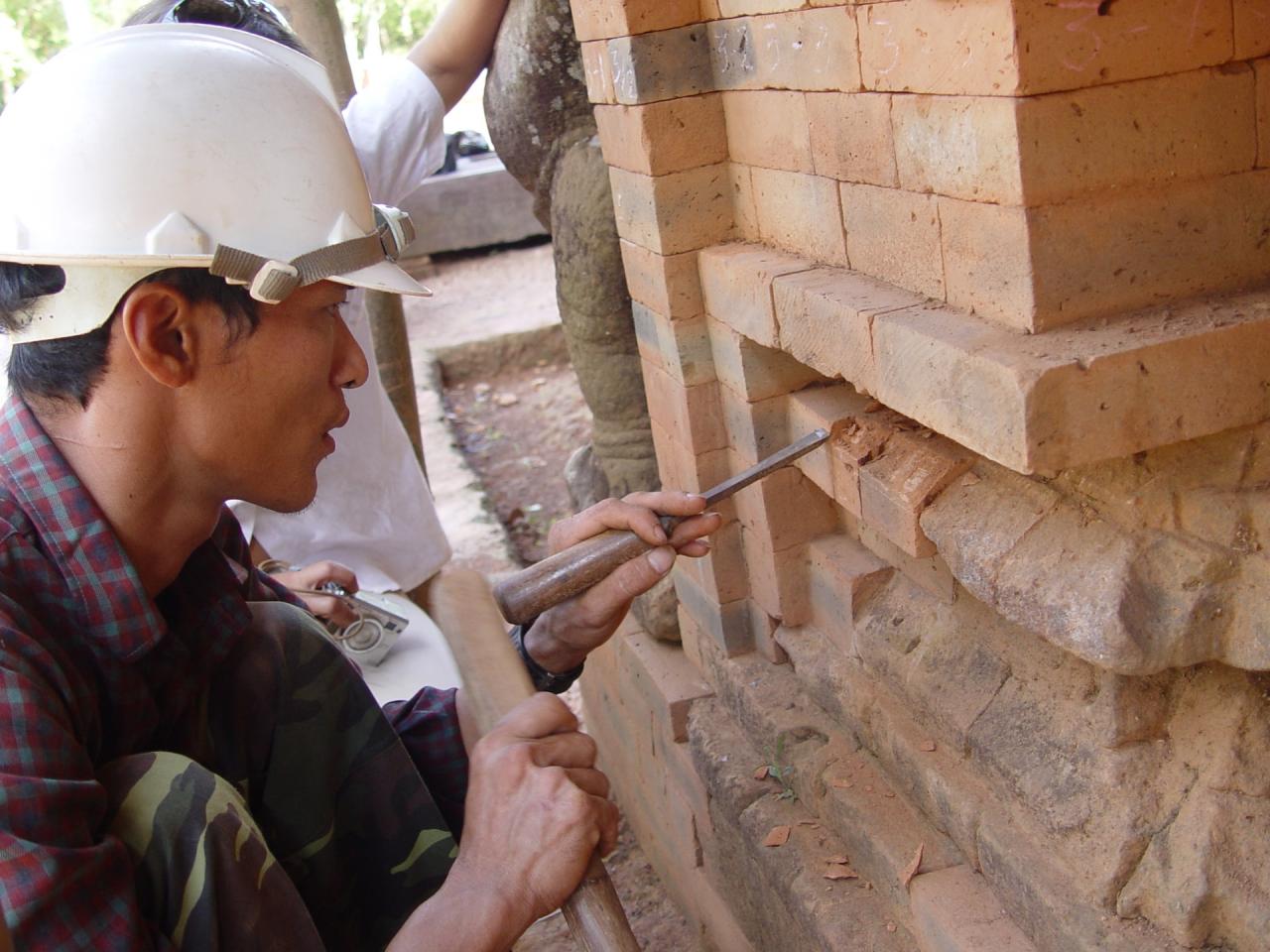
From a "blank" area for restoration workers
When applying international standards to the conservation of My Son relics from 2003 onwards, the biggest shortcoming was the lack of manpower for restoration. Experts could come from within the country or internationally, but the workers had to be local. However, the local restoration workforce at that time seemed to be starting from scratch.
Starting with the introduction of new methods, materials, and techniques at the My Son brick ruins, restoration workers not only needed guidance but also had to learn and explore the necessary skills on their own.
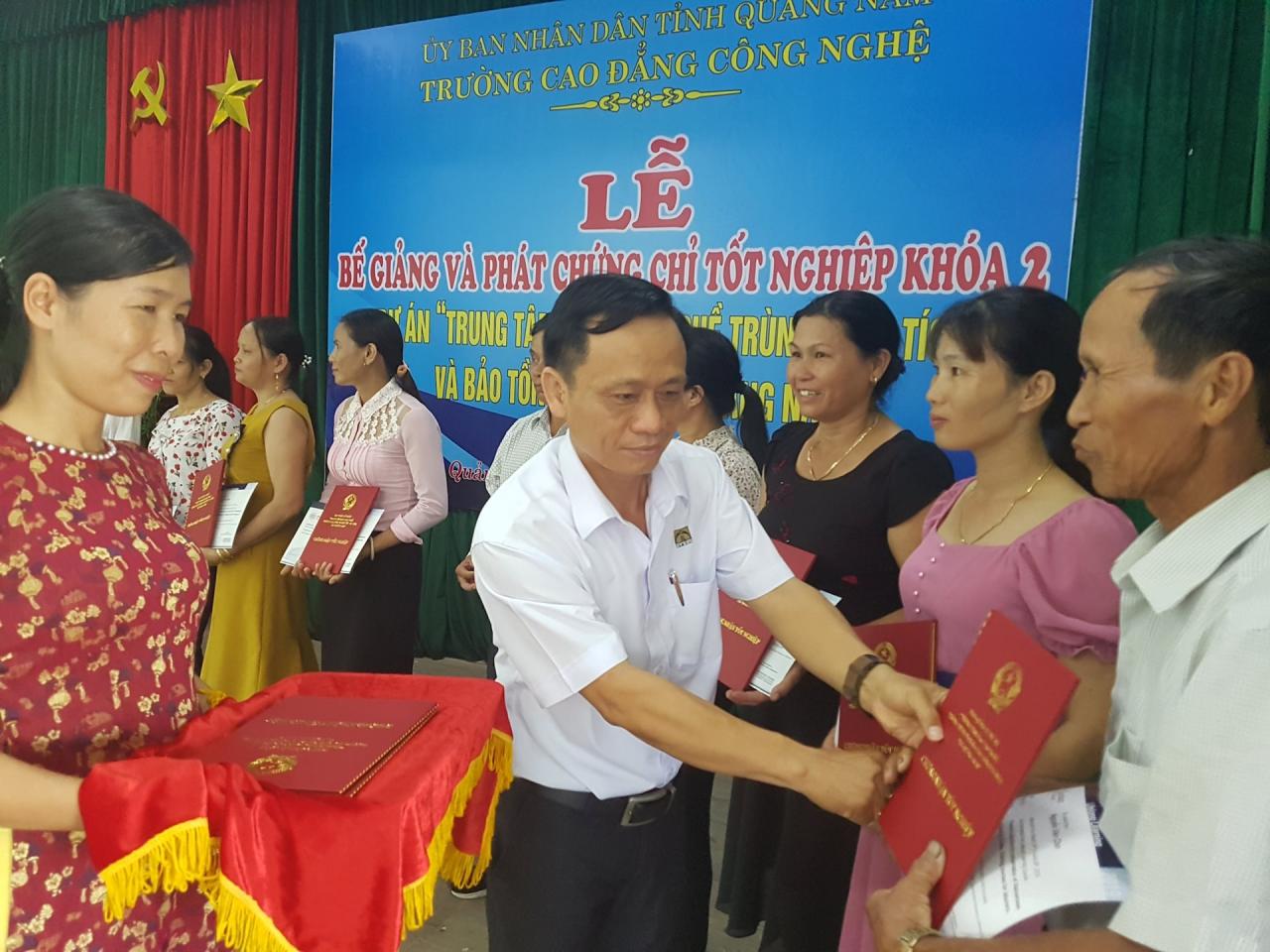
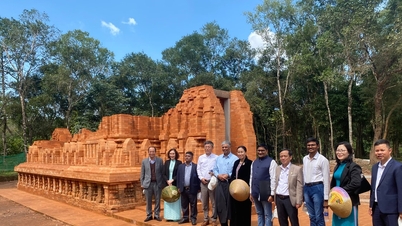
Over the course of about 20 years, more than 100 skilled workers were trained and gained practical experience through these projects, becoming one of the key human resources contributing to the success of the G, A, H, and K group projects.
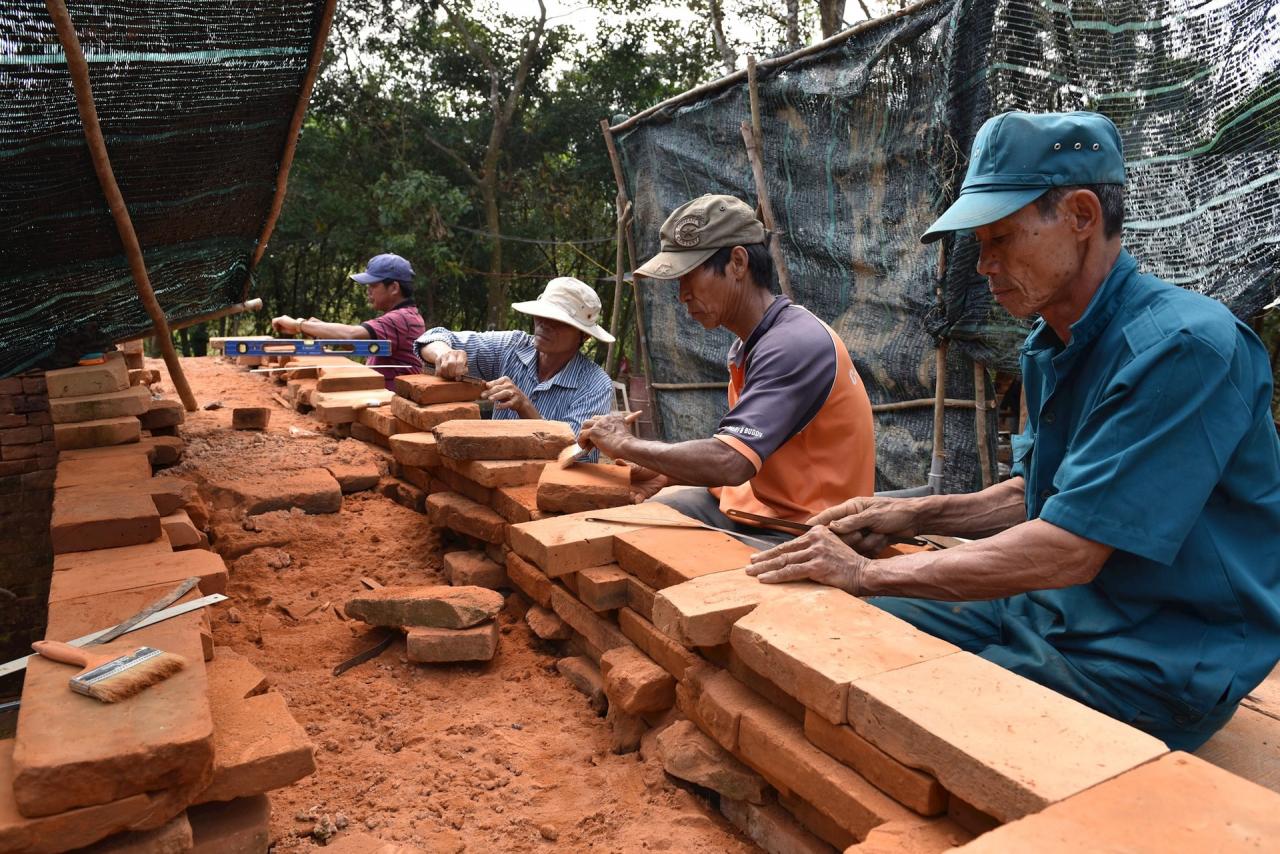
Mr. Nguyen Van Nam (born in 1963, residing in Nhuan Son village, Duy Phu commune), considered the "master craftsman" in the restoration project, said: "When restoring, we have to figure things out and learn on our own. Using resin oil to bind bricks or mortar mixed from brick powder was something we did for the first time. Only then did we realize that ancient bricks are different from modern bricks; each one is unique. We had to figure out how to chisel them without breaking them, how to grind them evenly, and how to adjust the dimensions. We had to sculpt and shape them in a way that was pleasing to the eye. It took days of continuous practice to learn. It was hard work, but when we finished restoring a tower, we felt happy and proud because we had contributed to the local heritage."
Mr. Nguyen Van Ban, originally a local stonemason, has been involved in restoration work for over 10 years. He has handled most of the restoration work on architectural elements and stone structures.
He stated: "Ancient stonemasons possessed exceptionally high technical skills. Whether the structures were simple or complex, they worked meticulously and precisely. Their combination of brick and stone was masterful; the joints between the brick and stone were tight and secure. They knew the properties of sandstone very well. They knew which stone was best for altars and which for decorative columns. Even with the same type of sandstone, the stone used for religious statues was of the highest quality. Their measurements and dimensions were like 'golden rulers,' so they were incredibly accurate."
Coming from diverse professions, local people embraced a completely new trade, new methods and techniques, and new materials. They were given the name "heritage restoration team."
Facing a shortage of workers.
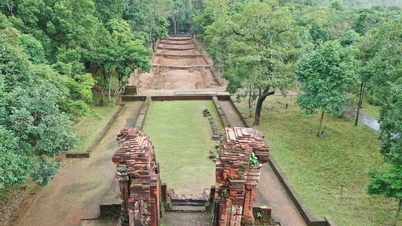
Along with technical staff and experts, local restoration workers have helped preserve many structures at My Son as well as in Central Vietnam over the past few decades. They have become an indispensable human resource in the preservation of the My Son heritage.
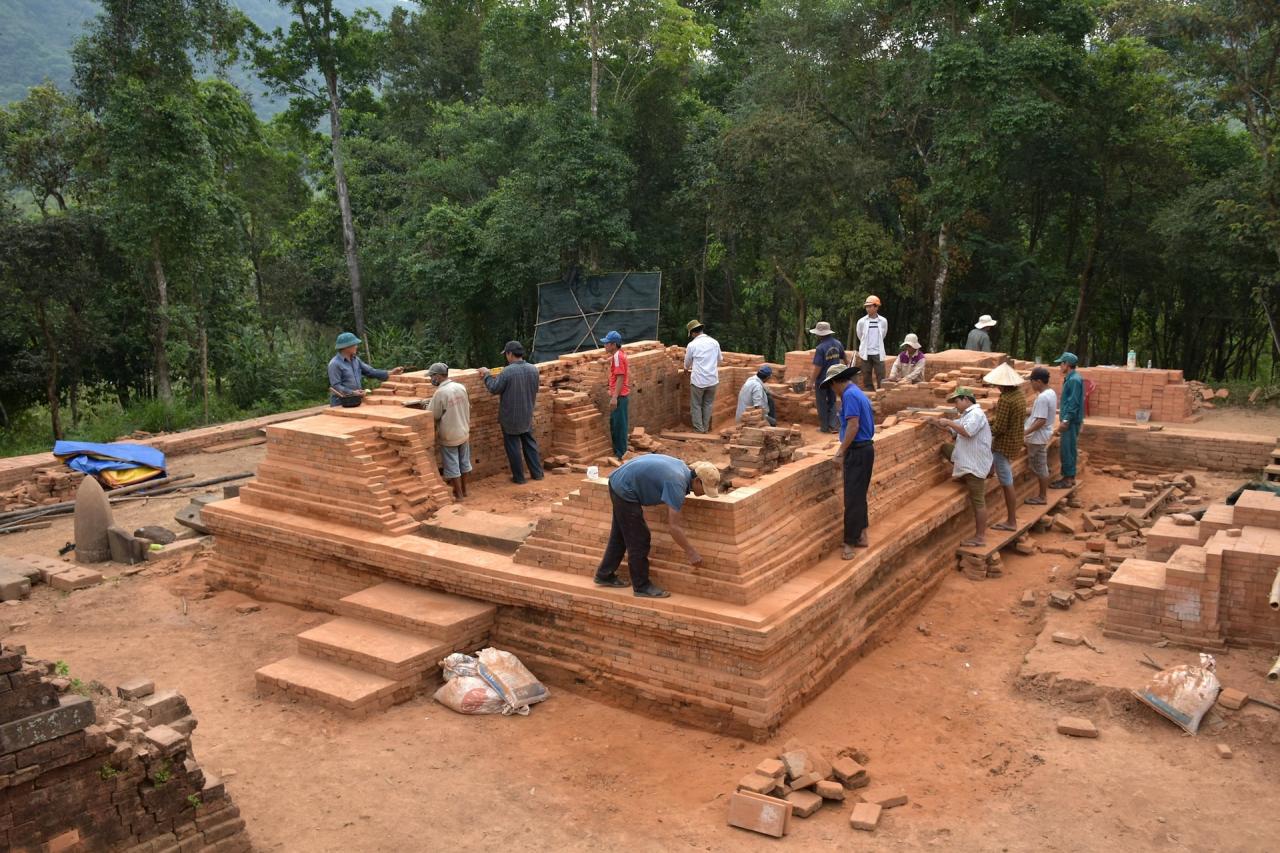
However, to date, My Son is facing a shortage of skilled workers. Mr. Nguyen Van Nam said: "This job looks easy, but it's very hard work. I often mentor and guide new workers. Some are diligent in learning, accept the working conditions, and stay with the profession. But many young people work for a short time and then go to other jobs with higher incomes."
Mr. Vo Van Co, from My Son village, was one of the favorites of Italian archaeological experts due to his excellent excavation and surveying skills. However, in recent years, he has changed professions after completing the restoration project of Tower G.
Similarly, Mr. Vo Van Thien, a skilled craftsman with nearly 20 years of experience in archaeology and restoration, also couldn't make it in the profession. Mr. Thien said: "The daily wage is too low, and working in the hot sun, sitting in excavation pits or climbing restoration towers, is even cheaper than doing manual labor outside. The work is also unstable; it's not always available, and excavation and restoration are project-based. Some years there's work, some years there isn't, and I only get to work for 4-5 months each year."
For large projects involving nearly a hundred workers, the compensation for restoration workers is similar to that of construction workers. According to the latest decision of the Quang Nam Provincial Department of Construction, document No. 258/QD-SXD dated December 25, 2023, regarding the announcement of construction worker unit prices in Quang Nam province, the compensation rate in Duy Xuyen district, belonging to group II, is 210,304 VND for level 2/7 construction workers and 247,731 VND for level 3/7 workers. Compared to market labor costs, this compensation rate makes it difficult to retain skilled restoration workers.
From a region with virtually no restoration workers, through conservation projects over the past 20 years, hundreds of workers have acquired restoration skills. However, maintaining the profession is now difficult.
The project may end, but conservation efforts cannot stop. Without the skilled hands of professional craftsmen, the most crucial resource in conservation is missing: people to pass on the skills, techniques, and folk knowledge accumulated over the past 20 years. Therefore, paying attention to a skilled team of restoration craftsmen is also paying attention to the sustainability of the heritage...
Source: https://baoquangnam.vn/nguy-co-thieu-tho-trung-tu-di-tich-3149387.html






























































Comment (0)