

Following the locals on their forest patrol.
For generations, forests have been the source of sustenance and a vital part of the lives of the Tay, Mong, and Dao ethnic groups, providing them with a comfortable life. Many families have escaped poverty and gradually improved their living standards thanks to the forests. For Giang A Cho, 31 years old, from Nam Tha, Van Ban ( Lao Cai ), relying solely on his terraced rice fields would likely have left his family perpetually poor. But everything changed when Giang A Cho took up the profession of caring for and protecting the forests.
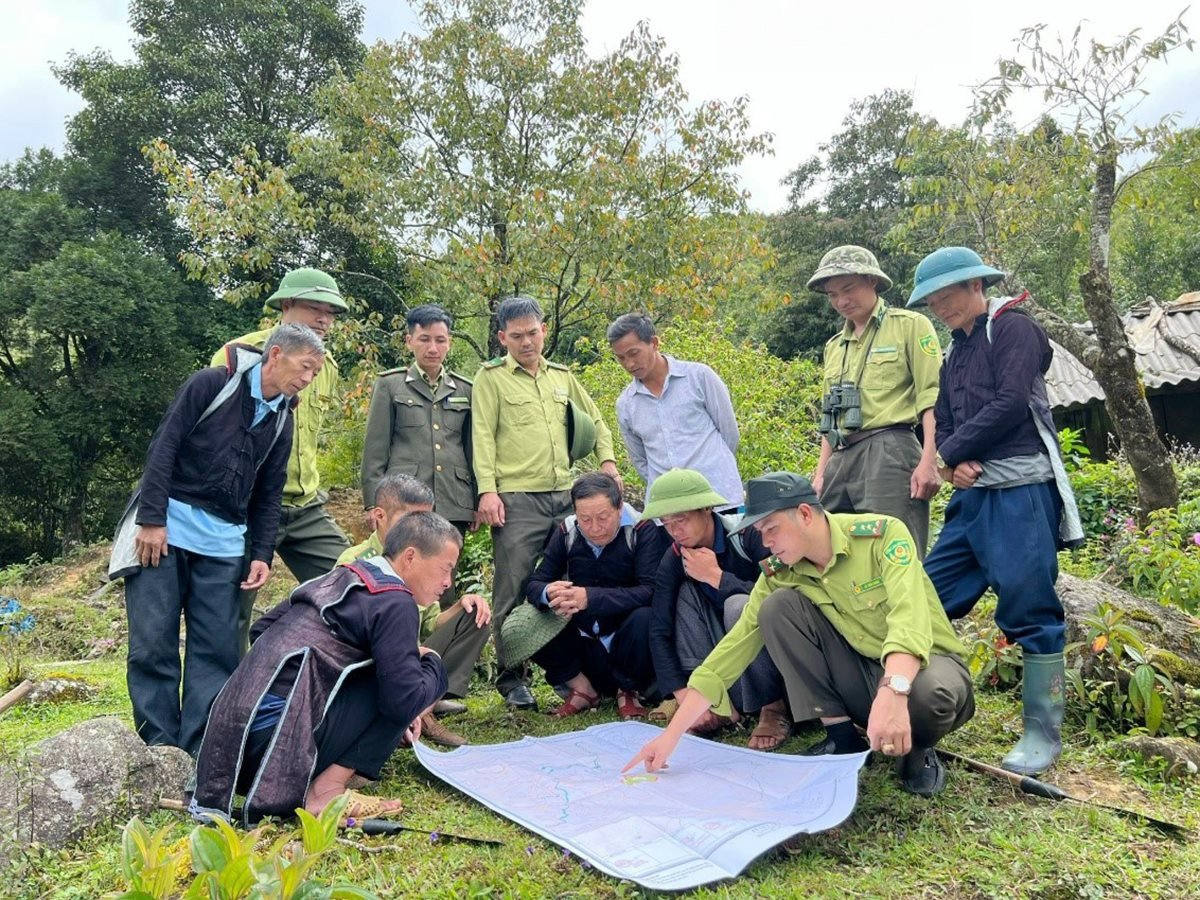
Giàng A Chơ only spends about 10 days a month at home with his wife and children. The rest of the time, he's in the forest protecting the hillside forest that his family and village have been assigned to him. Chơ shared that he's been assigned to care for and protect over 500 hectares of forest with the village team, so for over 10 years he's been going back and forth like that. The job of protecting and caring for the forest is very hard; sometimes he gets bitten by snakes, sometimes he suffers from malaria, but A Chơ perseveres in staying in the forest to protect it. Giàng A Chơ thinks, "If I want money to feed my children and educate them, and to lift my family out of poverty, a little hardship is nothing." Perhaps understanding the hardships of her husband, wife, and two children, it's no wonder that when Chơ isn't home, his wife takes care of his elderly mother and two children. Chơ's children are also more mature than their age; when their father is in the forest, they both go to school and do household chores on their own without needing to be reminded.
Following Giàng A Chơ and his fellow forest rangers along the mountain trail, we patrolled the forest. After the previous night's rain, the entire mountain forest and trees were damp. Occasionally, a few caterpillars crawled on the ground, sometimes swinging together on the blades of grass. I suddenly screamed in fright when I saw a leech wriggling on Giàng A Chơ's hair. He quickly removed it with his hand, threw it to the ground, stomped on it, and then reassured me: "It's okay, don't worry, just wrap your head tightly with a scarf and you won't be afraid of leeches or caterpillars attacking you..." Even though climbing the mountain was hot and sweaty, I didn't dare remove the scarf wrapped around my head for fear of the creatures accidentally crawling onto my skin. A Chơ carried a bag containing water, forest supplies, and a bottle of liquor. "This liquor is for when we encounter rain or if it gets too cold sleeping in the forest at night," A Chơ explained.
The higher we climbed, the more desolate and steep the path became, almost vertical with each step. It wasn't until 12 noon that we reached the hut where everyone stopped for lunch. While busily preparing food, A Chơ confided, "Forest patrolmen live in remote, isolated places, so life is full of hardships. We usually prepare enough food for 3 or 4 days after returning from a patrol. On rainy days, patrolling is slower than on dry days. We usually patrol in teams of about 5 or 6 people, helping each other and being able to provide assistance in case of illegal loggers or forest fires..."
Preserving forests is like preserving the livelihood of the poor.
Following Giàng A Chơ's forest patrol team deep into the forest, we encountered vast expanses of old bamboo trees with a diameter of 16cm. A Chơ confided: "Bamboo is a precious forest tree that nature has bestowed upon the people of Văn Bàn. The entire Văn Bàn district currently has more than 2,500 hectares of mixed natural forest with bamboo trees. Bamboo is not only a forest tree, but it also provides a livelihood, helping the people of Văn Bàn escape poverty."
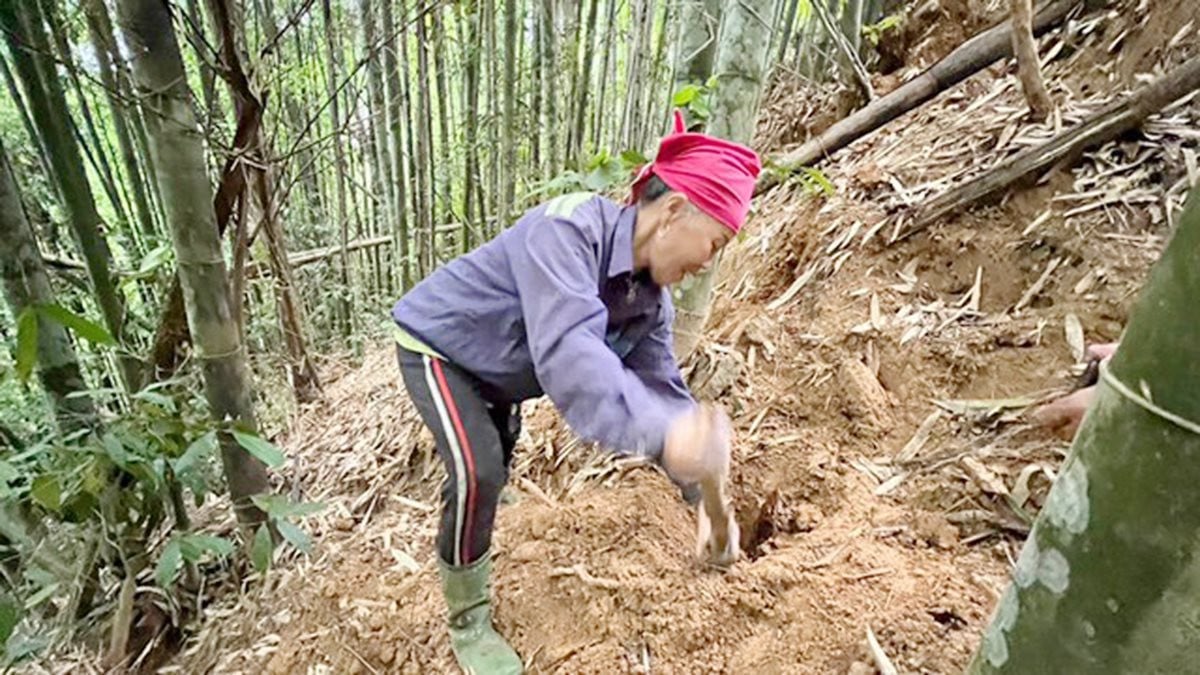
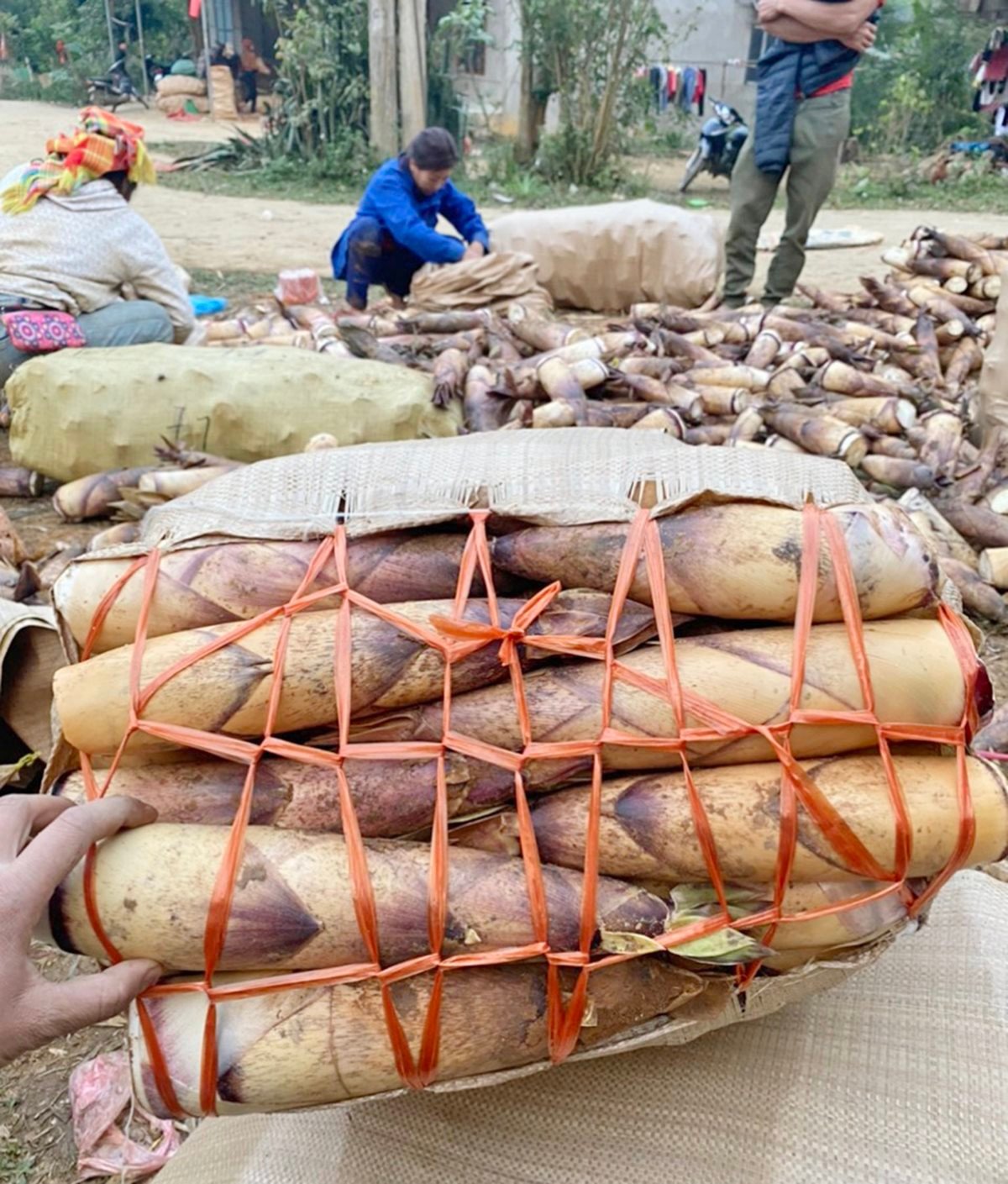
Every year from November to March, we farmers go into the bamboo forest to harvest bamboo shoots to sell. Each person can dig up several tens of kilograms a day, earning 200-300 thousand dong. One hectare of bamboo will yield about 500 kg of bamboo shoots a year. With over 2,500 hectares, people can harvest about 1,880 tons of bamboo shoots. At an average price of about 7,000 dong/kg, the total revenue would be around 13 billion dong. This is a significant source of income that contributes to improving the income and stabilizing the lives of people living in and near the forest.
“Our Nam Tha commune has the largest area of bamboo forests in Van Ban district. Previously, people mainly harvested bamboo for personal consumption and sale within the district, so the economic value wasn't high. In recent years, Van Ban bamboo shoots have become known as a specialty crop, known for their crispness, sweetness, and refreshing taste, and especially for being very clean, growing in natural forests without human intervention. Therefore, every bamboo shoot season, traders from all over come to collect them, and the price of bamboo shoots increases, bringing a significant income to the villagers.” As a result, the poverty rate in Nam Tha has decreased significantly in recent years, and people have become more aware of the importance of preserving the forest to escape poverty.
Accompanying us on the forest patrol was Mr. Hoang Cong Tuong, a forest ranger from the district. Mr. Tuong said that in recent years, due to the high economic value of bamboo shoots, people have been exploiting them quite indiscriminately. The reckless digging and lack of awareness have severed many main roots, preventing the shoots from sprouting and destroying the vitality of the mother plant. Meanwhile, Van Ban district currently has no bamboo plantations; all its land is natural forest. To protect and preserve the forest, the Van Ban District People's Committee has developed a plan for managing bamboo shoot harvesting. People are allowed to harvest bamboo shoots in bamboo forests and sell them commercially from November of the previous year to the end of March of the following year.
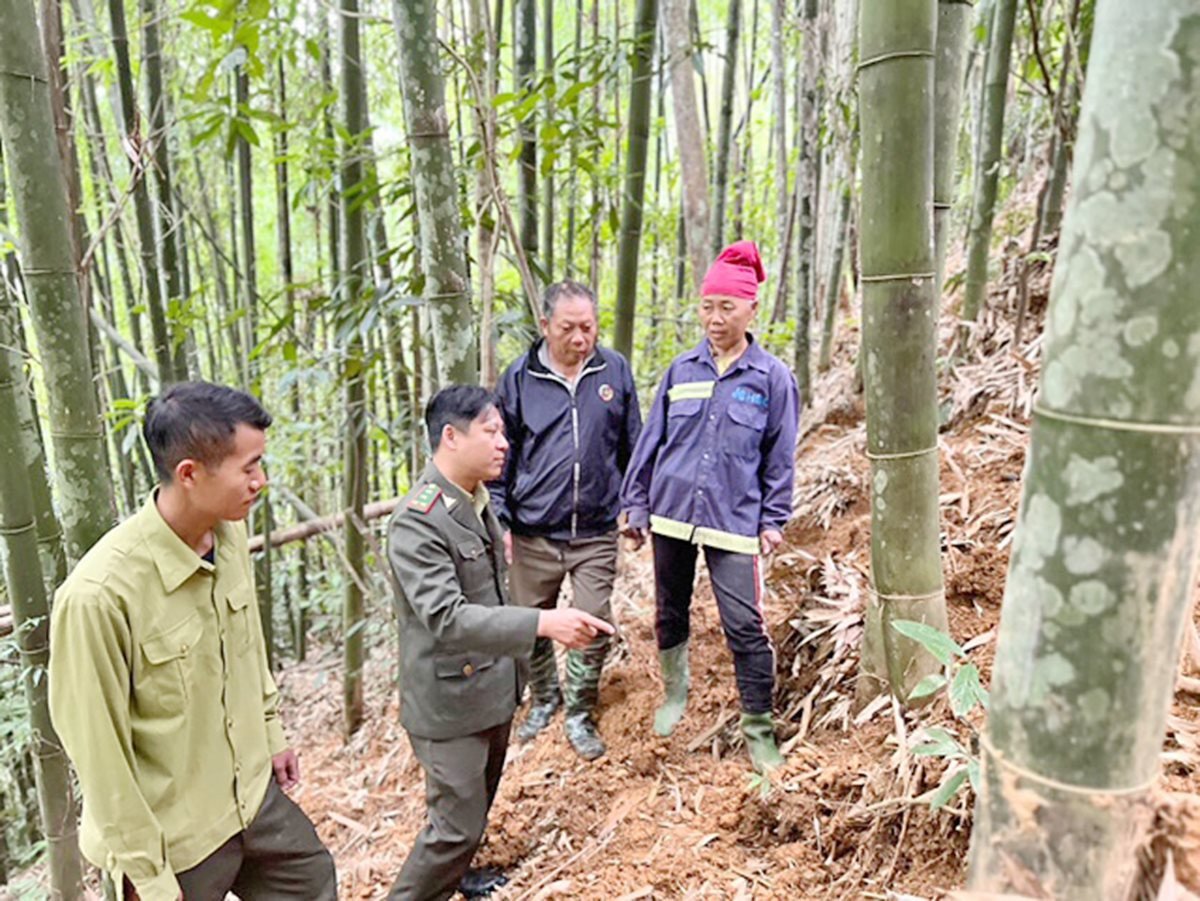
The remaining months are used to allow the bamboo shoots to regrow, forming a secondary layer for the bamboo forest to develop and providing a source of income for the following year.
To effectively manage and protect the forest, the Protective Forest Management Board has established 7 forest protection checkpoints/2 semi-professional forest protection teams, and Van Ban Forestry Company Limited has 3 checkpoints. They maintain a 24/7 presence at these checkpoints and regularly patrol the assigned forest areas. As a result, violations of forestry laws are always detected, prevented, and handled promptly. Therefore, the forest area in the locality has been maintained, and there are no longer any hotspots of illegal logging, hunting, or deforestation," Mr. Tuong added.
For the people of Van Ban district, Lao Cai province, the forest has truly become a source of income, helping them escape poverty sustainably. For me, this trip to the forest allowed me to witness and experience the hardships of forest care and protection, and hear many stories of the experiences of those who patrol the forest. This was truly an unforgettable trip for me in the mountainous highlands of Lao Cai.
Bamboo forests are secondary species, formed after slash-and-burn agriculture or after primary forests have been exploited. The plants grow primarily through an underground system of rhizomes located 20-30cm below the surface, sometimes with rhizomes emerging above the ground. The growing season is from December of the previous year to May of the following year, with bamboo shoots developing underground before emerging above the ground. According to agricultural engineers, the best time to harvest bamboo shoots is in the morning, when they begin to emerge 10-20cm above the ground. The cutting point is the junction between the rhizome and the shoot.
Source
![[Photo] Standing Committee member of the Party Central Committee Tran Cam Tu presents the Decision appointing the Secretary of the Party Committee of the Ho Chi Minh National Academy of Politics.](/_next/image?url=https%3A%2F%2Fvphoto.vietnam.vn%2Fthumb%2F1200x675%2Fvietnam%2Fresource%2FIMAGE%2F2026%2F02%2F02%2F1770039902160_le-cong-bo-bt-hvctqg-11-7880-jpg.webp&w=3840&q=75)





Comment (0)