

According to a Google executive, two years after Apple removed Google Maps to use its own map app as the default service on iPhones, the company has only regained 40% of its former mobile traffic.
Earlier this week, Michael Rossak, Google's vice president of finance, said the company is using the case of Apple Maps as a "benchmark" to predict what might happen if the iPhone maker replaces the default search engine on the Safari browser.
In an email from June 2020, Roszak shared data showing how Apple's transition impacted Google Maps traffic on iPhones.
"Nearly two years later, we've only been able to reach 40% of our previous peak, and the actual number could be even lower as Apple Maps traffic has also increased during the same period," a Google executive said.
The U.S. Department of Justice is accusing the search giant of maintaining an illegal monopoly by paying billions of dollars to ensure its search engine is the preferred, or default, choice on web browsers and smartphones.
Google's biggest contract is with Apple, under which Apple sets Google's search engine as the default in exchange for a share of the partner's advertising revenue. However, the agreed-upon fee between the two parties is not disclosed.
US authorities allege Google spent between $4 billion and $7 billion on the Safari acquisition in 2020. Lawyers representing Apple object to this claim, arguing that it is a publicly available estimate, not an actual figure.
Digital advertising budgets are flowing to Amazon.
More than five years ago, Google and MetaPlatform dominated the digital advertising market, accounting for over 50% of global revenue. However, recent changes, including Apple's privacy policy changes, have weakened these "empires" and created an opportunity for Amazon to rise.
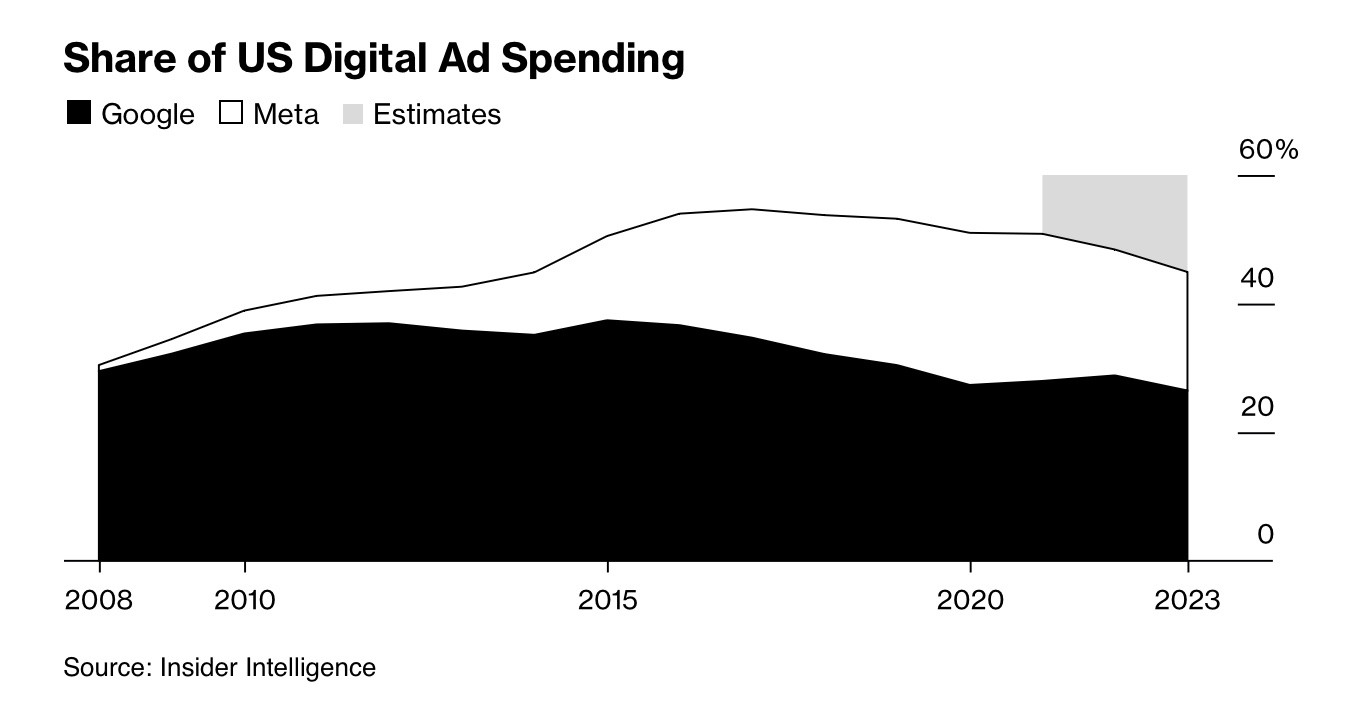
Jerry Dischler, Google's vice president of product advertising, said they are losing ground "to newcomers like TikTok and Amazon." Currently, the company, formerly Alphabet, has nearly 5 million marketers, compared to 10 million active on Meta. Of those, retail marketing accounts account for 35% of search ads, the company's largest marketing segment.
The executive stated that many consumer goods manufacturers have threatened to shift their entire advertising budgets from Google to Amazon, citing the e-commerce company's ability to "collect data better than us, resulting in better marketing outcomes." Dischler acknowledged that Amazon has surpassed Google in retail marketing, with a growth rate twice as high.
(According to Bloomberg)
Source
![[Photo] Standing Committee member of the Party Central Committee Tran Cam Tu working with the Central Inspection Committee](https://vphoto.vietnam.vn/thumb/1200x675/vietnam/resource/IMAGE/2026/05/28/1779969579668_ndo_br_bnd-2495-jpg.webp)













































































































Comment (0)