


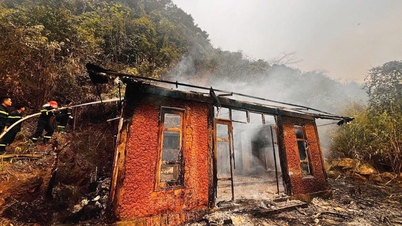
However, in practice, lax management occurs in many localities, leading to numerous negative consequences, overloading urban infrastructure systems, and posing risks of fires and explosions, as evidenced by several fires causing serious damage to people and property.
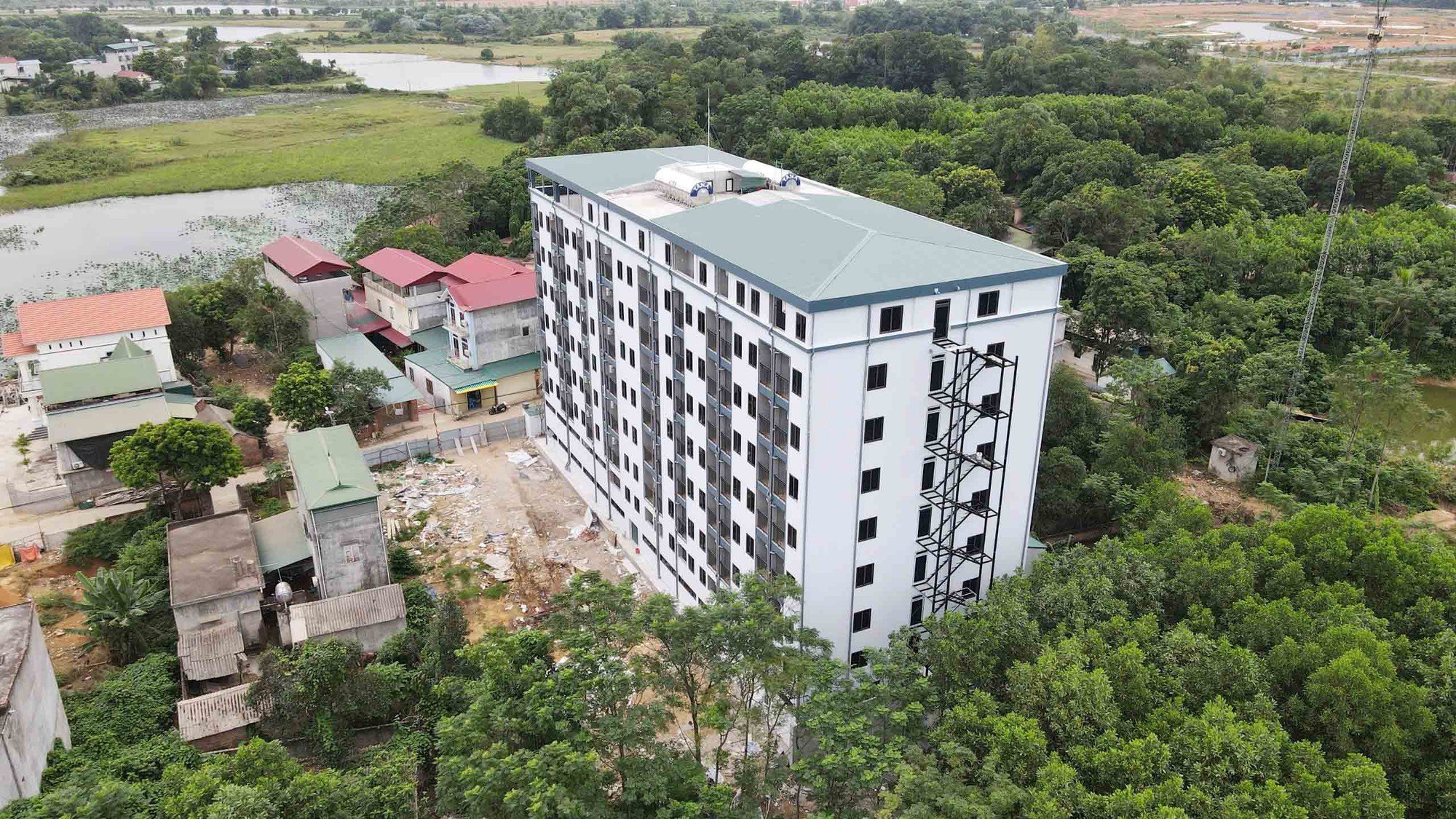
A 9-story mini-apartment building, exceeding the permitted number of floors by 6, is located in Tan Xa commune (Thach That district, Hanoi ).
Creating a legal framework for healthy development.
To address these limitations, the draft amended Housing Law stipulates that individuals constructing houses with two or more floors, where each floor is designed and built as apartments for sale or lease, must meet the conditions for being the investor of a housing construction project. The sale, lease, and rental of apartments shall be governed by the Housing Law and the law on real estate business; the issuance of certificates for each apartment shall be governed by the law on land; and the management and operation shall be governed by the regulations on the management and use of apartment buildings.
Agreeing on the need to tighten regulations for mini-apartments, National Assembly Deputy Tran Kim Yen (Ho Chi Minh City delegation) argued that current regulations on construction and technical standards for mini-apartments are not specific enough, leading to developers potentially "circumventing the law." Recent incidents causing loss of life and property show that the problem lies not with the mini-apartments themselves, but with developers failing to meet requirements and standards, along with the related responsibility of the management agencies.
According to Ms. Yen, the housing needs of the people, especially low-income workers, are real and very urgent. Authorities have a responsibility to ensure these legitimate needs are met by creating conditions for investors to produce quality and safe housing products. Creating a strict legal framework will help mini-apartments develop healthily, investors will know what is right and be confident that they are complying with regulations, and users will be assured that they are protected by a comprehensive legal system.
Priority is given to renting, sales are restricted.
Participating in the discussion, National Assembly Deputy Nguyen Duy Thanh (from Ca Mau province) argued that with the proposed draft, a household with a plot of land of a few hundred square meters could build a mini-apartment building for sale without needing to establish a business or create an investment project; the project would also not need to go through procedures such as investment policy approval, feasibility study reports, fire safety approval, or construction acceptance... The draft also allows for the issuance of individual ownership certificates for each mini-apartment unit, just like regular apartments. If these policies are approved, mini-apartments will proliferate, putting significant pressure on fire safety and social infrastructure.
Affirming that "people's lives must be prioritized," Mr. Thanh suggested that the drafting agency should establish technical standards for mini-apartment buildings to meet fire safety, earthquake safety, and planning requirements for residential areas and transportation. At the same time, state management agencies need to strengthen inspections, checks, and handling of violations, especially in individual housing projects built in the style of mini-apartment buildings.
Meanwhile, National Assembly Deputy Nguyen Quoc Luan ( Yen Bai delegation) expressed concern that the draft law stipulates conditions for mini-apartments similar to those for commercial apartments. He argued that this is not truly appropriate and is highly impractical. He cited the example that individuals cannot fully meet the requirements of a housing project developer (they must have legal status, capacity, and experience in implementing housing projects, etc.); similarly, if mini-apartments are managed according to the model of apartment buildings, they must have a management board and a maintenance fund…
To make this feasible, Representative Luận proposed that the state focus on managing and controlling urban planning, architectural management regulations, construction permits, quality standards, fire safety, and the transaction and management processes. Along with this, he suggested simplifying administrative conditions and procedures so that individuals with land use rights and financial resources can easily participate in the development of mini-apartment buildings. In particular, Mr. Luận recommended prioritizing the development of mini-apartments for rent, prohibiting or restricting sales and lease-purchases, to avoid future disputes and complications (such as management, maintenance, and inheritance).
Source link

![[Photo] General Secretary To Lam working with the Central Inspection Committee](https://vphoto.vietnam.vn/thumb/1200x675/vietnam/resource/IMAGE/2026/03/05/1772718314670_a1-bnd-8682-5192-jpg.webp)
![[Photo] Prime Minister Pham Minh Chinh receives the Minister of Emergency Situations of the Russian Federation.](https://vphoto.vietnam.vn/thumb/1200x675/vietnam/resource/IMAGE/2026/03/05/1772712011395_ndo_br_thiet-ke-chua-co-ten-76-png.webp)






















































































Comment (0)