

Although the province's domestic revenue in the first six months of 2023 was quite high compared to the forecast, the overall budget revenue still raises many concerns amidst ongoing difficulties…
Main revenue streams declined.
According to Ms. Tran Thi Dieu Hoang, Director of the Provincial Tax Department: The province's estimated domestic revenue for the first six months reached 4,671 billion VND, equivalent to 54.3% of the projected target. Although the revenue is relatively high compared to the annual target, this is the lowest level in the last two years, showing a downward trend and a 19.4% decrease compared to the same period last year. Specifically, tax, fee, and other revenue is estimated at 4,401 billion VND, equivalent to 59.4% of the projected target, a decrease of 10.4%, while revenue from land and housing is estimated at 270 billion VND, equivalent to 22.5% of the projected target, a decrease of 69.38%.
Of the 16 revenue items, 9 showed relatively good collection progress (over 54% of the projected amount), and 4 showed high growth: revenue from local state-owned enterprises (SOEs) at 77.9% of the projected amount, up 31.8%; revenue from foreign-invested enterprises at 81.4% of the projected amount, up 68.7%; lottery revenue at 66.6% of the projected amount, up 30.4%; and fees and charges at 52.7%, up 9.6%. However, 7 revenue items fell short of the projected amount, with widespread declines across most revenue categories; 12 tax categories experienced significant decreases, primarily those accounting for a large proportion of the total revenue.
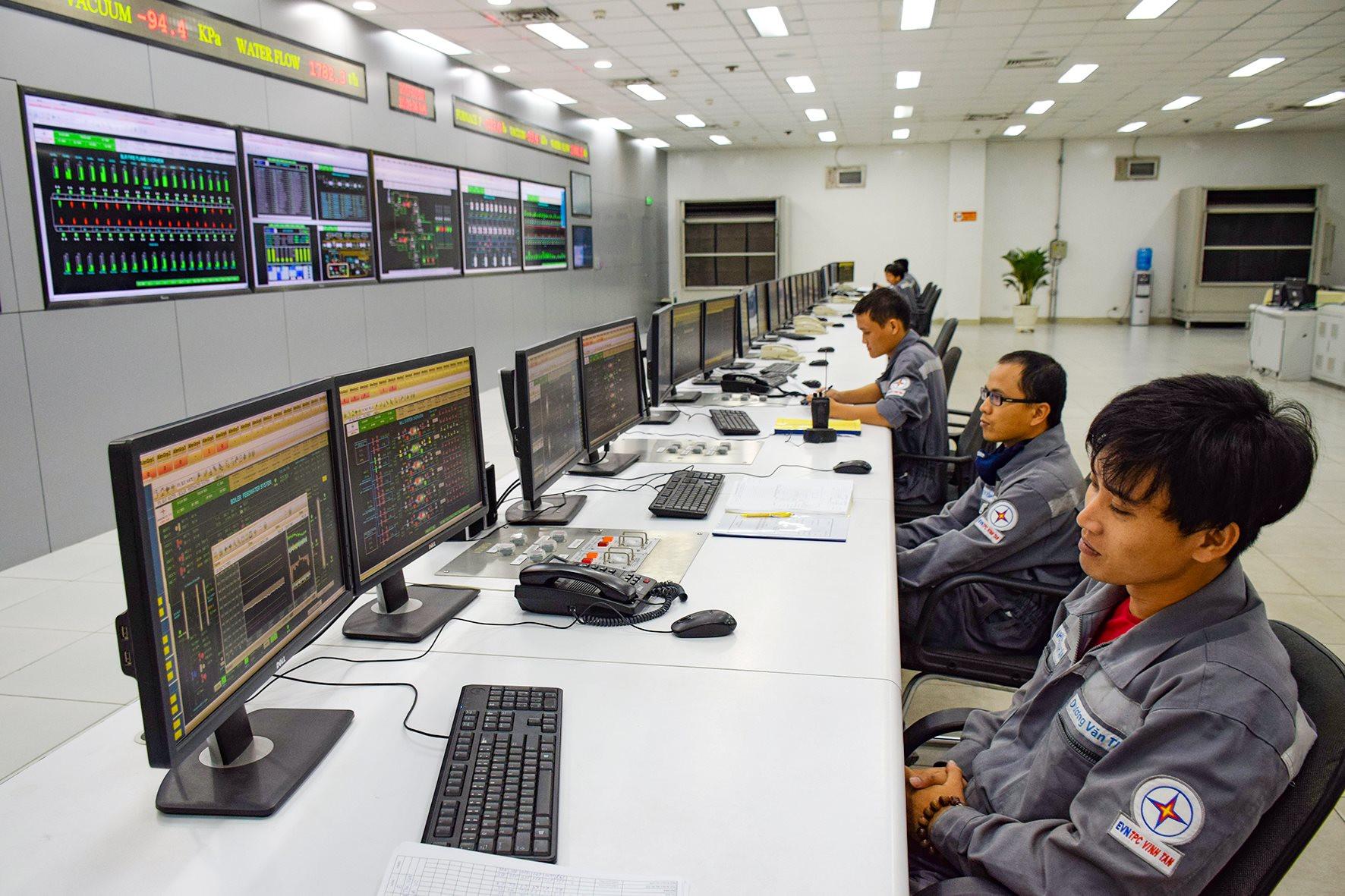
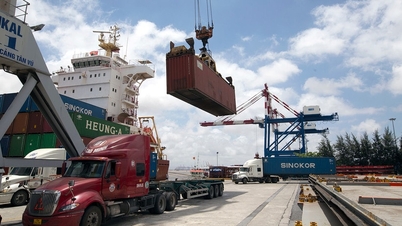
Revenue from thermal power plants has decreased - Photo by N.Lân
Specifically, revenue from central state-owned enterprises is estimated to decrease by 34.9%, mainly due to reduced capacity at the Vinh Tan thermal power plant because of high import prices for raw materials, and low revenue from hydropower plants in the first months of the year. Revenue from non-state enterprises is estimated to decrease by 7.05%, mainly due to reductions from real estate transfers of projects belonging to Novaland Group, and from companies constructing expressways, etc.
In addition, revenue from land use fees, land lease fees, and taxes and fees from real estate transfer and business activities, which account for a large proportion of revenue in most localities, reached only 401 billion VND in the past six months, a decrease of 71.9%. This is due to the sluggish real estate market, a significant decrease in real estate transactions and land-use conversion among the population. Difficulties in planning, land allocation, land auctions, and land clearance have also led to a significant reduction in related land revenue. Furthermore, the impact of some policies reducing the environmental protection tax rate according to Resolution No. 20 of the National Assembly Standing Committee on environmental protection tax contributed to a 39.1% decrease. For districts, towns, and cities, 6 out of 10 areas are expected to achieve relatively good revenue collection progress compared to the budget (over 55% of the budget), including: Bac Binh, Ham Thuan Bac, Ham Thuan Nam, Duc Linh, Tanh Linh, Phu Quy...

Focus on exploiting sustainable revenue sources - Photo by N.Lân
The difficulties continue.
Despite the difficulties, the proactive implementation of management and revenue collection solutions by the Tax Department, coupled with positive factors in the province's economy , has boosted revenue growth, offsetting shortfalls. In particular, Binh Thuan's hosting of the National Tourism Year attracted a large number of domestic and international tourists; the opening of the Dau Giay – Phan Thiet expressway connecting to the southern key economic region contributed to the flourishing tourism sector, leading to high growth in several economic indicators compared to the same period last year, with the province's GRDP increasing by 7.76%...
According to the Tax Department's forecast, the province's state budget revenue for the remaining six months of 2023 will continue to be affected by many factors. Specifically, the province's revenue structure remains unstable, lacking a core source of revenue and still heavily reliant on land revenue and lottery revenue (which accounted for 26.3% of total domestic revenue in 2022). The real estate market is struggling, and projects in the province have yet to determine specific land prices for calculating land use fees, leading to a decline in many related revenue streams and taxes. Furthermore, revenue from power plants has decreased significantly, and the impact of government tax exemptions and deferrals is expected to hinder the achievement of targets for 7 out of 16 revenue items.
To achieve the highest possible revenue target for 2023, the Tax Department has set forth many decisive tasks and solutions. Ms. Tran Thi Dieu Hoang, Director of the Provincial Tax Department, proposed that local leaders establish a Steering Committee for State Budget Revenue Collection and Anti-Violation; encourage large investors and businesses from outside the province to establish businesses or branches to declare and pay taxes and fulfill financial obligations, thereby fostering a sustainable revenue source for the budget. At the same time, she emphasized the need to further strengthen coordination among departments, agencies, and localities to resolve obstacles in tax management, such as debt recovery; review land-related projects that are not yet implemented or are behind schedule, and projects facing difficulties, in order to promptly address challenges and effectively exploit land revenue to compensate for revenue shortfalls.
Source




![[Photo] National Assembly Chairman Tran Thanh Man successfully concludes his participation in IPU-152](https://vphoto.vietnam.vn/thumb/1200x675/vietnam/resource/IMAGE/2026/04/18/1776502638199_vna-potal-chu-tich-quoc-hoi-ket-thuc-tot-dep-chuong-trinh-tham-du-ipu-152-8709975-jpg.webp)













































































Comment (0)