


This railway line is linked to the North-South International Transport Corridor, which has been in existence for many years, connecting Russia, Iran, India, Azerbaijan, and several other Asian and European countries, including road, rail, and sea transport.
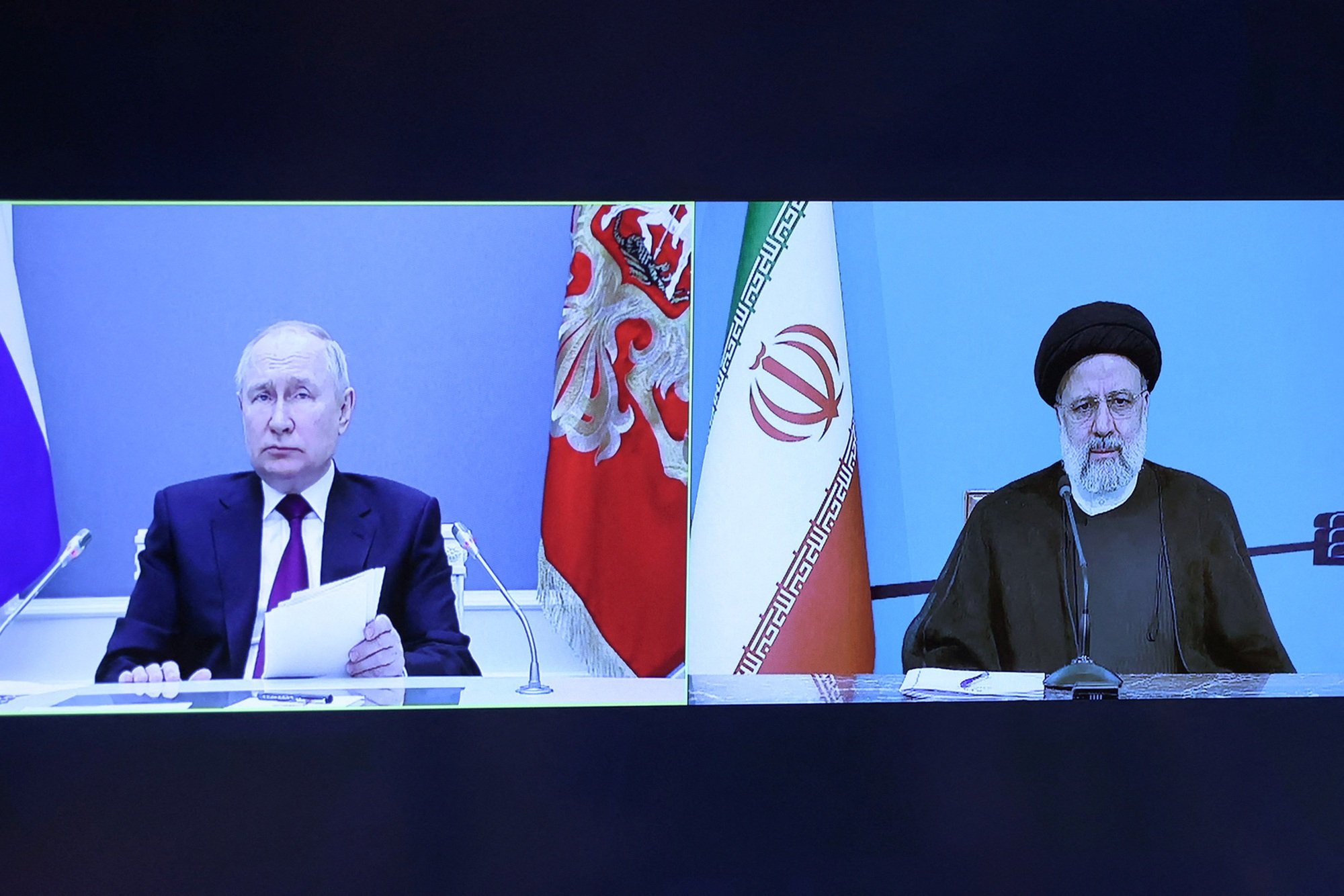
Iranian President Ebrahim Raisi and Russian President Vladimir Putin participated online in the signing ceremony of an agreement on the construction of the Rasht-Astara railway line on May 17, 2023.
This joint investment project elevates Russia-Iran relations at a time when both countries are politically isolated, surrounded, and subjected to economic sanctions and embargoes by the US, EU, and their allies. In this context, the project, along with the increased emphasis on the North-South International Transport Corridor, has immense long-term strategic significance for both countries. Moscow and Tehran are building a new intercontinental transport route, running from north to south, which could become an alternative to transport routes through the Suez Canal. Changing the transport network means changing the global supply chain network. Through this, Russia and Iran can mitigate the pressure from sanctions imposed by the US, EU, and their allies.
Therefore, the opposing sides, Russia and Iran, will certainly not let the project succeed easily, because otherwise, Moscow and Tehran would not only escape their difficulties but also gain a new trump card in the global geopolitical game, a new way to shape the game. This is a way for Russia and Iran to proactively lead the game.
Is the economic polarization between Russia and China and the West becoming increasingly apparent?
Source link









































































Comment (0)