

Preliminary results of the Spanish elections show that no party won an absolute majority in the country's parliament .
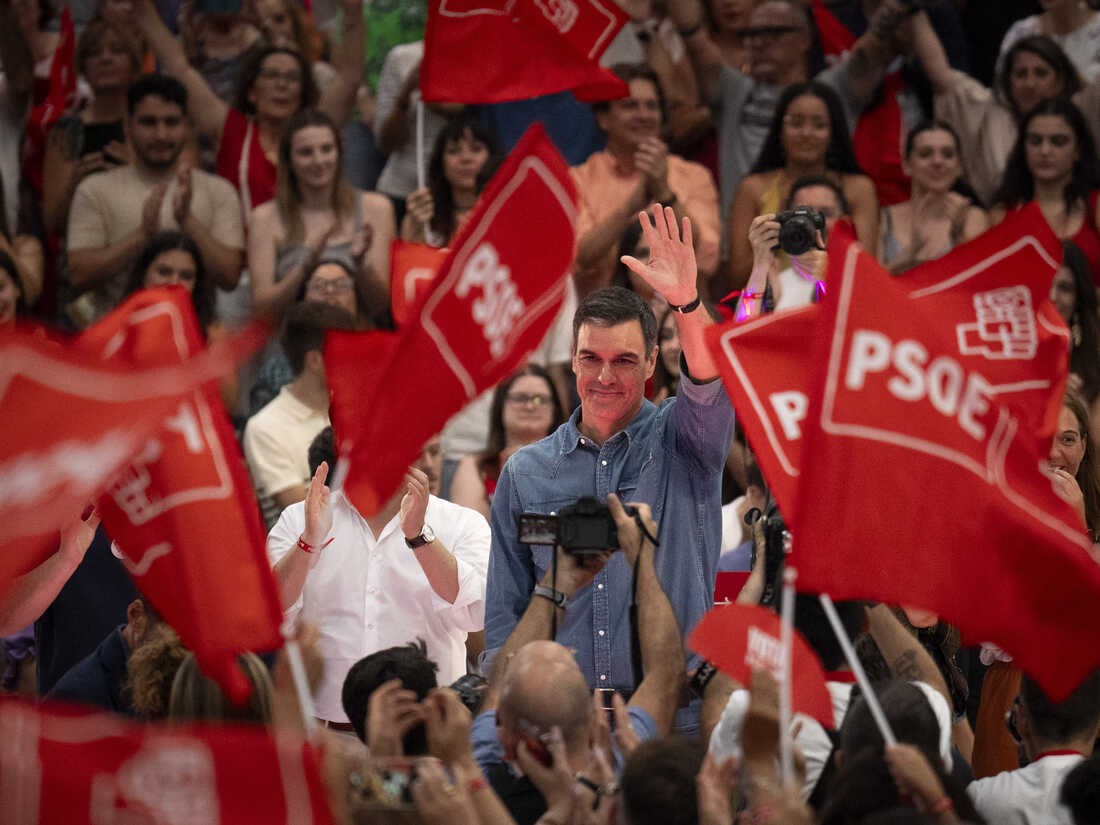 |
| Preliminary results of the Spanish elections suggest that Prime Minister Pedro Sanchez's (center) PSOE party may face difficulties in forming a new government. (Source: AP) |
On July 23, Spain held an early general election. With 99.5% of the votes counted, no party or coalition secured an absolute majority in the country's parliament. Specifically, Prime Minister Pedro Sanchez's Socialist Workers' Party (PSOE) won 122 seats, while its ally, the far-left Sumar party, won 31 seats.
Meanwhile, the opposition People's Party (PP) won 136 seats, 47 more than in the previous election in 2019. With 33 seats, the far-right Vox party remains the third largest force in Parliament despite winning 19 fewer seats than in 2019.
With these preliminary results, no party will win an absolute majority (176 seats) in the Spanish Parliament.
Speaking after the vote count was announced, Prime Minister Sanchez declared the PSOE victory: “The old-fashioned coalition, which wanted to completely undo all the progress we have made over the past four years, has failed.”
For his part, PP leader Alberto Nunez Feijoo declared that his party had won and was ready for dialogue in an effort to govern the country.
Jose Ignacio Torreblance, an expert at the European Council on Foreign Relations (ECFR), believes it is possible that the PP could form an alliance with Vox to secure enough seats in Parliament to form a new government .
However, the party will have to make concessions on some policies to the far-right. Currently, many voters, and even PP MPs, believe that Vox is not a suitable partner in any governing coalition.
Meanwhile, despite winning fewer votes than the PP, Prime Minister Pedro Sanchez's ruling PSOE party still has a chance to form a new government if it maintains its coalition with the Sumar party.
Source
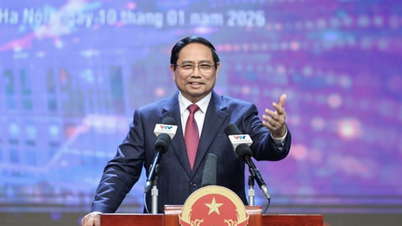
![[Photo] Prime Minister Pham Minh Chinh attends the Conference on the Implementation of Tasks for 2026 of Vietnam Television.](/_next/image?url=https%3A%2F%2Fvphoto.vietnam.vn%2Fthumb%2F1200x675%2Fvietnam%2Fresource%2FIMAGE%2F2026%2F01%2F10%2F1768047311329_ndo_br_dsc-3214-jpg.webp&w=3840&q=75)

































![[Infographics] Resolution No. 79-NQ/TW of the Politburo on the development of the state-owned economy](https://vphoto.vietnam.vn/thumb/402x226/vietnam/resource/IMAGE/2026/01/10/1768038914679_chp_3-11-23.jpeg)






























Comment (0)