

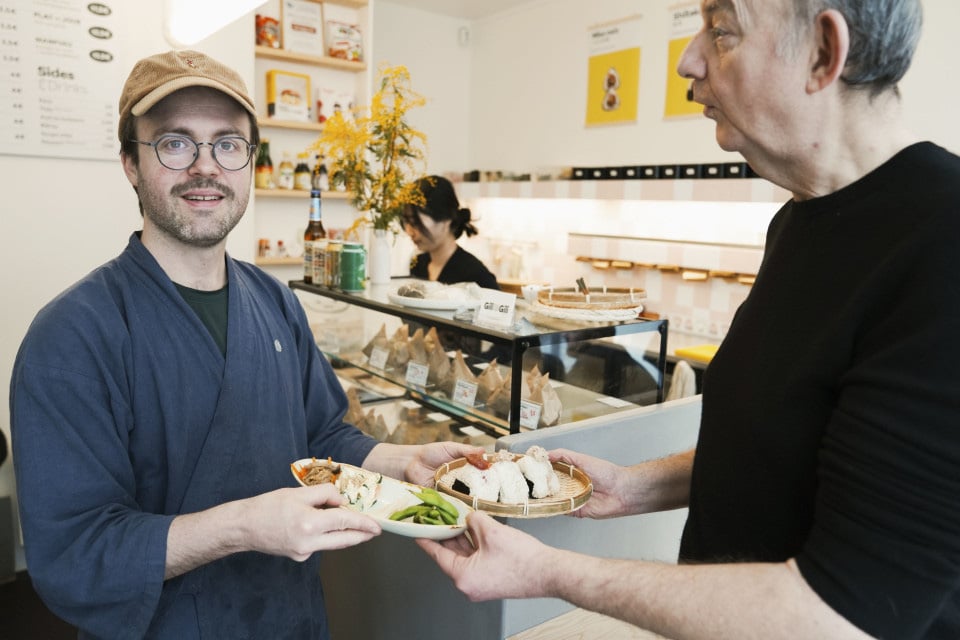
Samuel Trifot, the owner of a rice ball shop (left), hands out a portion of rice to one of his customers - Photo: Kyodo News
According to Kyodo News , at Gili-Gili, a shop specializing in Japanese rice balls in central Paris owned by Samuel Trifot, a Frenchman, and his wife, customers began lining up at lunchtime to buy rice balls filled with "kombu" (kelp), "umeboshi" (pickled Japanese plums), and other fillings.
The price of a serving of rice balls, ranging from 3 to 4 euros (approximately 490 to 650 yen), is considered expensive in Japan.
But in Paris, the French capital, this price is a competitive option. Buying three portions of rice balls might be cheaper than a single-person lunch.
The French favor Japanese rice balls for their convenience and health benefits.
A 28-year-old woman working in the publishing industry, who bought a tuna and mayo rice ball at Trifot's shop, said: "It's healthy and easy to eat. To me, it's probably even tastier than a baguette."
Besides being enjoyable while traveling on trains and buses, Japanese rice balls are also popular among many French people because they are gluten-free, a substance that can damage the lining of the small intestine in people with Celiac disease.
The various fillings available in Japanese rice balls create many choices for diners, including those following a vegan diet.
Rice balls have also become a popular item in supermarkets and grocery stores over the past two years and are gaining wider acceptance among diners in Paris.
Promoting Japanese rice exports
According to Kyodo News , the popularity of Japanese rice balls in Paris is thanks to the specialty restaurant Omusubi Gonbei.
The restaurant chose Paris as its first stop in Europe because they believe many locals have "sensitive" palates and enjoy the taste of rice balls.
The Omusubi Gonbei restaurant opened its second branch in Paris last February and is still very popular.
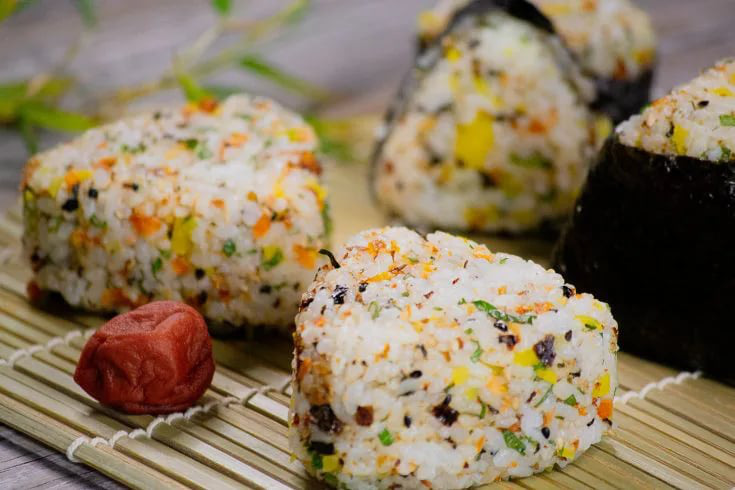
A serving of Japanese rice balls can contain a variety of different ingredients - Photo: Moshimoshi
Daisuke Sato, 51, a representative of the local Omusubi Gonbei restaurant, said that Japanese rice balls are a food suitable for the modern era because of their versatility, healthy ingredients, and suitability for vegans and Muslims.
Almost everyone, regardless of their religion, can eat Japanese rice balls.
Daisuke Sato explained that the reason Omusubi Gonbei's rice balls sell so well in France is thanks to the distinctive flavor of Japanese rice, the main ingredient of the dish.
He said, "The brown rice is imported from Japan, milled and processed at a shop in France. The best rice balls are those made with Japanese brown rice."
With the explosion of this local delicacy in France, the Japanese government also hopes that rice balls will "pave the way" for an increase in Japan's rice exports.
Source: https://tuoitre.vn/com-nam-nhat-ban-co-gi-ma-duoc-nguoi-phap-ua-chuong-20240602123341621.htm


























































































Comment (0)