

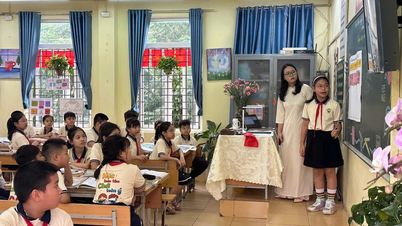
Education and training play a crucial role in the development of every nation. Over the years, the Party, the State, and the education sector have always paid attention to the teaching staff, recognizing them as the core force and nucleus in fulfilling the mission of raising the intellectual level of the people, nurturing talent, and training human resources for national development.
To date, with over 1.6 million teachers at all levels of education, from preschool and primary to secondary, vocational, and university, the teaching staff has not only grown in number but also improved in quality, fundamentally meeting the requirements of comprehensive and fundamental reform of education and training.
As of the end of the 2023-2024 school year, the percentage of teachers and administrators in preschools and high schools meeting the training standards under the 2019 Education Law was 89.3%, primary schools 89.9%, lower secondary schools 93.8%, and upper secondary schools 99.9%. The Ministry of Education and Training is continuing to promote training and professional development to improve the quality of the teaching staff to meet the demands of educational reform.
In order to gradually overcome difficulties and shortcomings in teacher recruitment, after the Politburo added 65,980 positions for the education sector in the 2022-2026 period, the Ministry of Education and Training coordinated with the Ministry of Interior to guide localities in implementing the plan.
By April 2024, localities had recruited 19,474 teachers out of a total of 27,826 additional positions for the 2023-2024 school year. In addition, the Ministry of Education and Training proposed the drafting of a National Assembly Resolution allowing the recruitment of individuals with college degrees to teach certain subjects under the new General Education Program.
Nevertheless, in the process of building and developing in line with the reform trend, there are still shortcomings. Policies and regulations concerning teachers, such as salaries, allowances, benefits, incentives, and social recognition, are not yet truly commensurate with the status, role, dedication, responsibility, and contributions of the teaching staff.
Teachers have not received the attention and protection they deserve from society, and some regrettable incidents still occur regarding the way society, parents, and students treat teachers. A small number of teachers and education administrators are hesitant to embrace innovation and have not yet properly understood the importance and role of educational reform. The quality of the teaching staff and education administrators is uneven, especially in areas with particularly difficult socio-economic conditions.
Local teacher shortages and surpluses still occur in various localities, while a large number of teachers are lacking to meet the requirements of the new General Education Program, especially in subjects such as Local Education, Experiential Activities and Career Guidance, Music, and Fine Arts.
The Ministry of Education and Training has advised the Government to develop and submit to the National Assembly the Law on Teachers, which is an important institutional solution aimed at developing the teaching staff.
In order to create a legal framework and ensure fair rights for teachers, the Ministry of Education and Training is conducting research on preferential allowances for civil servants in the education sector and reviewing and researching proposed policies on salary regimes for civil servants in ethnic boarding schools, ethnic semi-boarding schools, and schools with semi-boarding students in mountainous areas and areas with particularly difficult socio-economic conditions.
In particular, the Ministry of Education and Training advised the Government to develop and submit to the National Assembly the Law on Teachers, which is an important institutional solution aimed at developing the teaching staff.
To achieve the goals of educational reform, training, and teacher happiness, in addition to coordinated efforts from the State, educational management levels, teachers, parents, and students, breakthrough policies are urgently needed to support teachers in overcoming the aforementioned difficulties.
The education sector has been making gradual efforts to innovate, focusing on revising and improving the legal framework to remove bottlenecks. It is hoped that with these policies, the teaching staff and administrators will continue to develop and improve, better meeting the demands of educational and training reform.
Source: https://nhandan.vn/cham-lo-xay-dung-doi-ngu-nha-giao-post845857.html



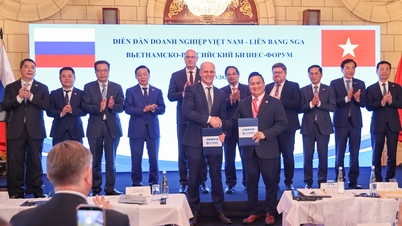
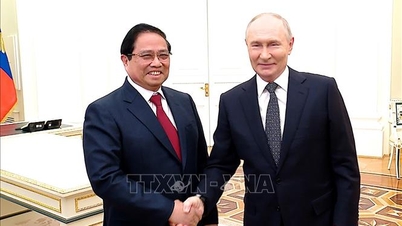
![[Photo] Prime Minister Pham Minh Chinh successfully concludes his official visit to the Russian Federation.](https://vphoto.vietnam.vn/thumb/1200x675/vietnam/resource/IMAGE/2026/03/26/1774482837673_vna-potal-thu-tuong-pham-minh-chinh-ket-thuc-tot-dep-chuyen-tham-chinh-thuc-lien-bang-nga-8663158-4245-jpg.webp)














![[Photo] Prime Minister Pham Minh Chinh successfully concludes his official visit to the Russian Federation.](https://vphoto.vietnam.vn/thumb/402x226/vietnam/resource/IMAGE/2026/03/26/1774482837673_vna-potal-thu-tuong-pham-minh-chinh-ket-thuc-tot-dep-chuyen-tham-chinh-thuc-lien-bang-nga-8663158-4245-jpg.webp)






























































Comment (0)