


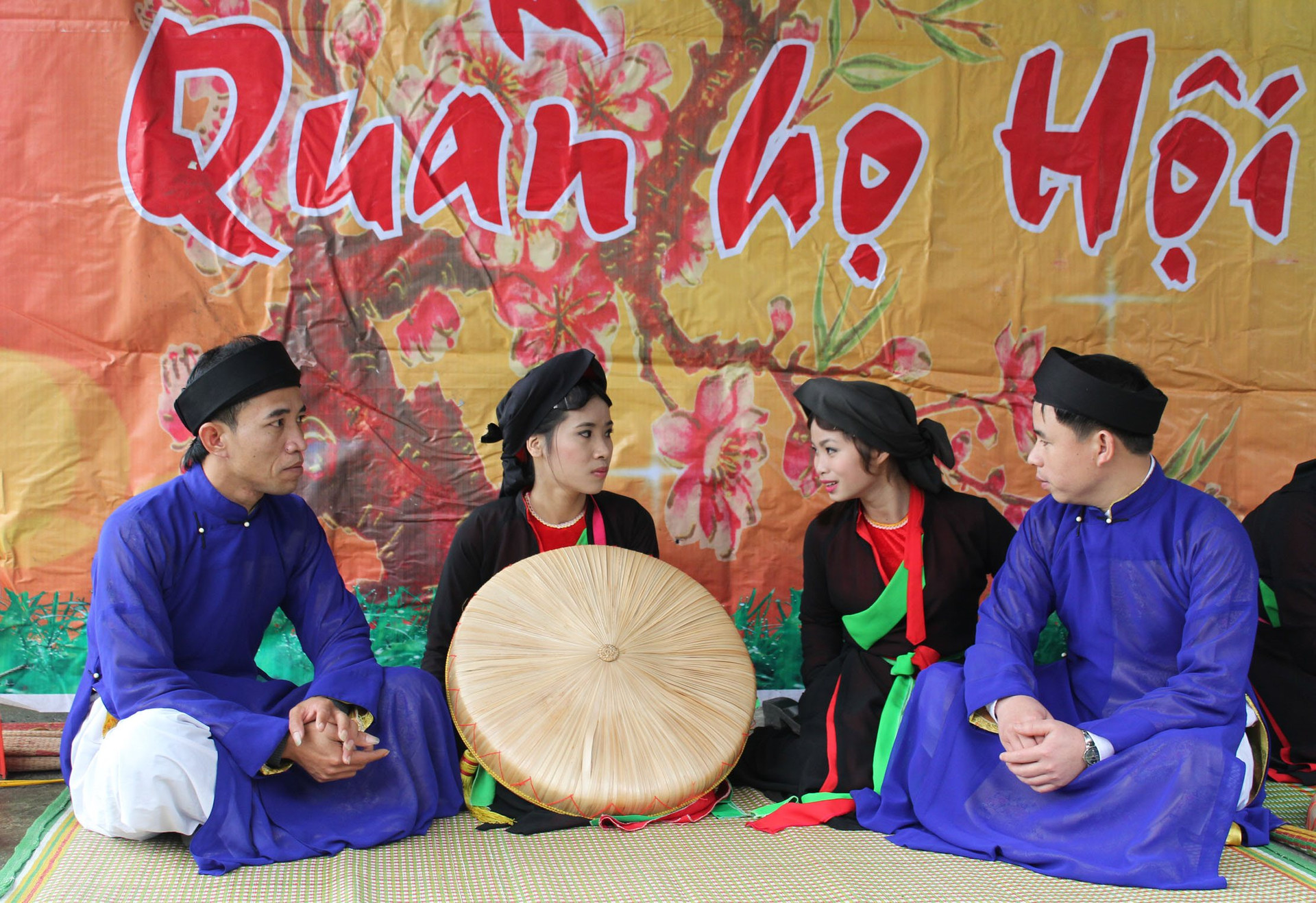
Every surprise in life, upon reflection, sometimes stems from a deep, mysterious connection. My old colleague, Tran Minh, a long-time friend, is a photojournalist. But more importantly, to me, Tran Minh is a Quan Ho folk singer. And his best performance, one that moves me to tears, is "Living in the Forest." Of all Quan Ho folk songs, this one is my favorite, because of its poignant sadness and the lingering sense of human existence, small and vulnerable like a water hyacinth floating on the water's surface, like a rudderless boat amidst the turbulent waves of a deep river…
Wanting to write something about Quan Ho folk songs, I listened to many old songs again and remembered Mr. Tran Minh. Three years ago, he prematurely left Quan Ho folk singing behind and passed away. Occasionally, those of us who used to listen to him sing still mention him not just as a colleague, but as a true artist of Quan Ho.
I was lost in thought, remembering the lively literary gatherings of those days, often attended by poets Do Trung Lai and Nguyen Thanh Phong, painter Phan Cam Thuong, and others... everyone wanted to hear Tran Minh sing.
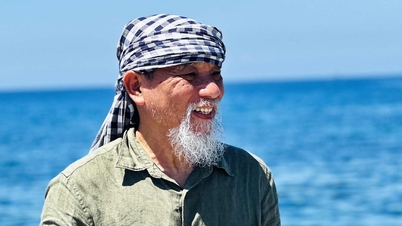
Tran Minh, originally from Bac Giang , is a gentle, melancholic man, reminiscent of the old Quan Ho folk songs, and kind-hearted, cherishing his friends with great affection. He sings beautifully and passionately, living a carefree, wandering life. He can sing in many "voices," but the most captivating is when he sings "Living in the Forest"—an old Quan Ho folk song with a "low-pitched" voice, sharing the same melody as "Living in the Boat" and "Living in the Ferry."
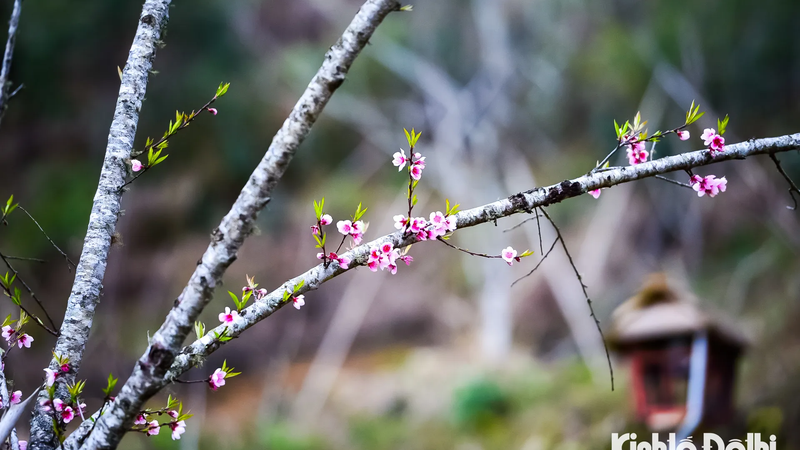
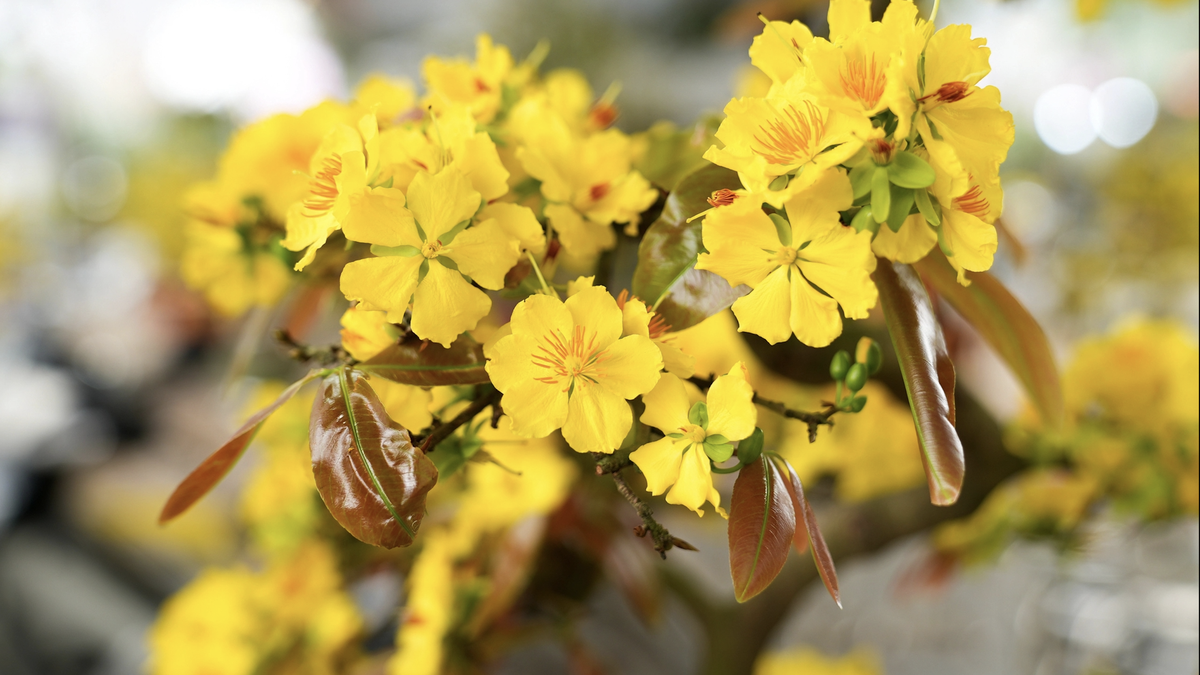
In the past, the male and female singers often composed call-and-response songs during the Quan Ho singing performances, such as the pair of songs "Sitting Leaning Against the Peach Blossom Window" and "Sitting Leaning Against the Boat's Edge." Perhaps all three Quan Ho songs, "Living in the Forest," "Living in the Boat," and "Living in the Ferry," were created through this call-and-response style among the male and female singers. There might also be another song, forming two pairs of four songs, that I am unaware of.
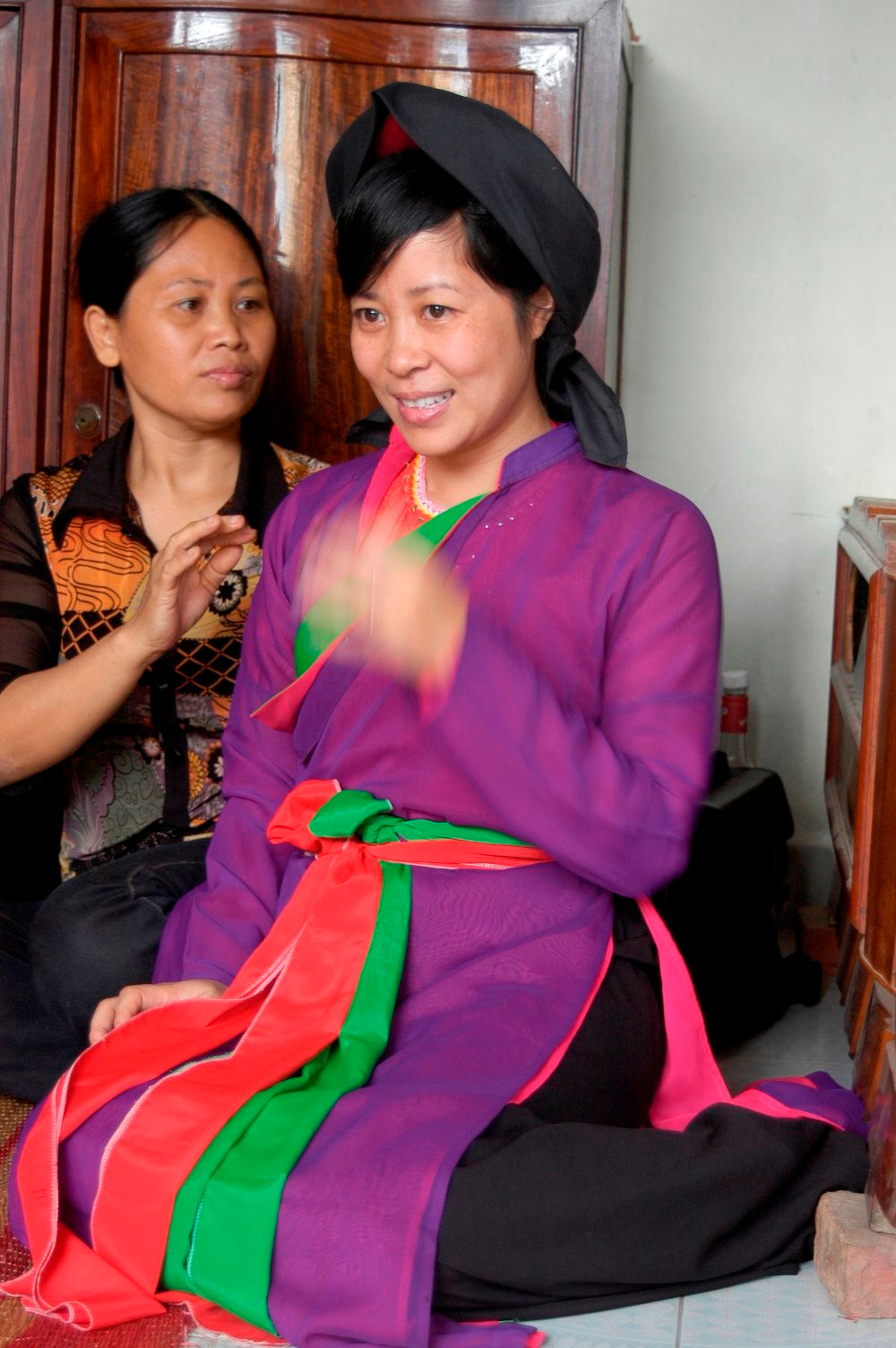
Quan Ho folk songs are the heartfelt expressions echoing from the depths of humanity, formed over a long period and deeply ingrained in the folk spiritual life, developing into many original Quan Ho villages in the Kinh Bac cultural region, formerly including Bac Ninh and Bac Giang. In addition, some Quan Ho melodies have also spread to places in Hanoi , Hung Yen, Lang Son, etc., following the profound flow of emotions, so that each person, upon encountering a melody, wishes to cherish it deep within their heart.
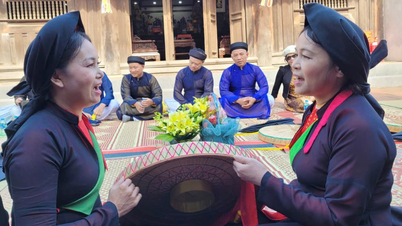
I remember once Mr. Tran Minh organized a trip for our group, including poets Do Trung Lai, Chu Hong Tien, Truong Xuan Thien, and many other friends, to visit Diem village, home to the Temple of Queen Mother Thuy, the founder of Quan Ho folk singing. That day, a family of artisans from Diem village welcomed us with a performance of traditional Quan Ho folk songs, followed by a feast featuring the characteristic crab and rice cake soup – a traditional Quan Ho dish served to guests.
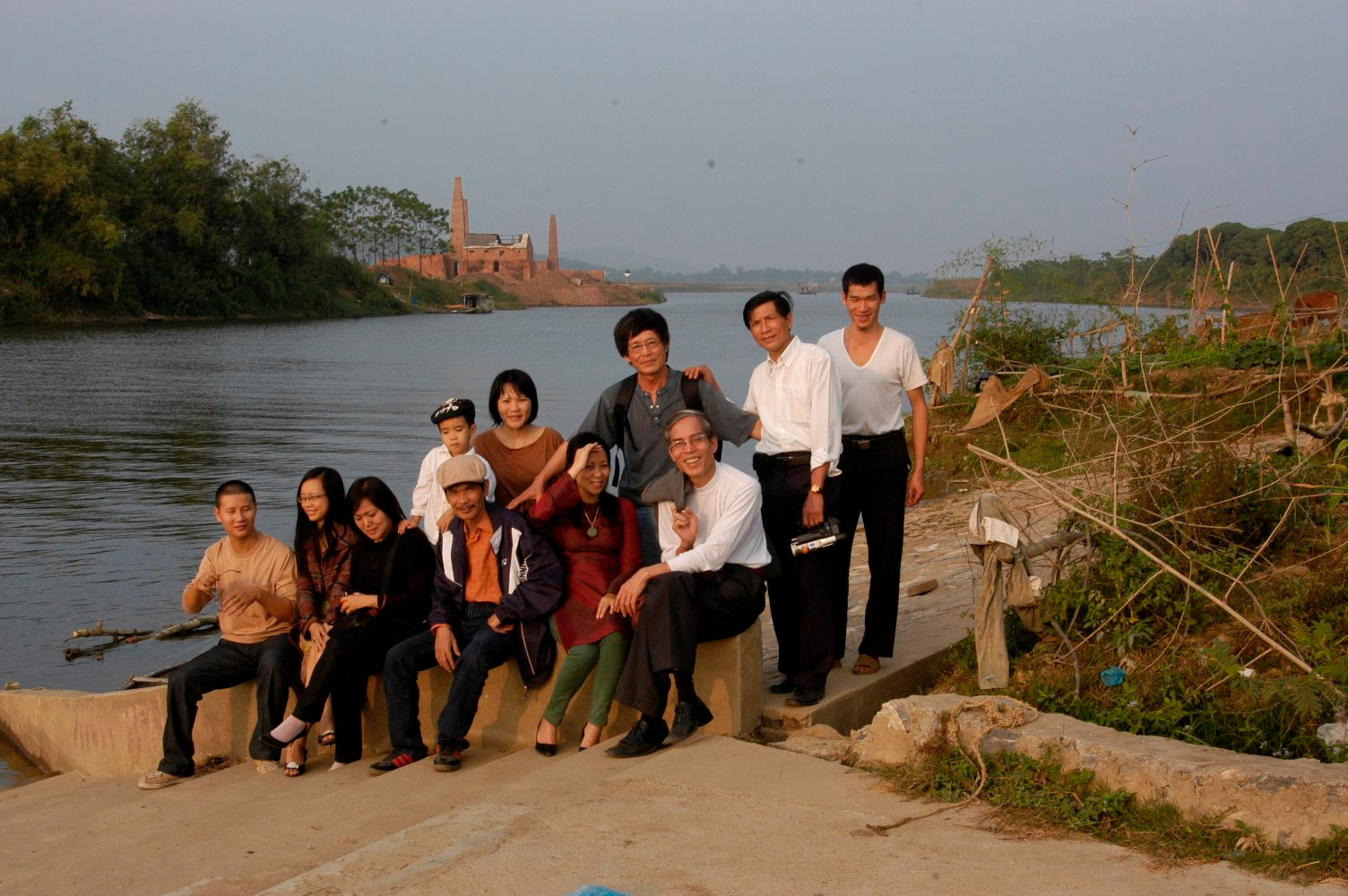
That day, Mr. Tran Minh sang many songs with the Quan Ho folk artists, but as always, everyone was most moved when he sang "Living in the Forest." The song has melancholic and poignant lyrics about the fate of a woman who has gone astray in life, wandering alone to raise her child in a remote, deep forest and mountain area.
Whenever I come across an old Quan Ho folk song, I have a habit of looking up the lyrics to read and understand them first. "Living in the forest" is an expression of a person's plight:
"We lived in the forest for three or four years."
Birds chirp, monkeys howl, a mixture of joy and worry.
I accidentally stepped onto the edge of the boat.
A deep river cannot be reached with a short pole.
A gentle breeze blows in the evening.
A flock of white swallows flutters over the mountains.
On a frosty winter night, the monkey still lingers, pleading to lull its child to sleep.
I've tried many times to find the origin of the song "Living in the Forest," but I've only found the lyrics, the song itself, and recordings. I remember Mr. Tran Minh saying several times that the song "Living in the Forest" is from Bac Giang, not Bac Ninh . I suspect he's from Bac Giang and, out of love for his homeland, attributed it to his hometown. But he might be right, because Quan Ho folk songs were originally folk songs of the Kinh Bac region, encompassing present-day Bac Ninh and Bac Giang. Quan Ho villages exist in both Bac Giang and Bac Ninh, as well as in several neighboring provinces. A 2016 statistic showed that there were 67 Quan Ho villages nationwide on the preservation list, including 23 in Bac Giang province (the most in Viet Yen district with 19 villages) and 44 in Bac Ninh province.
But the most interesting thing when I was searching for the origins of the song "Living in the Forest" was that I heard two songs with the same melody. Actually, I couldn't tell which one came first and which one was the counter-verse. And here are the lyrics of the song "Living in the Boat":
"We lived on the boat for three or four years."
The deep river steers a vast riverside region.
The water flows in two streams.
Heaven is so skillful in weaving such complicated threads of fate.
The complexities of love's intertwined threads
Good people often betray each other's trust.
The river is deep, with countless turbulent waves.
A white swallow flies into paradise.
"Remembering and longing for each other, we'll meet again in the afterlife - our destiny intertwined like bamboo and plum blossoms."
The verses of the poem "Living on a Boat" also portray the lives of those who are adrift and wandering:
"We lived on the boat for three or four years."
Drifting aimlessly on the water, where are you going?
The water is a deep, clear blue.
"The waves crash against the bridge, teasing and mocking..."
I read the poems, listened to the songs over and over again, on a spring night that felt as cold as winter, imagining the profound sadness in the eyes of the young men and women, singing until dawn, unwilling to leave, on those distant winter nights in the frigid North…
“Living forever, forever in the forest, for three, four, five years / Living forever, forever in the forest, in that place in the forest / Birds chirp, monkeys sing, half happy, half sad, half worried, my foot slipped, my foot fell, I stepped down into the river… / The river is deep, the pole is short, it is difficult to find, but the wind blows gently in the evening…”
And then the response, "Living in a boat," was uttered with a mournful lament:
“…Oh, you, you are such a good person, how could you be so heartless, oh ...
Quan Ho folk songs, some believe, originated in the 11th century, others in the 17th century. In any case, both periods are very far removed from our time, so they are considered ancient folk songs. Similarly, regarding the song "Living in the Forest," my friend Tran Minh, although he insisted it was from Bac Giang, not Bac Ninh, I think, whether it's from Bac Giang or Bac Ninh, isn't that important. "Living in the Forest"—a beautiful song in the treasury of ancient Quan Ho folk songs—is enough.
I'm not from the Quan Ho region, but I've always felt a deep affection and appreciation for those melodies, so full of meaning and emotion. These are the heartfelt expressions of countless emotions, born from generations of people bound together by profound human connection. They have silently gathered their own unique wisdom and essence, blending it into the rich tapestry of folk culture to create the distinctive "words, manners, and way of life" of the Quan Ho people. This legacy, through centuries of change, remains poignant and deeply moving, captivating us, evoking memories, and fostering affection…
Source





















































































Comment (0)