


In the final days of the Year of the Rabbit, women in the coastal villages of Cam Xuyen ( Ha Tinh province ) are busy harvesting oysters and collecting conch shells on the mudflats and rocky outcrops. They tirelessly search for "bounties from the sea" to have a more prosperous and warm Tet holiday.
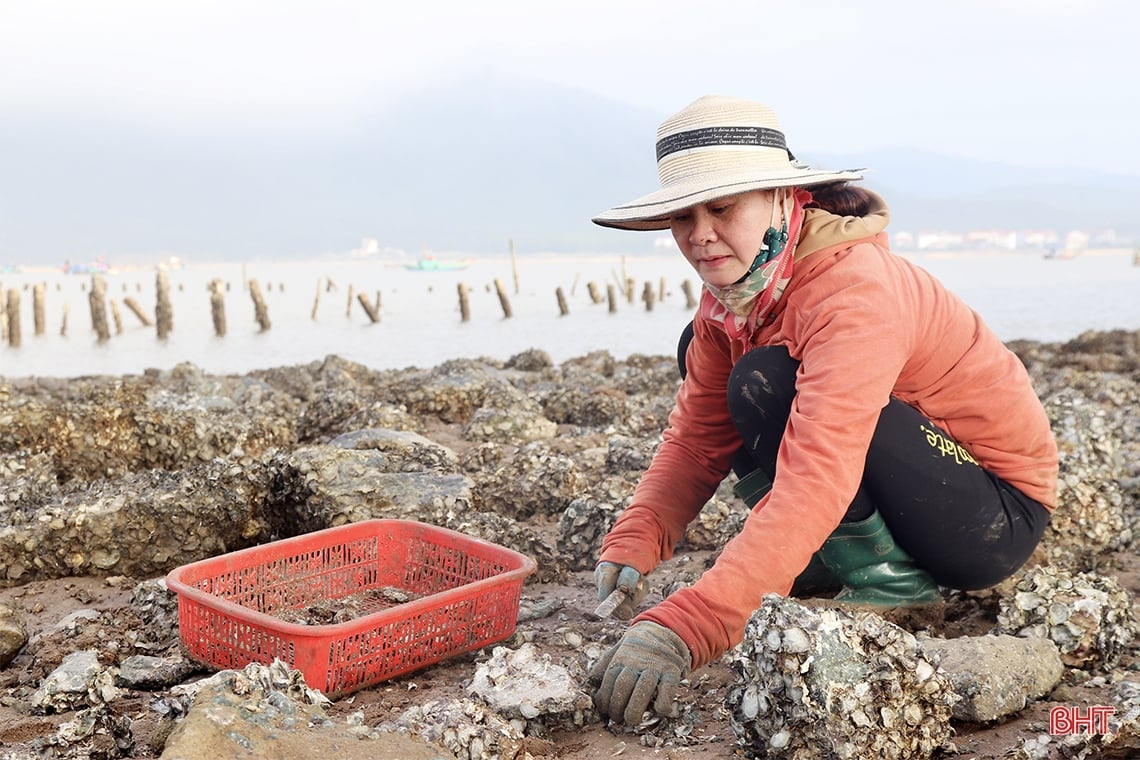
Around 2 PM, when the tide recedes, the women of Cam Nhuong and Cam Linh fishing villages (Cam Xuyen district) diligently make their way along the rocky and mudflats around the base of Cua Nhuong bridge to collect oysters and rake for snails. Although this work is arduous, it provides a decent income, so everyone works tirelessly, especially during these last days of the lunar year.
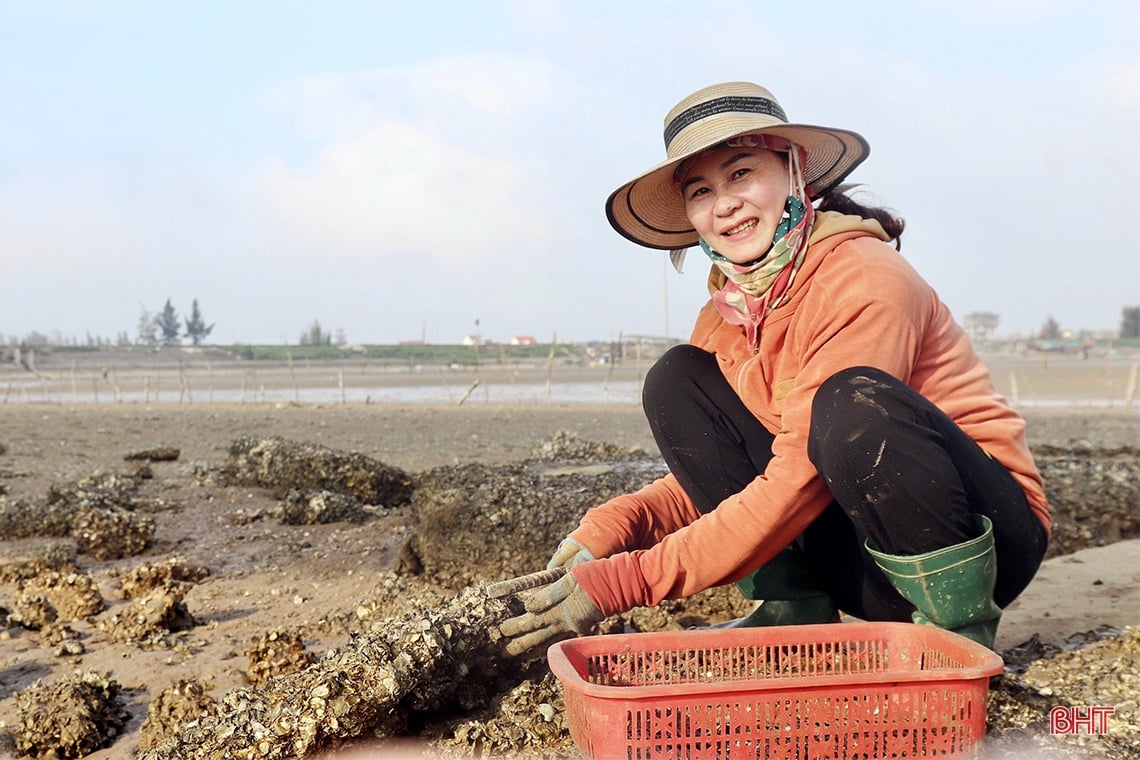
Ms. Nguyen Thi Lien (born in 1975, residing in Lien Thanh village, Cam Nhuong commune) shared: "The work of chiseling rocks and extracting oysters lasts all year round, however, it's usually busier for us at the end of the year. Because it's the time leading up to Tet (Lunar New Year), everyone wants to earn more income, so we work harder, going to work earlier and coming home later than usual to harvest more 'bounty from the sea'."
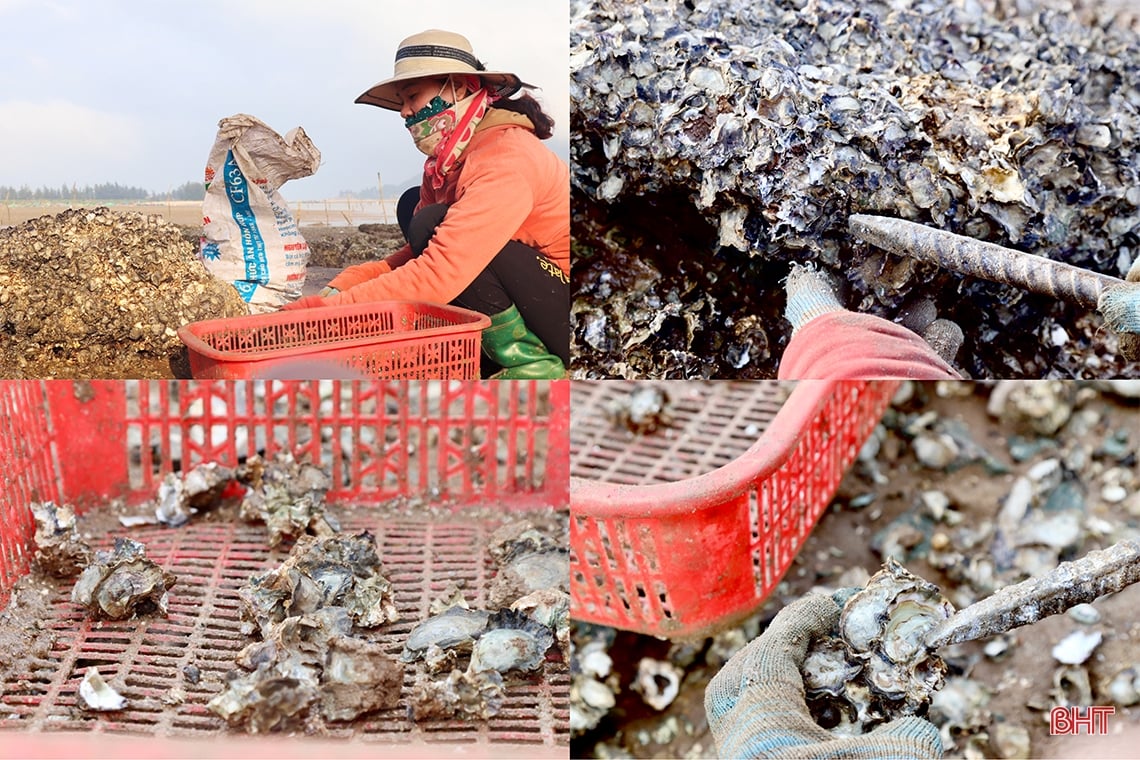
According to Ms. Lien, the area where she lives has no agricultural land for cultivation, and the economy depends on the sea for livelihood. Men go fishing at sea, while women, in addition to selling fish at the market, also carry tools to collect snails, pry open oysters, and catch seafood... to earn extra income.
Ms. Lien excitedly said: "After more than 4 hours of diligently working on the rocks, I harvested over 20 kg of rock oysters, earning more than 250,000 VND. Today's hard work provides me with extra income to cover expenses during Tet. Hopefully, the weather will be favorable in the coming days so that we coastal people can harvest more oysters and snails."
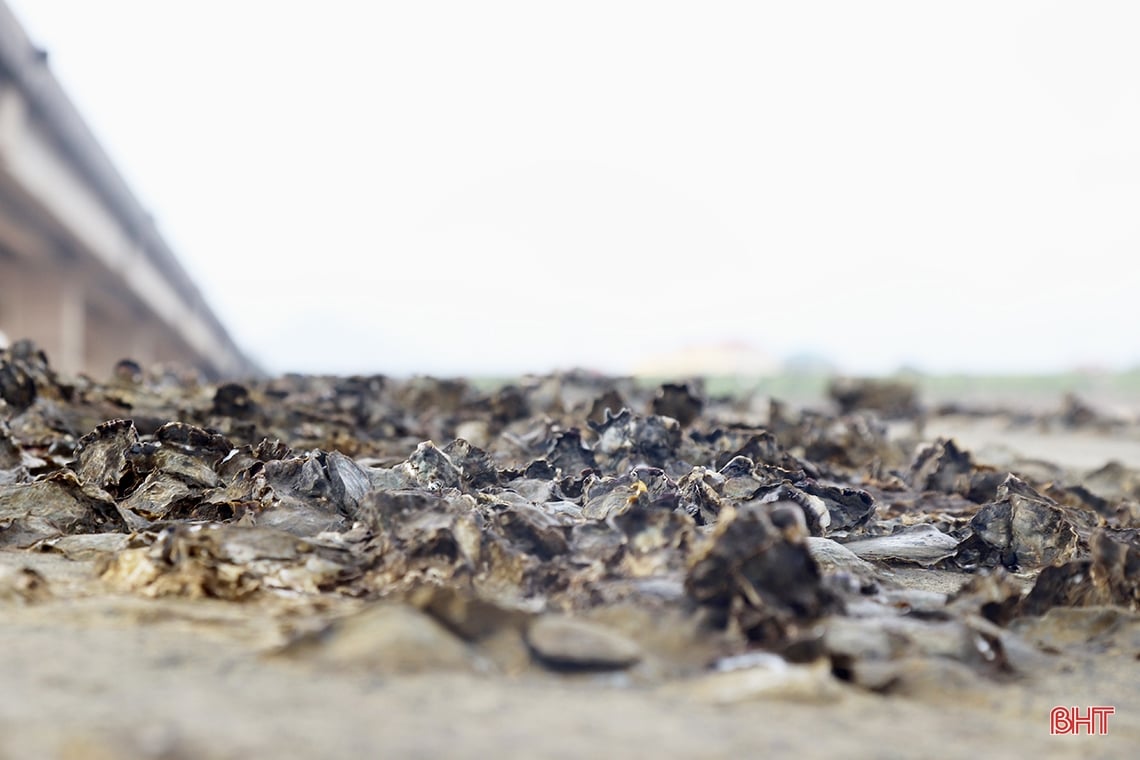
Oysters usually cling to rocky outcrops and bridge supports. When the tide recedes, coastal women in Cam Xuyen gather at the foot of the Cua Nhuong bridge to harvest oysters.
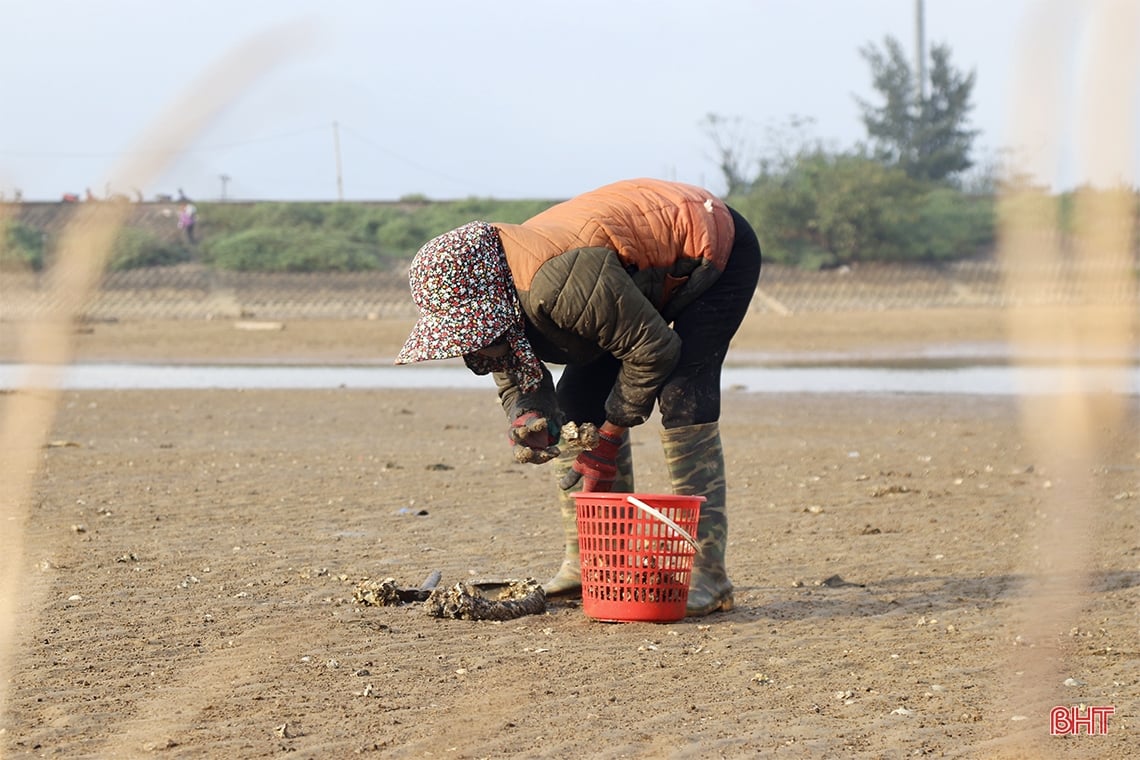
Not far away, Mrs. Nguyen Thi Bang (born in 1960, residing in Hamlet 2, Cam Linh Commune) was also prying oysters off the rocks scattered on the sand. Each time an oyster popped off the rock, Mrs. Bang felt an indescribable joy. For nearly 20 years, through freezing winters and scorching sun, Mrs. Bang has persevered in this profession to earn a living.
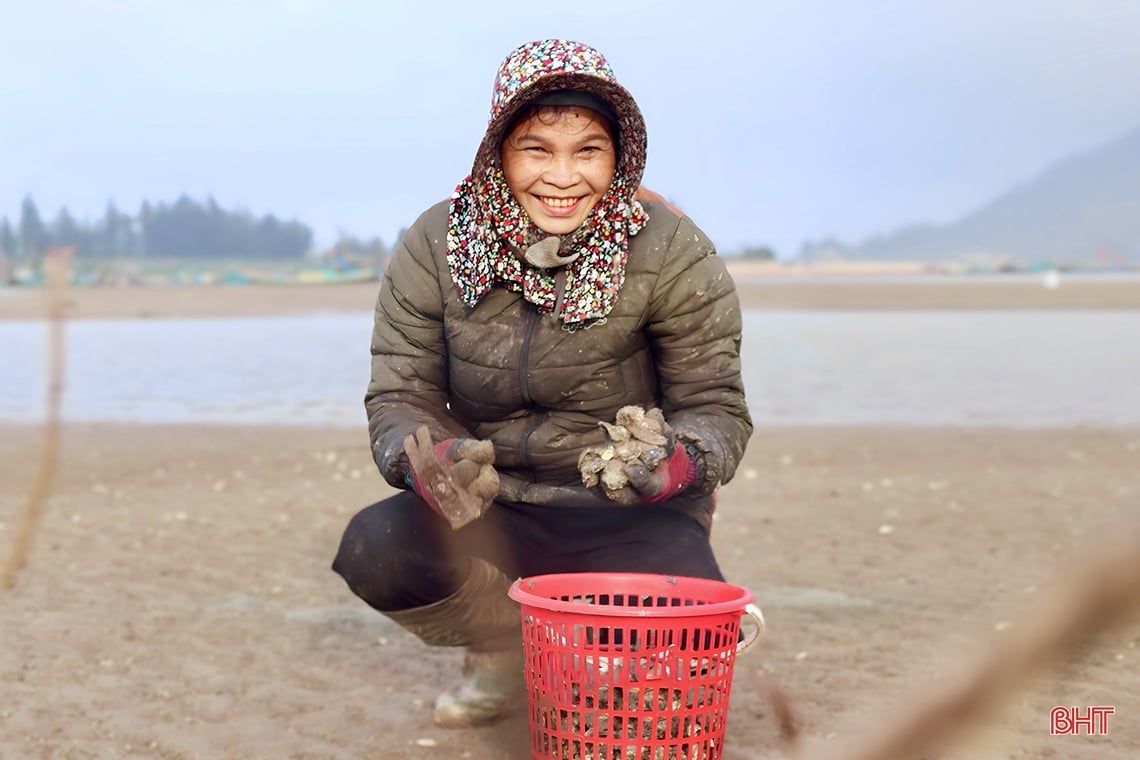
Being elderly, coupled with the cold and dry weather at the end of the year, makes Mrs. Bang's work even more arduous. Mrs. Bang confided: "Our lives are tied to the sea, so even in rain and cold, we don't give up our work, especially during Tet (Lunar New Year). Thanks to this job, I earn an average of 100,000 to 200,000 VND per day, enough to raise and educate my children."
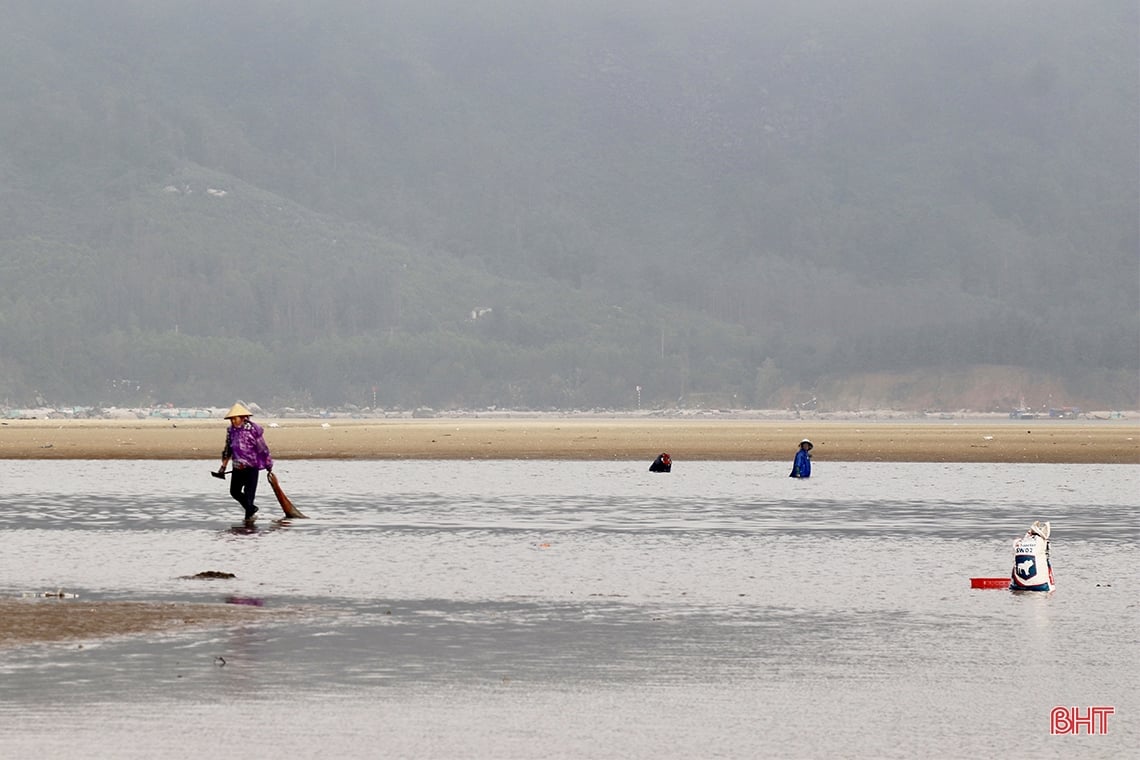
Besides harvesting oysters, many women in the coastal area of Cam Xuyen also go together to collect conch shells. This job requires good health because it involves a lot of moving around, pulling heavy loads, and enduring harsh weather conditions for extended periods.
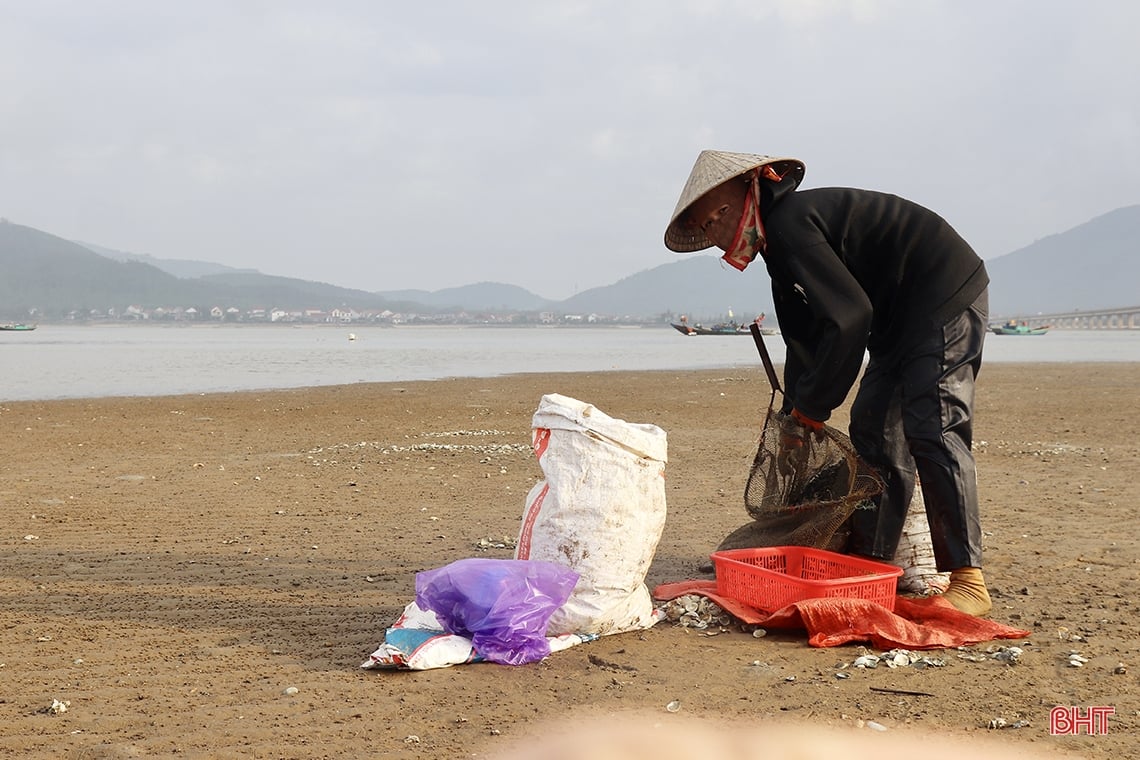
Ms. Hoang Thi Tuyen (Xuan Bac village, Cam Nhuong commune) shared: "The job of collecting iron snails usually follows the tide; we go whenever the tide recedes. In winter it's freezing cold, in summer it's scorching hot. Sometimes I want to rest, but if I don't work, my family of five won't know what to rely on. Moreover, Tet (Lunar New Year) is approaching, so we all encourage each other to try our best to have a warmer Tet."
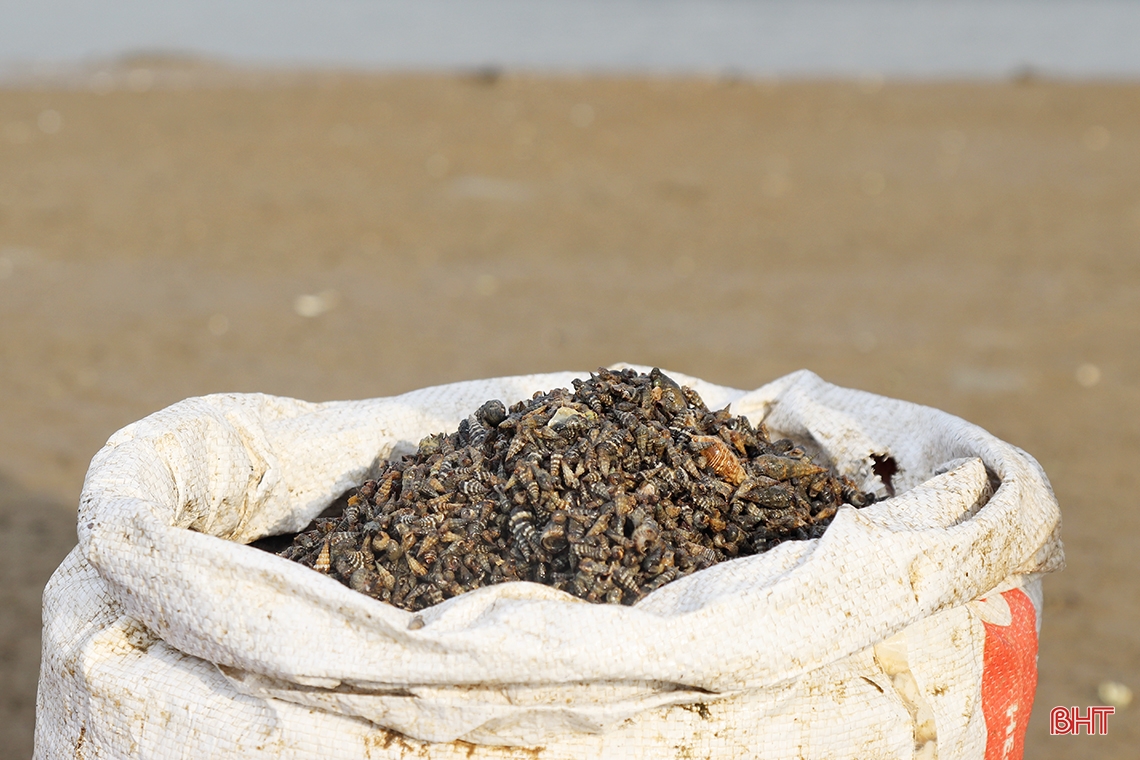
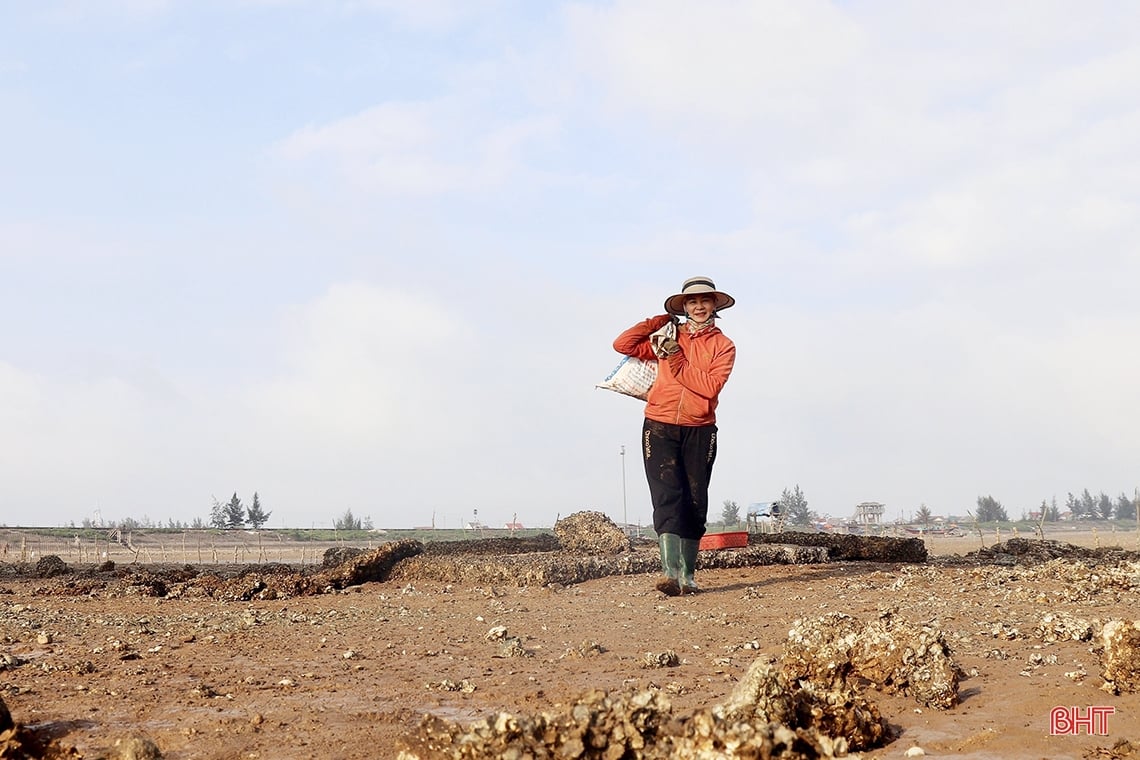
After an afternoon spent wading in the water collecting snails, Ms. Tuyen's reward was sacks full of iron snails. Ms. Tuyen said: "The weather has been favorable these past few days, so I've been collecting 50-60 kg of iron snails every day. These snails are bought by shrimp farmers to be ground into a powder and used as shrimp feed, at a price of 4,000 VND per kg."
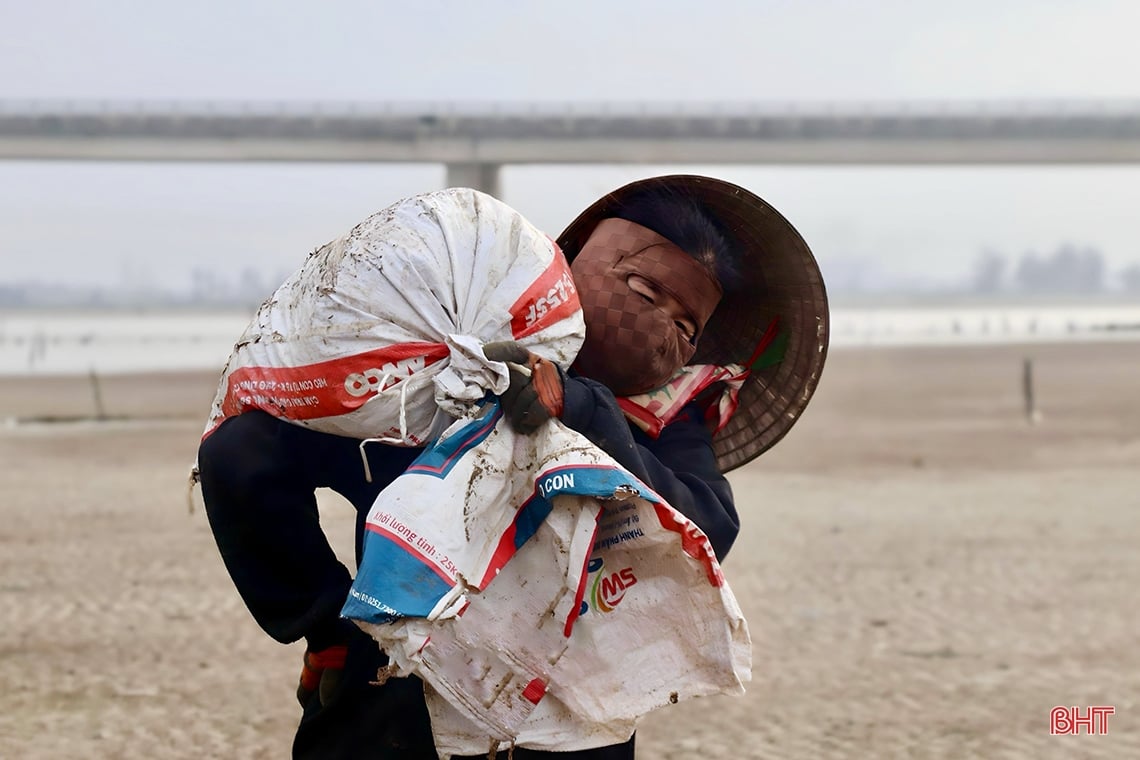
Like other laborers, in the days leading up to Tet (Lunar New Year), women in the coastal area of Cam Xuyen are busy earning a living. For them, baskets of oysters, snails, and other seafood are the motivation to strive for a better life. It is for this reason that the people here always hope for favorable weather and an abundant harvest from the sea so that their lives will be less arduous.
Van Chung
Source
![[Image] Fifth meeting of the Steering Committee for National Projects in the Railway Sector](/_next/image?url=https%3A%2F%2Fvphoto.vietnam.vn%2Fthumb%2F1200x675%2Fvietnam%2Fresource%2FIMAGE%2F2026%2F01%2F06%2F1767712857541_ndo_br_dsc-0581-jpg.webp&w=3840&q=75)
![[Photo] Prime Minister Pham Minh Chinh attends the Conference on the Implementation of Tasks for the Finance Sector in 2026](/_next/image?url=https%3A%2F%2Fvphoto.vietnam.vn%2Fthumb%2F1200x675%2Fvietnam%2Fresource%2FIMAGE%2F2026%2F01%2F06%2F1767699638245_ndo_br_dsc-0196-jpg.webp&w=3840&q=75)

![[Photo] Prime Minister Pham Minh Chinh receives Canadian Minister of International Development Randeep Sarai](/_next/image?url=https%3A%2F%2Fvphoto.vietnam.vn%2Fthumb%2F1200x675%2Fvietnam%2Fresource%2FIMAGE%2F2026%2F01%2F06%2F1767708661052_image123-3433-jpg.webp&w=3840&q=75)
![[Photo] Standing Committee member of the Party Central Committee Tran Cam Tu inspects preparations for the 14th Party Congress.](/_next/image?url=https%3A%2F%2Fvphoto.vietnam.vn%2Fthumb%2F1200x675%2Fvietnam%2Fresource%2FIMAGE%2F2026%2F01%2F06%2F1767695749033_image1122-1262-jpg.webp&w=3840&q=75)





















































Comment (0)