


People with diabetes may not need insulin or any other medication. For the first time, a report by a team of Chinese scientists and clinicians has raised hopes for those battling the disease.
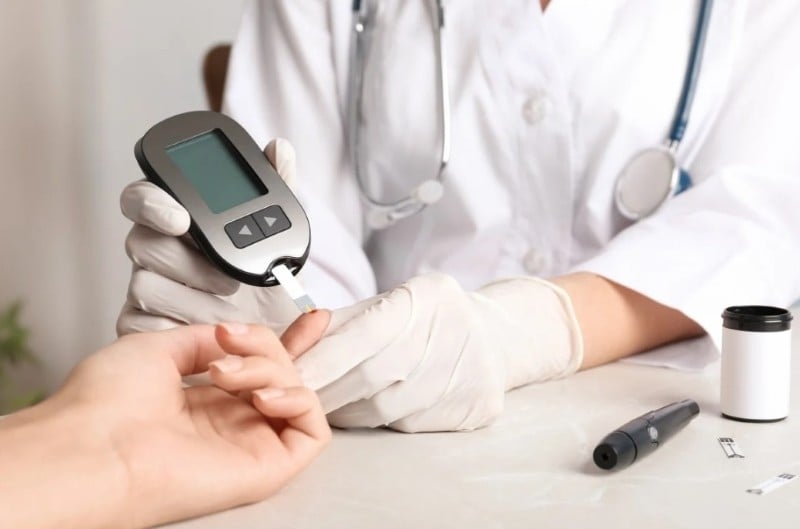 |
| Regardless of the type of diabetes, failing to maintain normal blood sugar levels over time can lead to serious side effects, including heart disease, vision loss, and kidney disease. Photo: Shutterstock |
The 59-year-old patient had type 2 diabetes for 25 years and was at risk of serious complications. He received a kidney transplant in 2017, but had lost most of the function of his pancreatic islets that help control his blood sugar and required multiple insulin injections daily.
In July 2021, this patient received an improved cell transplant. Surprisingly, 11 weeks later, he no longer needed supplemental insulin and oral medication to control his blood sugar, and stopped using them completely a year later.
According to Teo Yin Hao, a leading researcher at Shanghai Changzheng Hospital, subsequent examinations showed that the patient's pancreatic islet function had effectively recovered, and the patient has now been completely insulin-free for 33 months.
This medical breakthrough, achieved by a team of doctors and researchers from institutions including Shanghai Changzheng Hospital, the Center of Excellence in Molecular Cell Science of the Chinese Academy of Sciences, and Shanghai-based Renji Hospital, was published in the journal Cell Discovery on April 30th.
According to Timothy Kieffer, a professor in the Department of Physiology and Cell Biology at the University of British Columbia in Canada : "I think this research represents a significant step forward in the field of cell therapy for diabetes."
Diabetes is a chronic condition that affects how the body converts food into energy. What is consumed is broken down into glucose (a simple sugar) and released into the bloodstream. Insulin is essential for regulating blood sugar levels. Diabetes is caused by the body not producing enough insulin or not using the insulin that is produced effectively.
There are several types of diabetes, with type 2 being the most common, affecting nearly 90% of people with the disease. The causes are largely related to diet and develop over time.
Regardless of the type of diabetes, failing to maintain normal blood sugar levels over time can lead to serious side effects, including heart disease, vision loss, and kidney disease.
According to the U.S. Centers for Disease Control and Prevention, "there is no cure for diabetes."
Along with weight loss, healthy eating, and medication, insulin is currently the primary treatment for some people, but this requires regular injections and monitoring.
Scientists around the world are researching islet transplantation as a promising alternative, primarily by creating islet-like cells from human stem cell cultures. Now, after more than a decade of work, a team of Chinese scientists has taken a step closer.
Yin said the research team used and programmed the patients' own peripheral blood mononuclear cells, which were then transformed into "seed cells" and used to regenerate pancreatic islet tissue in an artificial environment.
While preclinical data from Kieffer's group supported the use of stem cell-derived islets to treat type 2 diabetes, the report by Yin and colleagues, to Kieffer's knowledge, represents "the first evidence in humans."
Yin said the breakthrough is another step forward in the relatively new field of regenerative medicine – where the body's regenerative capabilities are harnessed to treat disease. “Our technology has matured and it has pushed the boundaries in the field of regenerative medicine to treat diabetes.”
Globally, China has the highest number of people with diabetes. According to the International Diabetes Federation, the country currently has 140 million people with diabetes, of whom approximately 40 million are dependent on insulin injections for life.
According to Huang Yanzhong, a senior fellow on global health at the Council on Foreign Relations, the rate of diabetes in China is disproportionately high. In a paper last year, he pointed out that while China accounts for 17.7% of the world's population, the number of people with diabetes in the country accounts for a staggering quarter of the global total, placing a huge healthcare burden on the government.
If this cell therapy ultimately proves effective, Kieffer said, “it could free patients from the burden of chronic medication, improve their health and quality of life, and reduce healthcare costs.”
But to achieve that, he added, studies on more patients are needed based on the findings of this Chinese study.
Source: https://baoquocte.vn/lieu-phap-te-bao-dot-pha-moi-trong-dieu-tri-benh-tieu-duong-272767.html

![[Image] A dreamy "livable city" under pink clouds](https://vphoto.vietnam.vn/thumb/1200x675/vietnam/resource/IMAGE/2026/02/24/1771930060937_tp4-jpg.webp)

![[Photo] White pear blossoms bloom across the border of Pho Bang](https://vphoto.vietnam.vn/thumb/1200x675/vietnam/resource/IMAGE/2026/02/24/1771927665653_a8-8280-jpg.webp)







![[E-Magazine]: A package of love, wrapped in a greeting card](https://vphoto.vietnam.vn/thumb/402x226/vietnam/resource/IMAGE/2026/01/02/1767360596935_e-magazine-goi-w1200t0-di2600d199d5163304t11920l1-kyt-023.webp)



![[E-Magazine]: The season closes the chapter on sources of love](https://vphoto.vietnam.vn/thumb/402x226/vietnam/resource/IMAGE/2025/12/12/1765547070855_e-magazine-mua-w1200t0-di2549d199d5153818t11920l1-mkl-014.webp)
















![[Photo] National Assembly Chairman Tran Thanh Man working with the National Assembly Committees](https://vphoto.vietnam.vn/thumb/1200x675/vietnam/resource/IMAGE/2026/02/24/1771915679930_bnd-7209-2157-jpg.webp)



































































Comment (0)