To maximize the effectiveness of the North-South high-speed railway project, according to National Assembly deputies, in addition to special mechanisms, attention should be paid to technology and human resources.
It is necessary to apply specific mechanisms and policies.
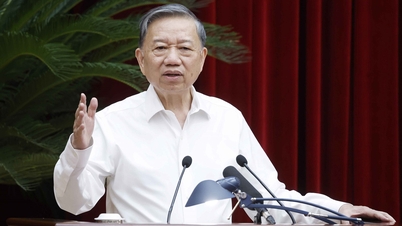
During the review of the investment policy for the North-South high-speed railway project at the 8th session of the 15th National Assembly, the Chairman of the Economic Committee, Vu Hong Thanh, stated that the project plays an important role, has long-term strategic significance, and will have a profound and wide-ranging impact on all aspects of Vietnam's socio-economic development. It is also of a very large scale, requiring complex technology and engineering, and is being implemented for the first time in Vietnam.
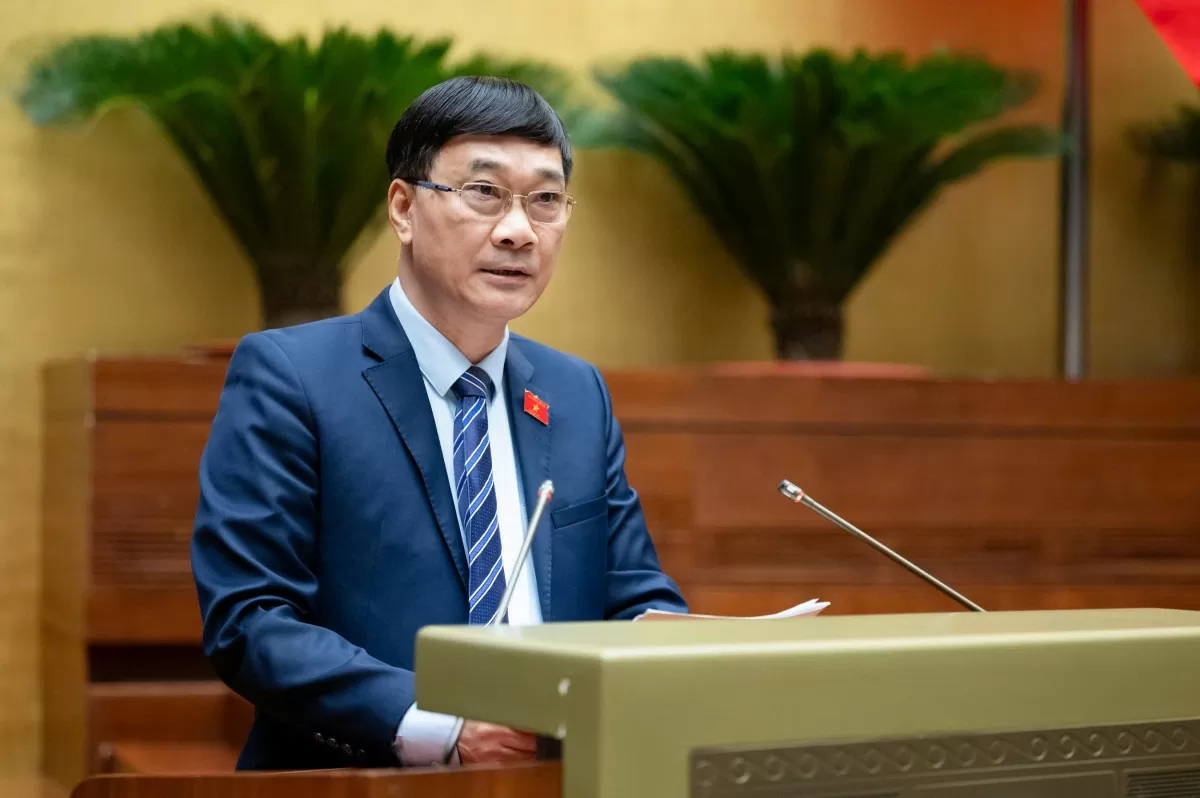 |
| Chairman of the Economic Committee Vu Hong Thanh presents the report on the review of the investment policy for the high-speed railway project on the North-South axis (Photo: National Assembly). |
"Therefore, to ensure the feasibility and effectiveness of the Project, allowing the application of certain specific mechanisms and policies is essential," Mr. Vu Hong Thanh emphasized.
According to Mr. Vu Hong Thanh, the Government has proposed 19 groups of special mechanisms and policies that differ from current legal regulations. Therefore, it is suggested that a more thorough and comprehensive impact assessment be conducted to develop appropriate solutions to mitigate and overcome negative impacts, and to report and seek opinions from competent authorities on the content of these special mechanisms and policies.
Essentially, the proposed mechanisms and policies are necessary, some of which have already been approved by the National Assembly in the past. However, it is suggested that these mechanisms and policies be further reviewed and revised to ensure their suitability and effectiveness.
Specifically, the development of medium-term public investment plans for each period is carried out according to the regulations of the Law on Public Investment. Therefore, determining the amount of capital allocated for each medium-term period of a project needs to be calculated, clearly defined, and included within the overall medium-term public investment plan, as well as within the national 5-year financial plan and the public debt borrowing and repayment plan for each period.
Therefore, some opinions suggest that the allocation of medium-term capital for the project and the adjustment of the medium-term public investment plan should be submitted to the National Assembly for consideration and decision. Regarding the adjustment of the annual public investment plan, the Economic Committee believes that there should be a specific policy allowing the Prime Minister to decide on the adjustment of the annual Central Government budget capital plan among ministries, central agencies, and localities to allocate capital for the project.
Furthermore, according to the Law on Public Investment, determining the source of funding and the ability to balance capital is one of the important conditions in the process of appraising and deciding on the investment policy for a public investment project.
The project is expected to require a very large amount of capital, therefore it needs to be carefully and cautiously considered to ensure the balance of the country's overall resources as well as to ensure the feasibility of funding for the project's implementation, while also ensuring compliance with the provisions of Clause 7, Article 8 of Regulation No. 189-QĐ/TW of the Politburo.
Therefore, some opinions suggest adhering to the regulations of the Law on Public Investment regarding the assessment of funding sources and the ability to balance capital. If the Government provides a clearer, more specific, and highly feasible explanation of the issues mentioned above, and this is approved by the competent authority, then consideration and decision may be made upon the consensus of the National Assembly.
Furthermore, due to the project's scale and complexity, adjustments to the investment policy, the addition of specific mechanisms and policies, and especially those with potentially significant impacts, require consideration and decision by the National Assembly. However, to ensure the project's urgency, it is proposed that the National Assembly consider authorizing the Standing Committee of the National Assembly to consider and decide on matters within the National Assembly's jurisdiction during periods when the National Assembly is not in session, and to report to the National Assembly at the nearest session.
According to Mr. Vu Hong Thanh, the preliminary total investment for the project is approximately VND 1,713,548 billion (approximately USD 67.34 billion). Compared to the total medium-term investment capital from the central government budget, the preliminary total investment for the project exceeds (by 114%) the total medium-term public investment capital from the central government budget for the 2021-2025 period and is equivalent to 59.7% of the total medium-term public investment capital from the state budget for the 2021-2025 period. Therefore, careful study and consideration are needed.
Specifically, regarding the 20% limit on the total planned medium-term public investment capital from the previous period, according to the attached appendix, the total expenditure for the years from 2026 to 2030 is approximately VND 733,000 billion, equivalent to 25.5% of the total medium-term public investment capital from the state budget for the 2021-2025 period and 49% of the total medium-term public investment capital from the central budget for the 2021-2025 period. Therefore, it does not comply with the provisions of the Law on Public Investment.
"This matter needs to be reported to the National Assembly for thorough consideration and discussion regarding the application of specific and special mechanisms and policies that differ from the provisions of Clause 2, Article 89 of the 2019 Law on Public Investment to ensure a legal basis during implementation; and to ensure compliance with current laws and regulations, including Regulation No. 189-QĐ/TW of the Politburo on controlling power, preventing and combating corruption and negative practices in the management and use of public finances and assets," Mr. Vu Hong Thanh stated.
 |
| Representative Ma Thi Thuy, Delegation of National Assembly Deputies from Tuyen Quang Province |
Contributing her opinion at the discussion session on the investment policy for the North-South high-speed railway project, delegate Ma Thi Thuy from Tuyen Quang province expressed strong agreement with the investment policy for the North-South high-speed railway project. Building the North-South high-speed railway is a long-held aspiration of voters and the people, and the project will have a tremendous impact on the socio-economic development of the entire country.
To maximize the project's effectiveness, delegates suggested that the Government pay attention to assessing the impact on public debt safety indicators when implementing other nationally important projects simultaneously during the 2025-2035 period. At the same time, they emphasized ensuring funding and minimizing the need for frequent adjustments to the project's policies, as has been the case with some other nationally important projects.
"Regarding the specific policies proposed for the project, the high-speed railway is a key, strategic project, and the regulation of specific mechanisms and policies for its implementation is appropriate, contributing to accelerating progress and improving the efficiency of capital utilization," said delegate Ma Thi Thuy.
However, delegates expressed concerns about the policy on exploiting minerals for common construction materials to serve projects, which stipulates that organizations and individuals exploiting minerals for projects are not required to go through the procedures for obtaining an exploitation license; are not required to prepare an investment project for mineral exploitation; and are not required to prepare an environmental impact assessment report.



According to the delegates, bypassing the mining licensing procedure will lead to a lack of legal basis for controlling the volume and scope of mining, potentially resulting in the exploitation and stockpiling of materials for other purposes, affecting the planning and management of local mineral resources. Furthermore, projects that provide guidance without specific criteria and procedures for evaluation methods, evaluation content, and inspection and monitoring may lead to inconsistencies in implementation across different localities.
Representative Nguyen Truc Anh from the Hanoi delegation stated that urban rail is very important. "I cannot imagine any form of transportation that could replace urban rail within the next 30 years, especially in cities with over 1 million inhabitants," Mr. Truc Anh said.
Therefore, we must localize the process. The Prime Minister or a Deputy Prime Minister must directly oversee and closely link their political careers to this project in order to succeed. In addition, specific pilot mechanisms are needed for this project to be successful.
Delegate Duong Khac Mai from Dak Nong province pointed out that the implementation of urban railway projects has faced many difficulties in recent times, leading to increased costs and extended completion times. This issue is also common in many public investment projects.
Furthermore, the project requires a very large quantity of cement, steel, and sand over a long period, while many highway and construction projects will be simultaneously implemented in the near future. In reality, the implementation of important national projects in the past has shown that, despite the application of specific policies regarding material quarries, the supply of raw materials remains insufficient to meet the construction schedule of the projects.
Based on the above analysis, the delegates suggested that the Government should carefully study and evaluate each specific issue in detail to find effective solutions to overcome these shortcomings and ensure the project is completed according to the planned schedule.
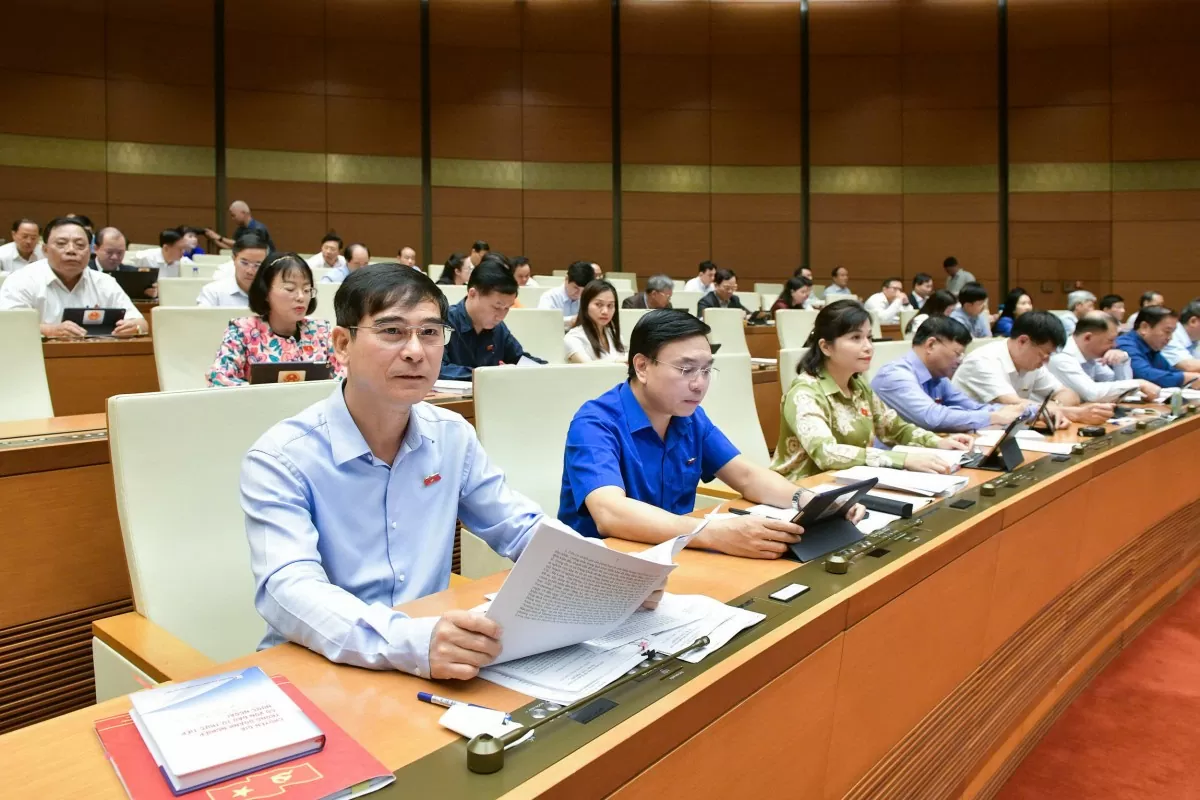 |
| The National Assembly heard the presentation and the verification report on the investment policy for the high-speed railway project on the North-South axis. |
Representative Pham Trong Nghia from Lang Son province informed that the project requires a large amount of land (approximately 10,827 hectares), including about 3,655 hectares of rice paddy land; about 2,567 hectares of forest land; and about 4,605 hectares of other land types as stipulated by land law. Therefore, the project will have significant impacts on the implementation of the National Land Use Plan and needs to be reviewed to ensure appropriate conversion, and the land use indicators in planning at all levels need to be reviewed and adjusted to ensure consistency and uniformity within the national planning system.
Delegates also suggested adding a more thorough assessment of the biological and ecological impacts of the project; developing a plan for reforestation to ensure the forest area meets the national forestry plan; and paying attention to stable livelihoods for people engaged in forestry. In particular, some localities with a large need to convert protective forest land and production forest land require a review and assessment of impacts, reporting on adjustments to land use planning, and focusing on measures to protect and restore forests, prevent natural disasters, and respond to climate change.
The project directly impacts approximately 120,836 people. Therefore, a more thorough assessment of its social and cultural impacts is recommended, especially in areas inhabited by ethnic minorities who rely on agriculture and forestry for their livelihoods. Consequently, research is needed to develop appropriate, stable, and long-term solutions for job creation, vocational retraining, and the preservation of ethnic cultural identity for affected people. Attention should also be paid to families of revolutionary veterans, ethnic minorities in difficult circumstances, and poor and near-poor households in the implementation of compensation, land clearance, and resettlement.
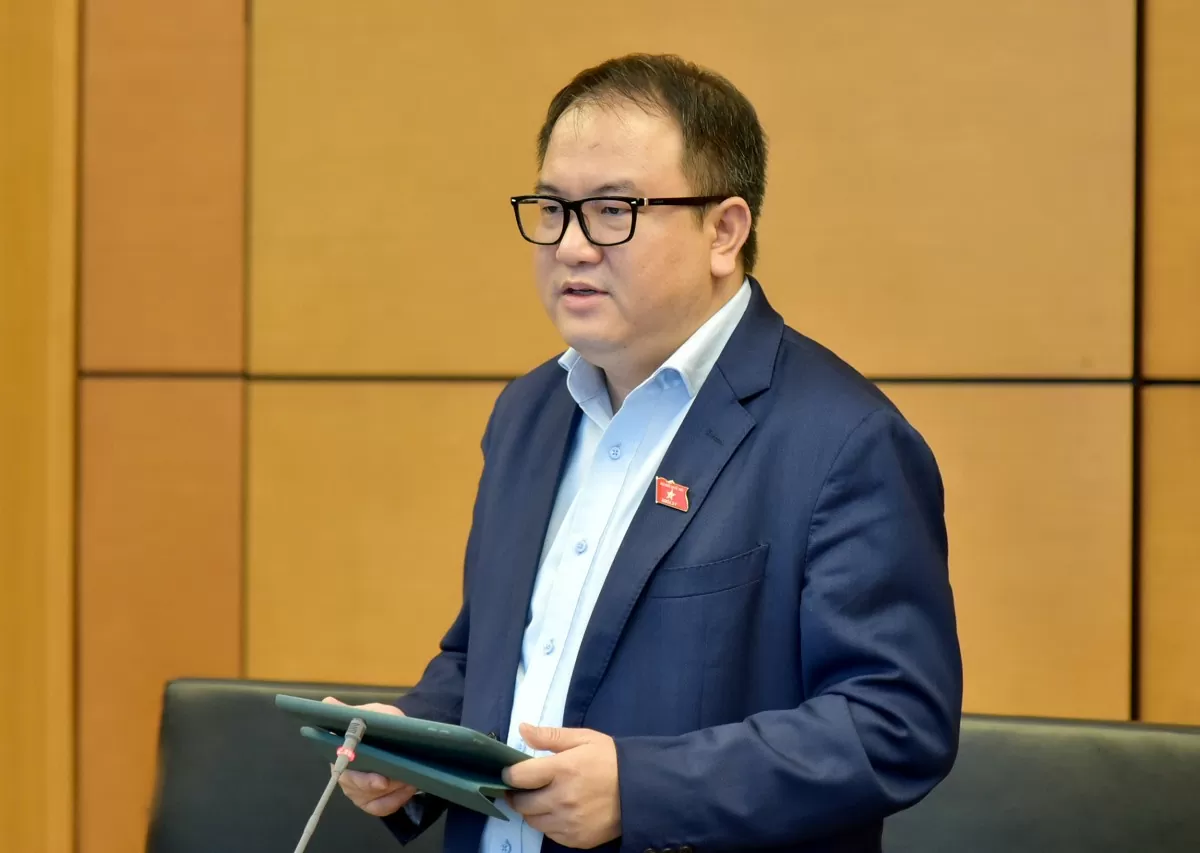 |
| Representative Pham Trong Nghia - Delegation of National Assembly Deputies from Lang Son Province |
With particular attention to human resources, Mr. Pham Trong Nghia shared that the railway industry's workforce is divided into four main sectors: State management; investment in basic railway infrastructure construction; management, operation and maintenance; and research and training. Therefore, thorough and careful preparation is needed to be ready to meet the requirements of the construction, operation, and exploitation of the high-speed railway system.
Global experience shows that countries that both conduct their own research and development (Japan, France, Germany, Italy) and those that receive technology transfer and are progressing towards mastering it (China, South Korea, Spain) all build national human resource development programs very early on to prepare for investment and development of high-speed rail.
"The specific policies must ensure that Vietnamese businesses and workers participate as much as possible in the construction and operation of this project," Mr. Nghia noted.
Solving the technological "problem" and enhancing localization.
Agreeing with the investment policy for the project, delegate Nguyen Truong Giang from Dak Nong province stated that the issue requiring special attention is the investment capital to ensure feasibility. Therefore, the delegate suggested that this aspect should be clarified further in the feasibility report.
Specifically, the analysis should be supplemented to clarify the total medium-term public investment capital from the state budget for the subsequent period; the capacity of state budget resources to meet the needs; the capital allocation plan and the ability to balance state budget funds used for the project... "It is necessary to forecast and anticipate potential difficulties in order to provide timely and appropriate solutions during implementation," the delegate said.
Furthermore, to successfully implement the project, many National Assembly deputies also suggested that attention should be paid to attracting domestic private investment, which would both help businesses have the opportunity to grow stronger and directly receive technology transfer from abroad to maximize localization. This would reduce dependence on foreign countries and mobilize resources from the entire society to alleviate pressure on the state budget.
Delegate Nguyen Manh Hung from Can Tho expressed that preparing human resources, developing operational plans, managing the project effectively, and ensuring a smooth technology transfer process are key factors that will contribute to the success of this large-scale project.
Supporting the Government's decision to submit 19 specific policies to the National Assembly to facilitate the project's implementation, the representative requested the Ministry of Transport to carefully consider and add other specific policies if necessary to ensure the project is implemented in the most effective way.
Furthermore, a comprehensive assessment of potential risks during project implementation, including risks related to capital, human resources, land acquisition, and technology, is crucial. Proactively identifying and implementing timely response measures will minimize difficulties and ensure the project proceeds according to plan.

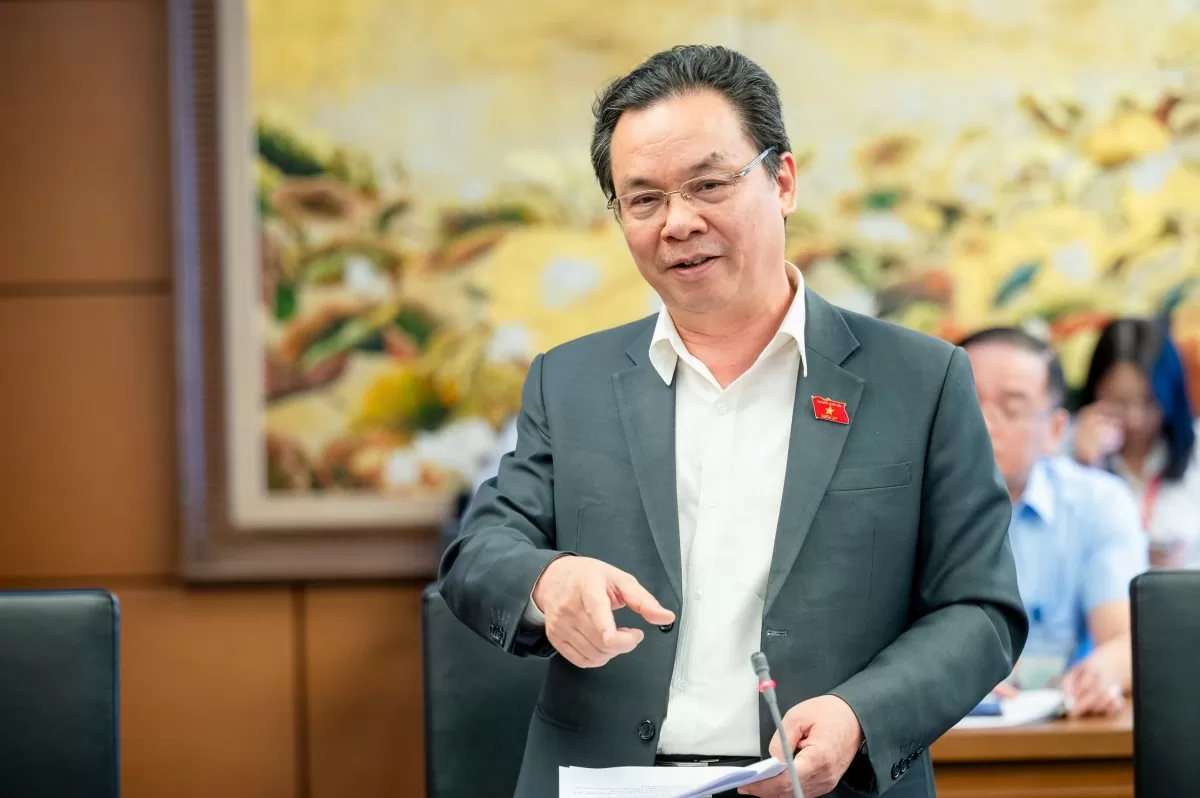 |
| Representative Hoang Van Cuong - Hanoi National Assembly Delegation |
Citing the example of the 500KW circuit 3 power line project, which could be implemented at lightning speed, delegate Hoang Van Cuong from the Hanoi delegation affirmed that this was because domestic investors carried out the project themselves, and we had the right to make the decisions.
Regarding the North-South high-speed railway project, will we be able to complete it as planned? This entirely depends on whether we have control over it. "If we don't have control, it will be very difficult. Because, during the implementation process, there will be all sorts of obstacles. Just a slight obstacle could cause the investor to stop and not proceed, and everything would be different," Mr. Cuong stated.
Therefore, delegates argued that the success or failure of high-speed rail depends on whether we can master the technology and control the investment and construction process.
According to the delegates, although we currently lack the technology to manufacture electric cars, why have electric cars like Vinfast's become products that are not only sold domestically but also exported abroad, competing with major brands?
Therefore, we need to boldly invest in technology transfer. The requirement here is that foreign investors must transfer technology, not just sell products. Next, we should entrust that technology transfer to a strong domestic corporation to represent us in receiving the technology transfer, investing, and producing the products.
Naturally, the domestic corporation cannot act alone; it must call upon each enterprise to participate in a different stage. This way, we will have a core enterprise to serve as the "backbone" for the development of the railway industry and draw other enterprises to participate in the chain.
For example, in the production of railway carriages, a company that manufactures seats could also participate. If it were a foreign company, they would readily import parts from their country, and we wouldn't have a chance. "Vietnam has enough strong corporations with sufficient potential. The question is whether we dare to place orders, whether we dare to entrust the work to them? I believe that when there is a market, there is no reason why domestic corporations shouldn't dare to step forward," the representative pointed out.
| During the group discussion at the 8th Session of the 15th National Assembly, National Assembly deputies unanimously supported the investment plan for the North-South high-speed railway project, based on the political and legal grounds and reasons outlined in Submission No. 767/TTr-CP. They also emphasized that this project is symbolic, strategically significant, and particularly important for economic, political, social, and international integration purposes. However, to ensure progress and feasibility, National Assembly deputies also offered specific suggestions regarding: funding for the project; the socio-economic and financial effectiveness of the project; and specific mechanisms and policies, particularly for project implementation. |
Lesson 4: Expectations to breathe new life into the economy
Source: https://congthuong.vn/bai-3-dai-bieu-quoc-hoi-hien-ke-de-du-an-ve-dich-thanh-cong-359692.html



![[Photo] Prime Minister Le Minh Hung presides over the thematic session on promoting science and technology development and innovation.](https://vphoto.vietnam.vn/thumb/1200x675/vietnam/resource/IMAGE/2026/06/23/1782207872934_ndo_br_dsc-1724-jpg.webp)