

In the chilly weather of the last months of the year, flower-growing villages in the province seem busier than ever with the work of caring for flowers to serve the Tet market. And hidden behind that vibrant beauty are the efforts of generations of people to preserve and nurture this traditional craft.
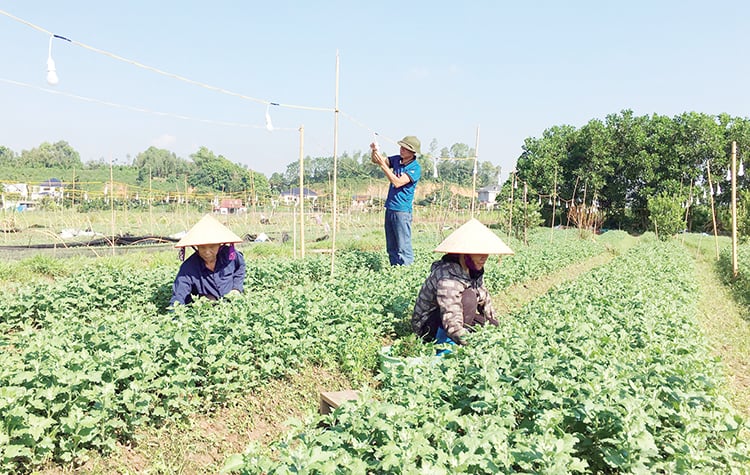
The people of Phuong Vien village, a traditional flower and ornamental plant growing village, are tending to chrysanthemums to prepare for the Lunar New Year.
Beautiful for the world, rich for oneself.
The province has 6 flower-growing villages, including 3 villages specializing in peach blossoms and 3 villages specializing in fresh flowers combined with other ornamental plants, with an average revenue of 4-7 billion VND per village per year. These villages were established about 30-40 years ago, or even longer, thus playing a significant role in the local economic development and becoming a unique cultural feature.
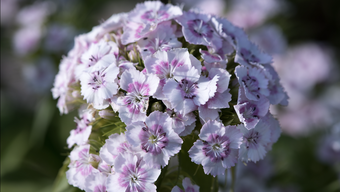
The Phuong Vien flower and ornamental plant village in Tan Phuong commune, Thanh Thuy district, has 20 households growing peach blossoms and 15 households growing fresh flowers, covering an area of over 3 hectares and generating 4 billion VND in revenue annually. Seemingly accustomed to unexpected visits from strangers interested in learning about the village's craft, Mr. Nguyen Xuan Nho, the village head, warmly welcomed guests, his voice filled with emotion and pride as he spoke about the flower cultivation industry, which originated in the 1950s. The pioneering generations initially only cultivated flowers like peonies, roses, and gerberas for their own family's needs and local sales, lacking the resources to sell flowers widely as is the case today. Flower cultivation has shaped, established, and secured a significant place in the lives and livelihoods of the villagers. He slowly calculated: "On average, fresh flowers generate 60 million VND per sao (approximately 1000 square meters) per season, after deducting expenses, we get half of that. The main types of flowers are chrysanthemums, gladioli, and lilies. The planting time is 3.5 to 4 months. Flowers are grown year-round in a rotational system, with some seasons allowing the land to rest, but during the Tet season, from the 15th day of the 12th lunar month to the 15th day of the 1st lunar month, we plant the maximum area because Tet accounts for more than 50% of the revenue. Flower farming has its ups and downs, but so far, people have managed to stick with the profession. Making life beautiful and enriching ourselves is something we are very happy about."
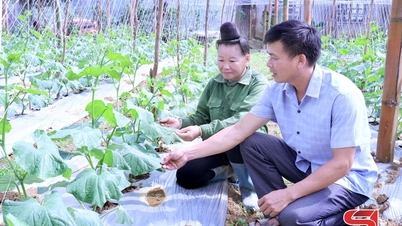
Amidst the flower fields, the stories of the farmers gave us a deeper understanding of their profession and their love for it. Growing flowers is a laborious process, but ensuring they bloom on the right days, weeks, and during the Lunar New Year requires not only experience but also the application of scientific and technical methods in the fields. Gardeners master the season through techniques such as: shading, using lights, pest control, stimulating flowering... especially by monitoring the weather to plant, care for, and harvest at the right time.
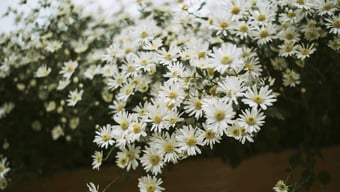
Unlike the long-established Phuong Vien flower village, the flower-growing profession in Thuong village, Tien Du commune, Phu Ninh district, was formed nearly 30 years ago. However, that amount of time has been enough for the villagers to acquire the techniques for planting and caring for flowers, and to understand the characteristics of each species. The village has 32 households growing flowers on an area of about 3 hectares. Previously, besides rice, the main source of income for the villagers was fruit trees and vegetables. Around 1999, the people of Thuong village went to specialized flower-growing areas inside and outside the province to learn experience and techniques in flower cultivation and to buy seedlings to grow. Their calloused, rough hands, previously only accustomed to rice and corn planting, now meticulously care for each flower cluster. From the initial rose variety, the flower structure in Thuong village has now diversified in types; chrysanthemums alone now come in dozens of varieties.
To help us understand the dedication put into flower cultivation, Mr. Nguyen Anh Tai, the head of the village, used an analogy: when the smoke from the kitchen fires dissipates in the morning sun, the flower growers are already out in the fields, and by evening the fields are still brightly lit to stimulate the flowers' growth. During peak season, eating and sleeping with the flowers is commonplace. In years with favorable weather, the flower growers have an easier time, but conversely, harsh weather requires much more effort in caring for the plants. Then there are storms and frost, which also cause farmers anxiety. But his face brightened when he spoke about the achievements of the profession: "Before, every family was struggling, but since we started flower cultivation, life has become much better. Although it's hard work, the income is high, thanks to which our children can get a good education, and our houses are more spacious. For the Tet flower season, we plant the seeds from the beginning of October in the lunar calendar, putting in a lot of effort and looking forward to the harvest at the end of the year."
Hoping the profession will develop.
The story of preserving and passing on traditional crafts remains a constant concern for any craft village amidst urbanization and a market economy. Flower cultivation requires technical expertise, is dependent on weather conditions, and demands a great deal of labor. To thrive, flower-growing villages must also understand the market and discover new varieties to suit customer preferences.
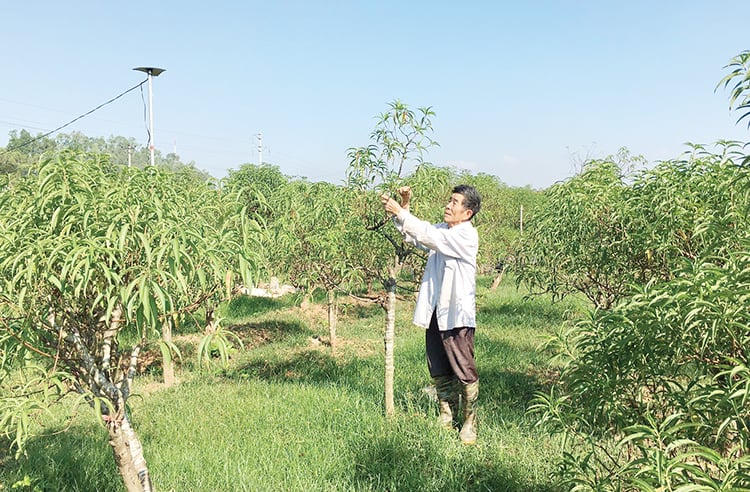
Caring for and shaping peach trees at Phuong Vien flower and ornamental plant growing village.
Leading us down to visit the kumquat orchards, where glimpses of plump, ripe fruit with yellowing skins could be seen amidst the lush green foliage, Mr. Nguyen Xuan Nho, head of the Phuong Vien flower and ornamental plant growing village, enthusiastically said: “Growing fresh flowers provides seasonal income, while peach blossoms and kumquats are harvested during Tet (Lunar New Year). Diversifying the types of plants ensures a stable income, and we hope to preserve the craft. It sounds simple, but growing these varieties requires meticulous research and learning how to prune branches and shape the peach blossoms for Tet; growing large, beautiful kumquats is a whole process. In reality, flower cultivation provides a stable income, and nothing has yet replaced it, so the number of households involved in flower farming remains high. There's a continuation by the younger generation, with some families having two or three generations dedicated to the profession and developing fresh flower businesses. We also hope that this craft will continue to be passed down through generations.”
This year, the impact of typhoon number 3, with prolonged heavy rains causing flooding, has resulted in varying degrees of damage to flower villages, leaving the villagers with more concerns. For households growing fresh flowers, replanting is necessary, sometimes even a third time. Mr. Nguyen Dai Nhan, one of the largest flower growers in Phuong Vien village, cultivates 10 acres of chrysanthemums, 300 kumquat trees, and 1,000 peach trees. Pointing to his newly planted flower field, Mr. Nhan said sadly, “Growing flowers requires skill and adapting to the weather, but during a historic flood like the one in September this year, we had no choice but to accept the consequences. Two acres of chrysanthemums ready for harvest and hundreds of peach trees died, resulting in a loss of approximately 200 million dong. This profession is hard work, but it's my passion, and as the saying goes, 'those who don't give up their profession, the profession won't let them down.'" His eyes lit up with joy as he spoke about his son, who is studying agriculture at university and will likely follow in his footsteps after graduation.
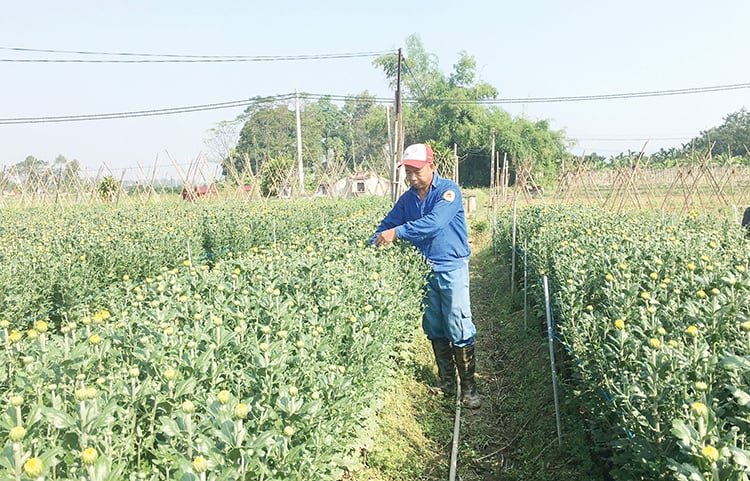
The flower-growing village of Thuong (Tien Du commune, Phu Ninh district) cultivates chrysanthemums in staggered batches, allowing for year-round harvesting.
To preserve the traditional crafts of the villages, localities have implemented solutions such as village planning, infrastructure investment, and vocational training to ensure the continuation of the craft. In some flower-making villages, even the youngest workers are over 40 years old. Mr. Nguyen Hong Chat, Vice Chairman of the People's Committee of Tien Du commune, stated: “The challenge for the villages is the increasing shortage of young workers. In Thuong flower village, the workforce is mainly middle-aged; most young people work in industrial zones or go abroad for work, so households involved in the craft actively engage in mutual assistance and labor exchange. The commune is researching and planning a reorganization of the village in terms of scale, operational methods, and mobilizing resources to invest in internal transportation within the flower-growing areas to create conditions for the sustainable development of the craft.”
The Provincial People's Committee has issued a Plan for implementing the Program for the Preservation and Development of Traditional Craft Villages in Phu Tho Province for the period 2022-2030, aiming to preserve and promote the traditional cultural values and identities of craft villages with comprehensive solutions for preserving and developing craft villages; preserving and promoting the values of artisans; promoting trade and building product brands; training human resources; applying scientific and technological advancements, etc. Implementing the Plan will contribute to promoting the development of flower craft villages in particular and craft villages in the province in general.
Leaving the flower village, our hearts were still filled with the vibrant colors, fragrances, and simple yet heartfelt stories of the villagers. We hope they will have bountiful harvests in the future, so that their efforts in preserving the craft will be rewarded, and that in the future, these craft villages can leverage their advantages to develop tourism linked to agriculture, making them destinations rich in cultural identity.
Nguyen Hue
Source: https://baophutho.vn/gin-giu-vun-dap-nghe-truyen-thong-224573.htm

![[Photo] Close-up of an Australian warship visiting Tien Sa port, Da Nang](https://vphoto.vietnam.vn/thumb/1200x675/vietnam/resource/IMAGE/2026/03/28/1774675489416_tau-5-jpg.)













































Comment (0)