


There are few PhD holders because the country has not yet trained them.
Dr. Vo Van Tuan, Vice Rector of Van Lang University, said that the university has been searching for PhDs for majors such as public relations, multimedia communication, and communication technology. In addition to lecturer positions, they are also looking for PhDs to head departments, but recruiting PhDs in the right fields has not been easy.
"The university invests in facilities and international training programs, but some of the aforementioned fields, plus applied arts, real estate, etc., face extreme difficulties in terms of staffing. We have to invite some professors and PhDs from abroad because currently, some of these fields do not have any domestic training institutions. Some fields have only recently started training PhDs, so we don't have the resources right away," Dr. Tuan shared.
Dr. Thai Hong Thuy Khanh, Head of the Finance and Accounting Department at Nguyen Tat Thanh University, also stated that while many universities offer undergraduate programs in logistics and supply chain management, master's or doctoral degrees in this field are very rare, especially in the supply chain sector.

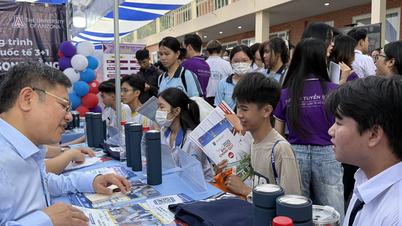
Students majoring in public relations, one of the fields of study that does not yet have a doctoral program in Vietnam.
"Currently, only a few universities have been allowed by the Ministry of Education and Training to pilot partnerships with foreign countries to train master's degree holders in logistics and supply chain management, while no domestic institution offers doctoral programs. We are severely lacking highly qualified personnel in this field," Dr. Khanh stated.
In the field of technology, especially in emerging and highly sought-after technologies like artificial intelligence and blockchain, universities are finding it difficult to recruit PhDs with the right specialization. Dr. Nguyen Tan Tran Minh Khang, Vice Rector of the University of Information Technology (Vietnam National University Ho Chi Minh City), stated: "PhD-level graduates in these specialized fields are already rare, and universities also have to compete for talent with research institutes and large technology corporations."
RECRUITING DOCTORATES IN RELATED FIELDS?
Dr. Dinh Ba Tien, Head of the Information Technology Department at the University of Science (Vietnam National University Ho Chi Minh City), noted that while many "hot" fields like artificial intelligence have been opened recently, not everyone is qualified to teach them. Recruiting lecturers with PhDs is even more difficult when some fields in the country lack training programs offered by any institution.
"Long-established universities will have resources from their alumni. For example, the University of Natural Sciences has many alumni who earned master's and doctoral degrees from the US, Europe, South Korea, etc. Some graduates in artificial intelligence are willing to return to the faculty to teach. However, universities will face competitive pressure from foreign businesses and corporations because they offer extremely attractive salaries," Dr. Tien said.
To ensure a sufficient number of lecturers for the logistics and supply chain management ngành in Ho Chi Minh City, in addition to the International University (Vietnam National University Ho Chi Minh City) which is currently offering master's programs in this field, the Ministry of Education and Training has also allowed several universities to collaborate with foreign institutions for pilot training programs. "To have enough staff, the university is also recruiting master's and doctoral graduates in this field who have studied abroad," Dr. Khanh informed.
Dr. Tuan stated that the university is ready to "roll out the red carpet" with attractive salary and benefits policies to recruit PhDs. "If a field lacks qualified lecturers, we will recruit PhDs in related fields according to the regulations of the Ministry of Education and Training, or invite qualified lecturers with PhDs in the relevant field who have studied abroad to ensure the capacity to lead and maintain the training program. In addition, the university has a policy of inviting talented students with aptitude and career aspirations to stay at the university, or sending them abroad to pursue master's or PhD degrees in the relevant field to create a future workforce," Dr. Tuan shared.

In the field of computer science and information technology, artificial intelligence was added as a major at the undergraduate, master's, and doctoral levels in 2022.
CONCERNED ABOUT EXPANDING THE INDUSTRY MASSIVELY WITHIN A SUFFICIENT WORKFORCE
However, according to regulations from the Ministry of Education and Training, the training program must have at least one full-time lecturer with a PhD in a relevant field (not overlapping with full-time lecturers from other fields), with at least 3 years of experience in training management or university teaching, responsible for leading the development and implementation of the training program. At the same time, there must be at least 5 full-time lecturers with PhDs in relevant fields to lead the teaching of the program (including the PhDs in the relevant field mentioned above), with each component of the training program having a lecturer with relevant expertise leading the teaching.
In this regulation, it's necessary to clarify whether "suitable" means graduating in the exact field of study or a related field. If it's a related field, for example, can a PhD in Information Technology teach artificial intelligence, or can a PhD in Business Administration teach e-commerce?
The head of the Training Department at a university in Ho Chi Minh City stated that the Ministry stipulates that if the teaching staff does not have a PhD in the exact field, they should recruit PhDs in related fields, but they must have research papers in that field. "However, in reality, it is very difficult to find such a team in newly emerging fields, so many universities recruit in related fields without requiring the right specialization, but they still find ways to meet the Ministry of Education and Training's requirements. For example, a PhD in information technology teaching in artificial intelligence without having conducted any research on AI, only starting to research and explore further during the teaching process. This will certainly affect the quality of training to some extent," he shared.
According to this head of the training department, to ensure quality, before opening a large number of new programs, the Ministry must consider whether the teaching staff can meet the demand, especially since those university programs do not yet offer master's or doctoral programs in Vietnam. "We shouldn't open too many small and unnecessary level 4 programs while doctoral training is not yet sufficient. Some programs should simply remain as specializations," this official added.
Meanwhile, in some universities, due to insufficient faculty resources to open a new program, it is only included as a specialization. For example, artificial intelligence is a specialization within computer science or software engineering, logistics and supply chain management is a specialization within business administration or international business...
Annual reviews and updates are conducted.
A representative from the Ministry of Education and Training stated that the Ministry reviews and adds master's and doctoral training programs annually, depending on the current state of education and based on proposals from higher education institutions.
"Some fields are not yet capable of training master's or doctoral students; they only meet the general needs and conditions at the undergraduate level. Circular 17 also clearly stipulates that the training program must include a mandatory doctoral degree in the correct specialization and additional related specializations. Except for newly piloted fields, which must accept related specializations first. For example, the artificial intelligence field will initially recruit doctoral graduates from abroad, and gradually, domestic resources will be available to train master's and doctoral students," this representative said.
Many disciplines do not yet have doctoral training codes.
Currently, in the Ministry of Education and Training's updated 2022 list of Level 4 undergraduate, master's, and doctoral training programs, many fields are offered at the undergraduate level but not at the master's or doctoral level.
For example, the business and management group at the master's and doctoral levels only includes majors in business administration, commercial business, finance and banking, insurance, and accounting.
In the field of applied arts, majors such as industrial design, graphic design, fashion design, and stage and film art design are only offered at the undergraduate and master's levels; there are no doctoral-level programs yet.
In the field of journalism and media, the master's degree program is only available in journalism, mass communication, and public relations; while the doctoral program is only available in journalism studies and mass communication.
In the field of computer science and information technology, artificial intelligence was added as a major at the undergraduate, master's, and doctoral levels in 2022.
In the tourism sector, the field of tourism and travel service management does not yet have a PhD program. The fields of hotel management, restaurant management, and food service management do not have either master's or doctoral training programs...
Source link
![[Photo] General Secretary To Lam attends the opening session of the Peace Council on Gaza.](https://vphoto.vietnam.vn/thumb/1200x675/vietnam/resource/IMAGE/2026/02/19/1771516865192_tbttolam5-jpg.webp)














































































Comment (0)