

In the 1920s, a female merchant from Cu Da village (Thanh Oai district, Hanoi ) bravely learned and invested in mastering the knitting technology that the French had introduced, thus creating a thriving industry…
Cu Da (Cu Khe commune, Thanh Oai district, Hanoi) has long been known as a Northern Vietnamese village with many beautiful architectural works such as village gates, communal houses, flagpoles, and traditional houses, interspersed with two-story houses built in the Indochinese style…
The pride of the people of Cự Đà village is that it has had electricity to light the village streets since 1930, a beautiful concrete flagpole on the banks of the Nhuệ River since 1929, and a railing running along the riverbank.
They must have been incredibly proud of their hometown, which is why the merchants of Cự Đà village named their businesses after the word "Cự," such as: Cự Tiên, Cự Chân, Cự Gioanh, Cự Chung, Cự Hải, Cự Lĩnh, Cự Phát, Cự Hảo, Cự Chí, Cự Ninh, Cự Lập, Cự Hoành, Cự Nguyên, Cự Tấn… In the first half of the 20th century, these brands were famous in Hà Đông, Hanoi, and Saigon, with some even reaching overseas markets.
The people of Cự Đà became wealthy by buying land, leasing it out, lending money at interest, weaving silk, making soy sauce, some working as contractors, others building houses for rent, and driving passenger vehicles... From 1924 onwards, things changed, and many people in Cự Đà acquired additional ways to get rich using Western-style knitting technology.
The first person to have an initiative in the knitting industry was Mrs. Trinh Thi Chuc. She married Mr. Tu Cu (Vu Van Cu), who was from the same village, so she was often called Mrs. Tu Cu.
New profession
In the book "Cự Đà Biographical Records," author Vũ Hiệp, the nephew of Mr. Tư Cư, states that in 1924, when Mrs. Tư Cư was 24 years old, she began working in the knitting industry. A few years before that, she and her husband moved from Cự Đà to Hà Đông, renting a house on Cửa Dinh street to sell vermicelli, dried bamboo shoots, and confectionery to make a living.
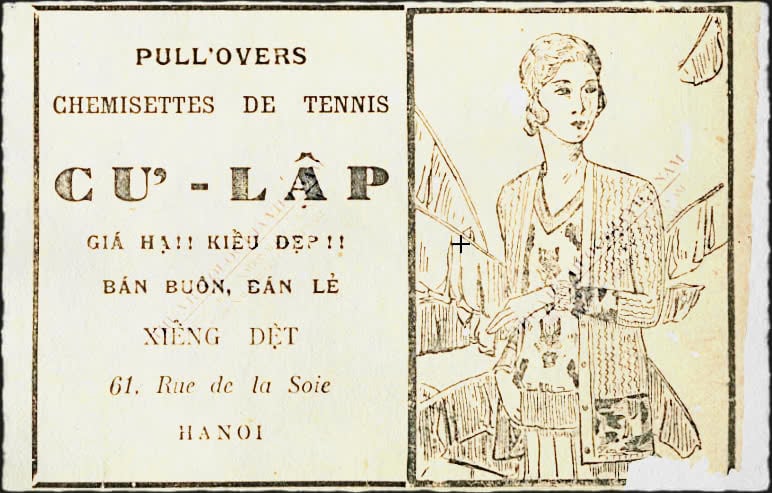
Advertisement for the new style of sweater of the year, published in Ngày Nay (Today's Newspaper), January 9, 1938. Photo: baochi.nlv.gov.vn
Her parents also lived nearby; her father, Trinh Van Mai, worked as a secretary at the Governor-General's residence, and she engaged in petty trading. Later, Mrs. Tu Cu switched to trading hemp rope, so she frequently traveled to Hanoi to source supplies.
One day, while walking down Hang Ngang Street, she saw the Quang Sinh Long and Ha Quang Ky textile shops, owned by Chinese merchants, displaying a new and unusual type of clothing. She bought a garment to watch the weaving process. These were knitting machines, quite different from silk weaving looms, something she had never seen before. Watching the weaving, she found it incredibly fascinating…
The looms were modern, but the weavers were Vietnamese, so she quietly waited until lunchtime. When the weavers went to eat, she followed them to inquire, and it turned out they were all from La Phu village, near Ha Dong. They told her that they bought the looms from Godart's shop on Trang Tien Street.
She immediately went to Godart and boldly approached the young man selling the company's goods, saying, "Sir, I'll give you one coin, please be my interpreter for the owner so I can inquire about that weaving machine." At that time, one coin was a very large sum of money, almost half an ounce of gold, and the weaving machine cost 120 coins.
After the discussion, she was so happy that she immediately discussed it with her husband and decided to sell the few acres of land they had inherited as part of their dowry, then order two machines. At the end of 1925, the machines arrived in Ha Dong, and French technicians came to install them and provide instructions on how to use them.
She went back to Quang Sinh Long's house, met the workers, and offered them a monthly salary of 4 dong, the same as Quang Sinh Long's, but also offered them lunch. After a year, their salary increased to 5 dong, not to mention that working in Ha Dong was close to home. So, the group of skilled workers came to work for her.
At that time, gold was 22 dong per tael (approximately 37.5 grams), so the wages paid to workers were very high. The Cu Chan company was established, producing beautiful knitted products that sold very well.
Today, in the ancient village of Cự Đà, there is still the house of the Cự Chân family, bearing a plaque with the words "Cự Chân" and two Chinese characters that read "Cự Trân". In Vietnamese, "Cự Chân" means true, sincere, and great; in Chinese, it means great treasure. Both meanings are auspicious.
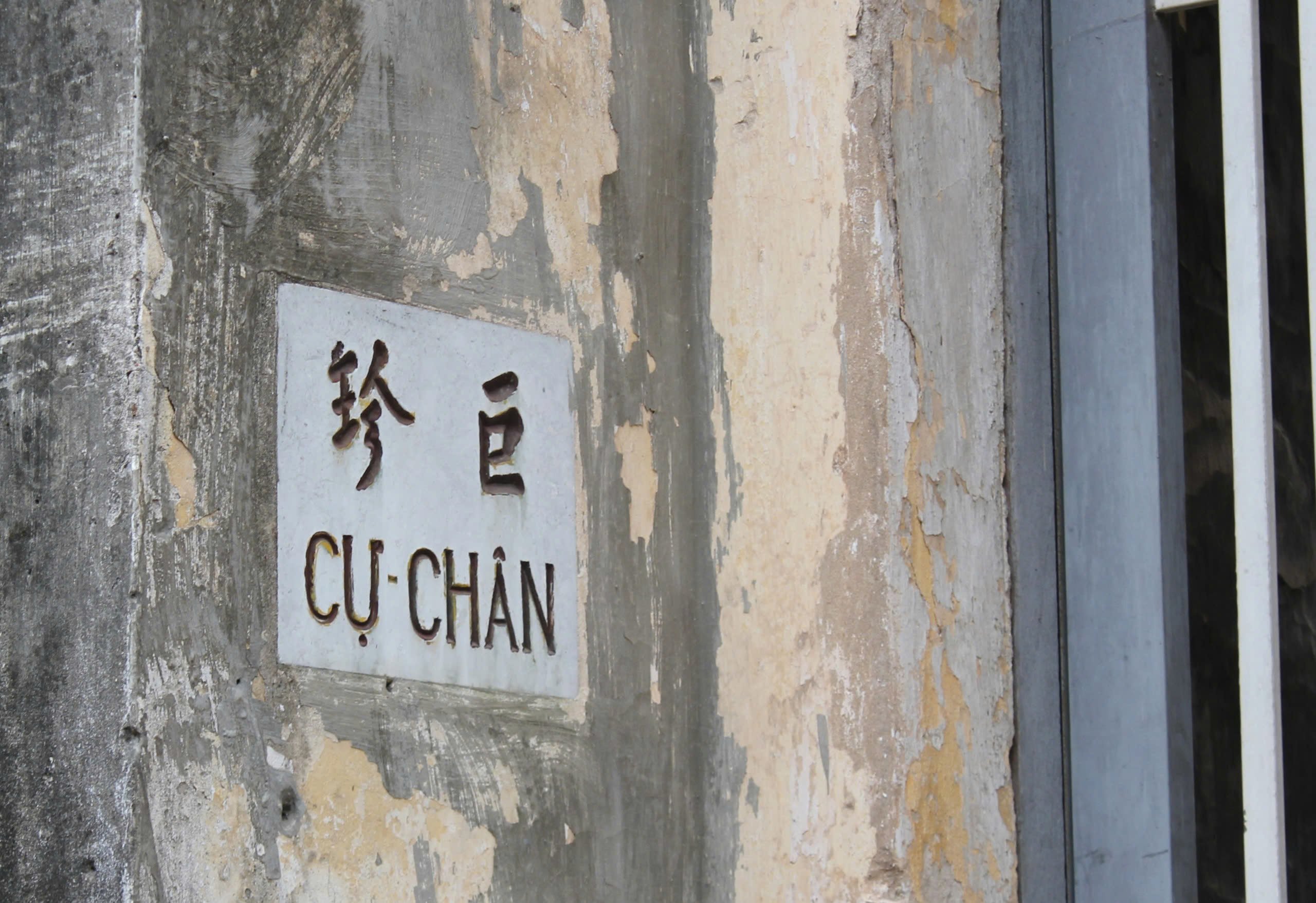
The sign is attached to the door of Mr. and Mrs. Cự Chân's house in Cự Đà village.
For a businessman, honesty, from providing high-quality products to building trust with customers and partners, is a treasure to be preserved; only then can the business prosper and become wealthy.
Exclusive rights to the knitting industry.
Mr. Trinh Van Mai also sold some of his rice fields to buy four weaving machines, naming them Cu Gioanh. From then on, Mr. Cu Gioanh's workshop flourished. After a while, Cu Chan and Cu Gioanh ordered machines directly from France.
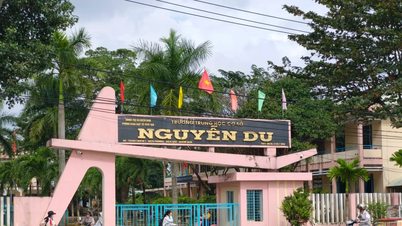
In 1926, both companies moved to Hanoi to expand their technology. Mr. Cu Gioanh leased and then purchased the land at 68-70 Hang Quat Street from Governor-General Nghiem Xuan Quang to build a textile factory. Today, this land is Nguyen Du Primary School.
Mr. and Mrs. Cự Chân initially rented the house at 101 Hàng Gai, and gradually developed their business to be just as successful as their parents'. At that time, Nam Định cotton was abundant, and the two companies dyed their own colors and improved designs. If the machinery broke down, Mr. Cự Gioanh and Mr. Cự Chân could repair it themselves.
Later, Mr. Trinh Van Thuc, the eldest son of Mr. Cu Doanh, got married and opened the Cu Chung factory at 100 Hang Bong Street in 1935-1936. The Cu Gioanh factory, managed by Mr. Trinh Van Can, also developed strongly, with dozens of weaving machines.
Mr. and Mrs. Cự Chân also guided their siblings and descendants in knitting. First, they instructed Mr. Ba Tiến, the older brother of Mr. Tư Cư, to open a shop selling products in Hải Dương in 1930. Gradually, Mr. Ba Tiến's children were also helped to switch to the trade.
The most successful were Mr. Cu Hai and Mr. Cu Chi, who expanded their operations to Hai Phong, opening the first knitting factory in this port city.
During the 1930s, the Trinh family of Mr. Cu Gioanh and the Vu family of Mr. Cu Chan held a monopoly on the knitting industry throughout the northern provinces and cities. Newspapers at the time, such as Phong Hoa, Ha Thanh Ngo Bao, Ngay Nay, Loa, and Tia Sang, published numerous advertisements for knitwear from companies bearing the Cu logo, including pullover sweaters, woolen jackets, socks, swimwear, etc., reflecting a vibrant period of business for merchants in Cu Da village.
In 1938, the Cu Gioanh and Cu Chung companies imported new, more sophisticated machines (machines No. 12 and 14) to weave thin fabrics that were popular in the market, leading to great success. From 1932 to 1945, the world economy declined, and French knitting companies struggled, allowing the products from Cu Da village to overtake them and dominate French colonial markets such as Madagascar, Algeria, New Caledonia, and Reunion.
Companies like Cự Gioanh, Cự Chung, Cự Hải, Cự Hiển… competed to produce goods for Saigon and export to Vientiane, Phnom Penh, Hong Kong, and Singapore. During its heyday in the 1930s and 1940s, the Cự Gioanh factory employed up to 200 workers.
Mr. Trinh Van An, currently residing in Ha Dong (Hanoi), whose house still displays the Cu Vinh brand name, said that Cu Vinh is his parents' brand. He often heard his parents recount how, initially, their family produced soy sauce, traded silk, and then knitted fabrics following the trend initiated by Mr. Cu Gioanh.
During its heyday, the family employed 15-20 weavers year-round. They used knitting machines number 8 and 10 to weave various types of sweaters, socks, and other items. Their most prosperous period was 1945-1949, when the family owned four houses in Ha Dong and the house at 14 Hang Quat Street, Hanoi.
This was truly a golden age for the people of Cự Đà in particular, and for Vietnamese merchants in general. In Europe, from the mid-19th century, football became a popular sport, leading to the creation of a new uniform: the men's pullover knitted shirt.
In the early 1920s, knitwear inspired women's fashion. From there, knitwear underwent a new development, not only being used as underwear but also as outerwear and warm clothing in many styles.
During the 1920s and 1930s, knitted sweaters were a popular fashion trend in Europe. Ms. Cự Chân, with her keen business sense, dared to invest in this new technology, leaving a significant mark on the silk and textile industry at the time.
In February 1959, following the state's policy of joint ventures, the Cu Gioanh knitwear factory was transformed into the Cu Doanh Textile Enterprise, the predecessor of the later Haprosimex Thang Long Knitwear Joint Stock Company. Mr. Trinh Van Can continued to hold the position of Deputy Director of the enterprise until his retirement in 1974.
Source: https://phunuvietnam.vn/ba-cu-chan-to-nghe-det-kim-dat-cu-da-20250210144300635.htm



![[Photo] The Prime Ministers of Vietnam and Russia witness the signing ceremony on cooperation in building a nuclear power plant.](https://vphoto.vietnam.vn/thumb/1200x675/vietnam/resource/IMAGE/2026/03/23/1774278492322_vna-potal-hai-thu-tuong-viet-nam-va-nga-chung-kien-le-ky-ket-hiep-dinh-ve-hop-tac-xay-dung-nha-may-dien-hat-nhan-8658380-jpg.webp)
![[Photo] Young people of the Dong Thap Border Guard actively participate in "March Border Month" activities.](https://vphoto.vietnam.vn/thumb/1200x675/vietnam/resource/IMAGE/2026/03/23/1774248483508_ndo_tl_dt3-jpg.webp)















































































Comment (0)