

(CLO) On the evening of February 12th, the People's Committee of Hai Phong city held a ceremony to receive the certificate ranking the Tu Luong Xam historical site complex - the headquarters of King Ngo Quyen in 938 - as a special national historical site and to inaugurate the traditional Tu Luong Xam Festival 2025, commemorating the 1087th anniversary of the Battle of Bach Dang and the 1081st anniversary of the death of King Ngo Quyen.

Deputy Prime Minister Le Thanh Long presented the Prime Minister's decision to classify the Tu Luong Xam complex - the headquarters of Ngo Quyen in 938 - as a Special National Monument to the People's Committee of Hai Phong City.
Deputy Prime Minister Le Thanh Long attended the ceremony and presented the Prime Minister's decision to classify the Tu Luong Xam complex - the headquarters of Ngo Quyen in 938 - as a special national historical site to the People's Committee of Hai Phong city.
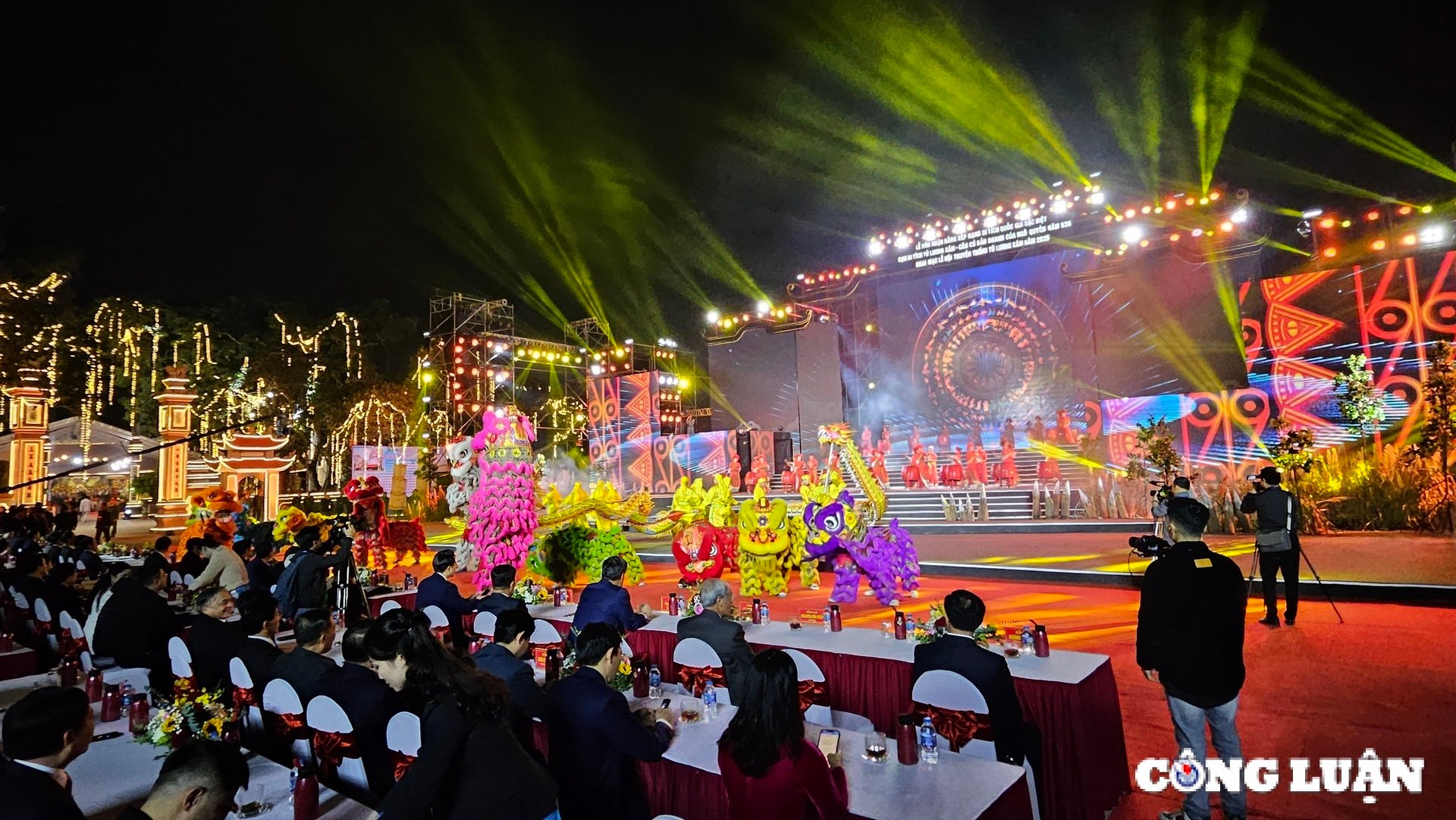
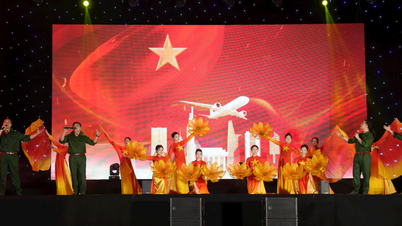
Lion and Dragon dance performance at the opening night of the festival.
The festival was also attended by leaders from central and local ministries and agencies, leaders of Hai Phong city, and thousands of local people and tourists.
Speaking at the festival, Mr. Ho An Phong, Deputy Minister of Culture, Sports and Tourism, requested Hai An district, Hai Phong city, to pay attention to the planning, development, and preservation of the Tu Luong Xam historical site complex. He also urged continued research, collection, excavation, and archaeological exploration to further clarify the history of the area containing the relics.
Simultaneously, organize extensive dissemination of the historical, cultural, scientific, and aesthetic value of the relics, and the positive values of the festivals in community cultural life, linking socio-economic development and tourism, contributing to building and fostering national pride, educating patriotic traditions, and making it an attractive tourist destination for domestic and international visitors. Strengthen training and improve the awareness, capacity, and skills of cultural workers and staff. Emphasize the role and responsibility of all levels of government, communities, and cultural stakeholders in the preservation and promotion of the values of these relics, heritage, and festivals. Pay attention to improving the landscape and protecting the ecological environment to create a complete cultural space for the relics and festivals.
With the aim of widely publicizing the life, career, and great contributions of the national hero Ngo Quyen, the historic Battle of Bach Dang, and the Tu Luong Xam historical site – the headquarters of King Ngo Quyen in 938, the Tu Luong Xam Festival program contributes to arousing national pride, promoting traditional cultural values, love for the homeland, and meeting the cultural and religious needs of the people. Through this, it strengthens the dissemination and promotion of information so that tourists from within and outside the city can learn about the historical and cultural value of the Tu Luong Xam historical site – the headquarters of King Ngo Quyen in 938.
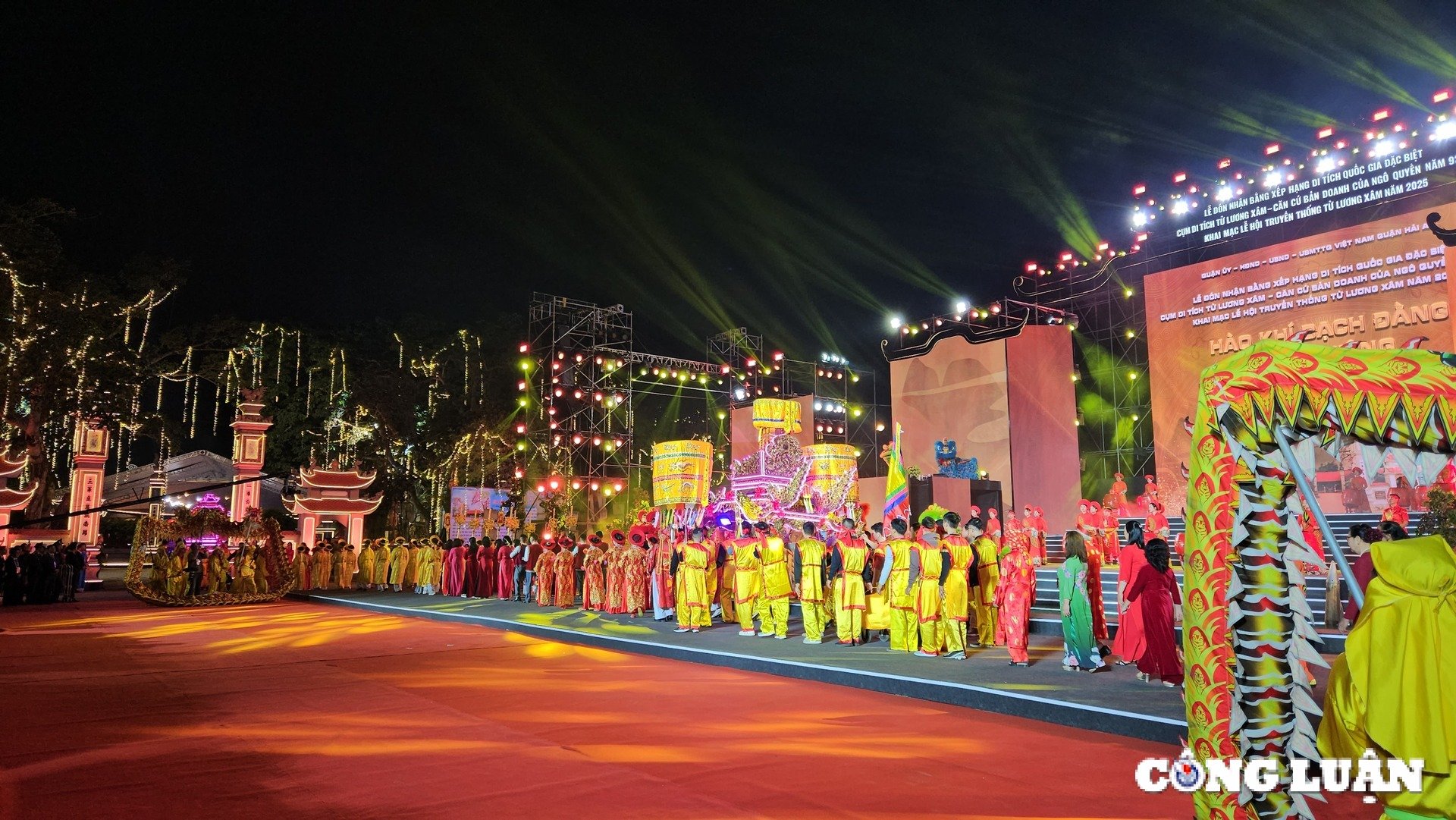
Procession at the Tu Luong Xam Festival
The traditional festival includes traditional rituals such as: the village sacrificial ceremony at 8:00 AM, the traditional procession starting at 5:30 PM on February 12, 2025 (the 15th day of the first lunar month of the Year of the Snake), and cultural and artistic activities: volleyball tournaments, tug-of-war, human chess, sack races, calligraphy, and folk games... taking place throughout the festival days.
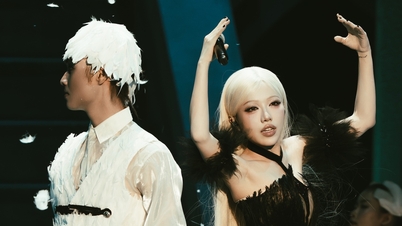
At the festival, a spectacular and grand artistic program recreated the glorious victory of King Ngo Quyen on the historic Bach Dang River in 938, with the participation of many famous artists, including singers Tung Duong, Phuong Anh, Ngoc Anh, rapper Ram C, etc., and was broadcast live on THP channel and the digital platforms of Hai Phong Radio and Television Station.
The Tu Luong Xam complex is one of 22 national and city-level historical sites in Hai An district dedicated to King Ngo Quyen, and is revered as the "Chief Temple"—the leading place of worship for King Ngo Quyen. It preserves historical evidence of the Battle of Bach Dang River, a battle that "resounded through the ages," leaving behind immense historical value for future generations.
Regarding King Ngo Quyen, he is one of the 14 exemplary national heroes of Vietnam. In 938, he led the people to defeat the Southern Han army in the historic Battle of Bach Dang River, ending more than 1,000 years of "Northern domination" and ushering in a long era of independence and self-reliance for the nation. Because of Ngo Quyen's merits, many dynasties bestowed titles upon him, honoring him as "Supreme and Most Sacred Great King, King Ngo, Son of Heaven, the founder of the nation's restoration."
The Tu Luong Xam historical site is located on a large, elevated plot of land in the northeast of Nam Hai ward, Hai An district. The main facade of the site faces east towards the Bach Dang estuary. Legend says that in preparation for the Battle of Bach Dang in 938, Ngo Quyen chose this location to store provisions and establish his headquarters to observe and command the historic Battle. He selected a strategic position to directly supervise the construction of the stake barrier, deploy forces, and organize ambushes to annihilate the invading Southern Han army. Traces of the original encircling road still remain here.
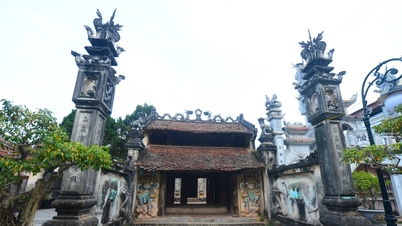
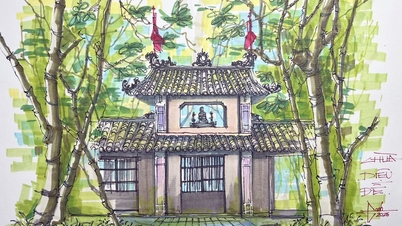
According to historical records, Tu Luong Xam Temple was magnificently constructed during the Later Le Dynasty and renovated during the Nguyen Dynasty. Therefore, the entire current temple architecture reflects the artistic style of the Nguyen Dynasty, with only some elements reflecting the artistic style of the Le Dynasty. Overall, the temple has a closed, interconnected "inner courtyard, outer enclosure" layout. It is situated on a spacious, elevated plot of land with many ancient trees, on the site of Ngo Quyen's former headquarters and granary during his resistance against the Southern Han invaders.
Beyond its architecture, the ancient artifacts within the temple evoke unique feelings in visitors. The temple still preserves three Bạch Đằng stakes, a testament to the Battle of Bạch Đằng in 938. To this day, Lương Xâm Temple retains 25 original royal decrees and over 20 copied decrees dating from 1522 to 1924. Among these decrees, various dynasties bestowed titles upon King Ngô Quyền, such as "Supreme and Most Sacred King," "Ngô King, Son of Heaven," and many other honorifics.
To the left of the expanded grounds of the Tu Luong Xam historical site stands the statue of King Ngo Quyen, erected in 2010 on a 1,500 m2 plot of land. The statue is constructed of granite with an electrolytic copper coating, and the total height of the statue and pedestal is 11.37m. The statue faces east, towards the mouth of the Bach Dang River – the site of the historic Battle of Bach Dang in 938. The statue is depicted in a commanding posture, with its right hand pointing directly towards the mouth of the Bach Dang River as if directing the battle, and its left hand resting on the hilt of its sword. The construction of the statue of King Ngo Quyen holds great significance for the people of Hai An district, symbolizing patriotism, national unity, and national pride.
Besides preserving many valuable artifacts and antiques, this historical site also boasts a system of ancient trees, including many red-flowered kapok trees over 500 years old, further enhancing the site's ancient beauty and attracting thousands of visitors every Lunar New Year. Every year, on the 16th day of the first lunar month, the Tu Luong Xam Festival takes place, attracting tens of thousands of tourists and locals alike.
This is also the largest festival in Hai An district, the only festival that makes most local people willing to set aside their personal and family worries to participate. In 2022, the Tu Luong Xam Festival was recognized by the Ministry of Culture, Sports and Tourism as a national intangible cultural heritage.
A unique feature, different from other village festivals, is the ceremonial procession with the "Four Sacred Temples" of Luong Xam and several other temples dedicated to Ngo Quyen in Hai An district converging at the Luong Xam Temple. This is followed by a traditional procession involving delegations from villages with Ngo Quyen temples such as Luong Xam, Xam Bo Ha Lung, Ha Doan, and processions from various wards, with palanquins converging to pay homage before the main temple of Luong Xam Temple – one of the four sacred temples of the ancient An Duong district and the three sacred temples of Hai An district today, creating a large-scale ceremony honoring the origins of the festival.
One of the things that makes the Tu Luong Xam historical site so valuable is that it preserves artifacts from the long and glorious period of nation-building and national defense, including: 125 artifacts and antiques, and 25 royal decrees dating from 1522 to 1924 from the early Le, Mac, later Le, Tay Son, and Nguyen dynasties. Particularly noteworthy is the presence of three stakes – believed to be evidence of the historic Battle of Bach Dang in 938.
With these values and significance, in 1986, Tu Luong Xam was classified as a national historical and cultural relic by the Ministry of Culture (now the Ministry of Culture, Sports and Tourism). In 2022, the traditional Tu Luong Xam festival was recognized by the Ministry of Culture, Sports and Tourism as a national intangible cultural heritage. Notably, on January 17, 2025, the Prime Minister decided to classify the Tu Luong Xam complex - the headquarters of Ngo Quyen in 938 - as a special national relic.
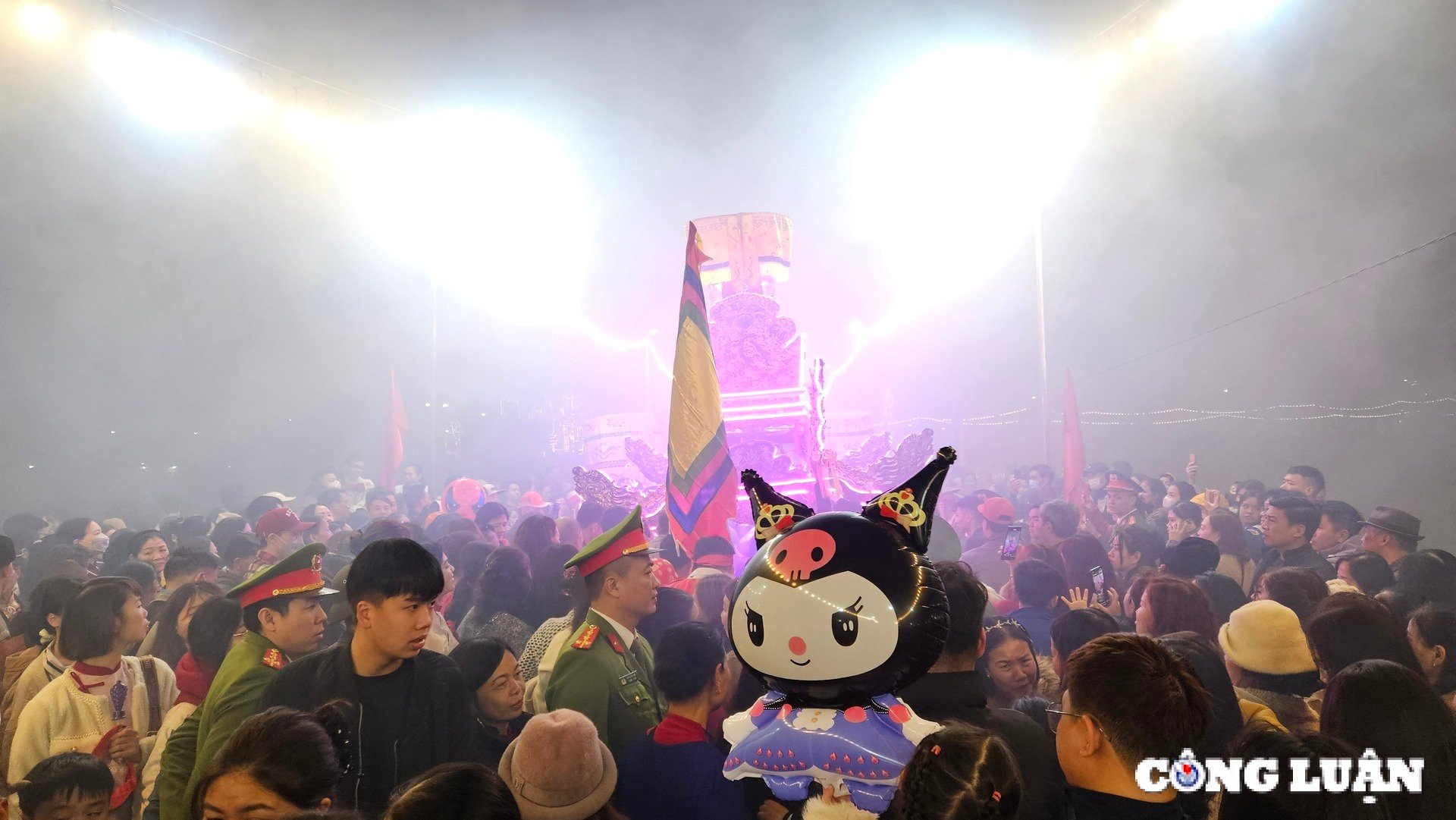
Thousands of locals and tourists attended the festival.
The Tu Luong Xam Festival in 2025 will take place from February 12-15, 2025 (which is from the 15th to the 18th day of the first lunar month of the Year of the Snake 2025).
Source: https://www.congluan.vn/hai-phong-cum-di-tich-tu-luong-xam-don-nhan-bang-xep-hang-di-tich-quoc-gia-dac-biet-post334207.html

![[Photo] Da Nang: Over 38,000 people "painted the streets red" during the Olympic Run for National Security.](https://vphoto.vietnam.vn/thumb/1200x675/vietnam/resource/IMAGE/2026/03/22/1774148860624_ndo_br_chay-15-jpg.webp)


















![[Photo] Prime Minister Pham Minh Chinh presides over a dialogue with Japanese businesses.](https://vphoto.vietnam.vn/thumb/1200x675/vietnam/resource/IMAGE/2026/03/21/1774097547316_ndo_br_dsc-0448-jpg.webp)
















































Comment (0)