The traditional ginger jam-making villages of Quang Nam province are ablaze with fire as Tet approaches.
Báo Tiền Phong•28/12/2024
TPO - As usual, at this time of year, families making traditional ginger jam in Quang Ngai are busy and bustling, preparing this delicious, spicy jam to supply customers during the Lunar New Year.
TPO - As usual, at this time of year, families making traditional ginger jam in Quang Ngai are busy and bustling, preparing this delicious, spicy jam to supply customers during the Lunar New Year.
With only one month left until the Lunar New Year of the Snake 2025, ginger jam production facilities in Nghia Dong commune (Quang Ngai city, Quang Ngai province) are busier than ever.
Ginger jam from Quang Ngai not only supplies people within the province but is also shipped to many places throughout the country.
The ginger jam production facility of Mrs. Nguyen Thi Lam's family (70 years old, residing in Hamlet 2, Nghia Dong Commune, Quang Ngai City) has been in operation for over 20 years. This is one of the famous ginger jam production facilities in Quang Ngai, working day and night to serve the Tet market.
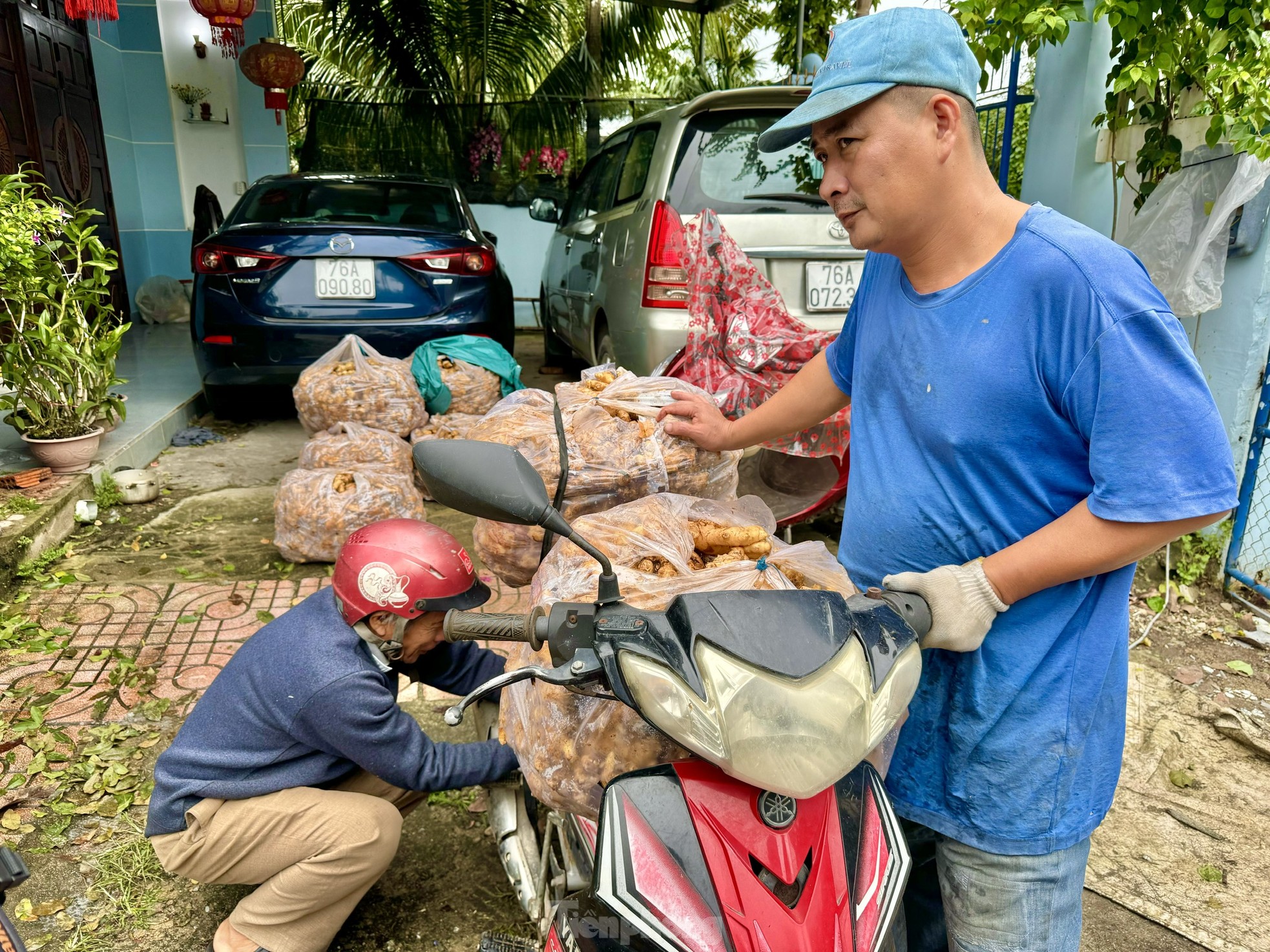
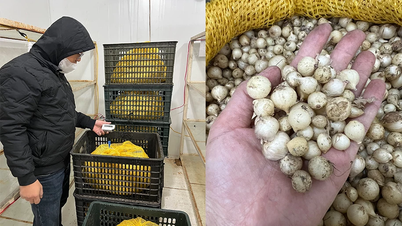
According to Mrs. Lam, every year-end, her family continues their familiar work of making ginger jam to serve the needs of people during the Lunar New Year. This is considered a family tradition for over 20 years. To make fragrant, delicious, and spicy ginger jam, her family chooses to buy fresh ginger from the Central Highlands region, thus obtaining jam slices with a distinct Central Vietnamese flavor.
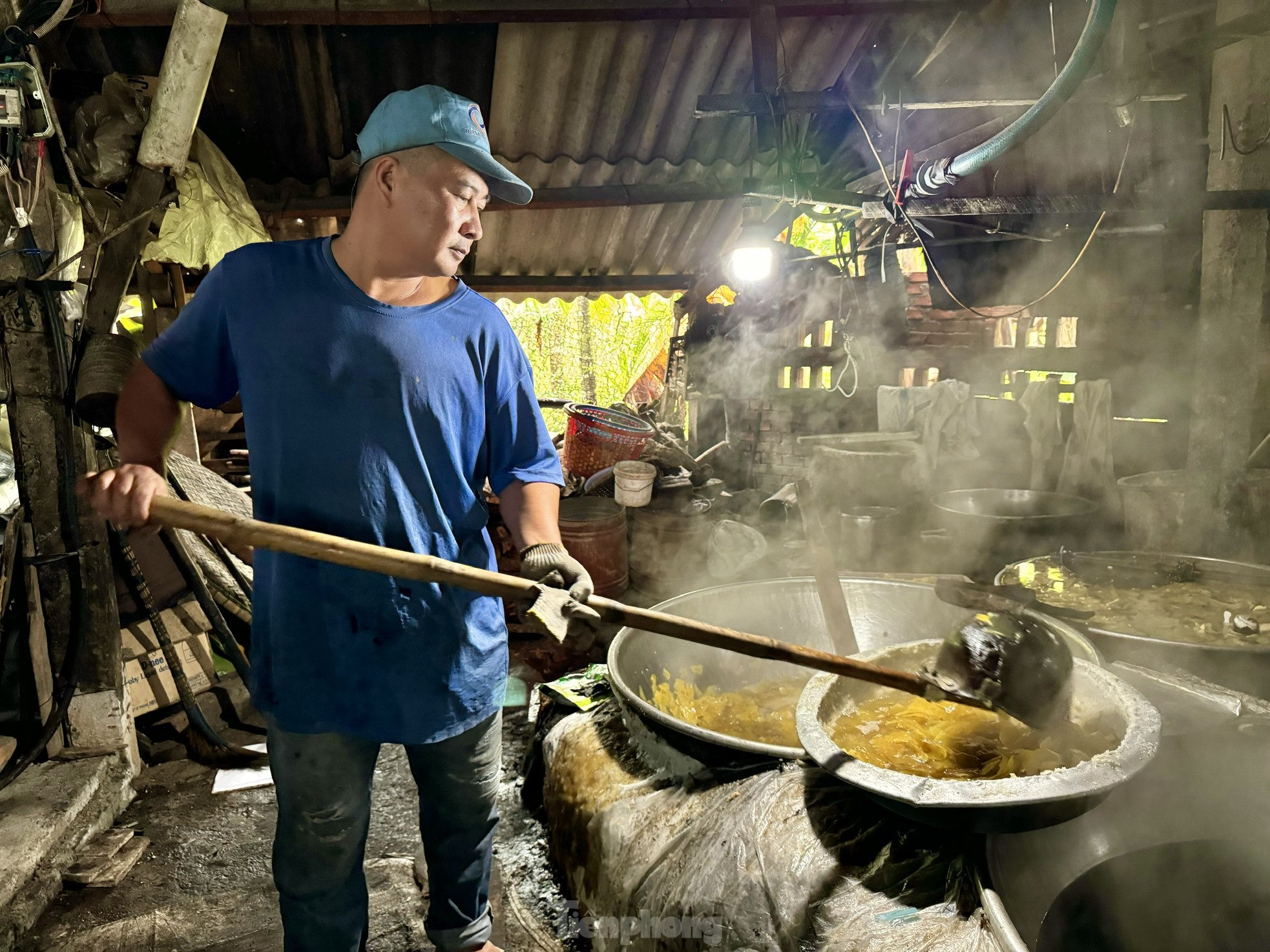
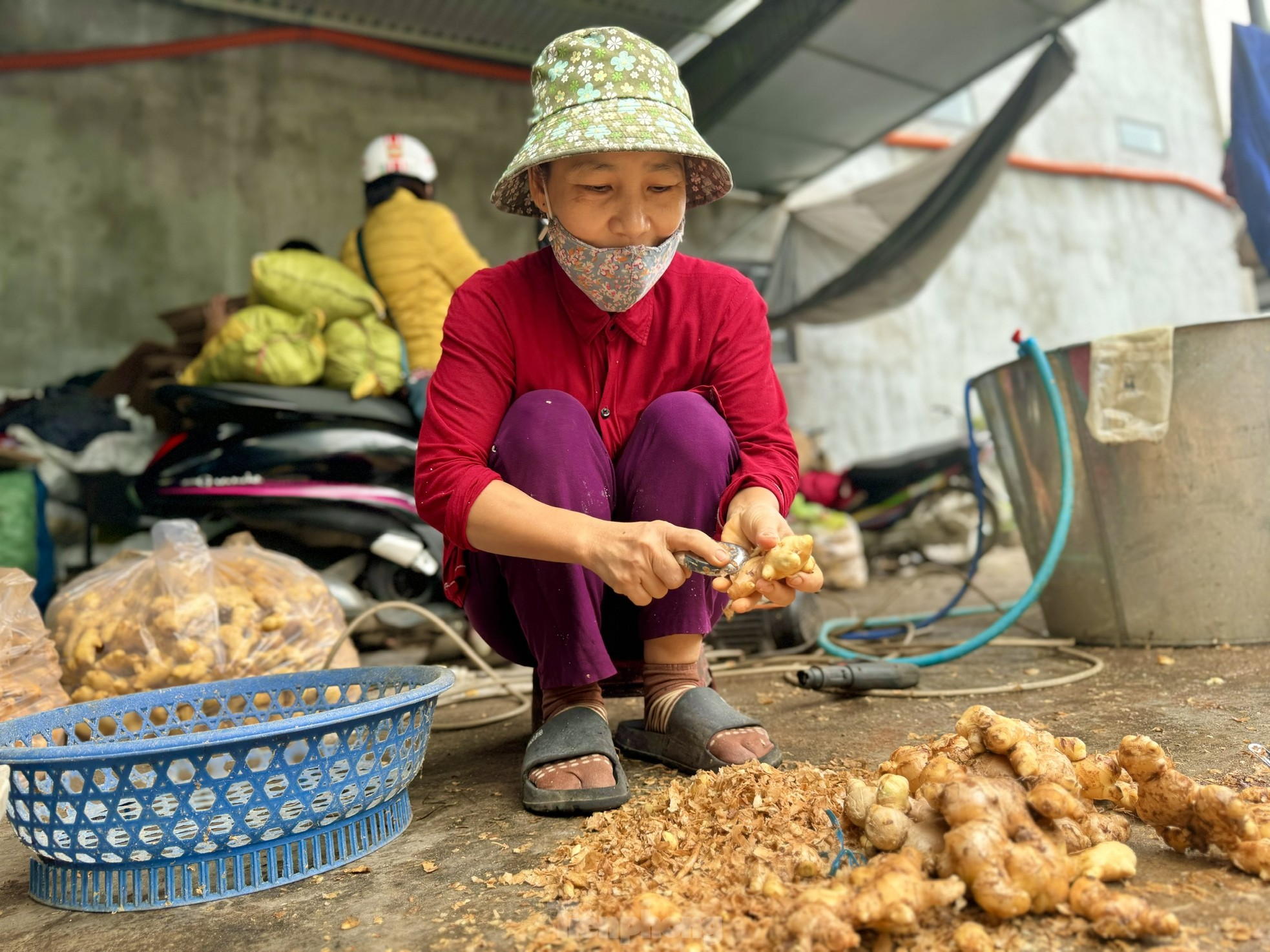
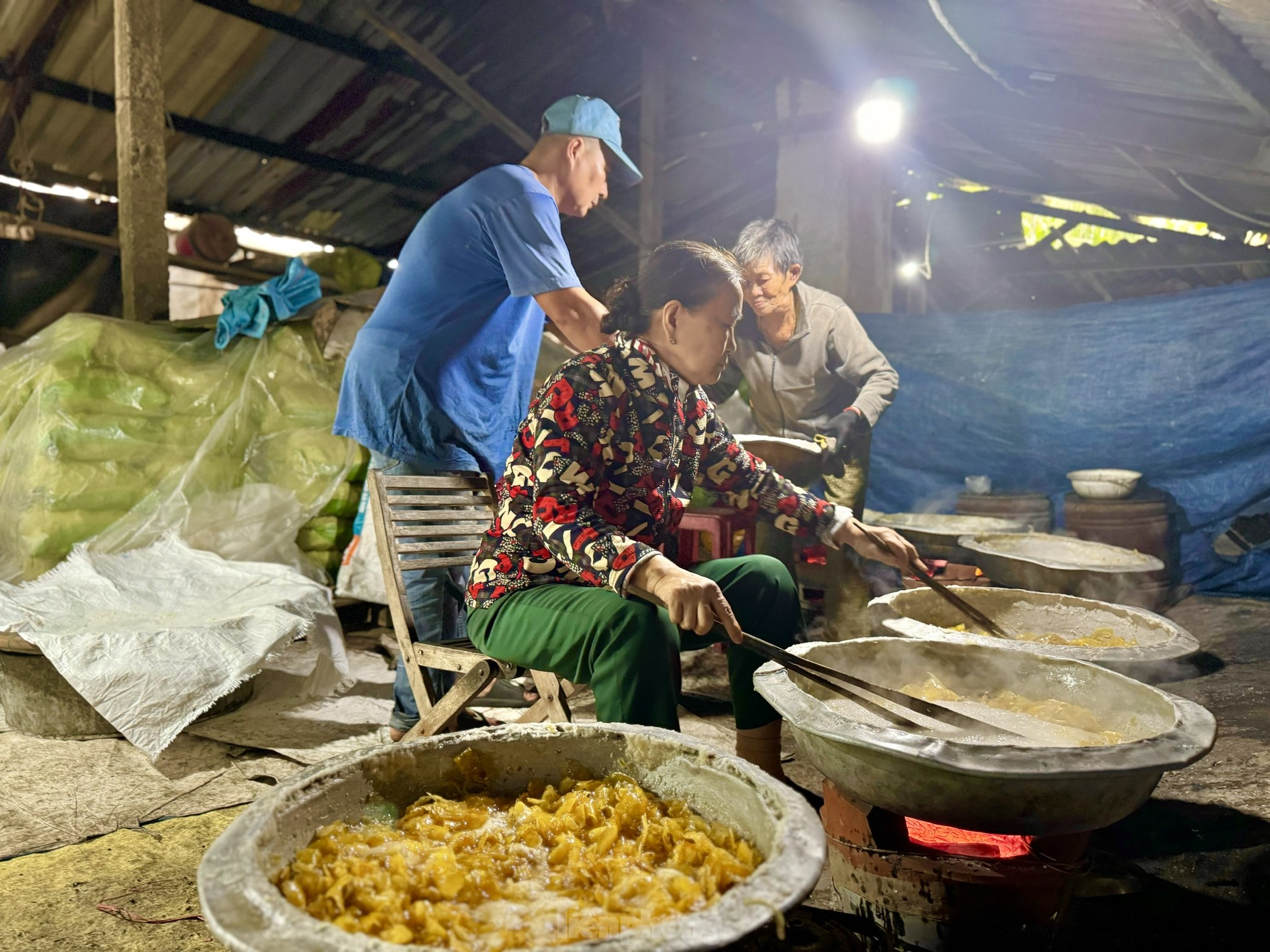
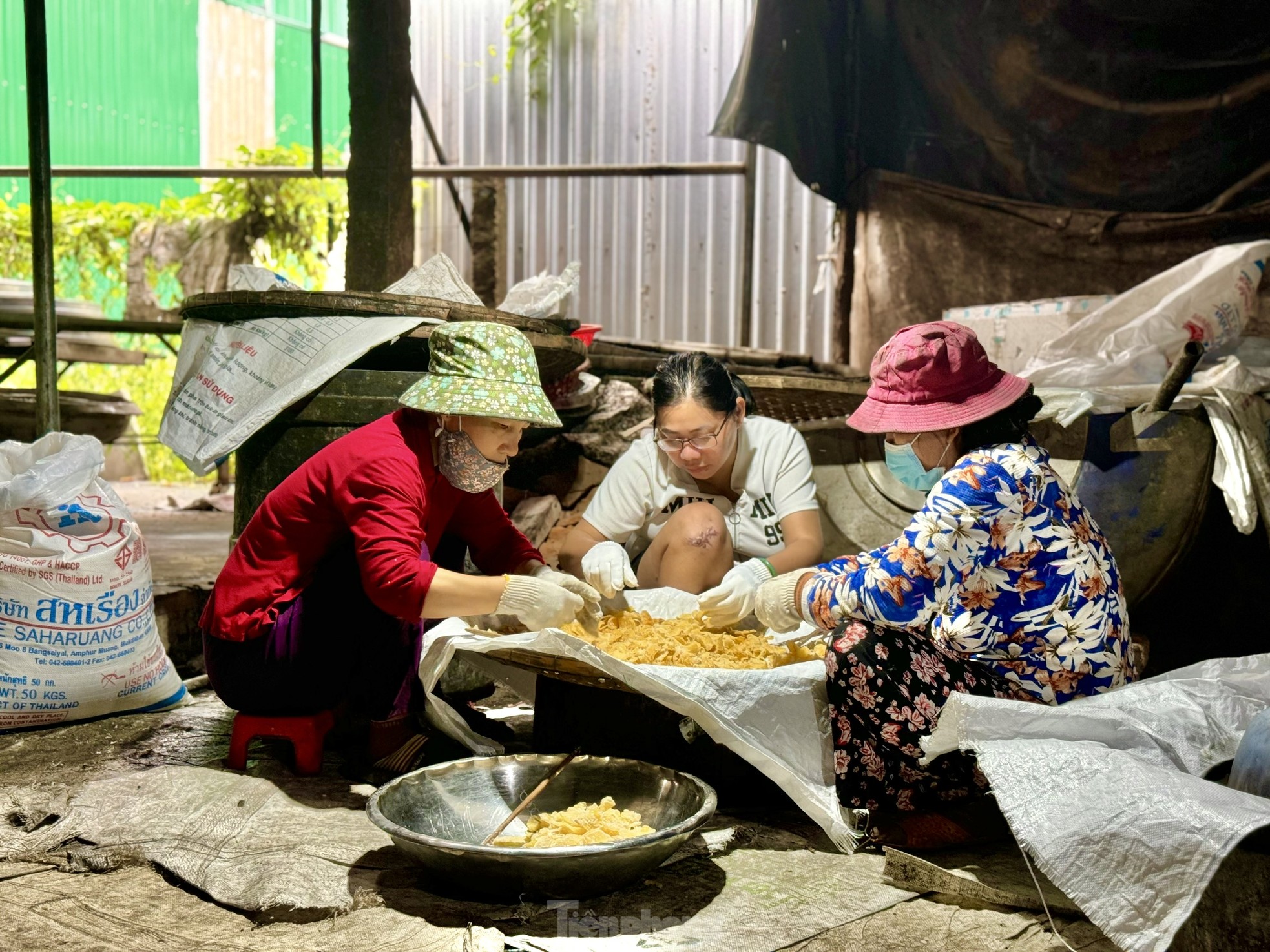
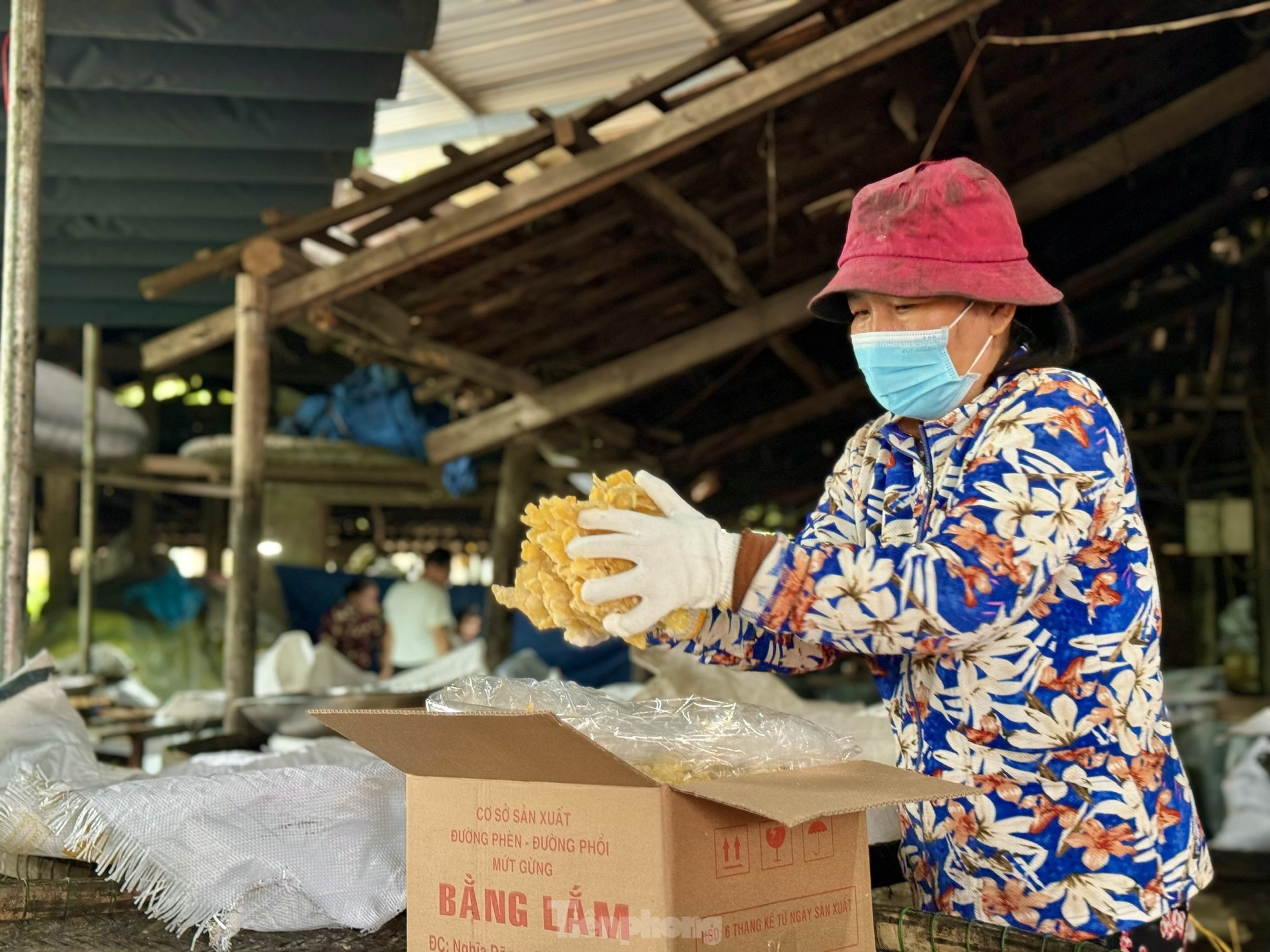
More than six workers toil tirelessly, each with their own task, from selecting ginger, cutting, peeling, washing, boiling, simmering, drying, and packaging... "Making ginger jam for Tet helps women earn a decent extra income on rainy days to support their families during the Tet holiday," shared Ms. Dong Thi Ha (residing in Nghia Dong commune).
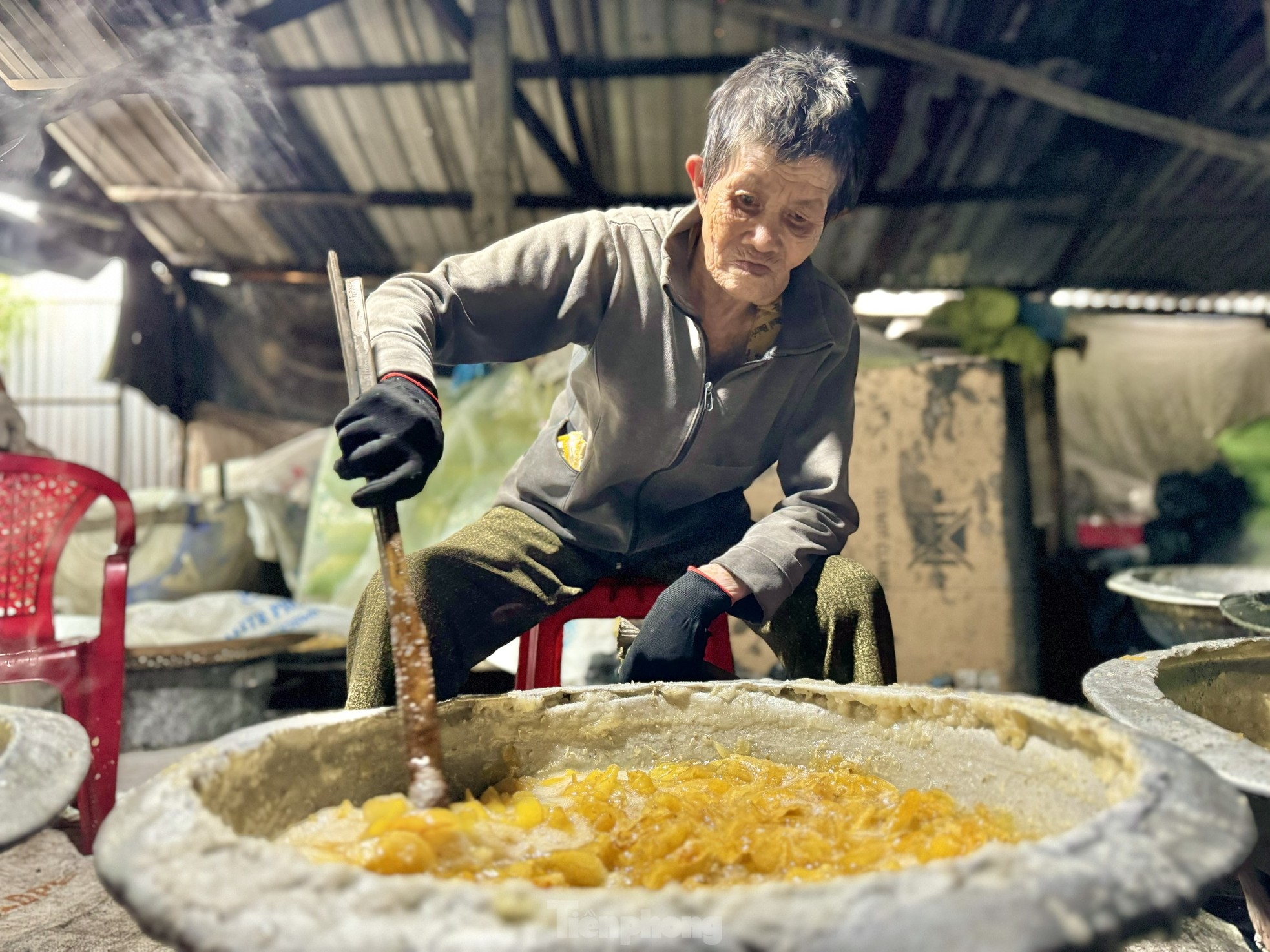
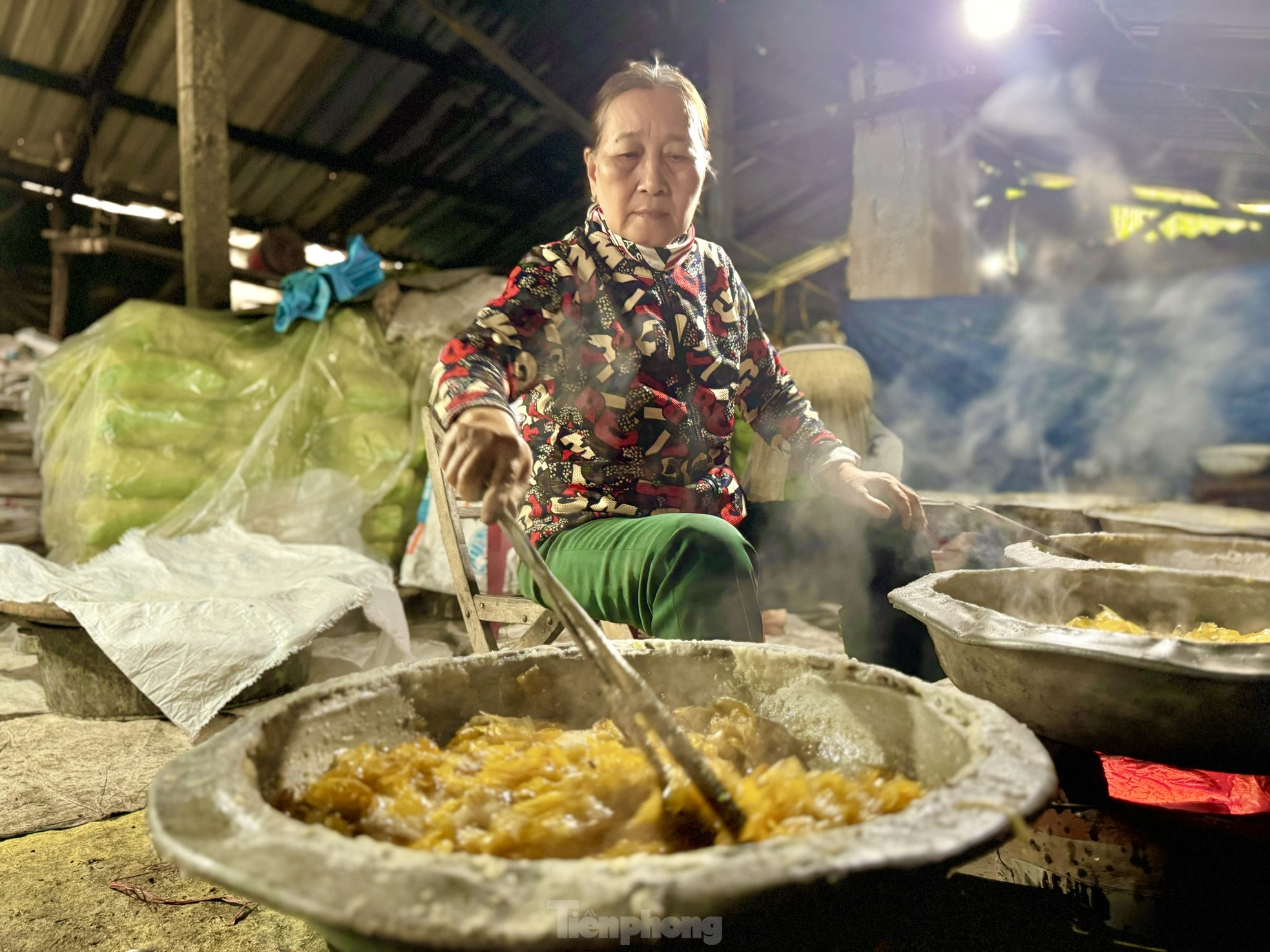
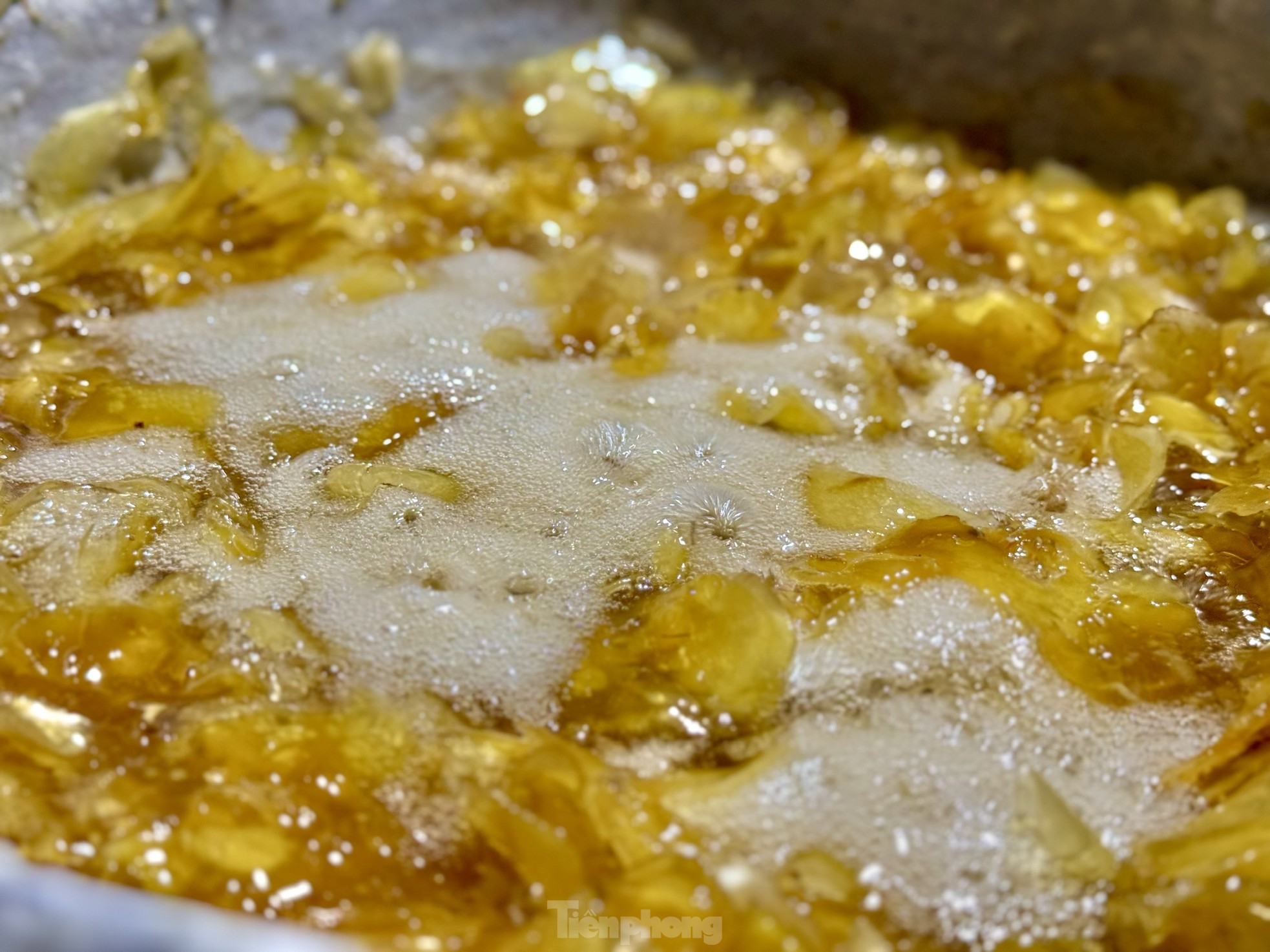
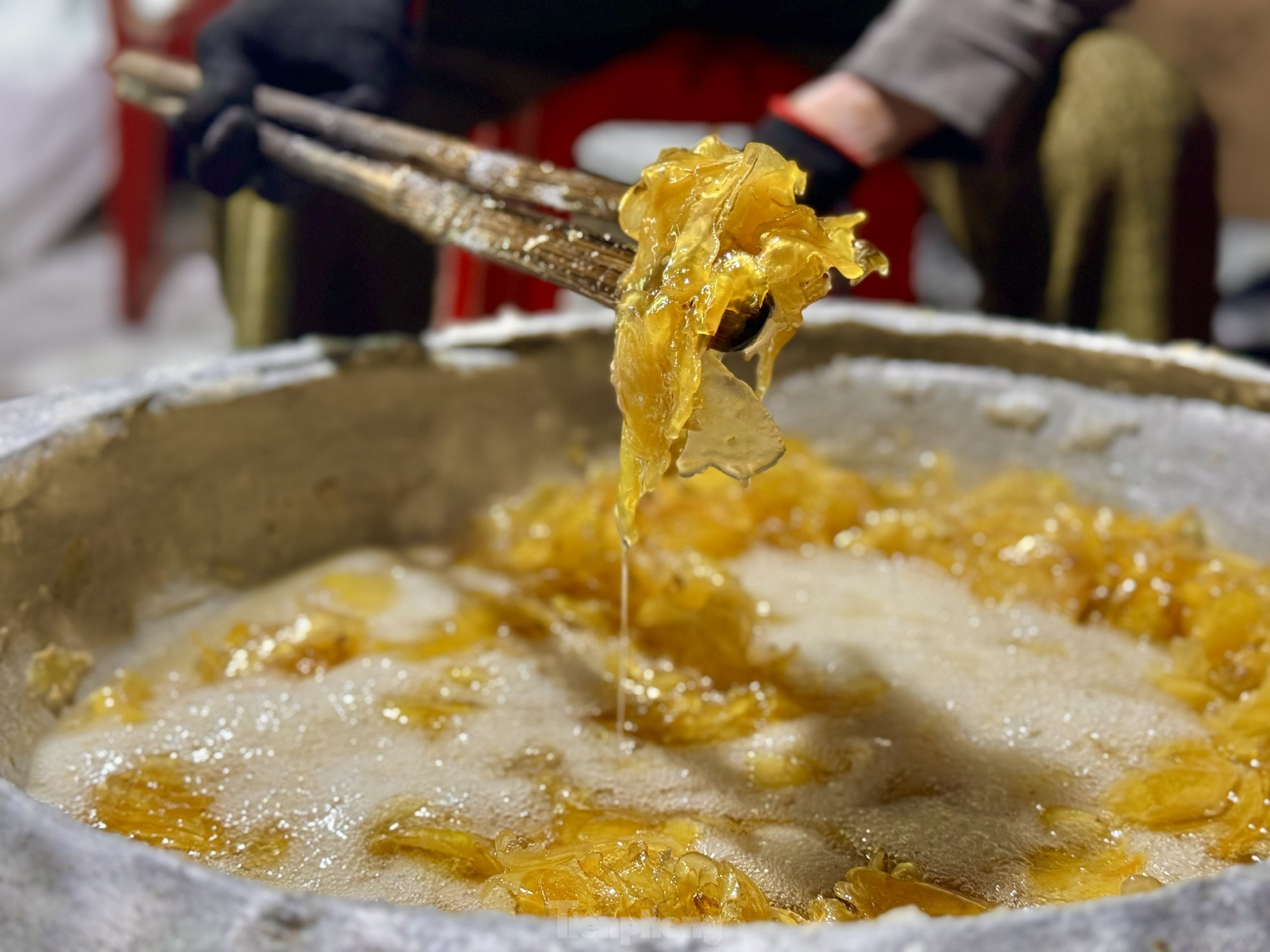
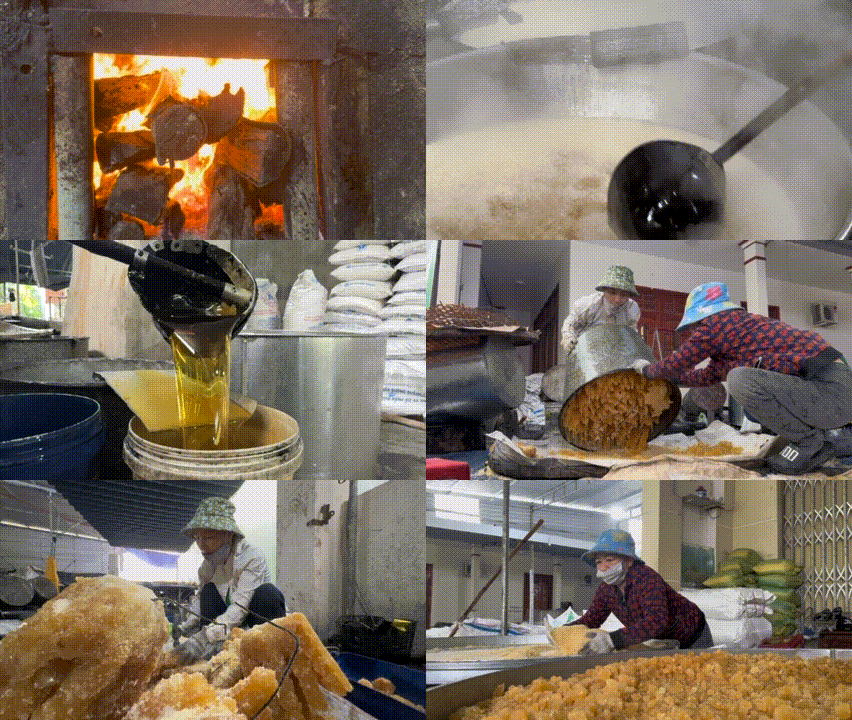
Ginger is peeled, washed, sliced, and boiled. After boiling, it must be rinsed with cold water until the water is clear. Simmering is the most important step in the process of making ginger jam.
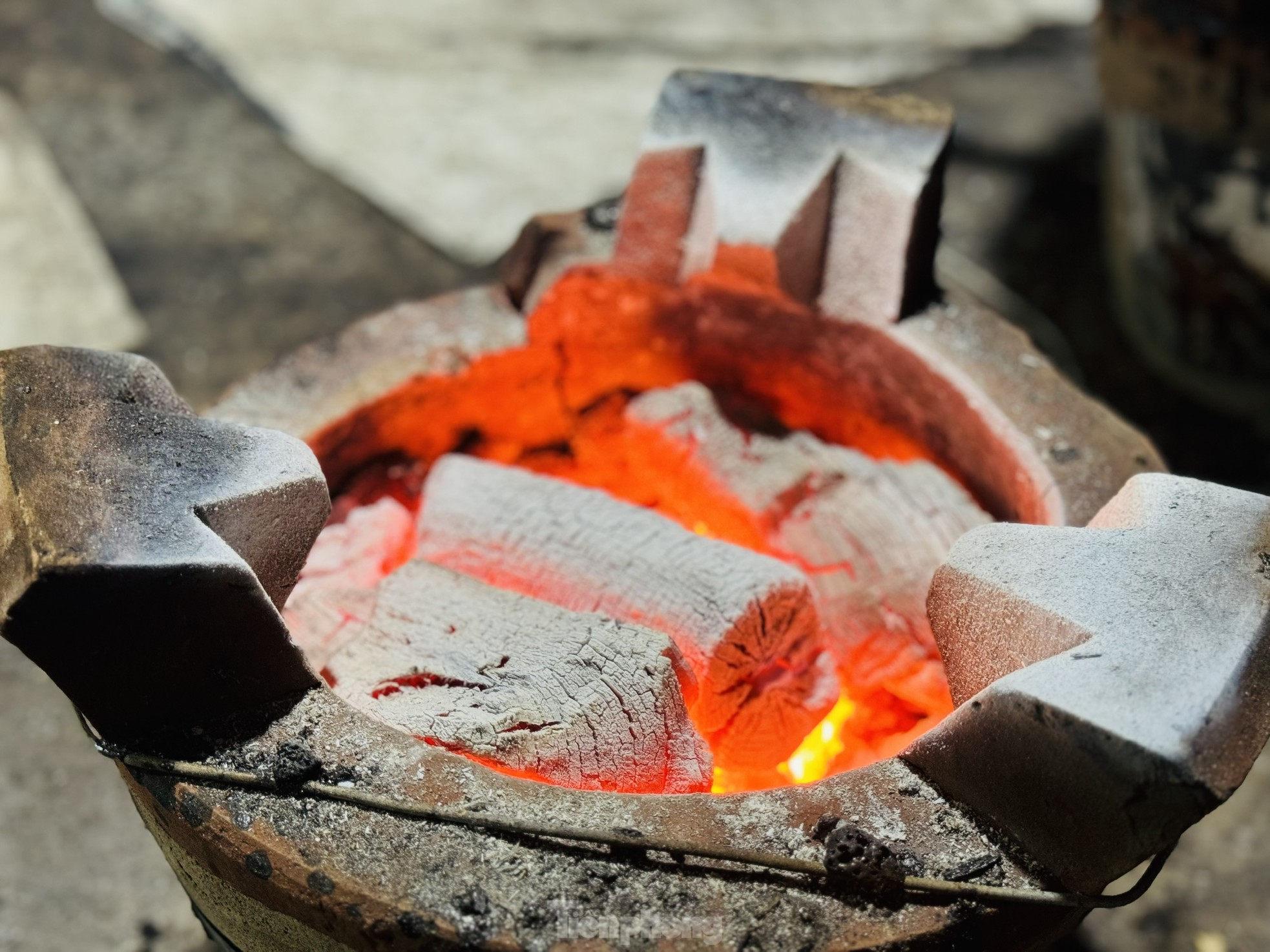
Throughout the simmering process, the person simmering must constantly monitor the pan to maintain a consistent heat. Too little or too much heat will both affect the quality of the ginger jam.
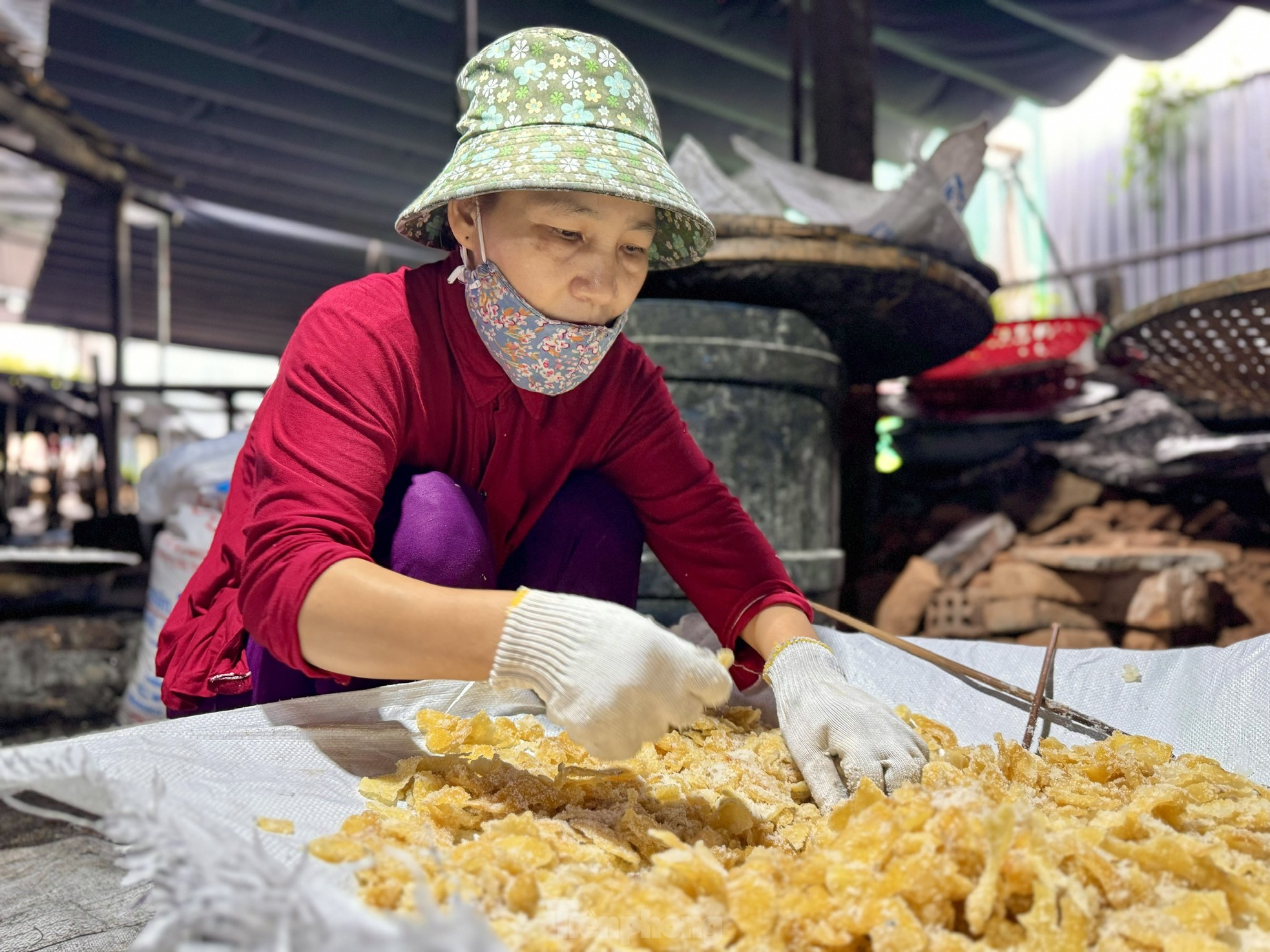
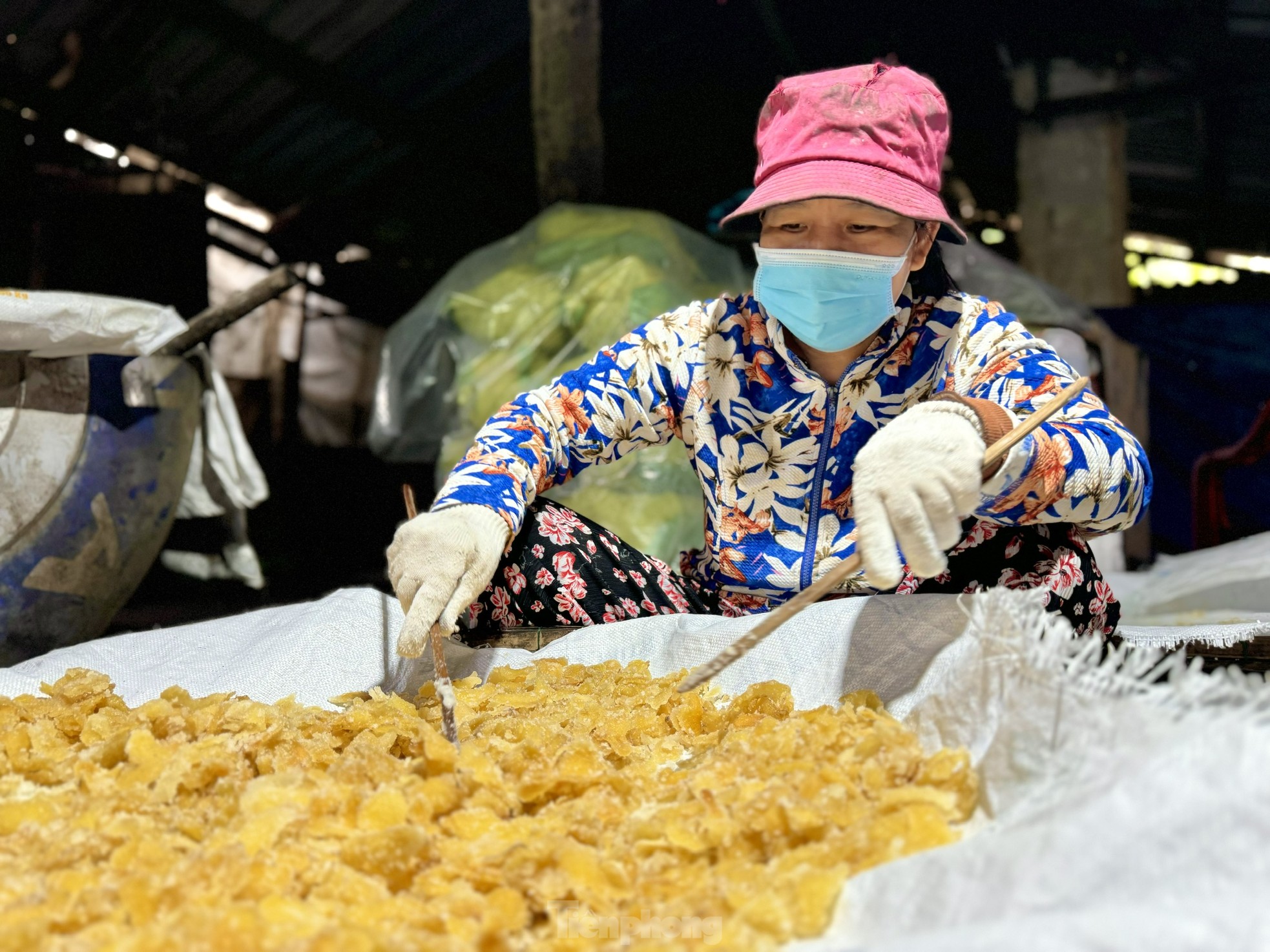
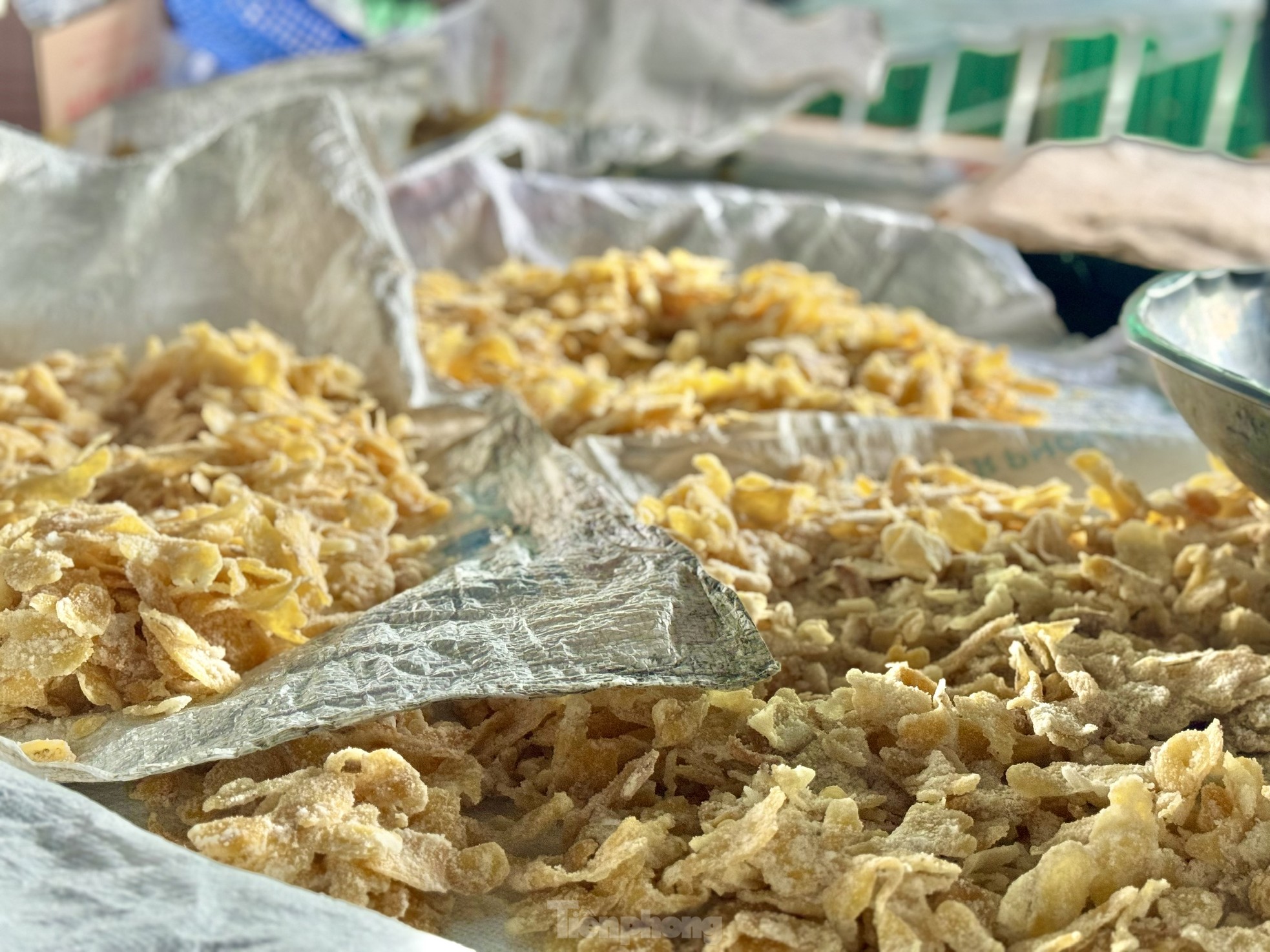
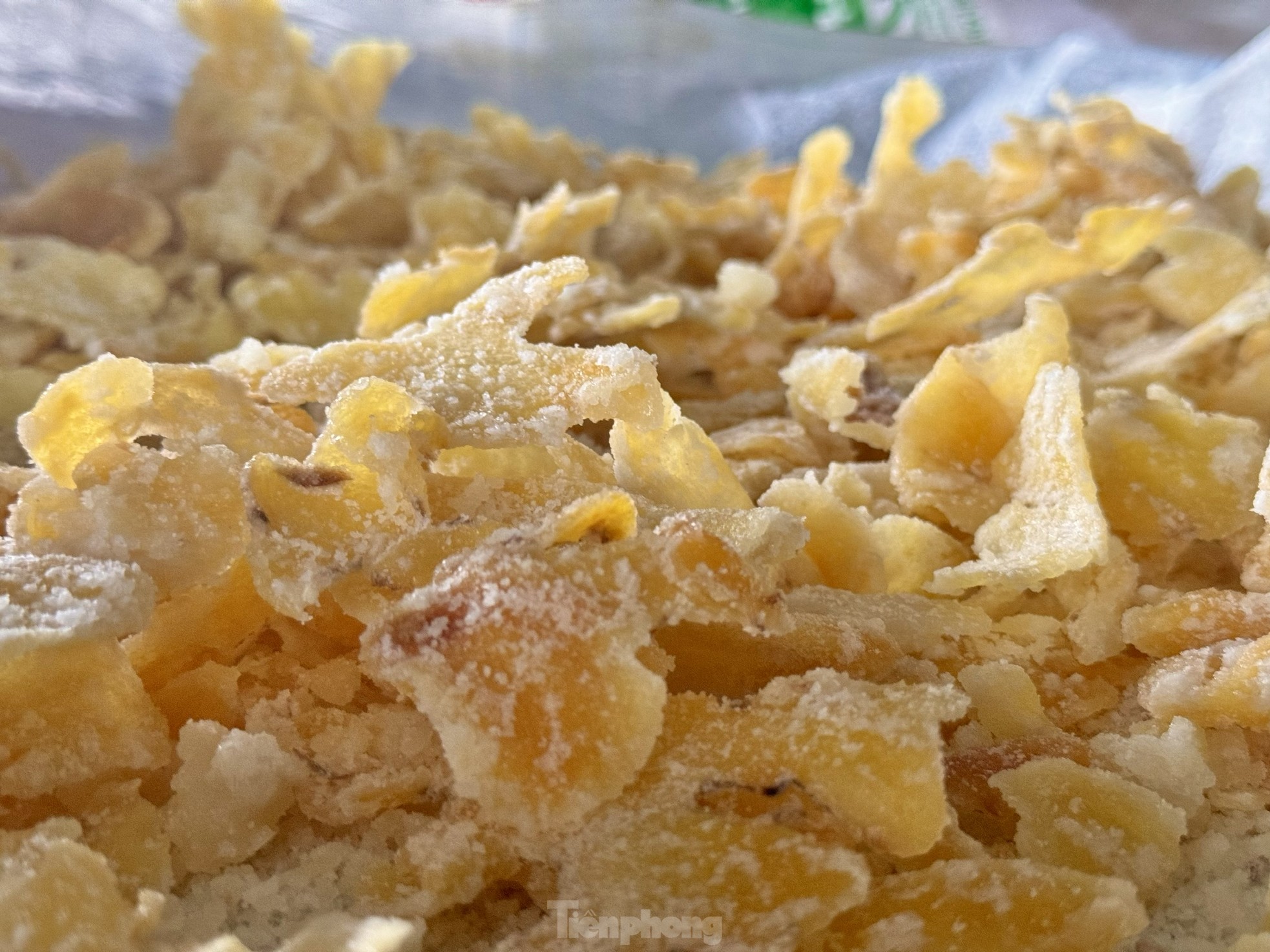
If the ratio of sugar and the heat of the pan used for simmering the ginger jam are not right, the ginger will turn black, rendering the dish a failure. After simmering, the ginger must be poured out and arranged in slices so that they spread out. Only then will the ginger look beautiful.
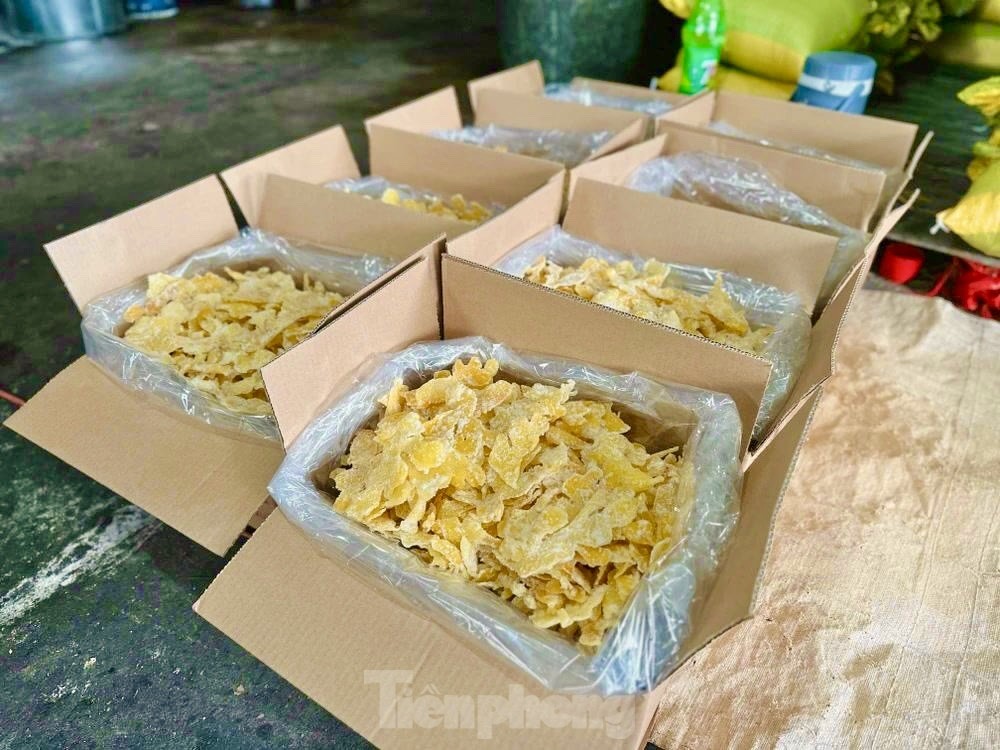
After spreading the ginger out on trays to cool, the ginger jam is considered complete. The jam is then transferred to boxes, packaged, and shipped to the order locations. The family's homemade ginger jam is sold in many places, not just in Quang Ngai.
"In previous years, my family could use more than 20 tons of ginger to make candied ginger for Tet (Lunar New Year). However, in recent years, the market has been tight, so my family has started to scale back production. In the last few years, we've only made a moderate amount, about a few tons of ginger at most, because the demand is no longer as high as before," Mrs. Lam shared.
Although it has only been practiced for a short time, the traditional jam-making profession in Nghia Dong commune (Quang Ngai city) not only helps the owners of the workshops earn a decent income, but also creates a significant source of income for many local women.
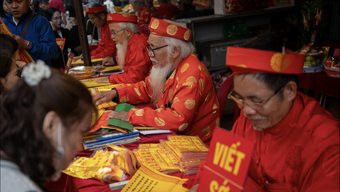
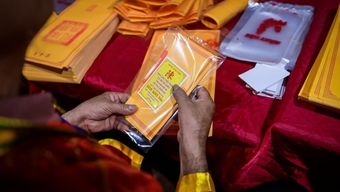
Scenes of people preparing 'tribute offerings to the imperial court' in the days leading up to Tet (Lunar New Year).
Quang Nam's traditional rice cakes are in high demand during the spring season.
The famous ginger jam village along the Perfume River is bustling with activity day and night during Tet (Lunar New Year).









![[Photo] General Secretary To Lam presides over a meeting with the Editorial Teams to summarize 100 years of the Party's leadership of the Vietnamese revolution and 40 years of implementing the National Construction Program.](https://vphoto.vietnam.vn/thumb/1200x675/vietnam/resource/IMAGE/2026/03/04/1772601288977_a1-bnd-8134-7576-jpg.webp)






















































































Comment (0)