

However, health authorities assert that no tobacco product is completely safe for health. E-cigarettes and heated tobacco products contain nicotine and remain addictive.
The level of toxicity is equivalent to traditional cigarettes.
According to the Ministry of Health , to mask the harshness of nicotine – a highly addictive substance – e-cigarette manufacturers use many flavorings such as mint, apple, orange, and lemon. This makes e-cigarettes more palatable, easier to inhale, and more appealing, attracting users, especially young people. E-cigarettes also contain vitamin E acetate and THC – a psychoactive substance found in marijuana, which is believed to be a major cause of thousands of lung injuries.
Meanwhile, heated tobacco products are processed using a special method from regular cigarette materials (using paper, tobacco leaves, or wood impregnated with nicotine). The amount of nicotine, the composition of other substances, and the level of toxicity are not significantly different, and are comparable to regular cigarettes.
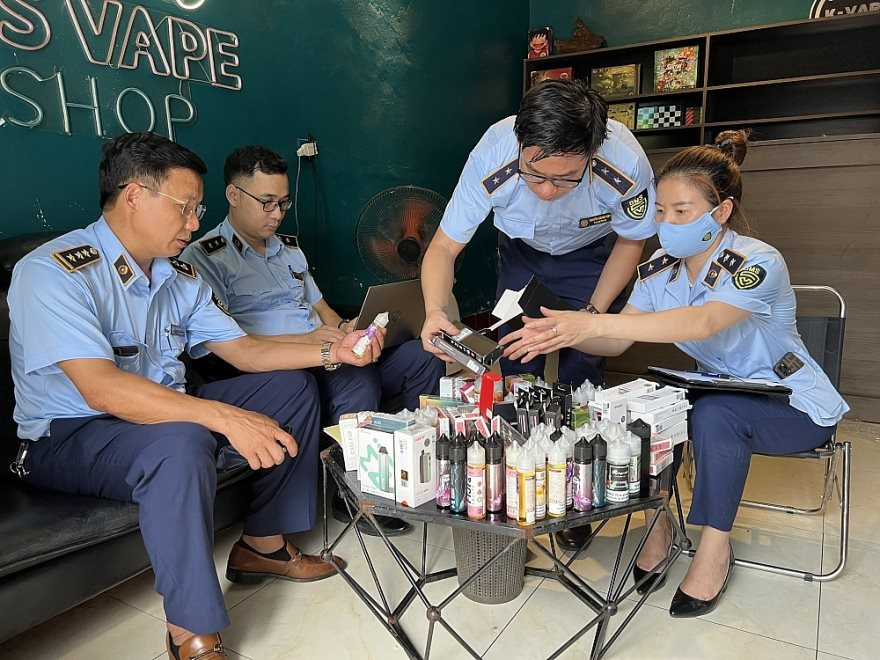
The World Health Organization (WHO) affirms that there is no evidence worldwide that e-cigarettes help people quit traditional cigarettes. The WHO also does not recognize e-cigarettes as a "tool to aid in quitting smoking." Furthermore, young people who have never smoked traditional cigarettes but use e-cigarettes are 2-3 times more likely to become addicted to traditional cigarettes compared to those who have never used e-cigarettes.
* Using e-cigarettes and heated tobacco products can cause damage to the lungs, heart, and brain, especially in young people.
* Just like smoking regular cigarettes, heated tobacco products and e-cigarettes also release toxic chemicals found in car exhaust and pesticides that cause cancer.
* Using e-cigarettes and heated tobacco products quickly leads to nicotine addiction and makes quitting difficult.World Health Organization (WHO)
At the Conference of Parties to the World Health Organization's Framework Convention on Tobacco Control, all countries agreed on the view that all tobacco products are harmful to health. Promoting heated tobacco products as containing fewer harmful chemicals than traditional cigarettes will mislead users about the harmful effects of heated tobacco products.
The WHO urges countries to avoid drawing unfounded conclusions about the safety of these products and to fully implement effective tobacco control measures as stipulated in the Framework Convention instead of using new products advertised as less harmful. Parties should prioritize measures to prevent the introduction of new tobacco products, including, at the highest level, the enactment of bans.
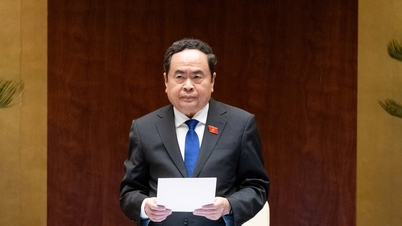
Sharing his views on the current state of e-cigarette use in Vietnam, Dr. Tran Van Thuan, Deputy Minister of Health, stated: In the past three years, the number of e-cigarette users has been increasing. According to research conducted by the Institute of Health Strategy and Policy, Ministry of Health in 2020, the rate of e-cigarette use in 34 provinces and cities increased 18 times compared to 2015, from only about 0.2% to 3.6%.
Notably, up to 8% of women and girls use e-cigarettes, compared to only 1.2% of women who smoke traditional cigarettes. E-cigarette use among adolescent girls, young women, and women of reproductive age can lead to negative consequences for reproductive health and the quality of future generations.
It poses many potential social and environmental risks.
According to Dr. Tran Van Thuan, several surveys within the e-cigarette user community clearly show a link between e-cigarette use and other social ills such as drug use, shisha smoking, and other addictive substances.
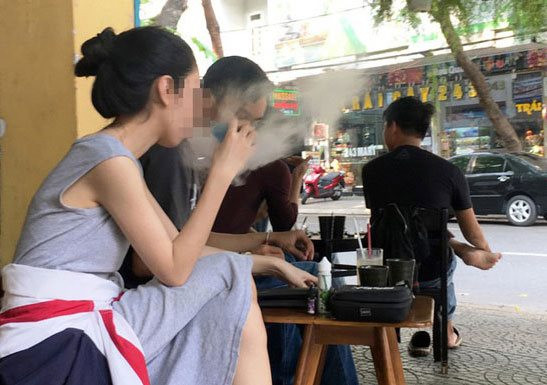
E-cigarettes use many flavorings and chemicals, making them susceptible to drug use through adulteration. Users can arbitrarily increase the nicotine content excessively or add drugs and other addictive substances without being easily detected. The adulteration of e-cigarette liquids (cannabis and marijuana) has been documented at the Poison Control Center of Bach Mai Hospital and the Drug Testing Center of the Institute of Criminal Science - Ministry of Public Security. These consequences negatively impact the health, environment, lifestyle, and behavior of young people.
More dangerously, these mixed drugs have infiltrated schools and families, threatening the lives and health of very young students. At the end of 2022, Bai Chay Hospital (Quang Ninh) also admitted four students (born in 2008) to the emergency room due to e-cigarette use. Initial information indicated that about an hour before admission, the male students had used e-cigarettes, but the type and origin were unknown. Afterward, the patients experienced dizziness, general discomfort, weakness, trembling hands and feet, chest tightness, shortness of breath, and frequent vomiting. The common cause was that they had tried or inhaled e-cigarettes.
Another case involved a 5-year-old boy in Hanoi who ingested about 5ml of a yellow liquid from an e-cigarette. Fifteen minutes later, he experienced convulsions, vomiting, and then fell into a coma, and was rushed to the National Children's Hospital for emergency treatment. Tests revealed that the boy tested positive for ADB-BUTINACA, a new type of synthetic drug. After a few days of treatment, the boy was discharged but remains under close monitoring to prevent complications.
The results of the 2021-2022 Ministry of Health's survey on tobacco use among 13-15 year olds show that over 60% of teenagers received e-cigarettes as gifts from others; over 20% purchased them online, and about 2% bought them from classmates. The ease of access to e-cigarettes, coupled with the lack of timely legal regulations, is the main reason for the increase in users in Vietnam, especially among young people who are easily attracted to new trends.
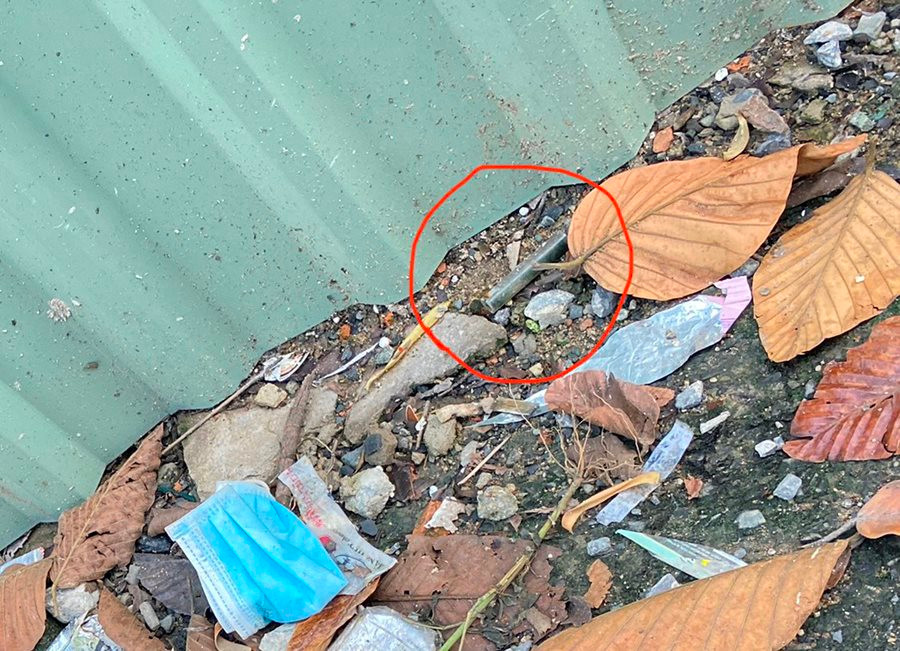
According to Dr. Ho Thi Hong from the Dong Nai Provincial Center for Disease Surveillance, besides the health hazards such as causing cardiovascular, respiratory, and digestive diseases similar to regular cigarettes, e-cigarettes and heated tobacco products also pose potential risks and contribute to social ills, negatively impacting the lifestyles of young people, and causing both immediate and long-term environmental damage.
Current e-cigarette products lack proper disposal instructions. According to a 2017 World Health Organization (WHO) report and other studies, two-thirds of all cigarettes are discarded indiscriminately; the cost of cleaning up discarded cigarettes alone is $11 billion, not including other environmental costs throughout the tobacco supply chain: planting trees, drying, etc. Furthermore, e-cigarette and heated tobacco devices contain many components: plastic, batteries, circuit boards, liquid containers, etc., making the dismantling, sorting, and recycling or disposal processes complex and expensive. If discarded in broken or shattered form, they can release harmful substances such as metals, acids, and nicotine into the environment.
Therefore, to protect their own health and the health of those around them, and to protect the environment, people - especially teenagers - should practice a healthy lifestyle, know how to refuse temptations, and say no to tobacco and harmful products.
Some recommendations from the WHO to strengthen tobacco control:
- Increasing tobacco taxes is the most effective measure to reduce purchasing power, thereby decreasing tobacco consumption and exposure, especially among teenagers.
- It is necessary to create smoke-free environments, paying particular attention to public areas frequented by young people such as restaurants, shopping malls, and entertainment venues.
- Strengthen the enforcement of regulations that comprehensively prohibit advertising, promotion, and sponsorship in all forms.
- Strengthen the management of tobacco sales to minors, prohibit tobacco sales in areas around schools, and especially prevent the increasing access to and use of e-cigarettes.
- Monitoring and supervising tobacco use through survey and data monitoring tools.
Source
![[Photo] General Secretary To Lam attends the ceremony commemorating the 80th anniversary of the Traditional Day of the Vietnamese Sports and Physical Education Sector.](https://vphoto.vietnam.vn/thumb/1200x675/vietnam/resource/IMAGE/2026/03/28/1774673986806_a1-bnd-4909-8531-jpg.)

![[Video] Vehicles banned from crossing Long Bien Bridge for 2 months.](https://vphoto.vietnam.vn/thumb/1200x675/vietnam/resource/IMAGE/2026/03/28/1774680289371_1-png.)
![[Photo] Close-up of an Australian warship visiting Tien Sa port, Da Nang](https://vphoto.vietnam.vn/thumb/1200x675/vietnam/resource/IMAGE/2026/03/28/1774675489416_tau-5-jpg.)






















































































Comment (0)