

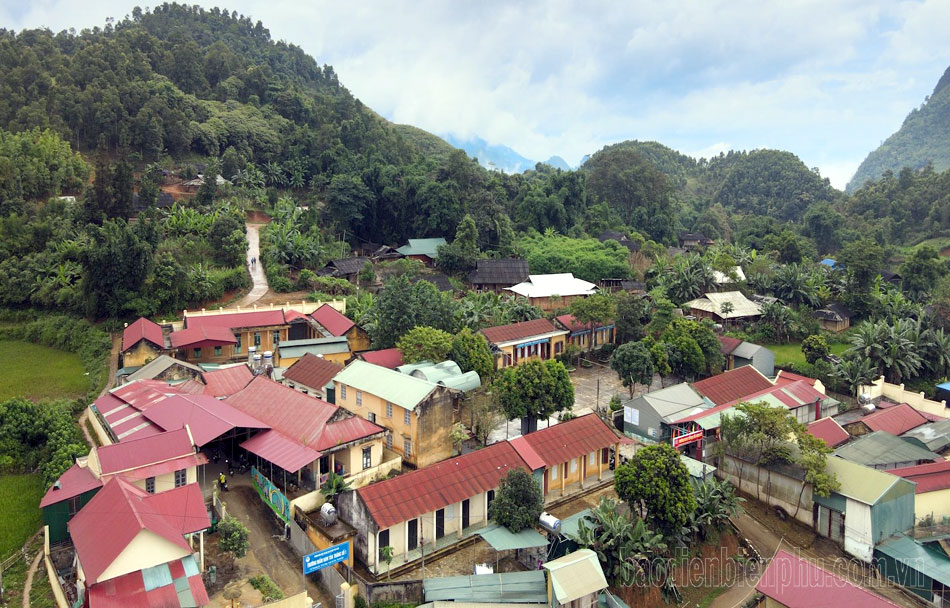
During the resistance war against the French, Tủa Thàng commune served as a hiding place for Viet Minh cadres and was the first revolutionary base of Tủa Chùa district. During that period, thousands of people volunteered to become liaisons and guides for Viet Minh cadres carrying out revolutionary activities. After the Dien Bien Phu victory, the lives of the people in the Tủa Thàng revolutionary base area faced many difficulties, with infrastructure destroyed by the war. People had to go into the forest to dig up wild yams to eat. Despite the hardships, the people remained loyal to the Party, placing absolute trust in its leadership.
Building on revolutionary traditions, the people of Tủa Thàng unite in labor and production, developing the economy , gradually stabilizing their lives, and working together to build their homeland. To date, this former revolutionary base area has gradually transitioned from a self-sufficient economy to a market economy, with many new economic sectors opening up, contributing to the development of the local potential. The lives of the people are basically stable, with many households becoming well-off; infrastructure has been invested in and built, rural roads have been concreted, and houses have been built in a more modern and spacious manner.
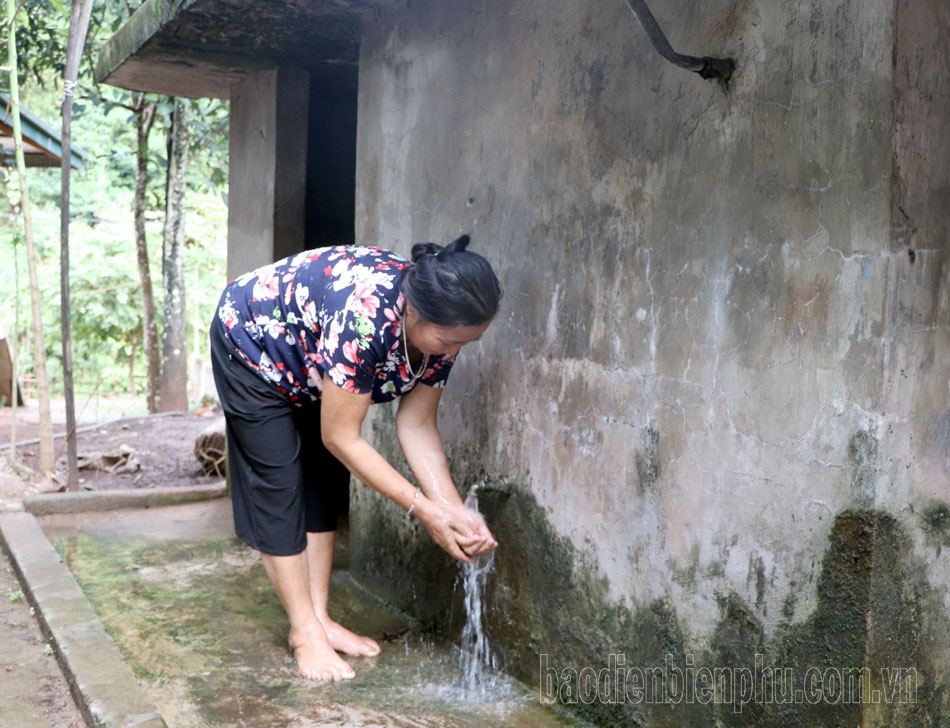
Leading us on a tour around the commune along the concrete road that stretches to every hamlet, past lush green rice and corn fields, the Chairman of the Tủa Thàng Commune People's Committee, Cà Văn Phiến, said: From the ruins and devastation after the war, the cadres and people of Tủa Thàng have upheld the revolutionary tradition, working together to build their homeland and steadily advance on the path of renewal. The Party Committee and the government of Tủa Thàng commune have identified economic development as the central task and Party building as the key task. The commune's Party Committee has issued many specialized resolutions on economic development, poverty reduction, and eliminating villages and hamlets without Party members or Party branches... Typical examples include: the resolution for each Party member to help one poor household develop its economy; the resolution on developing specialized areas for crop cultivation and livestock farming…
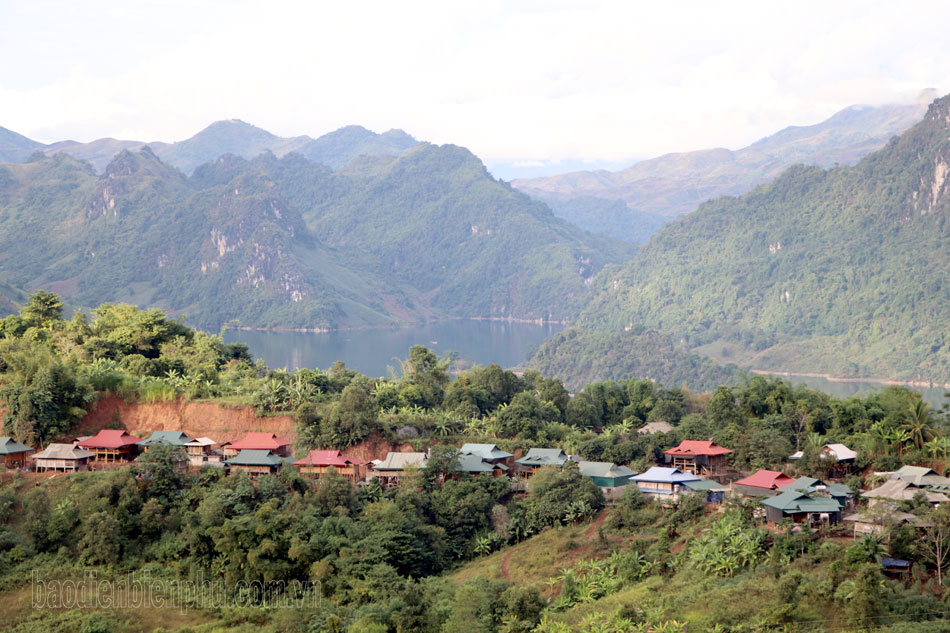
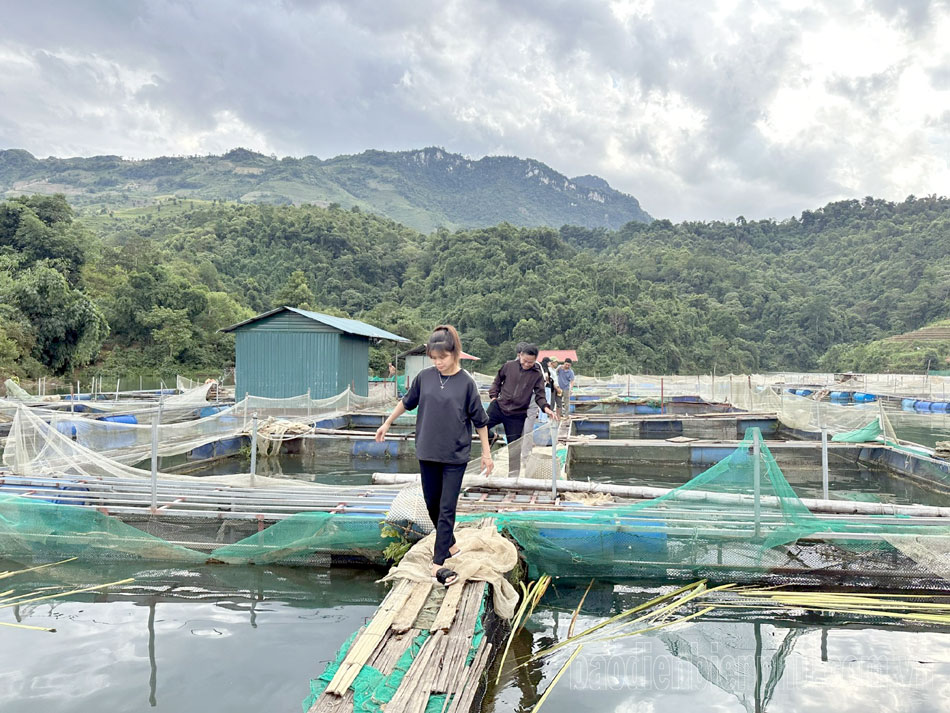
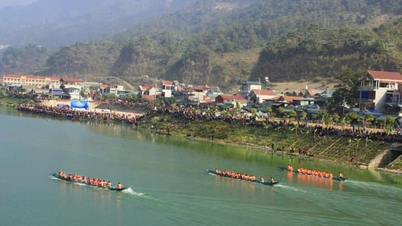
Based on thematic resolutions and actual conditions, Tủa Thàng commune is focusing on planning specialized farming areas, such as: livestock grazing areas in Tà Huổi Tráng 2 and Làng Vùa villages; rice cultivation areas in Huổi Trẳng, Tà Si Láng 1, and Tà Si Láng 2 villages; and aquaculture and fishing areas in Huổi Trẳng village... This has exploited and developed the potential and strengths of each region. For example, in Huổi Trẳng village, the lives of the people have improved thanks to leveraging the advantage of its proximity to the river to develop cage fish farming, with 42 households raising 170 fish cages on the Đà River; the average yield reaches 30-35 tons/year. Many households earn a profit of about 40-50 million VND/year from this cage fish farming model.
In livestock development, the number of cattle and poultry has increased year by year. To date, the total livestock population is nearly 7,700 and the poultry population is over 34,400. Many livestock farming models and farms have been established and have brought high economic efficiency, such as the livestock farm of Mr. Quang Van Thoi in Ta Huoi Trang 2 village. Previously, Mr. Thoi's family was a poor household in the village. In 2018, Mr. Thoi borrowed capital from the bank to invest in building barns and buying buffalo and cattle breeds for breeding. To date, Mr. Thoi's family consistently maintains over 20 buffalo and cattle; they have a stable income, have escaped poverty, and have become a successful production and business household in Tua Thang commune.
The war is long over, and with each passing year, the Party Committee, government, and people of the revolutionary base area of Tủa Thàng further enrich the glorious history of their homeland with many achievements in various fields. Economic indicators are higher each year than the previous one. Currently, the area of grain crops in the commune is 745 hectares, with a production of 2,481 tons; average food production is 422 kg/person/year. In the new rural development program, the entire commune has achieved 12 out of 19 criteria; the poverty rate has decreased to 31.4%; rural transportation has been basically built, making car travel convenient. The lives of the people have improved significantly, both materially and spiritually. The transformation of the revolutionary homeland of Tủa Thàng today is due to the unity and solidarity of the entire Party Committee, government, and people in economic development and poverty reduction. This is the foundation for Tủa Thàng to continue writing a proud chapter in its history during the period of renewal.
Source











![[Image] Fifth meeting of the Steering Committee for National Projects in the Railway Sector](/_next/image?url=https%3A%2F%2Fvphoto.vietnam.vn%2Fthumb%2F1200x675%2Fvietnam%2Fresource%2FIMAGE%2F2026%2F01%2F06%2F1767712857541_ndo_br_dsc-0581-jpg.webp&w=3840&q=75)














































Comment (0)