Where can I get a loan with an interest rate of 7% per year?
Many banks have announced interest rate reductions on loans, down to as low as 7-8% per year. However, last weekend, the author contacted a branch of Vietnam Maritime Commercial Bank (MSB) in Ho Chi Minh City and received detailed guidance on loan application procedures for production and business activities.
Besides real estate as collateral, businesses must provide two years of financial statements including taxable revenue of approximately 2-11 billion VND, company bank statements (possibly including the owner's account) for six months, a list of value-added tax invoices for four quarters (reported to the tax authorities), and one or two contracts with business partners… If the application is approved, the loan interest rate is 11.5% per year. For individual loans, the process is simpler, requiring only collateral and proof of income, but the interest rate for individuals can reach up to 12.99% per year.
This is a floating interest rate, so after a while, the base interest rate plus a 3% margin will be recalculated. Based on the current rate, this is approximately 13% per year. "To be more proactive, you should complete the application process early to avoid a situation where your credit limit is reached, like in 2022," the bank employee enthusiastically advised.
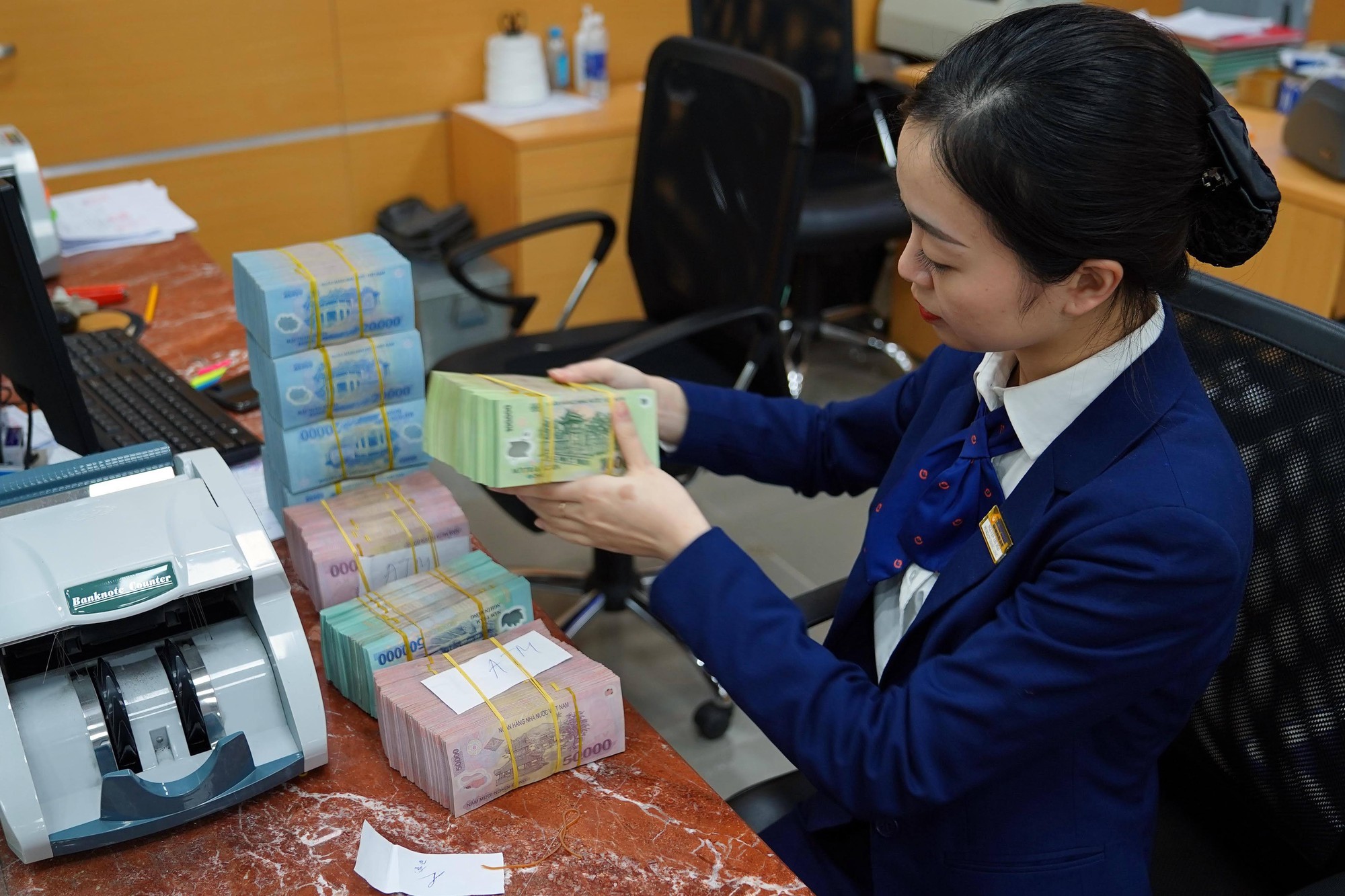
Businesses are still finding it difficult to borrow capital, and interest rates remain high.
Similarly, a credit officer at TPBank, named D., also stated that the current lending interest rate for businesses is around 9-10% per year. The bank has also begun to control credit growth again, as the growth rate in the first quarter of 2023 was quite high. Therefore, the timing of disbursement will depend on whether the bank's credit limit is still available or has been exhausted. Responding to the question of why there is information suggesting that the bank is unable to lend despite nearly reaching its credit limit, D. explained: "Besides lending, a portion of the current credit limit is used to handle bonds as per regulations."
When asked if they could access loans at 7-8% interest per year, Mr. Tran Thanh Hai, director of a company in District 6 (Ho Chi Minh City), said: "There's no such interest rate. My company is borrowing from a state-owned commercial bank at 9% per year for a 3-month loan." This interest rate represents a 0.2% reduction compared to the beginning of the year. He was happy to hear that deposit interest rates were going down, as he thought loan interest rates would follow suit, but in reality, the reduction in loan interest rates wasn't significant compared to the rate of decline in deposit interest rates. Furthermore, according to Mr. Hai, compared to the 5.4% per year deposit interest rate offered by this bank for a 3-month term, the loan interest rate is still 3.6% higher. This difference in interest rates is still too large.



Businesses are having difficulty obtaining loans and are turning to illegal lenders.
Not only are interest rates of 7-8% per year just a "dream" for many businesses, but even 10% per year is still quite rare. This is even true for priority sectors identified under Decree 31/2022 dated May 20, 2022, which provides a 2% interest rate subsidy from the state budget.
Mr. Nguyen Ngoc Thanh, Director of Kim Phat Transportation Company
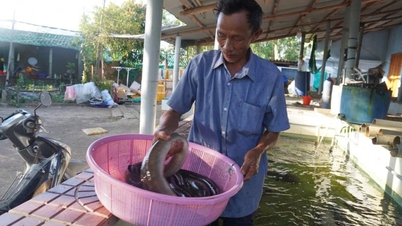
Mr. Duong Anh Tuan, Director of Binh Minh One-Member Limited Company, a livestock farming enterprise in Dong Nai , expressed his frustration, stating that businesses still face significant difficulties accessing capital from banks. At the beginning of the year, all collateral assets were revalued by banks at a 10-15% reduction, and subsequently, loan limits were lowered. As a result, his company has been unable to obtain new loans since the beginning of the year, while interest rates on existing loans remain at 9-11% per year. Although eligible for interest rate support, the company's application did not meet the requirements because revenue and profit in the first quarter of 2023 decreased significantly compared to the previous year, while banks require them to be equal to or higher than the previous year.
Mr. Tuan stated that the livestock industry is currently facing significant difficulties. Businesses that are still able to borrow capital are hesitant because with interest rates at 10% per year, generating enough profit to cover bank interest is a daunting challenge. Meanwhile, the cost of raising chickens is currently around 29,000-30,000 VND per bird, but the selling price only fluctuates between 19,000-20,000 VND per bird, 30% lower. Businesses already struggling, lacking funds, and needing loans cannot meet the bank's requirements. Therefore, the situation of businesses resorting to high-interest loans to buy poultry feed and pay employee salaries is inevitable.
"A reduction of only 0.5-1% in bank lending rates compared to the beginning of this year is not enough, while feed costs and financial expenses have increased by 20-30%. Businesses that are still eligible are hesitant to borrow, so they are not interested in the 2% interest rate support package. A more comprehensive support policy is needed, allowing livestock farmers to borrow at lower preferential interest rates so that borrowers will be motivated to overcome difficulties and have a chance to recover; otherwise, the current situation presents countless challenges," Mr. Tuan said.
Similarly, Mr. Nguyen Ngoc Thanh, Director of Kim Phat Transport Company, stated that the interest rate his company is currently paying is still close to 12% per year. He inquired with banks about the interest rate for new loans, noting that it would remain around this level, with no possibility of a lower rate; however, the most important factor is the difficulty in securing additional disbursements. Since the beginning of the year, the company's collateral has been revalued by approximately 15% compared to the previous year, which means the company's loan limit has also decreased accordingly due to the lack of additional collateral.
Furthermore, many banks unfairly value assets for loans. For example, banks state that if a business borrows to buy a vehicle of Chinese origin, they can only borrow a maximum of 50%, while vehicles of other countries can still be approved for up to 80-90%. This discriminatory asset valuation creates difficulties for businesses, especially in the transportation sector. "If we can't borrow, how can we access the 2% interest rate support package announced by the government? Each industry has its own characteristics; credit policies should be more flexible to support businesses through this difficult period. If the old methods are still applied, no one will be able to access capital," Mr. Thanh expressed his frustration.



According to the Vietnam Chamber of Commerce and Industry (VCCI), the rate of businesses accessing credit has been declining recently. The percentage of businesses with loans from banks was 49.4% in 2017, decreasing to 45% and 43% in 2018 and 2019 respectively. In 2020, amidst the emergence of the Covid-19 pandemic, 42.9% of businesses still had loans from banks. However, this rate dropped to only 35.4% in 2021 and further to 17.8% in 2022.
Concurring, Mr. Pham Van Viet, Vice Chairman of the Ho Chi Minh City Textile, Garment and Embroidery Association, argued that if lending conditions remain unchanged, businesses that cannot obtain loans will continue to be unable to do so. Even though lending interest rates have been reduced by 0.5-1% compared to the beginning of this year, small and medium-sized enterprises (SMEs) in this sector still cannot access loans. "Removing difficulties for businesses means rescuing the majority, those facing hardship, not just filtering out good businesses that are operating normally. Therefore, credit policies need to be changed and reconsidered according to each business sector to better suit reality, rather than applying the same conditions to all fields," Mr. Viet emphasized.
The results of the 2022 PCI survey, which surveyed 12,000 businesses and was published in mid-April by the Vietnam Chamber of Commerce and Industry (VCCI), show that the biggest difficulty businesses are facing is access to credit. Notably, in 2022, access to credit became the biggest concern for approximately 55.6% of businesses, much higher than the 37-47% figures in the years 2017-2021. If unable to borrow from banks, businesses still have to find other sources. These mainly include borrowing from relatives and friends; raising funds from shareholders; borrowing from other businesses; or mortgaging or selling business assets.
Even more concerning, statistics show that 12.5% of businesses have resorted to borrowing from informal lenders, a sharp increase from 4% in 2021. Naturally, the interest rates on these informal loans are very high, averaging around 46.5% per year, approximately 5.5 times higher than the average annual interest rate on loans from banks.
Source link



![[Photo] "Hanoi Lotus Festival" honors the lotus flower that has been associated with Vietnam for thousands of years.](https://vphoto.vietnam.vn/thumb/1200x675/vietnam/resource/IMAGE/2026/06/27/1782516943048_sen-ha-noi-2026-minh-duy-1-jpg.webp)