

Delegates decide on the level of confidence after reviewing work performance reports, asset declarations, monitoring task execution, and assessing the proactive and innovative spirit of the officials.
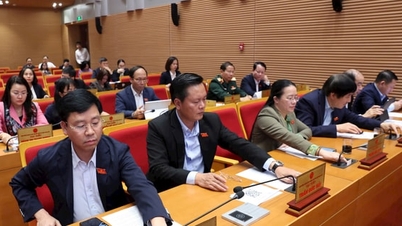
On the morning of October 25th, National Assembly delegates cast secret ballots to express their confidence in 44 positions elected or approved by the National Assembly. The results of the vote were announced that afternoon. This is the fourth time the National Assembly has held a vote of confidence, following those in 2013, 2014, and 2018.
The plan for the confidence vote at the 6th session was announced to delegates early on. A new feature is that, in addition to asset declarations, those subject to the confidence vote will also self-assess and review their work performance over the past period. These documents are sent to National Assembly delegates for review and will serve as one of the bases for determining the level of confidence.
After carefully reviewing the reports, Associate Professor Nguyen Chu Hoi (former Deputy Director General of the Department of Seas and Islands) assessed that the information provided helped delegates gain a more comprehensive, complete, accurate, and multi-faceted perspective. The delegate from Hai Phong City was particularly interested in the specific products and results of the work of the leaders being evaluated.
"I will assess how each individual position handled the situation, considering both the overall challenges and favorable circumstances, and what new developments emerged. I will also examine the impact of their achievements on the national situation or the specific sector," Associate Professor Nguyen Chu Hoi shared.
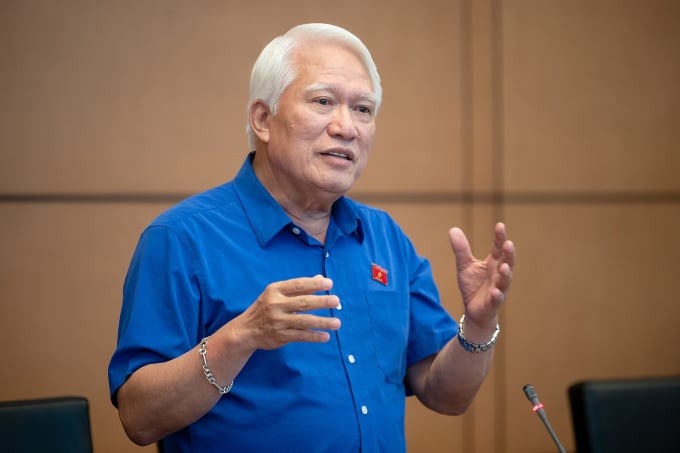
Representative Nguyen Chu Hoi. Photo: National Assembly Media
Representative Pham Trong Nghia (Director of the National Assembly's Center for Scientific and Legislative Information) also spent considerable time monitoring the practical performance of those being evaluated. He stated that the confidence rating would be based on work results, demonstrated in the fulfillment of tasks assigned by the National Assembly and the Government to each sector and field.
"I carefully assess the volume, quality, and progress of the work; its impact; and its practical effectiveness, based on the level of task completion," Mr. Nghia said.
In addition, he also listened to public feedback on the performance of officials. Areas where voters appreciated performance and areas where voters were dissatisfied were compiled as information to be used in evaluating public trust.
"The reports on the work performance of senior officials since the beginning of their term, which were submitted to delegates for a vote of confidence, were objective and comprehensive. Some even detailed their own limitations and weaknesses, along with proposed solutions for the future," Mr. Nghia shared.

Representative Pham Trong Nghia. Photo: National Assembly Media
Representative Le Thanh Hoan (in charge of the Law Committee) stated that he would base his assessment on the level of initiative and decisiveness of officials, and synthesize information from various sources to ensure the most objective and impartial evaluation. Regarding leaders of the Judiciary, he would base his confidence rating on the results of monitoring prosecution and trial activities.
Taking a vote of confidence helps leaders to self-reflect and self-correct.
Participating for the second time in the confidence vote for positions elected and approved by the National Assembly, Professor Nguyen Anh Tri (Hanoi delegation) assessed this as a very important activity in the parliamentary arena. "The confidence vote in the National Assembly is conducted by the highest power body on behalf of the people and voters, so it is essential for leaders and heads of departments to self-reflect, self-examine, and self-correct," Professor Tri said, adding that even without considering the confidence vote percentage, this process has great significance in encouraging those holding positions subject to the vote to strive and make greater efforts in their work.
When the vote count results are announced, leaders with high approval ratings will feel more encouraged and confident because they have done a good job and will continue to build on that success. Those with low approval ratings "will be reminded to try harder and make more effort in fulfilling their responsibilities."
"Through the 2018 confidence vote, I saw that many leaders had changed in a positive and more progressive direction," Mr. Tri assessed.
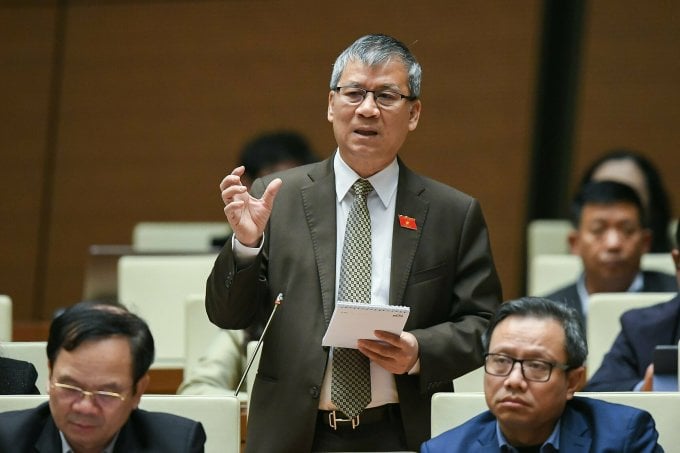
Professor Nguyen Anh Tri. Photo: National Assembly Media
Concurring, Associate Professor Nguyen Chu Hoi emphasized that the positions subject to the confidence vote are important leaders of the country. Therefore, this activity helps them review their performance, address shortcomings in the first half of their term, and assess the trust of voters through the ballots of National Assembly representatives.
"The delegates' discerning, fair, and objective perspective will help the leaders better fulfill their responsibilities and duties to the Party, the State, and the people in the remaining half of their term," Mr. Hoi confidently stated.
According to Mr. Le Thanh Hoan, any leader or head of a sector, whether from the National Assembly, the Government, or the Judiciary, has strived to demonstrate their capabilities from the beginning of their term, not just during the period leading up to the vote. "There is no such thing as one ministry or sector receiving more attention than another, because everything is under the supervision of the National Assembly," Mr. Hoan stated.
According to Resolution 96, if a person being evaluated receives more than half but less than two-thirds of the total votes indicating "low confidence," they may resign, or the National Assembly Standing Committee may conduct a confidence vote (with two levels: confidence and no confidence). If a person receives two-thirds or more of the total votes indicating "low confidence," their dismissal will be submitted to the National Assembly, or their dismissal proposal will be approved. Therefore, the value of these confidence votes "has a direct impact on the official."
"The results of previous confidence votes reflected the performance of the department heads. Officials who received many low confidence votes subsequently made efforts to bring about practical changes," Mr. Pham Trong Nghia shared.
On the afternoon of October 24th, the 15th National Assembly approved the list of 44 individuals to be subject to a vote of confidence at its 6th session.
The National Assembly held three confidence votes in June 2013, November 2014, and October 2018, using secret ballots with three levels of confidence: high, confidence, and low . In all three instances, no one received more than 50% low confidence rating.
Viet Tuan - Son Ha
Source link
![[Photo] Prime Minister Pham Minh Chinh attends the Conference summarizing and implementing tasks of the judicial sector.](/_next/image?url=https%3A%2F%2Fvphoto.vietnam.vn%2Fthumb%2F1200x675%2Fvietnam%2Fresource%2FIMAGE%2F2025%2F12%2F13%2F1765616082148_dsc-5565-jpg.webp&w=3840&q=75)

















































































Comment (0)