

A representative from the Department of Telecommunications ( Ministry of Information and Communications ) stated that there are currently plans to shut down 2G and 3G networks in Vietnam.

Vietnam has a roadmap for shutting down 2G and 3G networks. Photo: Viettel
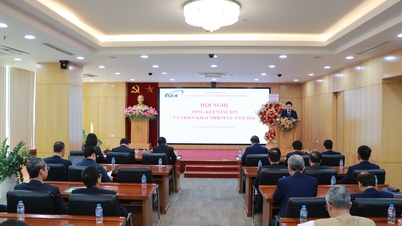
On July 18th, VietNamNet newspaper, in collaboration with the Telecommunications Department (Ministry of Information and Communications), organized a seminar titled "What should people prepare for when 2G is shut down?". According to the roadmap for phasing out 2G mobile networks in Vietnam, recently issued by the Ministry of Information and Communications, from September 16th, 2024, services will no longer be provided to subscriber devices that only support the 2G standard, except for providing services to subscriber devices connected to the 2G network for the purpose of transmitting and receiving data between devices (M2M) or providing services in the Truong Sa and Hoang Sa archipelagoes and the DK offshore platforms. Mr. Nguyen Phong Nha, Deputy Director of the Telecommunications Department, stated that 2G (30 years old) and 3G (nearly 20 years old) technologies are now outdated. 4G, 5G, and soon 6G technologies represent the next evolution of mobile networks, offering optimized options including faster speeds, greater capacity, and improved operational efficiency. "After phasing out 2G technology, 3G technology will be completely discontinued by September 2028," said the Deputy Director of the Telecommunications Department.
Mr. Nguyen Phong Nha - Deputy Director of the Telecommunications Department (far right) speaks at the seminar. Photo: Khanh An.
According to Mr. Nha, discontinuing 2G technology benefits the people, society, and businesses. For people using devices that only support 2G, network operators will provide support through subsidies for purchasing smart devices and offer data packages with more modern features suitable for the new technology. With smart devices, users will have access to many new services, including online public administration services, cashless payments, and information access through applications when accessing the internet. For businesses, shutting down 2G technology and, in the near future, 3G will help reduce operating costs. The expected increase in mobile data traffic when 2G technology is discontinued will boost revenue for telecommunications companies, as well as increase revenue for businesses providing content services and telecommunications application services, and create new opportunities for Vietnamese businesses to manufacture and supply devices supporting the new technology. For the government, not utilizing outdated, energy-intensive networks will contribute to reducing greenhouse gas emissions and gradually deploying energy-efficient mobile networks. To implement the 2G phasing roadmap, the Ministry of Information and Communications has requested mobile network operators to deploy 4G network infrastructure to ensure coverage that can replace the shut-down 2G base stations in all areas where 2G coverage is being phased out; focusing on infrastructure development in remote areas, border regions, and islands. The plan aims to ensure that by 2025, 100% of villages with poor signal coverage and access to the national power grid will have 4G mobile broadband coverage. As of May 2024, the number of 2G-only subscribers was over 11 million, accounting for approximately 9% of the total mobile subscribers nationwide. Currently, according to the plan to phase out 2G technology, mobile operators have reported that the number of 2G-only subscribers is expected to decrease to zero or to less than 5% of the total mobile subscribers of each company by September 2024.
Laodong.vn
Source: https://laodong.vn/cong-nghe/thoi-diem-tat-song-3g-tai-viet-nam-1368084.ldo







































































































Comment (0)