

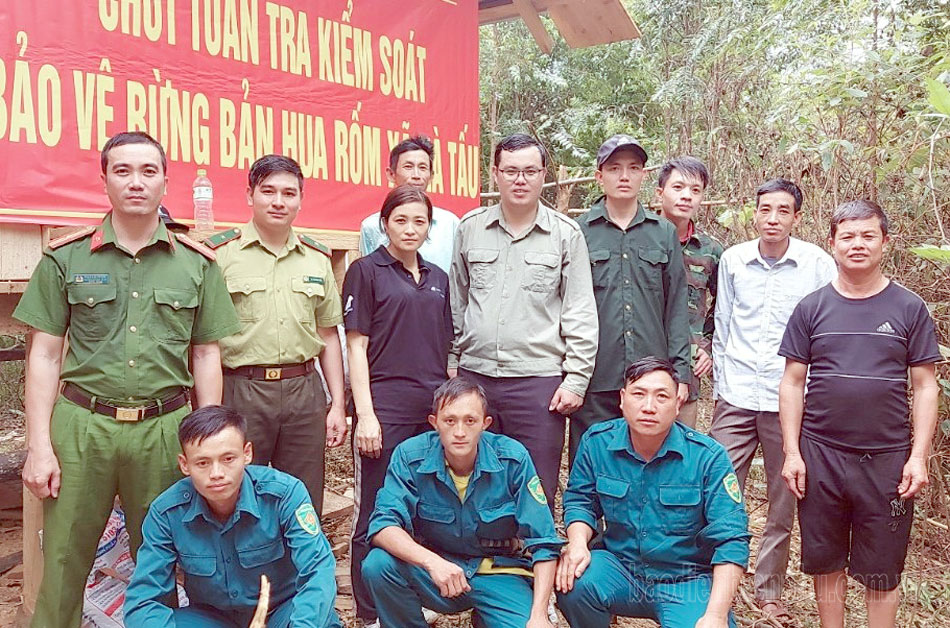
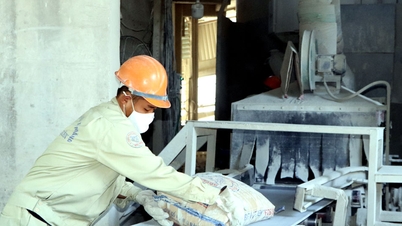
During the implementation of the Payment for Ecosystem Services (PES) policy, the Provincial Forest Protection and Development Fund focused on promoting awareness of the policy. As a result, agencies, organizations, and individuals implementing the policy have been proactive in fulfilling their obligations and responsibilities. For the Thac Trang Hydropower Plant in Dien Bien Phu City, when using PES for production, the unit has always strictly complied with the policy regulations. Based on its annual electricity production, the plant has fully paid the PES payments as stipulated in the policy. Because the plant's electricity production depends on the water supply, the plant has a full obligation when using the service.
Discussing this issue, Mr. Doan Van Cong, Head of Operations at Thac Trang Hydropower Plant in Dien Bien Phu City, said: “Every year, the plant maintains electricity production thanks to the water supply from the forest environment. When the State has regulations on payment according to policy, the unit also bases its calculations on the total electricity produced and compares it with the prescribed payment rate of 36 VND/kWh to create a total payment schedule and make payments periodically. To fulfill our obligations as a service user, we have never paid late, delayed, or underpaid compared to the regulations.”
To ensure the policy is implemented correctly, fully, and promptly, and to achieve its intended purpose and significance, the agencies, units, organizations, and individuals involved have coordinated their efforts at each stage. The Provincial Forest Protection and Development Fund is the focal point assisting the competent State agencies in organizing activities and tasks related to the payment of forest environmental service fees. The Fund represents the provider of forest environmental services and signs contracts with the users of forest environmental services to receive entrusted funds for forest environmental services annually on a regular basis. Based on the funds received from the service users, the Forest Protection and Development Fund proactively proceeds with the payment of forest environmental service fees to forest owners. To ensure accurate, complete, and timely payments, the Fund has implemented many necessary measures in accordance with regulations.
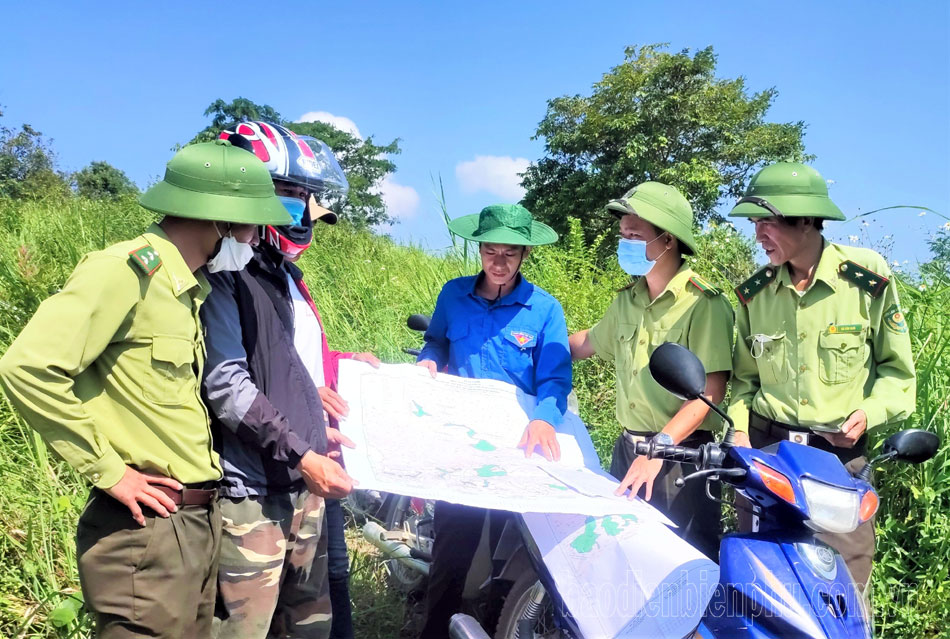
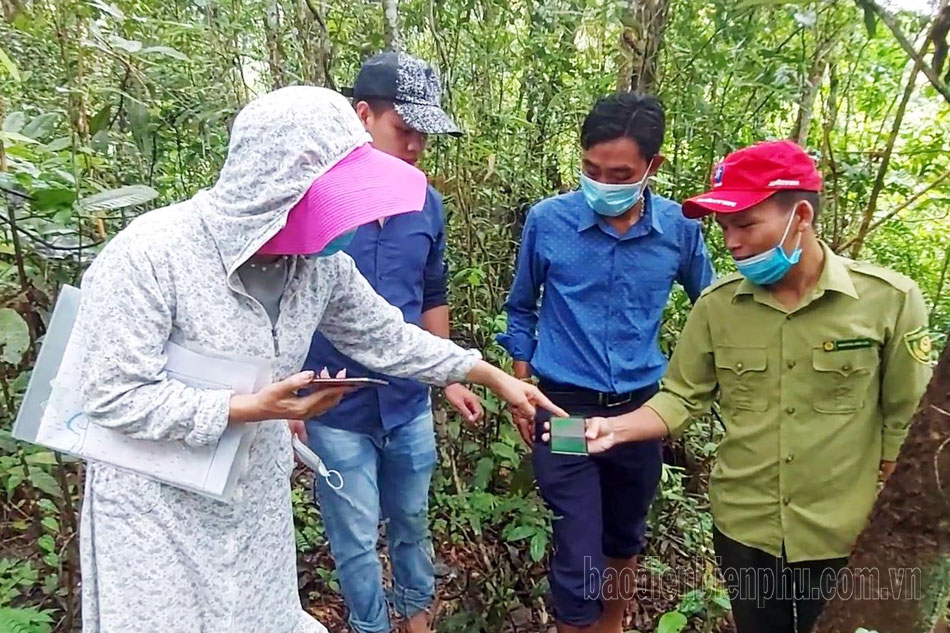
Mr. Phan Anh Son, Deputy Director of the Provincial Forest Protection and Development Fund, stated: The Fund's management, operation, and payment of forest environmental service fees (FES) are based on determining the annual forest area. Verifying the forest area for payment is considered a crucial step in paying FES to forest owners. Therefore, the unit has coordinated with the Forest Ranger Stations, commune authorities, and forest owners to track annual changes in forest area and conduct measurements and verifications. Afterward, the data is compiled, agreed upon, and payment schedules are created to reflect the actual situation. Thanks to the synchronized implementation of various solutions ensuring high objectivity and accuracy, in 2023, the Provincial Forest Protection and Development Fund achieved 100% of its collection target; payments for forest environmental services (FES) to forest owners in 2022 reached 99% of the target, and advances for 2023 reached 97% of the target.
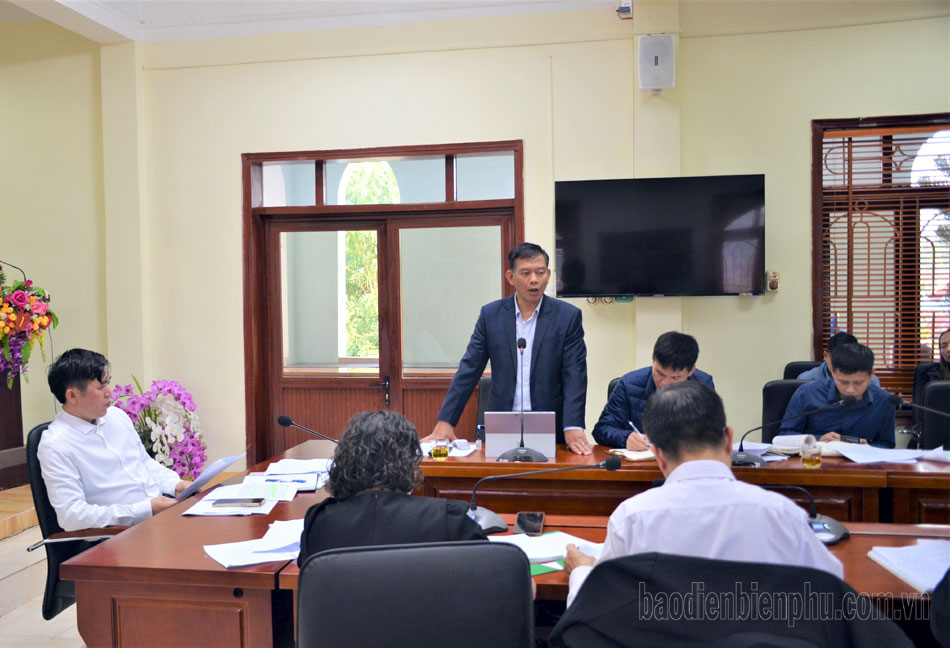
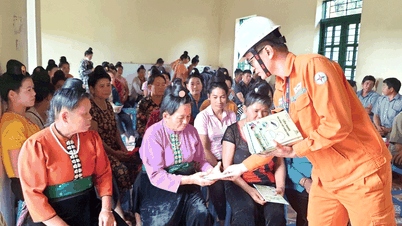
In addition to ensuring that payments for forest environmental services are made correctly, fully, promptly, and transparently, policy implementers also monitor the use of funds after payment to ensure that the money is used for the right purposes and effectively, especially for forest management and protection. Achieving this requires the proactive involvement of forest owners, particularly the participation of local authorities in monitoring, urging, and guiding forest owners in managing and using forest environmental service funds. Mr. Lo Van Tuong, Vice Chairman of the People's Committee of Quai Cang commune, Tuan Giao district, shared: “To ensure that people and the community use the Forest Protection and Development Fund effectively, the commune government has directed the villages to establish fund management teams and register accounts at the District Social Bank so that the Fund can deposit money into the accounts. Afterwards, representatives of the management team will withdraw the money and distribute it to the villagers or use it for village activities. To monitor the use of the Forest Protection and Development Fund in the villages, the commune also directs and assigns land management officials, in coordination with local forest rangers, to monitor how the funds are used and spent. If any village spends the money improperly, the funds will be recovered and used for other purposes.”
Thanks to effective management and supervision of the Payment for Ecosystem Services (PES) funds, most community-based forest owners in the province choose to allocate a portion of their annual payments to forest management and protection. The remaining funds, if substantial, are distributed equally among households; if smaller, they are put into village funds for common benefit. These innovative and effective approaches by the communities have helped to make the PES policy more effective, fostering a stronger connection between people and the forest. This further affirms the correctness of implementing the PES policy in accordance with regulations to improve forest management and protection, and increase forest cover in the province over the past period.
Source


![[Photo] General Secretary and President To Lam and the President of the Philippines hold talks.](https://vphoto.vietnam.vn/thumb/1200x675/vietnam/resource/IMAGE/2026/06/01/1780283481955_vna-potal-tong-bi-thu-chu-tich-nuoc-to-lam-va-tong-thong-philippines-hoi-dam-8797519-1429-jpg.webp)














![[Photo] The General Secretary, President and his wife begin their state visit to the Philippines.](https://vphoto.vietnam.vn/thumb/1200x675/vietnam/resource/IMAGE/2026/05/31/1780230559452_anh-man-hinh-2026-05-31-luc-19-28-11.png)

![[Image] Hanoi Police officially crowned champions of V-League 2025/2026](https://vphoto.vietnam.vn/thumb/1200x675/vietnam/resource/IMAGE/2026/05/31/1780244769054_ndo_br_039d561b692be875b13a-jpg.webp)
































































Comment (0)