

In the US, when she was in elementary school, Elysha Schuhbauer, from Ontario, often sewed buttons and embroidered onto her own clothes.
"I want unique pieces that can't be found anywhere else. If I find something that suits me, I want to keep wearing it for as long as possible," said the woman who runs Worth Mending, a sewing machine sales company.
Worth Mending is part of the sustainable fashion movement (Visible Mending), which celebrates imperfection and patterns on clothing as an art form, honoring an individual's relationship with the items they wear.
According to Elysha, clothes can tell the story of their owner's life. A patch on the upper thigh of a pair of jeans might be a memory of a bike ride to work, and stitching on a jacket might be from a time when you worked as an electrician.
Visible Mending is also a counterattack against the fast fashion industry, which is responsible for 8% of carbon emissions and is the second-largest consumer of water globally.
After oil, textile manufacturing is the most polluting industry. The average person consumes 400% more clothing than two decades ago, and in the US, more than 11 million tons of textiles are discarded each year, according to a 2021 study on Circular Economy and Sustainability in the Textile Industry .
By repairing, recycling, and purchasing recycled clothing, experts believe that fashion can transform into a more sustainable industry.
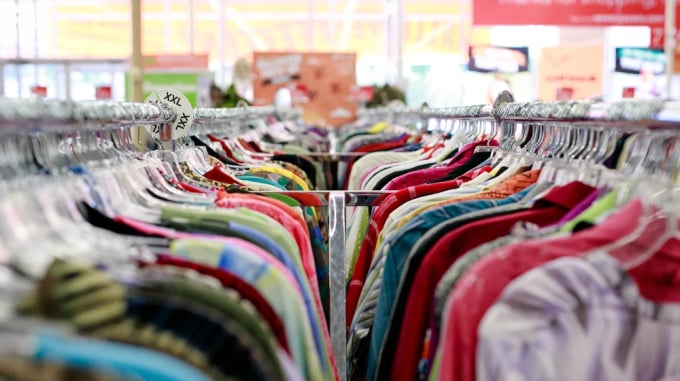
The fashion industry is the second-largest polluter after oil, but by building a sustainable wardrobe, you can help change that. Photo: Vice
Natasha David, director of the Ellen MacArthur Foundation's fashion initiatives program, says the fast fashion industry is currently built on a "Resource Extraction - Production - Discard After Consumption" model. Global research organizations are promoting a circular economy, meaning clothing made from renewable materials, worn more frequently, and recycled after its lifespan.
David stated that circular business models could capture 23% of the market by 2030, while simultaneously reducing carbon emissions by one-third of what is needed to keep the planet's temperature from rising by more than 1.5 degrees Celsius. This is also the goal set by the Paris Agreement. According to this expert, the biggest hurdle to achieving this economy is product redesign.
Therefore, from 2019 to 2023, the organization brought together 100 businesses, including fashion companies like H&M, Levis, and Tommy Hilfiger, along with retailers, factories, and garment manufacturers, to redesign jeans – a major wardrobe staple that is highly polluting and resource-intensive – to create 1.5 million pairs of jeans containing at least 5% recycled materials.
From the consumer perspective, interest in sustainable fashion is growing. In a 2022 study, Dr. Sheng Lu, a professor of fashion and apparel research at the University of Delaware, found an abundant supply base for clothing made from 100% recycled textiles.
Currently, less than 1% of all textiles produced are recycled into textiles, according to Tricia Carey, commercial director of Renewcell, a recycled fiber manufacturer. Renewcell opened its first industrial facility in 2022 after significant investment from brands such as H&M. Since then, they have produced 20,000 tonnes of Circulose, a recycled pulp derived from textile waste. A case study estimates that each tonne of Circulose pulp used in clothing avoids 5 tonnes of carbon emissions compared to traditional fibers.
Carey said Renewcell's growth is driven by the fashion industry's demand for textile solutions in the circular economy, but their biggest challenge is getting fashion brands to buy in bulk.
"One factor contributing to the increased demand for more sustainable clothing in general is a greater awareness of the negative social and environmental impacts of garment production," Carey said, adding that upcoming climate change legislation will boost recycling and reuse.
According to Lu, consumer behavior directly impacts the success of fashion companies. He stated that Gen Z students, the core future customers of fashion, are focusing on the socio-environmental impact when choosing clothing.
"Many students say they only buy secondhand clothes these days because there's so much textile waste and used clothing out there," he said. Besides secondhand and consignment fashion, rental shops are also booming to meet demand.
Lily Fulop, a graphic designer who runs the recycled clothing Instagram account Mindful Mending, says that if consumers buy fast fashion, they should buy more consciously, applying the advice from the Paris Convention to buy no more than five new items per year, and also repairing, recycling, and buying secondhand clothes.
The best materials to buy are cotton, wool, or silk. Learn some basic sewing techniques for simple repairs. If a seam comes undone, a button is loose, or the clothing gets a hole, a quick stitch, hem, or patch can make the garment look new again.
"Build a more durable wardrobe that won't stretch and is of good enough quality that if a hole gets torn, it will only need repairing," she said. For those who lack the time, interest, or physical ability to repair but still want to upgrade their clothes, consider businesses that offer repair services.
Some companies are making it easier to sell secondhand clothes. The Worn Wear initiative by the renowned American fashion company Patagonia is encouraging the recycling or resale of used clothing. A spokesperson for the organization stated that, on average, trading and reselling a Worn Wear item saves nearly 5 kg of carbon emissions compared to making a new garment.
"The best way to reduce the carbon footprint and environmental impact of clothing is to keep it used for longer, by you or someone else," he said.
According to Elysha Schuhbauer, there are many things on this planet that can give us a luxurious life without the accumulation of wealth and waste. Sustainable fashion is a huge challenge, but there are many ways to leverage it and make a big difference if we start, beginning with building our own wardrobes.
Bao Nhien (According to Vice )
Source



























































































Comment (0)