

Many outstanding results
At the meeting, the Director of the Ho Chi Minh City Department of Information and Communications, Lam Dinh Thang, reported on the results of digital transformation in 2023 and the key tasks and solutions for implementing the Digital Transformation Plan and the Ho Chi Minh City Smart City Project in 2024.
Accordingly, Ho Chi Minh City has achieved remarkable results. The city's data center and cloud computing infrastructure have been upgraded and maintained to meet capacity and resource requirements, with over 1,000 servers for the city's e-government information system. The dedicated network system has been connected and expanded to connect from the city level down to the commune, ward, Thu Duc City, and affiliated units with over 800 connection points. The city has also established 8 large data warehouses. Notably, the city's data portal is connected and shares data with departments, agencies, and localities, while also linking with national databases; providing open data to citizens and businesses.
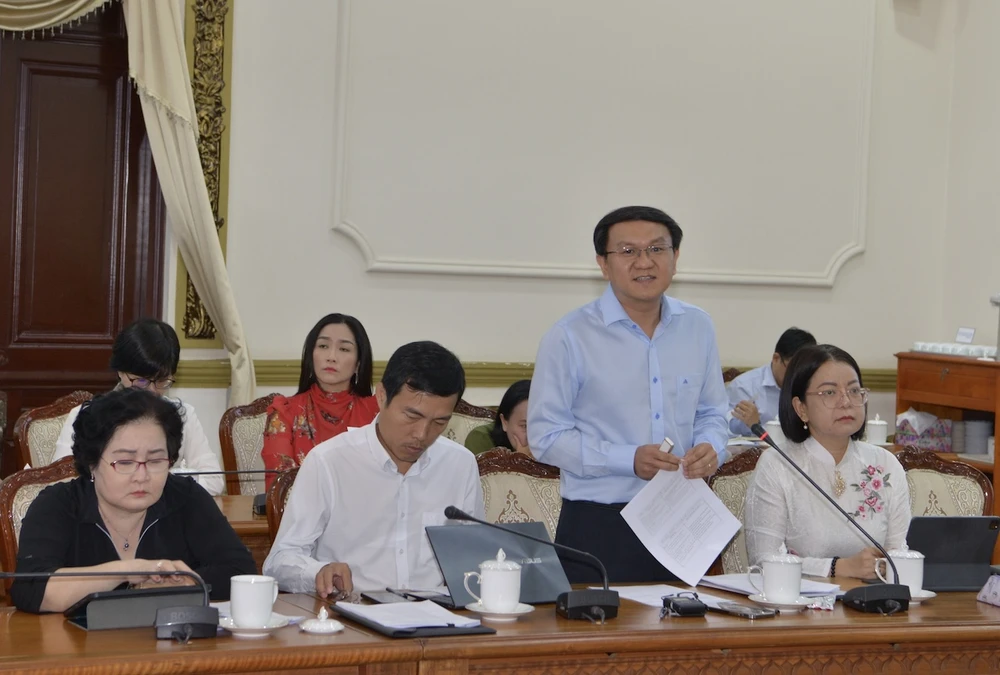
Mr. Lam Dinh Thang shared: To date, 100% of state agencies in the city have implemented official email; online video conferencing; electronic document and file management systems; meeting invitation and work schedule systems; and information aggregation systems to support management and direction. The centralized administrative procedure resolution information system platform and the city's public service portal have been completed and put into operation. The city has restructured the business process for resolving administrative procedures in the digital environment, achieving 740 online public services (460 fully online public services, 280 partially online public services). Ho Chi Minh City's digital economy is estimated to reach 18.22% of the city's GRDP…
However, the city also faces challenges: Regulations and procedures among ministries, localities, and units are not synchronized and remain inadequate when transitioning from "paper" to "digital." IT infrastructure and internal networks, especially at the ward, commune, and town levels, need to be reviewed and upgraded to ensure seamless interoperability within Ho Chi Minh City's systems. The progress of digitization and database development is slow, and open data has not yet created the impetus for fostering an ecosystem of innovation and AI application. Specialized applications are fragmented, lacking common, unified platforms; outdated software remains, and forms, processes, and data are not standardized to comply with Ho Chi Minh City's Urban Government Architecture.
Therefore, in 2024, the city will continue to review its IT infrastructure, with units being reviewed and upgraded to ensure interconnectedness with wards, communes, and towns. It will strengthen the application of IoT, cameras, and AI in urban management and monitoring, and promote the effective use of 5G networks. The Ho Chi Minh City Department of Information and Communications will review and update regulations and operating procedures for transitioning from "paper" to "digital." This will focus on four key policies: policies on providing and using online public services throughout the entire process, policies on minimum spending ratios and guidelines for spending limits on IT applications and digital transformation, policies on digital transformation for small and medium-sized enterprises, and policies on hiring digital transformation experts. The city will also improve shared platforms, interconnecting with platforms of ministries and agencies, and promote specialized information system platforms, focusing on areas such as construction permits and land management.
Enhancing the capacity to serve the state and the people.
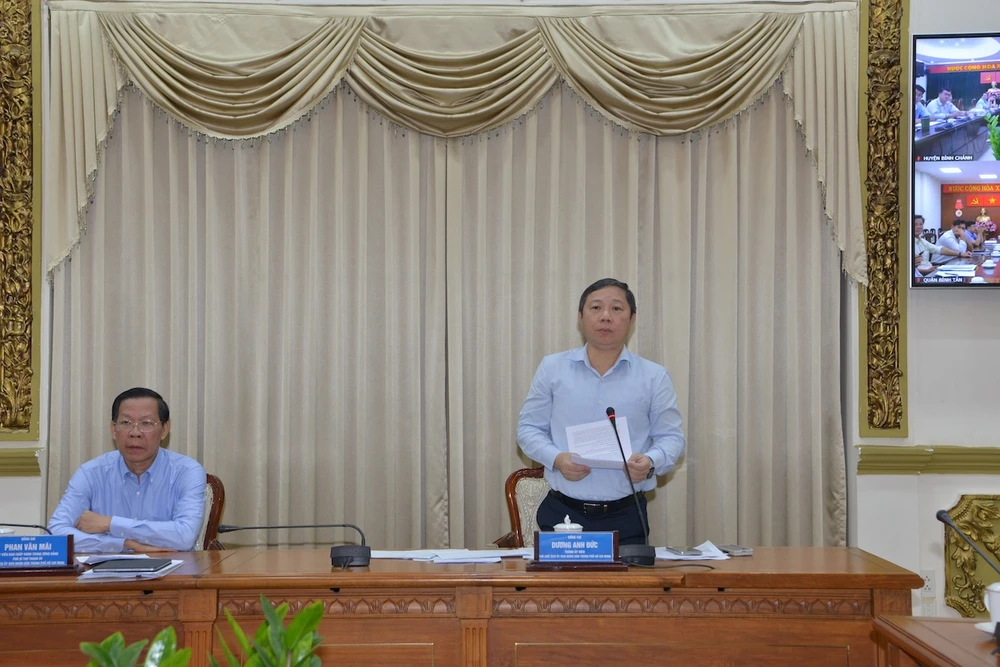
At the meeting, Vice Chairman of the Ho Chi Minh City People's Committee Duong Anh Duc emphasized that data infrastructure is extremely important and needs to be interconnected. Regarding data interconnection related to Project 06, he proposed that the police force should soon conduct trials of data interconnection to create effectiveness in digital transformation. Vice Chairman Duong Anh Duc also requested the Department of Information and Communications to promptly announce digital services and applications so that citizens and businesses can quickly use them and provide feedback… because digital transformation must be implemented based on the principles of substance, quality, and effectiveness.
In parallel, other units also contributed many ideas to the City's Digital Transformation and Smart City Program Implementation Plan for 2024. Mr. Lam Nguyen Hai Long, Chairman of the Ho Chi Minh City Informatics Association, said: Currently, small and micro enterprises want to implement digital transformation but have limited resources. He proposed that the city provide partial financial support to these entities through organizations such as the Ho Chi Minh City Business Association (HUBA) so that digital transformation activities can be strongly disseminated within the business community.
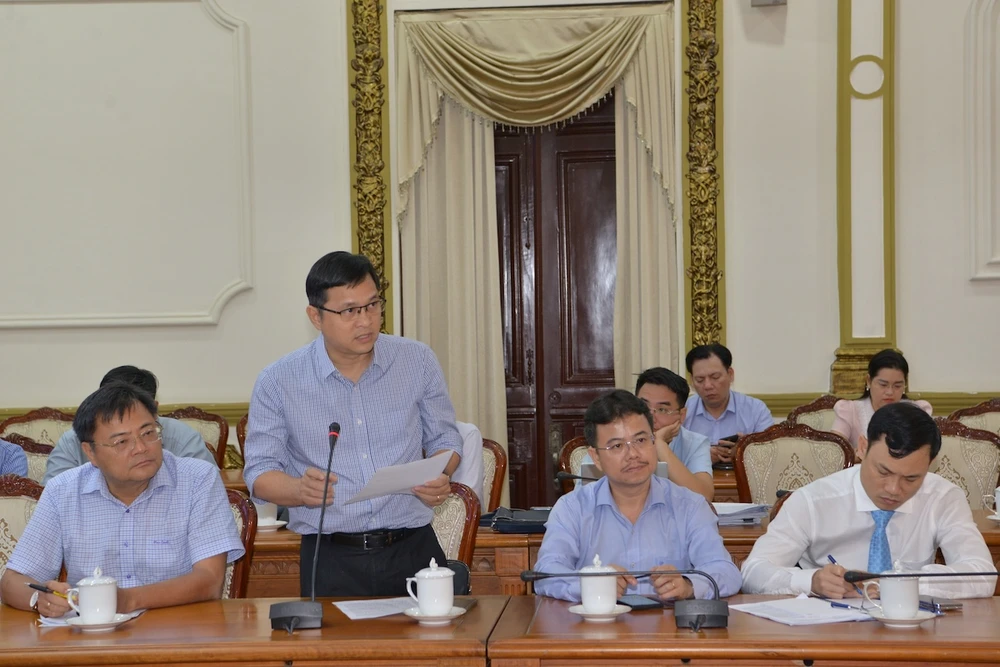
Data, especially public data, can only be proactively exploited by the state. Data is an asset that becomes more effective the more it is exploited. Closed data is dead data. Therefore, data needs interaction, and that interaction can only be achieved through the involvement and exploitation of citizens and businesses. We propose that the City select several areas for early implementation of data connectivity and integration, as well as the mandatory creation of "digital completion documents." The Ho Chi Minh City Informatics Association is ready to collaborate with relevant departments and agencies to advise on this matter.
“The city should incorporate the topic of digital transformation awareness into the activities of Party branches, community digital transformation groups at the local level, and training programs for officials at all levels to raise awareness among the city's civil servants and public employees. Because when awareness changes, the mindset and methods of implementation will certainly change. This will help businesses, especially technology companies, have the opportunity to access and deploy digital transformation solutions in the public sector, promoting e-government and digital government,” Mr. Lam Nguyen Hai Long shared.
According to Tran Van Bay, Deputy Director of the Ho Chi Minh City Department of Natural Resources and Environment, people are the most important element of the system, the key factor determining the success of the digital transformation process. Therefore, the Department of Natural Resources and Environment always focuses on training and developing human resources, meeting both quantitative and qualitative requirements. Currently, the system employs over 1,200 people.
However, infrastructure and equipment are still very limited, and the income of civil servants and employees is still difficult. Therefore, the city needs to prioritize resources to continue implementing digital transformation, focusing on key tasks that form the foundation for the future development of IT applications and the formation of digital ecosystems such as the land data ecosystem. This is based on the view that digital transformation not only enhances the efficiency of state management but also creates new impetus and a new development environment for citizens and businesses to participate and make a worthy contribution to the economic and social development of the city.
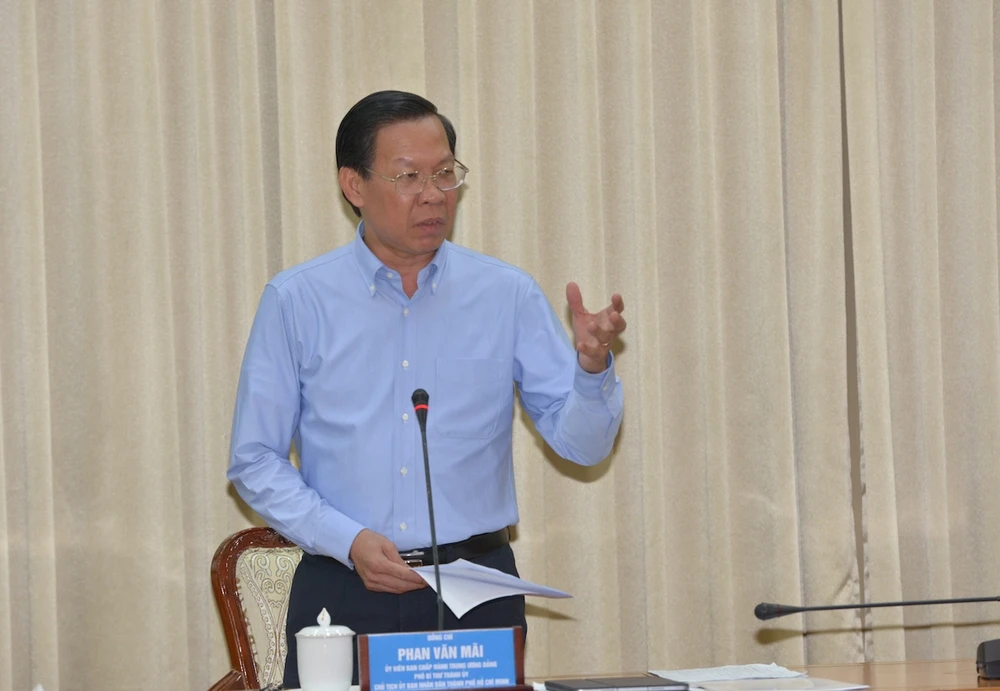
Speaking at the meeting, Chairman Phan Van Mai welcomed the contributions of the delegates and requested the Department of Information and Communications to gather and synthesize the feedback on the city's digital transformation and provide advice to the city. The city also invited all large enterprises to participate in digital transformation with the city, with the spirit of supporting projects and investing in the city to bring about positive results. The city's digital transformation must improve the service capacity of administrative agencies, civil servants, and those within the administrative apparatus. This will make it easier and more convenient for citizens, individuals, organizations, and those interacting with the administrative apparatus at the lowest possible cost, the Chairman of the Ho Chi Minh City People's Committee stated.
“With the plans outlined, the Department of Information and Communications needs to identify the tasks that must be done quickly in the first quarter of 2024, such as allocating capital, building institutions, and activities related to digital transformation. Districts and counties need to continue implementing ongoing tasks and continue carrying out subsequent tasks to connect into a system. From now until 2025, we must strive to ensure that all interactions and communication with individuals, and between individuals and organizations and the city's administrative apparatus, are fundamentally conducted on a digital platform. Along with that, we must ensure that management and implementation, that is, the operation of the city's administrative activities, are also on a digital platform,” directed Chairman of the Ho Chi Minh City People's Committee Phan Van Mai.
BA TAN
Source

![[Photo] The General Secretary attends the groundbreaking ceremony for the construction of the Truong Ha Primary and Secondary Boarding School.](/_next/image?url=https%3A%2F%2Fvphoto.vietnam.vn%2Fthumb%2F1200x675%2Fvietnam%2Fresource%2FIMAGE%2F2026%2F01%2F28%2F1769604498277_vna-potal-tong-bi-thu-du-le-khoi-cong-xay-dung-cong-trinh-truong-pho-thong-noi-tru-tieu-hoc-va-trung-hoc-co-so-truong-ha-8556822-jpg.webp&w=3840&q=75)

![[Photo] Commemorating the unwavering friendship between Vietnam and Laos](/_next/image?url=https%3A%2F%2Fvphoto.vietnam.vn%2Fthumb%2F1200x675%2Fvietnam%2Fresource%2FIMAGE%2F2026%2F01%2F27%2F1769518372051_ndo_br_1-jpg.webp&w=3840&q=75)


![[Photo] National Assembly Chairman Tran Thanh Man meets with former leaders of the National Assembly from various periods.](/_next/image?url=https%3A%2F%2Fvphoto.vietnam.vn%2Fthumb%2F402x226%2Fvietnam%2Fresource%2FIMAGE%2F2026%2F01%2F28%2F1769601014034_anh-man-hinh-2026-01-28-luc-18-50-04.png&w=3840&q=75)


![OCOP during Tet season: [Part 3] Ultra-thin rice paper takes off.](/_next/image?url=https%3A%2F%2Fvphoto.vietnam.vn%2Fthumb%2F402x226%2Fvietnam%2Fresource%2FIMAGE%2F2026%2F01%2F28%2F1769562783429_004-194121_651-081010.jpeg&w=3840&q=75)


![OCOP during Tet season: [Part 2] Hoa Thanh incense village glows red.](/_next/image?url=https%3A%2F%2Fvphoto.vietnam.vn%2Fthumb%2F402x226%2Fvietnam%2Fresource%2FIMAGE%2F2026%2F01%2F27%2F1769480573807_505139049_683408031333867_2820052735775418136_n-180643_808-092229.jpeg&w=3840&q=75)
![OCOP during Tet season: [Part 1] Ba Den custard apples in their 'golden season'](/_next/image?url=https%3A%2F%2Fvphoto.vietnam.vn%2Fthumb%2F402x226%2Fvietnam%2Fresource%2FIMAGE%2F2026%2F01%2F26%2F1769417540049_03-174213_554-154843.jpeg&w=3840&q=75)




Comment (0)