

The workshop was attended by numerous experts, representatives from state management agencies, researchers, lecturers from research institutes, colleges, universities in Vietnam and abroad, and tourism businesses to exchange and share experiences on digital transformation in the field of vocational training in tourism.
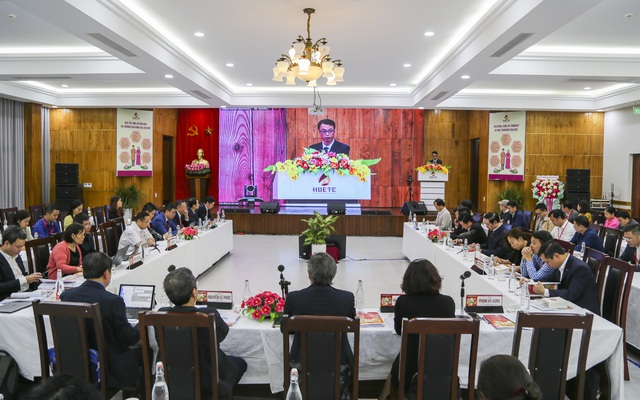
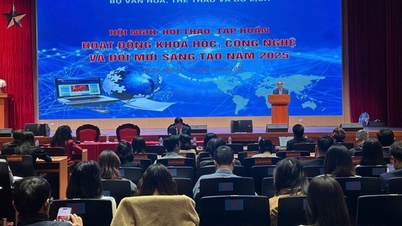
Scenes from the conference.
In his opening remarks and introductory speech at the workshop, Mr. Pham Ba Hung, Principal of Hue Tourism College, stated that in the context of globalization and the strong development of information technology, digital transformation has become an inevitable and revolutionary trend in all areas of socio -economic life, including the tourism industry and tourism human resource training. The remarkable development of technology not only creates changes in the way tourism businesses are managed and operated but also creates an urgent need for digital transformation in tourism vocational training to meet the demands of a high-quality labor market in the digital age.
According to Mr. Pham Ba Hung, digital transformation in vocational training for tourism not only helps improve the quality of education but also creates conditions for students to access new knowledge and skills, in line with the development trends of the global tourism industry. This transformation requires a flexible, modern, and advanced education system capable of integrating digital tools and new technologies into the training process, thereby creating an integrated, flexible, and highly interactive teaching environment…
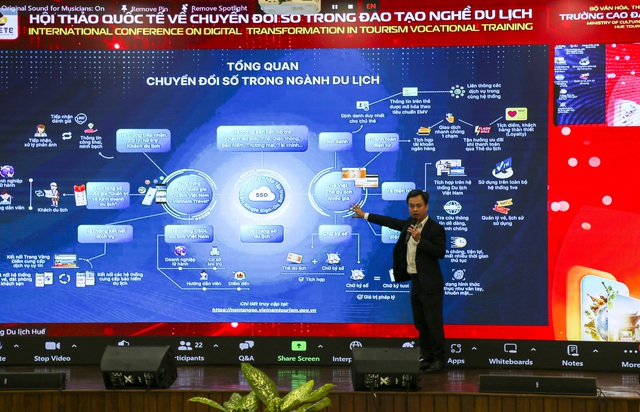
Experts discussed and shared experiences at the workshop.
However, alongside the opportunities, digital transformation in vocational training for tourism also presents numerous challenges. One of the biggest challenges is investing in infrastructure and information technology. This requires significant financial resources along with commitment from training institutions and the government. Furthermore, developing human resources with the skills and pedagogical competence to teach in a digital environment is also a challenge, requiring professional and systematic teacher training programs.
"Digital transformation in vocational training for tourism is a challenging process requiring the participation and efforts of many stakeholders, but it also holds great promise, opening up opportunities to improve the quality of education and meet the future needs of the tourism industry."
Through the workshop "Digital Transformation in Tourism Vocational Training," we aim to create a forum where stakeholders can share knowledge and experience, and discuss together to find effective solutions for digital transformation in tourism vocational training, contributing to the development of Vietnam's tourism industry in the new era; including state management agencies on tourism, training institutions, tourism experts, businesses, and the community…,” Mr. Pham Ba Hung emphasized.
According to Le Anh Tuan, Director of the Training Department (Ministry of Culture, Sports and Tourism), in recent years, training and human resource development in the tourism sector has achieved remarkable progress. The training facilities, enrollment scale, training models and methods, and training quality are gradually meeting the requirements for human resources to serve the practical development of the industry.
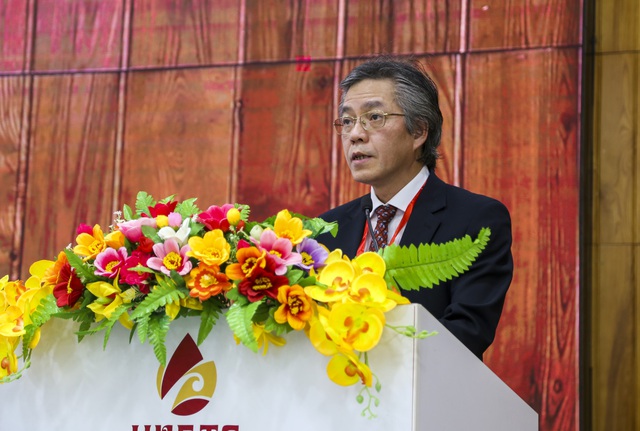
Mr. Le Anh Tuan, Director of the Training Department (Ministry of Culture, Sports and Tourism), delivered a speech at the workshop.
This workshop will serve as a forum for discussing and evaluating the current situation and proposing solutions for implementing digital transformation in tourism vocational training; it will also provide relevant and appropriate recommendations to management agencies on creating suitable mechanisms and policies to maximize the effectiveness of this activity.
Specifically, at the workshop, delegates explored more than 20 presentations and discussed several key topics, including: sharing the current situation and recommending solutions for applying digital technology in tourism vocational training and management; applying digital transformation in state management of tourism vocational training; applying digital transformation in student recruitment and management; designing, building, and managing training programs on digital platforms; enhancing learners' experiential skills based on technology; exchanging experiences in digital transformation in tourism business management; and trends and experiences in digital transformation in vocational education from some training institutions worldwide.
According to the Organizing Committee, the diverse number of presentations clearly reflected the deep interest and shared desire of all stakeholders to improve the quality of vocational training in tourism through digital transformation.
Source


![[Image] Central Party Office summarizes work in 2025](/_next/image?url=https%3A%2F%2Fvphoto.vietnam.vn%2Fthumb%2F1200x675%2Fvietnam%2Fresource%2FIMAGE%2F2025%2F12%2F18%2F1766065572073_vptw-hoi-nghi-tong-ket-89-1204-jpg.webp&w=3840&q=75)









































































Comment (0)