

Two buses with consecutive departure times on the same route and operated by the same transport company are allowed to depart simultaneously if they have enough passengers. However, the company must still comply with the regulations on the total number of trips per day.
Knowing the customer is in a hurry, they still have to wait.
At 2:45 AM on December 13th, at the Van Anh bus company office in the North Thanh Hoa City bus station, a large number of passengers who had already purchased tickets were waiting for their buses to depart. A ticket seller stated that the first two buses of the day, at 3 AM and 4 AM, were always fully booked. Most passengers were people traveling to Hanoi for medical appointments or school, choosing to leave early to ensure they arrived on time.
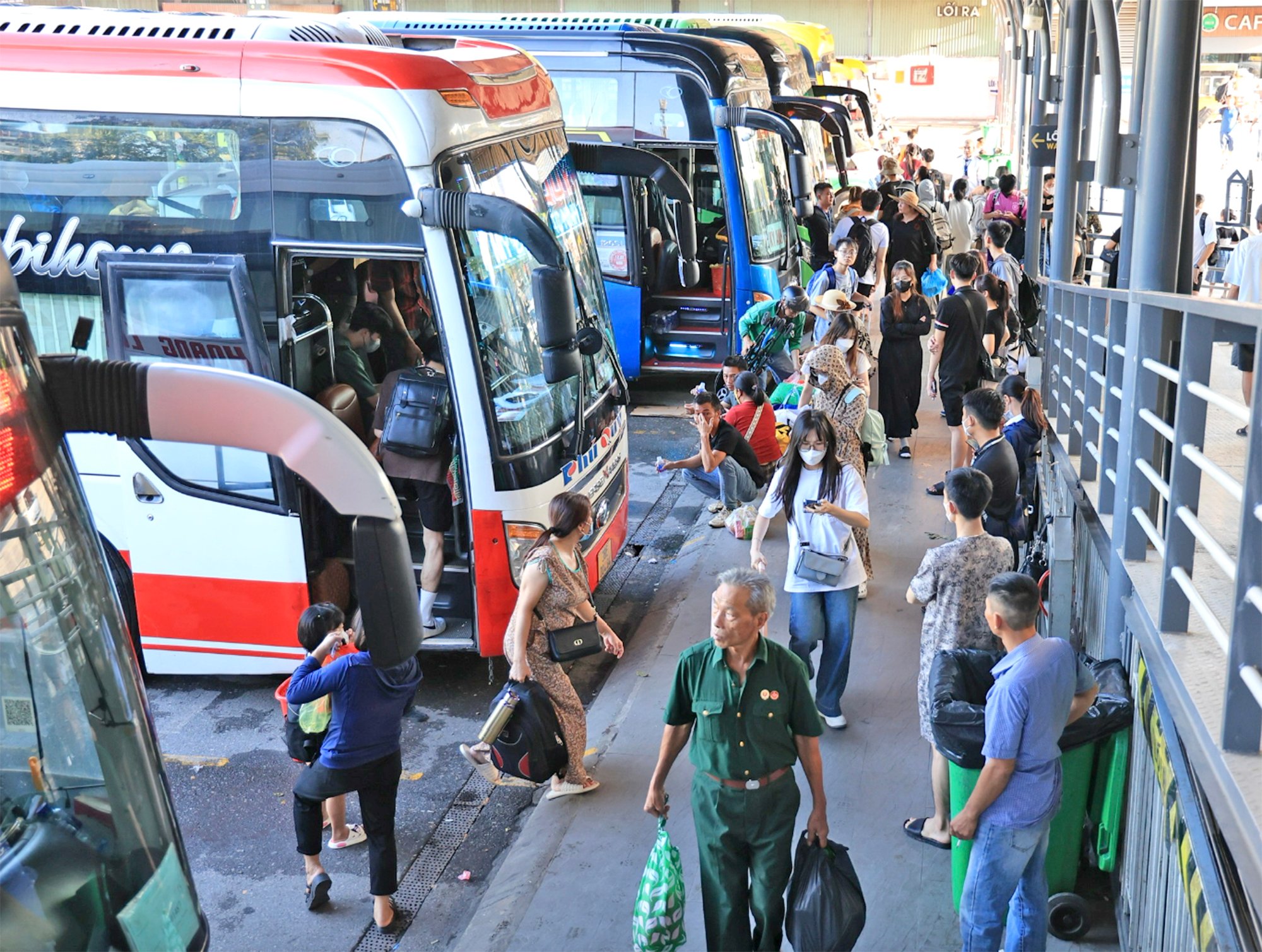
From January 1, 2025, two consecutive buses on the same route operated by the same company may depart at the same time if all tickets are sold.
Mr. Vu Viet Duc (residing in Thanh Hoa City) said that he took his father to the 108 Hospital (Hanoi) for a medical check-up and had scheduled an appointment with the doctor for 7:30 AM, but due to being busy, he didn't have time to book a ticket for the 3 PM bus the day before. This morning, he went to the bus station early to see if any passengers had booked the 3 PM bus but weren't in a hurry and could exchange tickets with him, but there were none.
"I heard that the 4 PM bus is already full. It would be great if the bus could leave immediately, so passengers wouldn't have to wait so long," said Mr. Duc.
According to current regulations, unless it is a peak holiday or weekend when there is a high demand for passengers and it needs to be met early, all buses of each fixed-route transport company must depart according to their permitted schedule, regardless of whether the bus is full or not.
Mr. Nguyen Tien Dung, Deputy Director of Van Anh Tourism and Transportation Company Limited, said that most of the company's early morning buses are always fully booked with passengers needing to travel to Hanoi early. Many passengers who booked tickets late found that the 3 AM bus was sold out and had to wait another hour for the next bus.
"We know the passengers are in a hurry, but the bus station doesn't issue early departure permits, and the transport company can't violate the regulations," Mr. Dung said.
Both the bus company and the passengers benefit.
Similarly, on tourist routes like Hanoi - Sa Pa on Friday evenings, even though many passengers have booked tickets and many trips are already full, bus companies like Sao Viet still have to comply with regulations regarding punctual departure times.
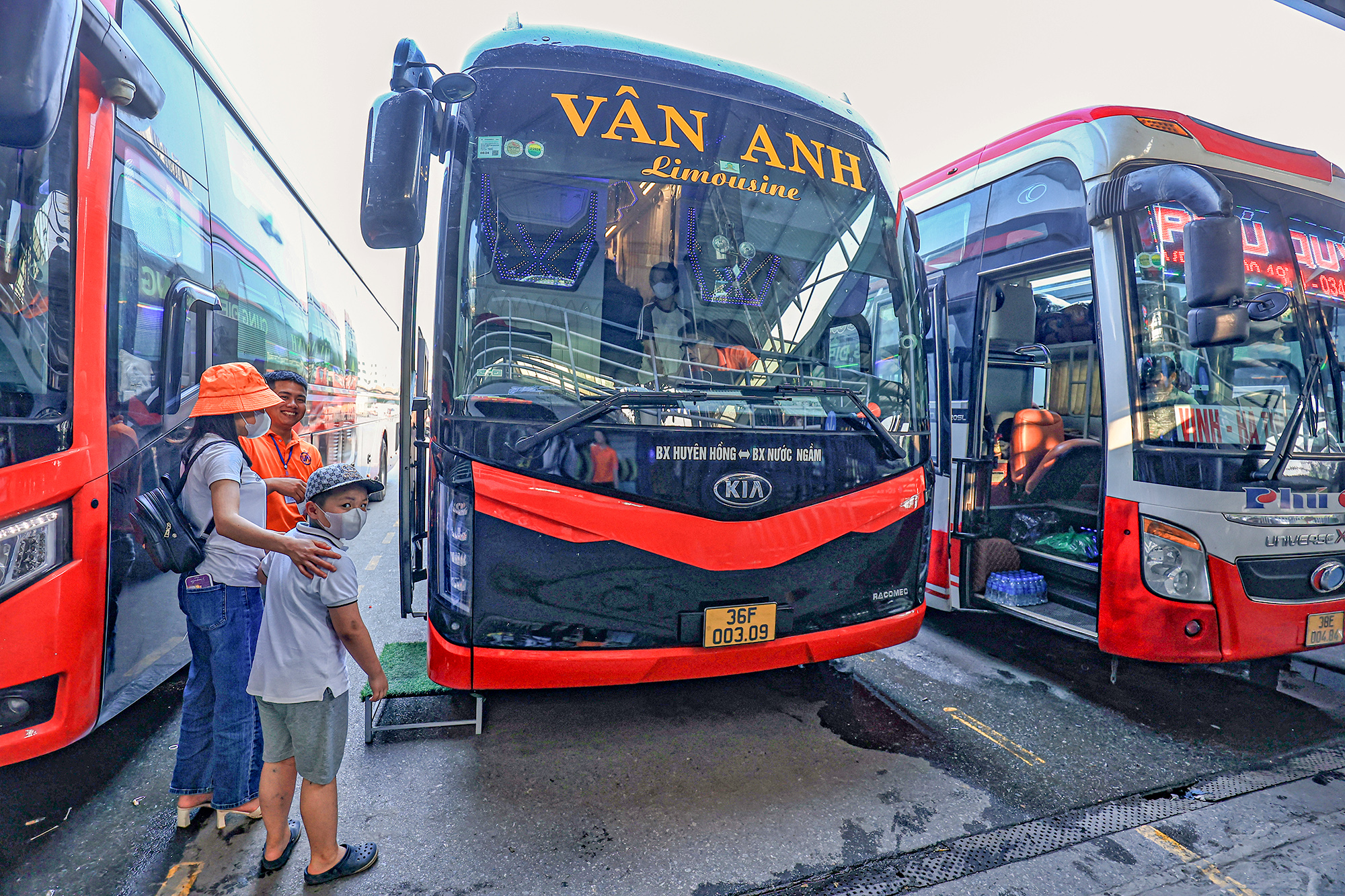
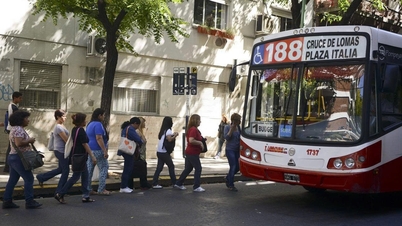
Passengers traveling on intercity buses at Nuoc Ngam Bus Station, Hanoi. (Illustrative photo: Ta Hai)
However, with Circular No. 36/2024 of the Ministry of Transport coming into effect on January 1, 2025, this situation will soon end. The new regulation allows two buses with consecutive departure times on the same route and operated by the same transport company to depart simultaneously if there are enough passengers.
According to Mr. Nguyen Tien Dung (Van Anh bus company), the new regulations both facilitate passengers by reducing long wait times and help businesses clear passenger congestion quickly, thereby improving service quality.
Mr. Do Van Bang, Chairman of the Hanoi Transport Association, also believes that the regulation is in line with reality. Because for buses that have already sold out, passengers who need to travel early do not necessarily have to wait until the scheduled departure time.
"The new regulations have created more openness for fixed-route buses, thereby increasing competition with contract buses, especially those disguised as fixed-route contract buses that are actively controlling departure times, schedules, and travel routes," Mr. Bang observed.
The total number of trips per day remains unchanged.
According to the Head of the Transport Department of the Ministry of Transport, under the new regulations, two consecutive buses on the same route operated by the same company are only allowed to depart at the same time as the previous bus if all tickets are sold; buses from two different companies are not permitted to do so.
This is to avoid a situation where two vehicles from two different transport companies depart at the same time, potentially leading to competition for arrival times at the destination and posing a risk to traffic safety.
On the other hand, if two consecutive trips by the same company have reached their full capacity and depart at the same time as the first trip, then the company is not allowed to let the second trip depart at the same time.
For example, a transportation company has departure times at 3 AM, 4 AM, and 5 AM. If two consecutive trips at 3 AM and 4 AM are fully booked and depart at 3 AM, then at 4 AM, the company is not allowed to let any vehicles depart; they must wait until 5 AM for the next trip. Thus, the transportation company must still comply with the regulations regarding the total number of trips permitted to operate in a day.
This also makes it easier for other transport companies on the same route with departure times between 3-5 am to gather passengers during this period.
Strict control is needed to prevent loopholes.
A transportation expert stated that the regulation aligns with current transportation trends, prioritizing passenger service. However, in practice, bus stations and authorities need to closely monitor its implementation to prevent businesses from circumventing the law, such as buses departing before reaching the required number of passengers, thus avoiding unfair competition with other businesses operating on the same route.
Specifically, before issuing a departure order for a bus to leave the station at the same time as the previous bus, bus station staff must coordinate with bus company staff to count passengers and confirm that both buses are fully occupied before allowing them to depart.
In cases where vehicles are on the road, if traffic police discover that a vehicle has departed early because it has a full passenger capacity but there are fewer passengers on board, they should impose strict penalties to ensure a deterrent effect.
Source: https://www.baogiaothong.vn/xe-du-khach-khong-can-cho-gio-xuat-ben-192241217141209021.htm

































![[Photo] Reception to welcome General Secretary and President To Lam and his wife on their State visit to the Philippines](https://vphoto.vietnam.vn/thumb/1200x675/vietnam/resource/IMAGE/2026/06/01/1780295488620_vna-potal-chieu-dai-chao-mung-tong-bi-thu-chu-tich-nuoc-to-lam-va-phu-nhan-tham-cap-nha-nuoc-toi-philippines-8798060-7855-jpg.webp)












































































Comment (0)