

According to the explanation, the main reason iPhone apps seem to have an advantage over their Android counterparts is the fewer options available on the market. People can see many Android phones with different capabilities, processors, screens, cameras, etc. However, Apple only produces a limited number of iPhone models to choose from.
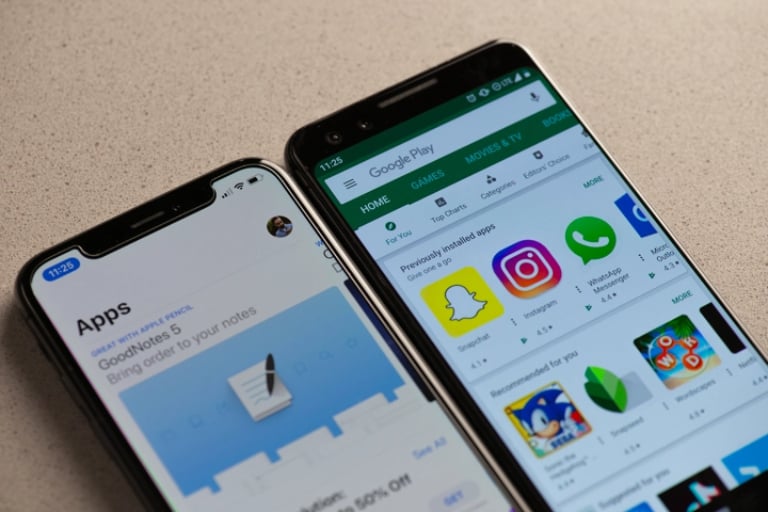
iPhone users are given preferential treatment by app developers compared to Android users.
Although Apple has expanded its model range, they are all high-end devices capable of handling the most demanding applications for years to come. Vonau acknowledges that Google's apps are also better on the iPhone.
"Google Maps builds its routes quickly, giving users a sense of movement. WhatsApp provides appropriate transition effects when users open the keyboard or swipe to go back to all conversations. And YouTube offers rich, extended animations when users move their phone to landscape mode," Vonau wrote.
Another point Vonau makes is that iOS gesture navigation has been the default since the iPhone X, while Android phones offer different methods. For example, depending on the phone, going back can be done using the back button, a back gesture, or a custom gesture from the device manufacturer.
Although Vonau didn't mention it, iPhone owners are far more likely to pay for an app or in-app subscription than Android owners. Statista has a chart showing how much people spend on the App Store and Google Play Store, as well as how much they will spend in the future, with the difference noted to be significant.
As a result, developers create better apps for iPhone users because they generate more revenue, even though the Android user base is larger.
Source link

![[Photo] Close-up view of the most modern multi-level boarding school in the border region.](/_next/image?url=https%3A%2F%2Fvphoto.vietnam.vn%2Fthumb%2F1200x675%2Fvietnam%2Fresource%2FIMAGE%2F2026%2F01%2F31%2F1769825352253_z7485066371145-45cccc741d77ee89a371005bcaa2e314-7270-jpg.webp&w=3840&q=75)


![[Photo] General Secretary To Lam receives the Special Envoy of General Secretary and President of China Xi Jinping](/_next/image?url=https%3A%2F%2Fvphoto.vietnam.vn%2Fthumb%2F1200x675%2Fvietnam%2Fresource%2FIMAGE%2F2026%2F01%2F30%2F1769759383835_a1-bnd-5347-7855-jpg.webp&w=3840&q=75)


![[Photo] Rushing to harvest winter crops](/_next/image?url=https%3A%2F%2Fvphoto.vietnam.vn%2Fthumb%2F402x226%2Fvietnam%2Fresource%2FIMAGE%2F2026%2F01%2F31%2F1769825055870_baolaocai-br_mg-8725-jpg.webp&w=3840&q=75)


![OCOP during Tet season: [Part 3] Ultra-thin rice paper takes off.](/_next/image?url=https%3A%2F%2Fvphoto.vietnam.vn%2Fthumb%2F402x226%2Fvietnam%2Fresource%2FIMAGE%2F2026%2F01%2F28%2F1769562783429_004-194121_651-081010.jpeg&w=3840&q=75)


![OCOP during Tet season: [Part 2] Hoa Thanh incense village glows red.](/_next/image?url=https%3A%2F%2Fvphoto.vietnam.vn%2Fthumb%2F402x226%2Fvietnam%2Fresource%2FIMAGE%2F2026%2F01%2F27%2F1769480573807_505139049_683408031333867_2820052735775418136_n-180643_808-092229.jpeg&w=3840&q=75)




Comment (0)