

Editor's Note: The recent peak electricity shortages during the hot season caused billions of dollars in losses and remain a real threat for the next few years. The increasing involvement of the private sector in power generation investment is raising important issues regarding investment attraction policies. Meanwhile, the electricity pricing mechanism still lacks market principles.
The series of articles "The Future of the Electricity Industry" analyzes existing bottlenecks, aiming to further promote investment in new power sources and necessary changes to electricity pricing policies.
Responding to concerns about resource shortages.
"The reality of electricity supply over the past period shows that continuing to entrust the Vietnam Electricity Group (EVN) - a state-owned enterprise - with the task of ensuring sufficient electricity supply for the economy is no longer appropriate. The aforementioned mechanism has reached its limit; if it continues to be maintained, it will both weaken EVN and cause further shortages and instability in electricity supply for the economy."
This was the conclusion reached by Dr. Nguyen Dinh Cung, former Director of the Central Institute for Economic Management Research, when presenting at a seminar organized by the Supervisory Delegation of the National Assembly Standing Committee in June.
Mr. Cung's opinion at the time was still "out of place," because EVN's guarantee of electricity supply had been considered a constant for decades.
But now, Mr. Cung's viewpoint has prompted much reflection. This is because the Government has decided to separate the National Power System Dispatch Center (A0) from EVN and place it under the direct control of the Ministry of Industry and Trade . With A0 being independent from EVN, the corporation's responsibility in power generation will be limited to approximately 38% of its installed capacity when requested. Responsibility for any power shortages will fall to the Ministry of Industry and Trade because A0 is the agency responsible for system dispatch and electricity market management.
The current challenge is how to invest in more power sources to meet the 10% annual growth in demand. Will state-owned enterprises like EVN, PVN, and TKV take on this responsibility, or will the private sector rise to take the leading role?
EVN's view is that, in addition to encouraging economic sectors, consideration should be given to continuing to entrust state-owned economic groups with investing in key power generation and transmission projects, and ensuring that the proportion of power sources is maintained appropriately in the planning stages.
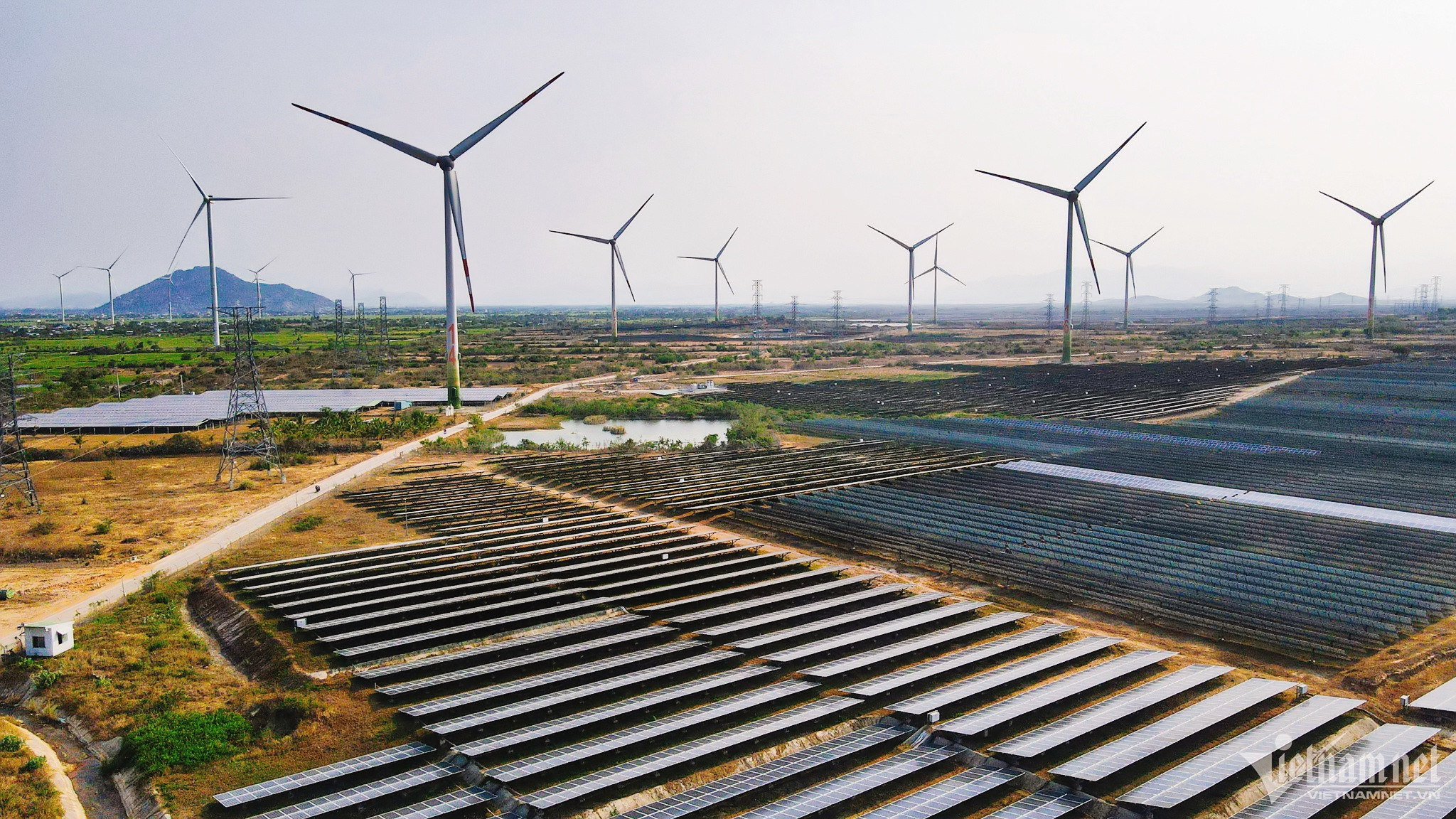
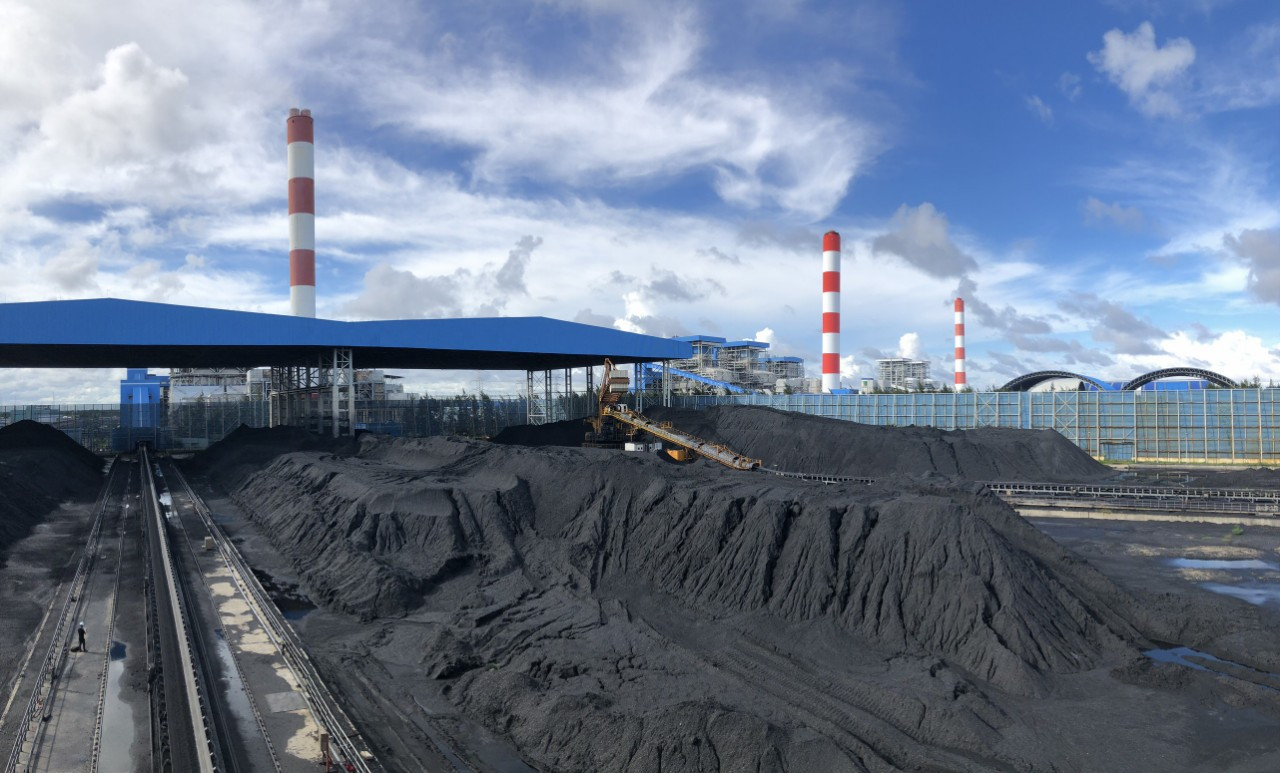
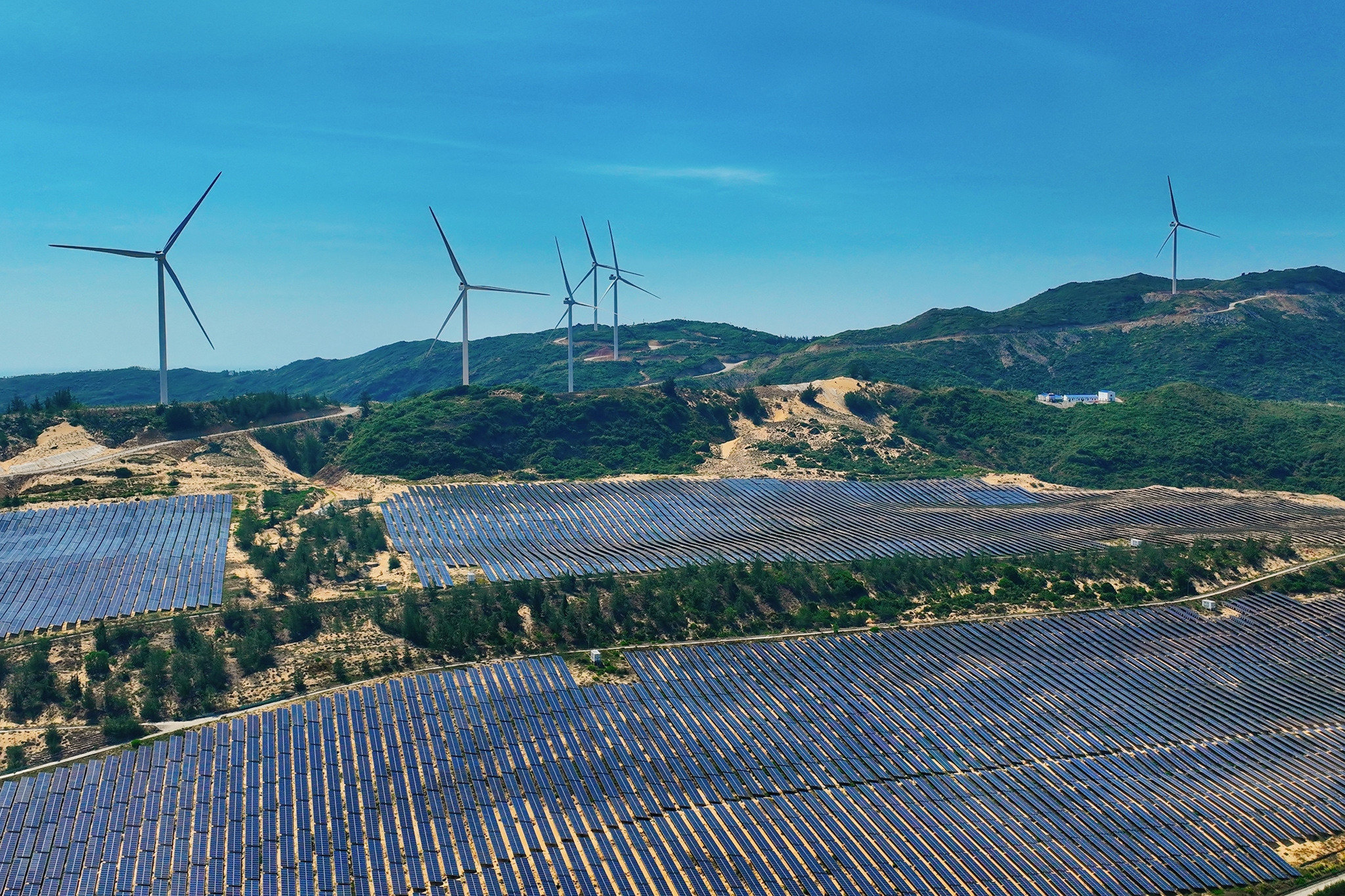
Meanwhile, many energy experts are calling for private investment. As coal-fired power plants are gradually being phased out, LNG power, wind power, offshore wind power, etc., are expected to attract more domestic and foreign private investors.
Since 2019, Enterprize Energy Group has proposed to the Prime Minister the project to develop 3,400MW of offshore wind power in Binh Thuan province, with a total investment of $11.9 billion. The group expects to submit its application for investment approval by the end of this year. The company also wants to build a transmission line from the project to Binh Duong and Dong Nai provinces.
"We are not concerned about whether or not there is a feed-in tariff (FiT), but rather that the price must be balanced and acceptable to investors, the State, and the people. However, there is an unchanging principle: after the first few projects, the price of offshore wind power will decrease," the group's representative shared, proposing that the Government select a pilot project and negotiate the price.
According to Professor Le Chi Hiep of Ho Chi Minh City University of Technology, if not implemented carefully, a shortage of resources may occur in the next five years.
"We have a dilemma: we need to cut coal-fired power and deploy LNG-fired power, but the reality is how to organize the implementation to achieve results. If we implement it well, we might be able to ensure there is no power shortage, but the risk of a shortage can still occur," Professor Le Chi Hiep commented.
Both state-owned and private enterprises need policy and pricing reforms.
For many years, the revised Power Development Plan VII has not been seriously implemented. Numerous power generation projects, both state-owned and privately invested under the BOT (Build-Operate-Transfer) or Independent Power Plant (IPP) models, have been behind schedule. While state-owned enterprises face procedural and funding issues, the private sector lacks experience, capital, and even electricity price negotiations, resulting in many projects remaining only on paper.
To accelerate power generation projects in the next phase, the aforementioned bottlenecks need to be removed. EVN proposes strengthening decentralization for state-owned enterprises, including granting the Boards of Directors of economic groups wholly owned by the State the right to decide on matters related to capital mobilization plans, investment, implementation of investment projects, construction, purchase and sale of fixed assets, investment projects outside the enterprise, etc.
Meanwhile, PVN also proposed organizing briefings, dissemination, and guidance on the implementation of energy laws to ensure timely handling of shortcomings and improve the enforceability of the legal system in the energy sector.
In particular, while awaiting a general law for all types of renewable energy, the Government is considering prioritizing the development of a separate legal framework for offshore wind power to achieve the offshore wind power objectives outlined in the Power Development Plan VIII.
Meanwhile, for private companies and state-owned enterprises other than EVN, price and guaranteed investment returns are crucial factors. Many foreign-invested projects have been stalled for years due to negotiations over power purchase agreements (PPAs).
For example, the $4 billion Bac Lieu LNG power plant project by Delta Offshore Energy. Although granted an investment license in 2020, after three years, the project has still not been able to begin construction, and it is unknown when. The main reason is that the investor has demanded commitments in the PPA (Project Agreement) that exceed the framework of Vietnamese law and have no precedent.
Gas-fired power projects like the Nhon Trach 3&4 LNG plant by PV Power (a subsidiary of PVN), after many years since their inception, are still struggling to negotiate power purchase agreements. The main obstacle is that the investor wants EVN to commit to a total annual electricity purchase volume to ensure the project's revenue and profitability. This is something EVN finds very difficult to commit to.
According to expert Nguyen Anh Tuan (Vietnam Energy Association): To effectively implement the Power Development Plan VIII, national key power projects require strict supervision from the Government and the Ministry of Industry and Trade to prevent prolonged delays.
“Investment capital for power projects is substantial, therefore it is necessary to mobilize domestic and foreign capital by considering government guarantees for a number of priority and important projects; adjusting mechanisms to avoid risks for BOT investors who have been and are currently negotiating contracts. For LNG projects, where the BOT model may no longer be applicable, a suitable power purchase mechanism is needed to avoid risks for investors, especially foreign investors,” Mr. Anh Tuan recommended.
Experts believe that electricity prices remain the most important factor in promoting investment in power generation. Both state-owned and private enterprises want to make a profit. However, if input electricity prices are market-driven while output prices are controlled by the state, it can easily lead to a situation of "buying high and selling low."
According to an energy expert, international experience shows that the cost reduction effect from introducing competition into the investment phase of new power sources is much greater than introducing competition into the operation of already built power plants, which is even more important for a country with a high load growth rate like Vietnam.
Therefore, as long as EVN remains the sole buyer and the electricity market is still incomplete, the government should prioritize the application of competitive bidding for investment in new power sources with the lowest electricity price as the criterion.
At the same time, newly signed power purchase agreements need to include flexible terms, minimizing off-take clauses that put pressure on retail electricity prices and reduce transparency and competition in the electricity market.
Next article: Changing the electricity pricing mechanism: An urgent requirement when A0 leaves EVN
Source















































































Comment (0)