

Chairman of the Vietnam Bar Association , Do Ngoc Thinh, proposed amending the regulations on common and private ownership in the Housing Law to limit disputes.
Common disputes in apartment buildings recently revolve around the division of common and private areas, amenities, and infrastructure between developers and residents, with the most contentious issues being the demarcation of ownership and parking space for motorbikes and cars in the basement. Dr. Do Ngoc Thinh, President of the Vietnam Bar Association and member of the National Assembly 's Judicial Committee, answered VnExpress's questions on this matter, in light of the draft revised Housing Law currently being presented at the 5th session of the 15th National Assembly.
- Disputes between developers and residents regarding ownership in apartment buildings have been ongoing for many years, but why have the Housing Law and other legal regulations, despite numerous amendments and supplements, still failed to definitively resolve this situation?
- Despite numerous revisions and additions, the legal framework still fails to meet practical requirements due to increasingly complex disputes. Some cases arose before legal regulations were in place, persisting to this day without a definitive resolution. Inspection and enforcement in this area have not been thorough or timely. In many places, management is lax, and many investors are delinquent in paying maintenance fund debts, showing signs of criminal law violations that have not been addressed by competent authorities.
Meanwhile, the management board elected by residents through the condominium owners' meeting has not fully exercised its representative role due to a lack of specific guidance on its operation and legal status. The majority of current condominium management boards lack expertise in managing and operating condominiums, and have not received professional training, making it difficult for them to represent and protect the legitimate rights of residents when disputes arise with the developer.

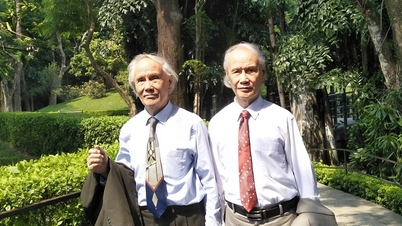
Lawyer Do Ngoc Thinh speaks at the National Assembly. Photo: Pham Thinh
- In your opinion, why are the legal regulations regarding the demarcation of common and private areas and amenities in apartment buildings impractical in reality?
- Common and private ownership rights are stipulated in the Housing Law 2014, the Civil Code 2015, and the Regulations on the Management and Use of Apartment Buildings (issued together with Circular No. 02/2016 of the Ministry of Construction ), along with several other related guiding documents. However, their application in practice still faces many shortcomings, a typical example being disputes over parking spaces.
According to Circular 02, the area and equipment that are privately or jointly owned by the owner must be clearly stated in the apartment purchase or lease-purchase contract. Along with the contract, the investor must provide the buyer with drawings and a list of jointly owned areas as stipulated by the Housing Law.
Disputes arise between customers and developers because the distinction between common and private ownership is unclear, and there is a lack of clarity from the time of contract signing regarding issues such as whether or not parking spaces are for sale, the number of parking spaces in the building, and the rules for registering parking spaces. Therefore, I believe that although there are legal regulations, in practice, when parties enter into contracts without clear demarcation, the risk of disputes remains.
Before Circular 02 came into effect on February 15, 2016, many apartment buildings had sales and lease agreements that did not clearly stipulate this, leading to numerous conflicts and disputes over ownership of the basement.
- What are your comments on the lawyer's argument that the current regulation regarding parking spaces in apartment buildings, which is under the management or ownership of the developer, is the main cause of disputes, when in fact it should be common property?
- One of the highlights of Circular No. 02/2016 is the regulation on ownership and management of parking spaces in apartment buildings. The buying, selling, and leasing of parking spaces are included in the apartment purchase or lease-purchase contract, or are drawn up as a separate contract.
Parking spaces for motorbikes, tricycles, and vehicles for people with disabilities are the common property of all apartment owners. Regarding car parking spaces, buyers or tenants of apartments or other areas within the apartment building may decide to purchase or rent a space; if they do not purchase or rent, the parking space remains under the management of the developer. The developer is not allowed to include the cost of constructing these parking spaces in the selling or rental price.
Thus, in addition to having the option to buy or rent a parking space in their apartment building, apartment owners can also resell or sublease their parking space. However, the demand for parking spaces in apartment buildings has increased recently, and the buying and selling of parking spaces is mainly a private agreement between the two parties, which can lead to a monopoly by the developer, driving up prices.
I believe that if parking spaces are acknowledged as belonging to the developer, the State should regulate the price ceiling, so that developers will not demand excessively high purchase or rental prices. However, given the current high demand for parking spaces, regulations allowing the buying and selling of parking spaces and the handover of common and private areas related to parking spaces by developers could easily lead to civil disputes. This issue is of great importance to the public interest.
It is also necessary to carefully study the issue of transferring ownership of basement parking spaces to common ownership among apartment owners. Because if the area for parking cars is included in common ownership, the construction costs of the parking spaces will be included in the selling price of the house or apartment, and some households that do not use or do not need to use a car will still have to bear this cost when buying the house.
- The law stipulates that developers are not allowed to include the cost of constructing parking spaces in the selling price of apartments, but how can we know if they are including it in the price, and in reality, many apartment buildings are experiencing disputes over this issue?
- I haven't seen any current regulations clarifying this issue. This is truly a loophole in the law; residents cannot control whether the investment costs for constructing parking spaces can be included in the cost of selling apartments. The inability to determine which ownership the parking spaces belong to is the root cause of disputes between developers and residents.
In my opinion, the parking spaces in apartment buildings are essentially common property. In fact, all common areas in an apartment building, including parking spaces, are included in the selling price of the apartment, and the developer relinquishes ownership rights from the moment of handover.
- Based on your observations and direct involvement in resolving ownership disputes in apartment buildings, why do you think so few disputes are brought to court?
- The process of investigating these cases reveals that these are all long-standing and contentious disputes within the community. The large number of residents sometimes puts them at a disadvantage because it's difficult to find common ground. Authorizing someone to resolve the dispute is also difficult because no one is willing to initiate legal proceedings. Furthermore, the large number of people involved makes it difficult to agree on the costs of litigation, so the cases gradually drag on and remain unresolved.
When filing a lawsuit, residents or the condominium management board must first pay an advance court fee based on the property value. This causes many people to abandon the lawsuit and compromise with the developer.
Furthermore, the sales contracts signed by both parties are often pre-drafted by the developer and do not clearly specify the rights of residents regarding common areas (basement, stairwell, rooftop, etc.), making it difficult for residents to file a lawsuit to claim their rights if a dispute arises.
In my opinion, disputes in apartment buildings should be resolved by the parties involved through negotiation and mediation in accordance with relevant laws. If negotiation and mediation fail, the matter should be referred to the people's court for resolution. State agencies and local authorities need to inspect, monitor, and strictly handle violations by the parties involved.
- With the draft amended Housing Law currently being presented at the 5th session of the 15th National Assembly, how would you, as a National Assembly representative, contribute to resolving ownership disputes in apartment buildings?
- The draft is still open for public comment, and it specifically regulates many aspects related to common and private ownership in apartment buildings to limit current disputes and make apartment buildings safer during use.
I have taken note of the opinions of lawyers in the Vietnam Bar Association to contribute to the amendment and supplementation of the 5th draft of the Housing Law. We have proposed four groups of issues concerning ownership, development policies, housing transactions and management, in order to minimize housing-related disputes, maximize the protection of the legitimate rights and interests of the parties involved, and promote the improvement of the legal system in the field of housing in Vietnam.
I propose amending the regulations on common and private ownership of apartment buildings in the draft revised Housing Law. Accordingly, parking spaces in apartment buildings should be classified as common property and should not be subject to buying or selling. This will minimize related disputes.
Source link

![[Photo] Prime Minister Pham Minh Chinh receives the Governor of Tochigi Province (Japan)](/_next/image?url=https%3A%2F%2Fvphoto.vietnam.vn%2Fthumb%2F1200x675%2Fvietnam%2Fresource%2FIMAGE%2F2025%2F12%2F16%2F1765892133176_dsc-8082-6425-jpg.webp&w=3840&q=75)
![[Live] 2025 Community Action Awards Gala](/_next/image?url=https%3A%2F%2Fvphoto.vietnam.vn%2Fthumb%2F1200x675%2Fvietnam%2Fresource%2FIMAGE%2F2025%2F12%2F16%2F1765899631650_ndo_tr_z7334013144784-9f9fe10a6d63584c85aff40f2957c250-jpg.webp&w=3840&q=75)
![[Image] Leaked images ahead of the 2025 Community Action Awards gala.](/_next/image?url=https%3A%2F%2Fvphoto.vietnam.vn%2Fthumb%2F1200x675%2Fvietnam%2Fresource%2FIMAGE%2F2025%2F12%2F16%2F1765882828720_ndo_br_thiet-ke-chua-co-ten-45-png.webp&w=3840&q=75)
![[Photo] Prime Minister Pham Minh Chinh receives Lao Minister of Education and Sports Thongsalith Mangnormek](/_next/image?url=https%3A%2F%2Fvphoto.vietnam.vn%2Fthumb%2F1200x675%2Fvietnam%2Fresource%2FIMAGE%2F2025%2F12%2F16%2F1765876834721_dsc-7519-jpg.webp&w=3840&q=75)




















































![[Photo] Prime Minister Pham Minh Chinh attends the Vietnam Economic Forum 2025](https://vphoto.vietnam.vn/thumb/402x226/vietnam/resource/IMAGE/2025/12/16/1765893035503_ndo_br_dsc-8043-jpg.webp)





























Comment (0)