

The first case of Japanese encephalitis recorded this year in Hanoi is a 5-year-old boy in Phuc Tho District.
According to the Hanoi Center for Disease Control, the child initially showed symptoms on September 19th including high fever, headache, and fatigue. On September 25th, the child was admitted to the National Children's Hospital for inpatient treatment. There, a sample was taken for testing, and the result was positive for Japanese encephalitis virus.
According to the Center for Tropical Diseases (National Children's Hospital), Japanese encephalitis is an acute inflammatory disease of the brain caused by the Japanese encephalitis virus. This is the leading cause of encephalitis in Asia, including Vietnam.
The disease can occur at any age but is most common in young children (under 15 years old), and is most prevalent in children aged 2-8.
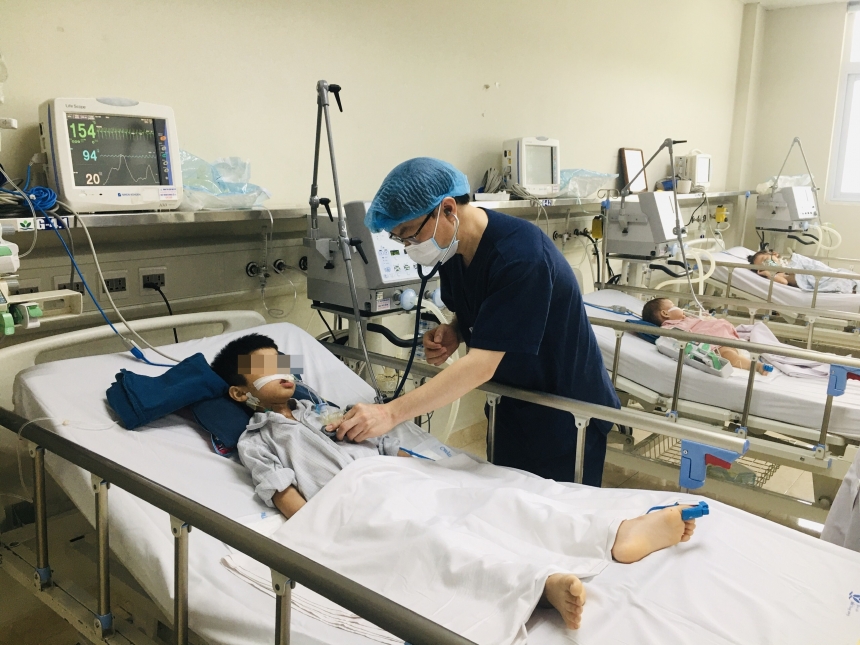
Early recognition of Japanese encephalitis symptoms is crucial for timely hospitalization of children.
Central Pediatric Hospital
Japanese encephalitis is considered one of the dangerous diseases, with a high mortality rate and high rate of sequelae in young children (25-35%). These sequelae cause patients to have reduced communication abilities and reduced or lost ability to work.
Most mothers whose older children contract Japanese encephalitis assume that because their children have received all three doses of the vaccine by the age of two, they can be complacent. However, this is one of the mistakes that contributes to the increased incidence of the disease in older children.
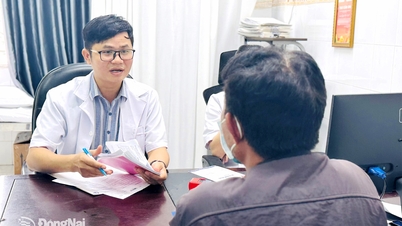
"In order to get children to the hospital in time, parents need to know the early symptoms and signs of Japanese encephalitis," a treating physician at the Center for Tropical Diseases noted.
Warning signs of encephalitis
According to doctors, when children have a fever, parents often think it's a common viral fever and buy fever-reducing medication for their children. However, if it's a common viral fever, after taking the medication and the fever subsides, the child will be active and playing normally.
However, with Japanese encephalitis, in the first 1-2 days, children usually show signs such as fever accompanied by progressively worsening headaches, fatigue, nausea, and vomiting. "Of these symptoms, fever and vomiting are the most often mistaken by parents," a treating physician at the Center for Tropical Diseases noted.
When children vomit, many mothers assume it's due to a digestive disorder or coughing. Therefore, many give their children digestive enzymes, cough medicine, or anti-vomiting medication in the hope of reducing the vomiting.
"However, in reality, when children experience dry vomiting accompanied by fever and progressively worsening headaches, these are symptoms of encephalitis. Mothers often don't recognize this until their children exhibit typical symptoms like severe headaches, high fever, and seizures, at which point they take them to the hospital. By then, the child's condition has progressed significantly, making treatment more difficult and increasing the risk of long-term complications," the infectious disease specialist noted.
The Japanese encephalitis virus typically attacks young children. Patients may experience early complications such as bronchitis and pneumonia.
Early complications of this disease may include hemiplegia or paralysis, aphasia, motor coordination disorders, and severe memory loss. Late complications may include epilepsy, hearing loss or deafness, and mental disorders.
There have been cases of children being admitted late, suffering very serious complications, and losing consciousness completely; or children who were still conscious but unable to move.
National Children's Hospital
Source link

![[Live] 2025 Community Action Awards Gala](/_next/image?url=https%3A%2F%2Fvphoto.vietnam.vn%2Fthumb%2F1200x675%2Fvietnam%2Fresource%2FIMAGE%2F2025%2F12%2F16%2F1765899631650_ndo_tr_z7334013144784-9f9fe10a6d63584c85aff40f2957c250-jpg.webp&w=3840&q=75)
![[Photo] Prime Minister Pham Minh Chinh receives the Governor of Tochigi Province (Japan)](/_next/image?url=https%3A%2F%2Fvphoto.vietnam.vn%2Fthumb%2F1200x675%2Fvietnam%2Fresource%2FIMAGE%2F2025%2F12%2F16%2F1765892133176_dsc-8082-6425-jpg.webp&w=3840&q=75)
![[Photo] Prime Minister Pham Minh Chinh receives Lao Minister of Education and Sports Thongsalith Mangnormek](/_next/image?url=https%3A%2F%2Fvphoto.vietnam.vn%2Fthumb%2F1200x675%2Fvietnam%2Fresource%2FIMAGE%2F2025%2F12%2F16%2F1765876834721_dsc-7519-jpg.webp&w=3840&q=75)
![[Image] Leaked images ahead of the 2025 Community Action Awards gala.](/_next/image?url=https%3A%2F%2Fvphoto.vietnam.vn%2Fthumb%2F1200x675%2Fvietnam%2Fresource%2FIMAGE%2F2025%2F12%2F16%2F1765882828720_ndo_br_thiet-ke-chua-co-ten-45-png.webp&w=3840&q=75)
![[Image] The tenacious fighting spirit of Vietnamese women's football](/_next/image?url=https%3A%2F%2Fvphoto.vietnam.vn%2Fthumb%2F1200x675%2Fvietnam%2Fresource%2FIMAGE%2F2025%2F12%2F17%2F1765990260956_ndo_br_4224760955870434771-copy-jpg.webp&w=3840&q=75)


















































![[Live] Closing Ceremony and Award Presentation for the "Impressive Vietnam Tourism" Video/Clip Creation Contest 2025](https://vphoto.vietnam.vn/thumb/402x226/vietnam/resource/IMAGE/2025/12/17/1765974650260_z7273498850699-00d2fd6b0972cb39494cfa2559bf85ac-1765959338756946072104-627-0-1338-1138-crop-1765959347256801551121.jpeg)





















Comment (0)