Farmers in Quy Chau overcome difficulties and race against time.
Việt Nam•20/01/2024
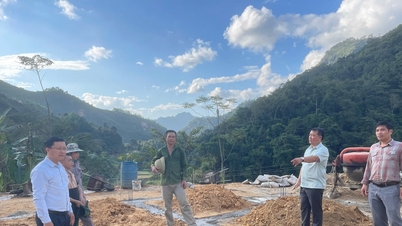
Four months ago, a historic flood buried thousands of hectares of farmland, mostly rice paddies. To have land for planting, Ms. Luong Thi Huong's family in Ban village (Chau Tien commune) had to hire an excavator to clear the topsoil and rocks from their rice fields at a cost of 7 million VND per 2,500 square meters. (Photo: Thanh Phuc) The flood also buried half of the rice fields belonging to Ms. Lo Thi Huyen's family (Ban village, Chau Tien commune). "Because the fields are located close to the road, when the flood came, all the soil and rocks rushed down into the fields, burying half the area. Besides hiring an excavator to clear the top layer of soil and rocks, we also had to build a wide embankment to prevent soil and rocks from flooding in." Photo: Hoai Thu Huyen's family also had to use wooden planks, bamboo, and reeds to build fences to protect their fields from landslides. Photo: Thanh Phuc After the fields were leveled with excavators, the soil became weak. To prevent water leakage and to keep crabs and snails from damaging the rice crops, many households used cement bags as barriers. Photo: Thanh Phuc
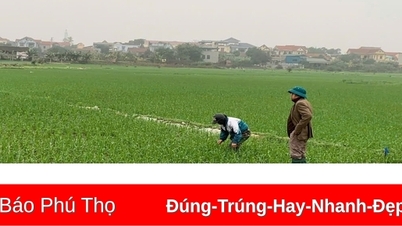
The floods also swept away and damaged the waterwheels in the rice fields. Before the spring planting season, the households had to completely rebuild the water wheels that led water to the fields. Photo: Hoai Thu Currently, the entire Chau Tien commune has completed plowing and is accelerating the planting process. To date, over 200 hectares of rice have been planted. It is expected that the entire area will be planted by January 31st. Photo: Thanh Phuc Ms. Lu Thi Ha's family is one of the largest rice farmers in Hoa Tien village, Chau Tien commune, with approximately 30 hectares. Ms. Ha cultivates rice twice a year: spring and autumn. “The spring crop always yields higher productivity than the autumn crop. In the 2023 autumn crop, my family suffered a complete loss, losing 30 hectares of rice due to flooding. Therefore, our family's food supply now depends entirely on this spring crop.” (Photo: Hoai Thu) To speed up the process, meet planting deadlines, and take advantage of the remaining warm weather, households in Quy Chau are exchanging labor with each other. Photo: Thanh Phuc
As the main crop of the year, rice cultivation is the most anticipated in terms of yield and output. Therefore, people strictly adhere to the techniques of sowing seedlings and transplanting according to the seasonal schedule. In the photo: People in Quy Chau sow rice seedlings covered with plastic sheeting. Photo: Hoai Thu When transplanting seedlings, people use sickles to scoop the seedlings instead of pulling them up. “Shoveling seedlings helps save a significant amount of seed, and yields higher productivity. In particular, it allows for better control over the sowing time, shortens the rice growth period, and avoids many disease-causing agents,” said Ms. Vi Thi Hong Quynh, a farmer from Chau Tien commune. Photo: Thanh Phuc According to the 2024 spring crop production plan, the entire Quy Chau district will plant 1,850 hectares of rice. The planting schedule is arranged into two phases, specifically as follows: Phase 1: Sowing seedlings from January 4-9, 2024, transplanting from January 24-29, 2024, using Thai Xuyen, Phu Uu 978, and Japonica 2 varieties; Phase 2: Sowing seedlings from January 10-15, transplanting from January 30 to February 4, 2024, using Thien Uu 8, SL 9, Bac Huong, Huong Thanh 8, and BQ varieties… Photo: Hoai Thu



 Việt Nam•20/01/2024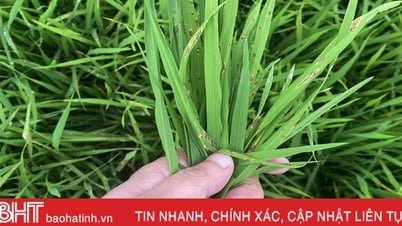

























































Comment (0)