

The Land Law of 2024, effective from August 1, 2024, five months earlier than the previously decided date (January 1, 2025), is in line with the Party's policy. It helps to promptly address existing shortcomings and limitations, especially in land valuation, land acquisition, compensation, and resettlement support, while simultaneously creating a comprehensive legal framework and unlocking land resources.
Construction is underway on the southern arterial road of the Thai Binh Economic Zone, specifically the section passing through Kien Xuong and Tien Hai districts.
Building upon the 2013 Land Law
Lawyer Nguyen Duc Long, from the Thai Binh Provincial Lawyers Association, stated: The 2024 Land Law is a major law, meticulously and scientifically prepared by the Government, with numerous specialized sessions. The National Assembly Standing Committee has given its opinion on the draft law in 7 sessions; the National Assembly considered and passed it according to the 4-session process. The law was built on the basis of a thorough review of the implementation of the 2013 Land Law, addressing issues arising from practice, closely adhering to and fully institutionalizing the policies and orientations in the Party's 13th National Congress documents, and the resolutions and conclusions of the Party and the National Assembly; The 2024 Land Law institutionalizes the three general objectives, six specific objectives, six groups of solutions, and eight major policy groups outlined in Resolution No. 18-NQ/TW of the Central Committee on "Continuing to innovate and improve institutions and policies, enhance the effectiveness and efficiency of land management and use, and create momentum to make Vietnam a high-income developed country." The process of perfecting the Law has involved significant effort and intellect, not only from agencies directly involved in the legislative process but also from all agencies within the political system and the entire society. Therefore, it can be affirmed that the 2024 Land Law is a high-quality legal document, inheriting and making significant progress compared to the 2013 Land Law. This law profoundly impacts almost all aspects of life, affecting every agency, organization, business, and citizen. Therefore, the Law, once implemented, will significantly contribute to creating a more complete, comprehensive, and appropriate legal foundation for further concretizing the institution of state ownership of land as stipulated in the 2013 Constitution; and enhance the effectiveness and efficiency of land management and use. The promulgation and effective implementation of the Law will be one of the important tools to unlock land resources, ensure a more harmonious balance of interests between the people, businesses, and the State, and contribute to making land a crucial resource for promoting socio-economic development and strengthening national defense and security in the coming period.
Many new features
Mr. Le Van Binh, Deputy Director of the Land Department, Ministry of Natural Resources and Environment, stated: The 2024 Land Law has undergone 9 revisions and additions, comprising 16 chapters and 260 articles; of which, 180 out of 212 articles of the 2013 Land Law have been amended and supplemented, and 78 new articles have been added. Compared to the 2013 Land Law, the 2024 Land Law has many new, groundbreaking points, meeting the requirements for the comprehensive improvement of policies and laws on land management and use in accordance with the development of a socialist-oriented market economy; resolving overlapping and conflicting policies and laws related to land. At the same time, the 2024 Land Law establishes a modern, transparent, and efficient land management system, promotes administrative procedure reform, digital transformation, and improves the land access index; Promoting democracy, reducing land disputes; contributing to the commercialization of land use rights, developing a transparent real estate market..., creating momentum to make Vietnam a high-income developed country. The 2024 Land Law clearly stipulates that the national land information system model is centralized, unified from the central to local levels, synchronized, multi-purpose, and interconnected nationwide. Therefore, building and perfecting the national land database will create efficiency in the use of land resources in management, administration, aggregation, as well as rational and sustainable exploitation for state agencies, businesses, and citizens.
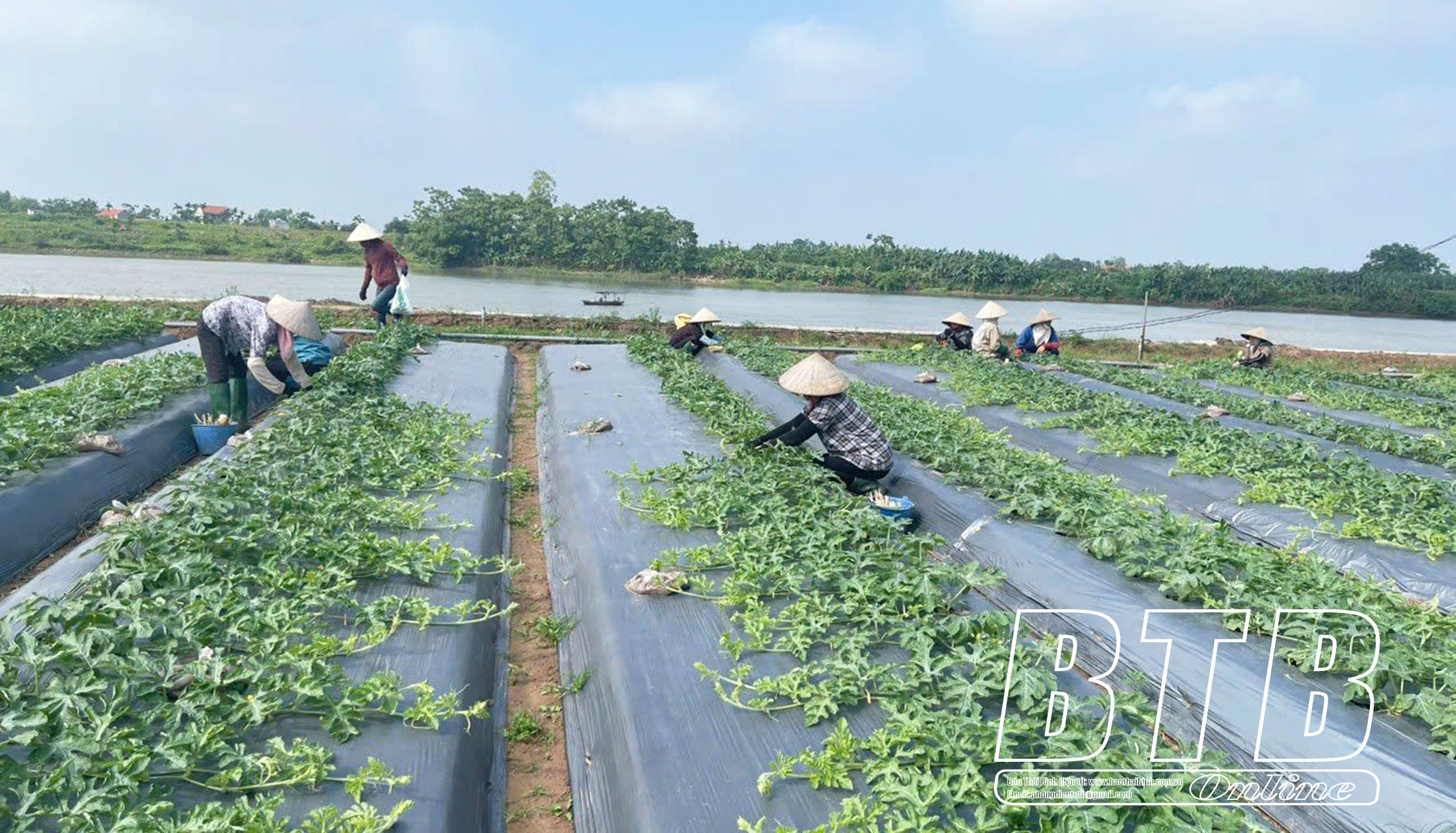
Agricultural land in Hong Minh commune (Hung Ha).
According to Mr. Nguyen Van Truong, Director of the Department of Natural Resources and Environment: The 2024 Land Law specifically stipulates the time for determining land prices, the time for calculating land use fees, and land rent for each case of land allocation, land lease, permission to change land use purposes, extension of land use, change of land use form, and adjustment of land allocation and lease decisions that change the area, purpose of land use, and duration of land use.
Accordingly, the competent People's Committee must issue a decision on specific land prices within no more than 180 days from the time of determining the land price. For cases where land prices from the land price table are used to calculate land use fees and land lease fees, the competent People's Committee must record the land price in the decision on land allocation, land lease, permission to change land use purposes, extension of land use, adjustment of land use duration, and change of land use form. At the same time, the authority to determine specific land prices is delegated to the Chairman of the District People's Committee for cases of land allocation, land lease, permission to change land use purposes, recognition of land use rights, extension of land use, adjustment of land use duration, determination of the starting price for auctioning land use rights for land allocation, land lease, adjustment of detailed construction planning, and land reclamation under the authority of the District People's Committee.
Mr. Pham Ngoc Ke, Chairman of the People's Committee of Tien Hai District, said: The 2024 Land Law, with many new and groundbreaking contents, contributes to perfecting legal policies and improving the effectiveness and efficiency of land management and use, such as: land use planning and plans; land acquisition, compensation, and resettlement support; land allocation, land leasing, and permission to change land use purposes; land finance and land prices; land registration, issuance of land use right certificates and ownership certificates for assets attached to land; building an information system and database on land; and promoting decentralization and delegation of power. Reforming administrative procedures in the land sector and enhancing the responsibility of local governments at all levels in land management and use... Therefore, to ensure the conditions for implementing the 2024 Land Law and quickly putting the Law into practice, the District People's Committee has directed the Department of Natural Resources and Environment to take the lead in developing a plan to coordinate with relevant departments and agencies to disseminate and educate on land law, raising awareness of land law among agencies, organizations, households, and individuals.
 Mr. Pham Trung Kien, Deputy Head of the Department of Natural Resources and Environment of Thai Thuy District From the perspective of innovation policy, land has been and continues to be a significant resource in socio-economic development. State management of land in the district is gradually becoming more systematic. The awareness of land law compliance among organizations, households, and individuals using land is increasingly improving. To ensure the law is implemented effectively, the Department of Natural Resources and Environment has proactively advised the District People's Committee to strengthen propaganda and implementation in accordance with practical realities.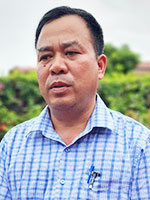 Mr. Tran Quang Dat, Vice Chairman of the People's Committee of Dong Xa commune (Dong Hung district) In the agricultural sector, the 2024 Land Law has expanded the scope and limits for individuals to receive the transfer of agricultural land use rights. Specifically, the limit for individuals to receive the transfer of agricultural land use rights shall not exceed 15 times the limit for agricultural land allocation to individuals for each type of land as stipulated in Clauses 1, 2, and 3, Article 176 of the 2024 Land Law. Individuals who do not directly engage in agricultural production are still allowed to receive the transfer of rice cultivation land. These are new and very important points for localities to develop green, clean, and safe agriculture; contributing to the comprehensive development of the local economy. |
(to be continued)
Minh Nguyet
Source: https://baothaibinh.com.vn/tin-tuc/4/208607/ky-2-khoi-thong-nguon-luc-dat-dai


![[Photo] Prime Minister Pham Minh Chinh attends the Conference on the Implementation of Tasks for 2026 of Vietnam Television.](/_next/image?url=https%3A%2F%2Fvphoto.vietnam.vn%2Fthumb%2F1200x675%2Fvietnam%2Fresource%2FIMAGE%2F2026%2F01%2F10%2F1768047311329_ndo_br_dsc-3214-jpg.webp&w=3840&q=75)






































![[Infographics] Resolution No. 79-NQ/TW of the Politburo on the development of the state-owned economy](https://vphoto.vietnam.vn/thumb/402x226/vietnam/resource/IMAGE/2026/01/10/1768038914679_chp_3-11-23.jpeg)



























Comment (0)