

Researchers have made a major breakthrough in the field of organ transplantation with a monkey that lived for 758 days with a genetically modified pig kidney.
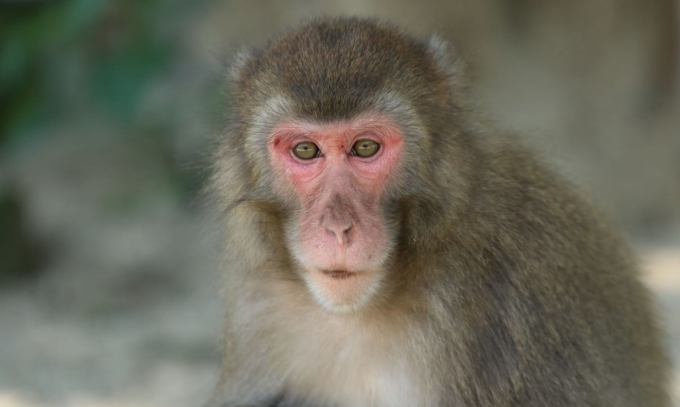
Macaque monkeys, the species selected for pig kidney transplant research. Photo: Takasakiyama Natural Zoological Garden.
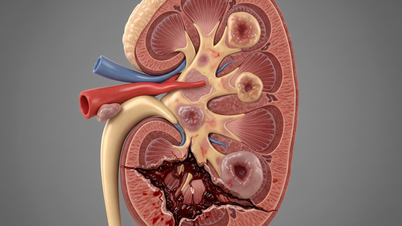
A new study on transplanting genetically modified pig kidneys into monkeys, published in the journal Nature, was conducted by the American biotechnology company eGenesis and Harvard Medical School. The research team suggests that genetically modified pigs are a potential solution to the global shortage of organ donors for patients with organ failure, the Guardian reported on October 11th. According to Dr. Michael Curtis, CEO of eGenesis, this new milestone offers hope for this solution and could lead to positive outcomes for those who need organ transplants to continue living.
Scientists have spent decades researching whether animal organs can function normally and safely in the human body without being rejected by the patient's immune system, but the challenge remains immense. In the latest experiment, the research team used the CRISPR gene-editing tool to alter the genes of small Yucatan pigs, then transplanted their kidneys into macaque monkeys. The gene modification aimed to prevent organ rejection and eliminate any swine viruses that might be activated in the recipient's body.
In a new study, a team of scientists described the condition of 21 monkeys after their kidneys were removed and transplanted with genetically modified pig kidneys. Monkeys typically only survive 24 days because the kidneys (modified to disable three genes) trigger an immune rejection response. But when the team added seven human genes that help reduce blood clotting, inflammation, and other immune responses, the monkeys lived seven times longer, typically around 176 days.
When combined with immunosuppressive therapy, the research team said a monkey could live for more than two years—758 days—with a transplanted organ. Curtis said the longevity of some of the monkeys brings eGenesis closer to meeting the U.S. Food and Drug Administration's (FDA) requirement that animals survive for at least 12 months before clinical trials on humans can begin.
The research team used small Yucatan pigs as "donors" because, when mature, their kidneys are about the same size as adult human kidneys. In experiments with monkeys, pig kidneys were transplanted when they were 2-3 months old and smaller.
Tatsuo Kawai, a member of the research team and a professor at Harvard Medical School, said they expect the modified pig organs to work better in humans than in monkeys because they are a better fit. Professor Dusko Ilic at King's College London commented that the new work is a breakthrough, but noted that there is still a long way to go before this method can be used in clinical trials.
Thu Thao (According to Guardian )
Source link
![[Photo] Prime Minister Pham Minh Chinh receives Lao Minister of Education and Sports Thongsalith Mangnormek](/_next/image?url=https%3A%2F%2Fvphoto.vietnam.vn%2Fthumb%2F1200x675%2Fvietnam%2Fresource%2FIMAGE%2F2025%2F12%2F16%2F1765876834721_dsc-7519-jpg.webp&w=3840&q=75)

![[Image] The tenacious fighting spirit of Vietnamese women's football](/_next/image?url=https%3A%2F%2Fvphoto.vietnam.vn%2Fthumb%2F1200x675%2Fvietnam%2Fresource%2FIMAGE%2F2025%2F12%2F17%2F1765990260956_ndo_br_4224760955870434771-copy-jpg.webp&w=3840&q=75)
![[Image] Leaked images ahead of the 2025 Community Action Awards gala.](/_next/image?url=https%3A%2F%2Fvphoto.vietnam.vn%2Fthumb%2F1200x675%2Fvietnam%2Fresource%2FIMAGE%2F2025%2F12%2F16%2F1765882828720_ndo_br_thiet-ke-chua-co-ten-45-png.webp&w=3840&q=75)
![[Live] 2025 Community Action Awards Gala](/_next/image?url=https%3A%2F%2Fvphoto.vietnam.vn%2Fthumb%2F1200x675%2Fvietnam%2Fresource%2FIMAGE%2F2025%2F12%2F16%2F1765899631650_ndo_tr_z7334013144784-9f9fe10a6d63584c85aff40f2957c250-jpg.webp&w=3840&q=75)
![[Photo] Prime Minister Pham Minh Chinh receives the Governor of Tochigi Province (Japan)](/_next/image?url=https%3A%2F%2Fvphoto.vietnam.vn%2Fthumb%2F1200x675%2Fvietnam%2Fresource%2FIMAGE%2F2025%2F12%2F16%2F1765892133176_dsc-8082-6425-jpg.webp&w=3840&q=75)






























































![[Live] Closing Ceremony and Award Presentation for the "Impressive Vietnam Tourism" Video/Clip Creation Contest 2025](https://vphoto.vietnam.vn/thumb/402x226/vietnam/resource/IMAGE/2025/12/17/1765974650260_z7273498850699-00d2fd6b0972cb39494cfa2559bf85ac-1765959338756946072104-627-0-1338-1138-crop-1765959347256801551121.jpeg)






















Comment (0)