

Enhance two-way communication.
Sharing about the collaborative relationship between the Department of Information and Communications and central press agencies operating in the area, journalist Nong Van Dat - Head of the Vietnam News Agency's permanent office in Cao Bang - said: "During journalistic activities in the locality, things have been quite smooth thanks to the support of the provincial leadership and leaders of various departments and agencies, and we haven't encountered many difficulties."
However, sometimes, during fieldwork, reporters still encounter obstacles due to a lack of cooperation from local agencies and organizations, such as refusal to provide documents, avoidance, or failure to comply with the Press Law. These obstacles and difficulties have been reported by reporters to the Department of Information and Communications. Subsequently, the Department, together with the Propaganda Department of the Cao Bang Provincial Party Committee, informed these agencies, requesting them to comply with the Press Law and not create difficulties for reporters in their work.
"Thanks to this, agencies and units in the province have a better understanding of the Press Law, and are cooperating and providing information and documents to the press," observed Nong Van Dat, Head of the Vietnam News Agency's Cao Bang bureau.
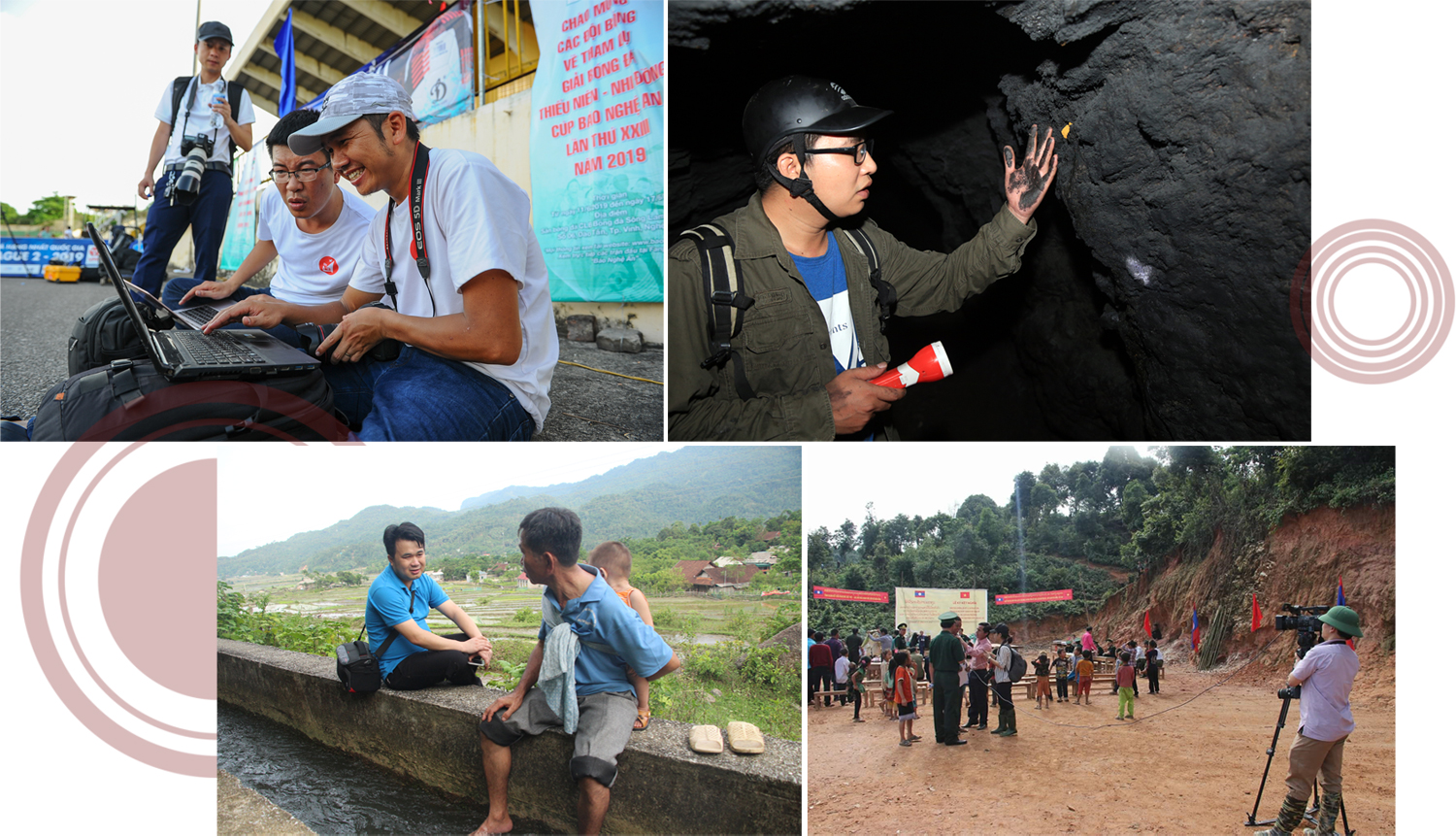
Discussing this issue, journalist Tran Duy Tuyen, Head of the Dan Tri Newspaper's representative office in Thanh Hoa, stated: "As one of the central press agencies permanently stationed in the locality, for many years, we have received great attention and support from the Department of Information and Communications, especially the Press and Publishing Management Division. The two-way coordination and information exchange between the Department of Information and Communications helps local reporters to promptly grasp the local government's policies and guidelines. Through press conferences and monthly and quarterly briefings organized in coordination with the Department of Information and Communications, central press agencies in the area can directly exchange and dialogue with provincial leaders on issues of interest to the press."
This also reflects the shortcomings in the process of speaking to and providing information to the press in the area. At the same time, with the cooperation and support of the Department of Information and Communications, the unit has been able to grasp more promptly many prominent issues and information in the area that the public is interested in.”
Regarding public feedback on information disseminated through collaboration between central press agencies and the Department of Information and Communications, journalist Tran Duy Tuyen assessed how this collaboration has improved public trust and interest: "Most such information receives public attention, especially in terms of information guidance. This is because the information provided in collaboration with the Department of Information and Communications has a clear legal basis and is provided by relevant authorities, thus possessing a high level of credibility."
As a concrete example of a successful collaboration between reporters and the Department of Information and Communications, journalist Tran Duy Tuyen cited the following: Investment promotion events, high-level leadership meetings, and political and economic events in the locality all benefited from the coordination and support of the Department of Information and Communications in providing information and images. This enabled media outlets to obtain more complete, accurate, and timely information.
Frankly speaking, Mr. Nguyen Thuc Manh, Deputy Director of the Department of Information and Communications of Yen Bai province, shared: Previously, in Yen Bai province, the lack of planning, proactiveness, and professionalism in providing information to the press still existed in a few agencies and localities. This was also a difficulty and obstacle to the work of the press, affecting the overall effectiveness of propaganda in the locality.
To address this issue, the Department of Information and Communications of Yen Bai province has been implementing several key solutions. To date, all departments, agencies, and localities in Yen Bai province have issued regulations on speaking to and providing information to the press, establishing clear and transparent mechanisms for providing information to the media. Therefore, the lack of proactiveness and professionalism in providing information to the press in Yen Bai has been overcome; the provision of information to the press is now carried out in a more systematic and effective manner.
Both managing and coordinating.
To further clarify the collaborative relationship between the Department of Information and Communications and central press agencies, journalist Tran Long - a correspondent for the Education Times newspaper in Vinh Phuc - analyzed: Clause 4, Article 7 of the Press Law stipulates: "The People's Committee at the provincial level, within its duties and powers, is responsible for state management of the press in the locality." The Provincial People's Committee also issued regulations on the functions and duties of the Department of Information and Communications in press management, which delegates the authority to manage the press to the Department of Information and Communications.
"This illustrates that the relationship between the local Department of Information and Communications and reporters and journalists is both managerial and collaborative. In other words, the Department of Information and Communications assists reporters and journalists in operating in accordance with regulations, thereby producing quality journalistic works that meet the requirements of the media agency and serve the tastes of readers," said journalist Tran Long.
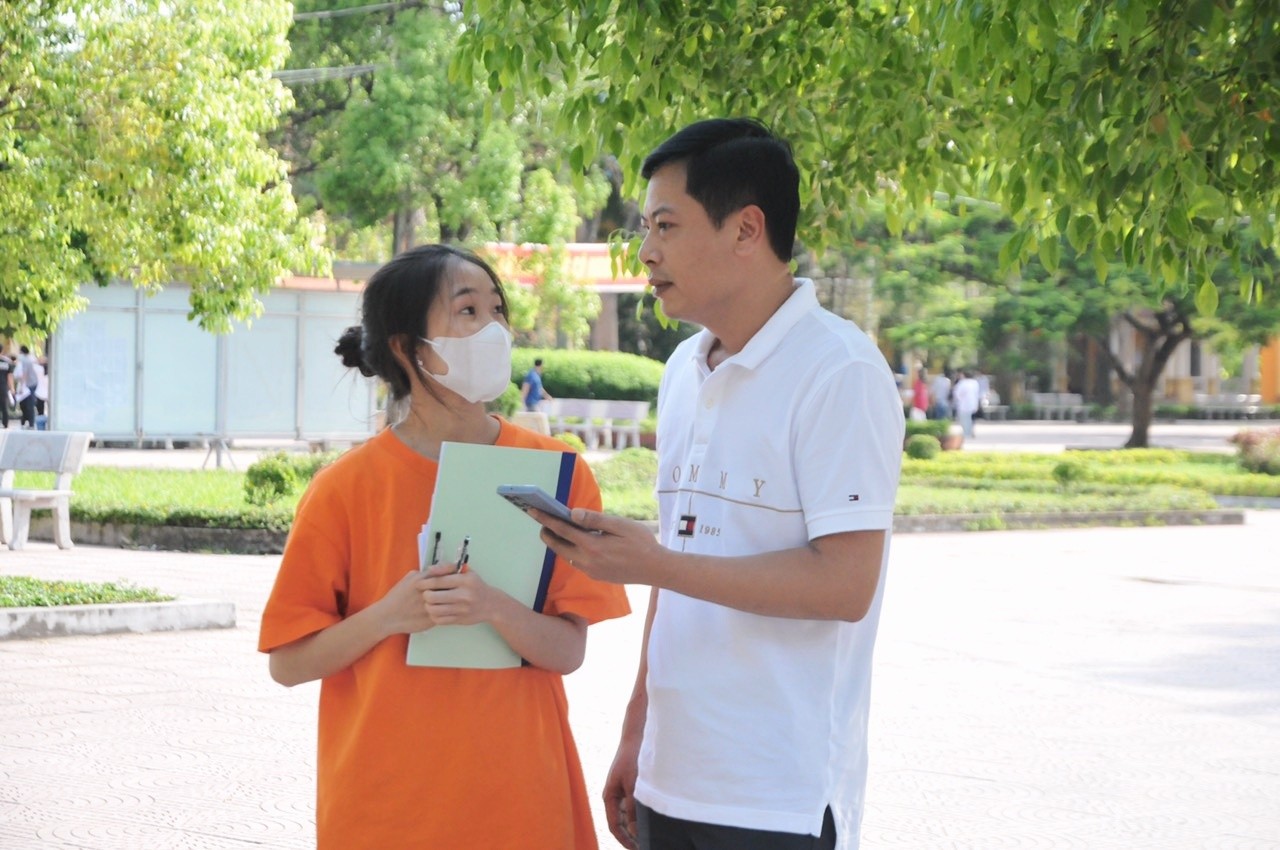
Reporter Tran Long from the Education and Times newspaper is working at the high school graduation exam site at Nguyen Thai Hoc High School, Vinh Phuc province.
Tran Long, a correspondent for the Education Times newspaper in Vinh Phuc, added: “After nearly 20 years of working in journalism, mainly as a local reporter, I have received effective assistance and cooperation from the Departments of Information and Communications. Firstly, I have been provided with timely and accurate information on current social issues in the province. In addition, I have received news and prominent activities in the fields of economics, culture, security, and social order... Furthermore, the Departments of Information and Communications regularly provide information on 'hot' issues of public concern through various channels.”
According to journalist Tran Long, a local correspondent who frequently has to organize news coverage, find sources, and develop work programs independently, reporters must cover all fields, from politics and society to economics, security, and defense. The topics are broad, the geographical area is vast, and reporters don't always have enough time and mental capacity to cover everything. Therefore, official information channels from relevant agencies, specifically the Department of Information and Communications, are invaluable and necessary. The information shared between the two sides receives positive feedback from readers and public trust because it comes from official sources.
Reporter Tran Long commented: A newspaper or reporter who consistently delivers timely and accurate news will gain trust and high regard from the public. Once they receive trust and positive feedback from the public, the reporter's work will be smoother and easier. Readers are both a very good source of information for local reporters and a very objective source of assessment of the quality of the reporter's articles.
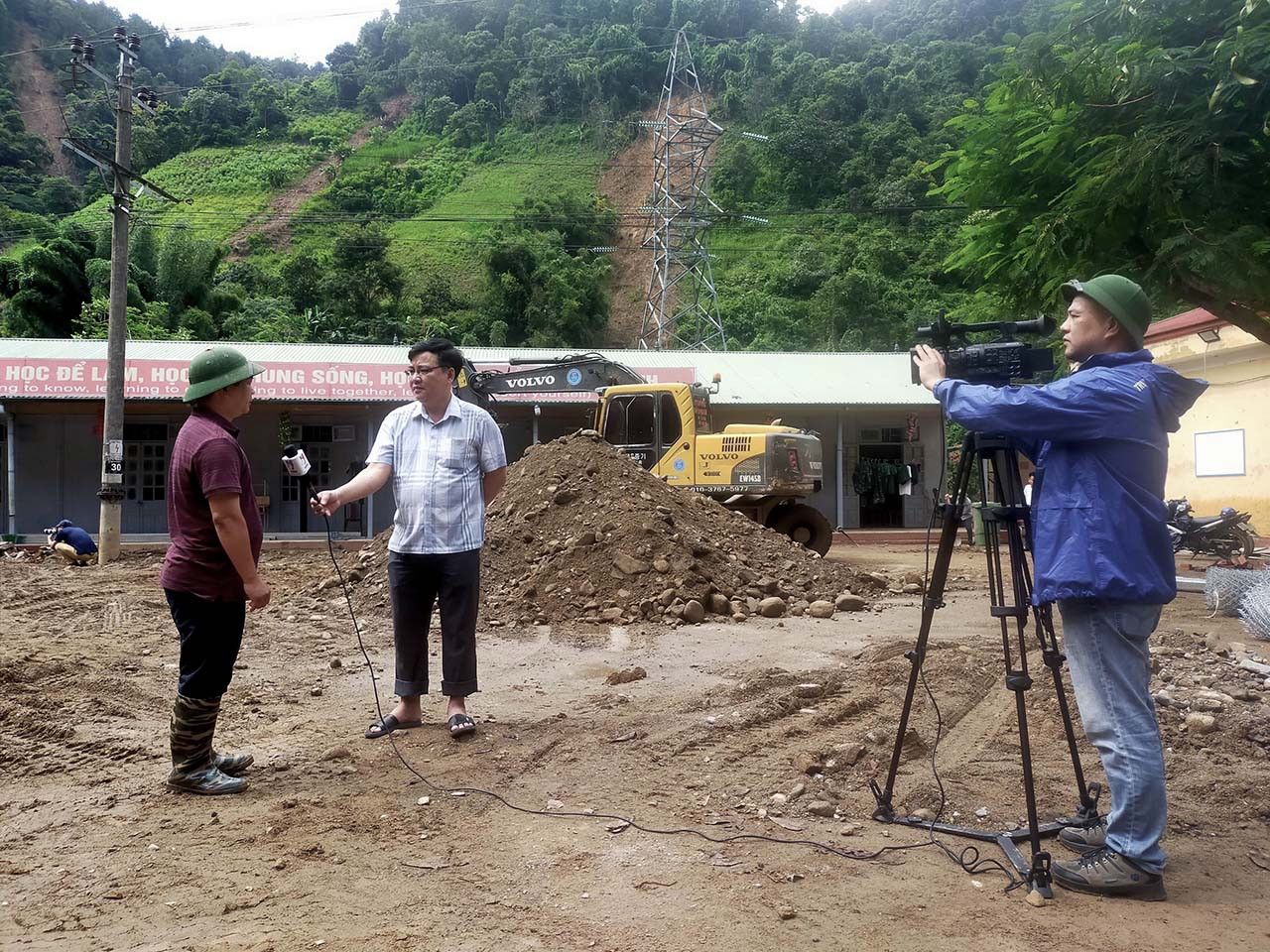
The correspondent based in Yen Bai is on assignment.
Discussing the collaboration between the Department of Information and Communications and press agencies, Ms. Le Hai Yen, Deputy Director of the Department of Information and Communications of Lang Son province, said: Annually, the Department has provided over 300 pieces of content to more than 30 press agencies. These agencies have access to official, timely, and truthful information, which has been transformed into hundreds of articles. The proportion of positive information about Lang Son province has increased, while negative information has decreased. In the first six months of 2024, 46 news bulletins summarizing information from central newspapers reflected on Lang Son with 2,373 news items and articles. Of these, 1,078 were positive (45%), 7 were negative (3%), and 1,288 were neutral (52%).
“ In Lang Son province, all levels and sectors, from the provincial to the grassroots level, have always proactively provided information to the press in accordance with the regulations in Decree 09/2017/ND-CP on speaking and providing information to the press through various forms such as press conferences, issuing press releases, press briefings, through electronic media, and answering press interviews. As a result, the press has reflected relatively fully, comprehensively, regularly, and promptly on Lang Son province,” said the Deputy Director of the Department of Information and Communications of Lang Son province.
According to Ms. Yen, every year, the Lang Son Department of Information and Communications takes the lead in reviewing agencies and units in the province, requesting them to update and publish the list of spokespersons and provide information to the press for public posting on the provincial electronic information portal. The Department has established and operates a Zalo group for resident press agencies and press agencies cooperating with Lang Son province to provide timely information. For thematic content or proposals from press agencies, the Department has promptly reported to the Provincial People's Committee and issued documents to facilitate the work of reporters from press agencies.
Regarding this matter, Provincial Party Committee member and Director of the Department of Information and Communications of Hai Duong province, Nguyen Cao Thang, said: “In Hai Duong, we always clearly recognize the particularly important role of the press in information and propaganda work. Reporters are provided with press passes for major events to easily access and report on events and activities of the province and its departments, agencies, and localities through the press.”
At the same time, the Department of Information and Communications has proactively and actively advised the Provincial People's Committee to issue and organize the implementation of legal documents, directing and managing, creating a legal framework and favorable conditions for press agencies to operate.
“We have also implemented an online support system through the Press Hotline, Spokesperson and information provider for the press, and the Hai Duong Press Zalo group, Representative Office - Resident Reporters - where reporters can submit published news and articles, send information requests, and receive timely feedback from the Department of Information and Communications and other departments, agencies, and localities. This system is designed to enhance interaction and minimize waiting time, helping the press obtain information quickly and conveniently…”
In addition, the Department also organizes training sessions on information gathering and processing skills and safe working methods for reporters... All these mechanisms aim to create the best conditions for the press to operate, contributing to improving the quality of information and ensuring transparency and accuracy in communication," emphasized the Director of the Department of Information and Communications of Hai Duong province.
The reciprocal "interaction"
Responding to the question, "How should the Department of Information and Communications and press agencies coordinate to strengthen collaboration and improve the quality and accuracy of information disseminated?", Nong Van Dat, Head of the Vietnam News Agency's Cao Bang bureau, stated: "To achieve this, press agencies certainly need to cooperate closely with the Department of Information and Communications, increase their proactive approach, and treat the Department of Information and Communications as an editor or 'vigilant' to help them detect errors in information. From there, they can provide feedback to reporters so that corrections and adjustments can be made promptly."
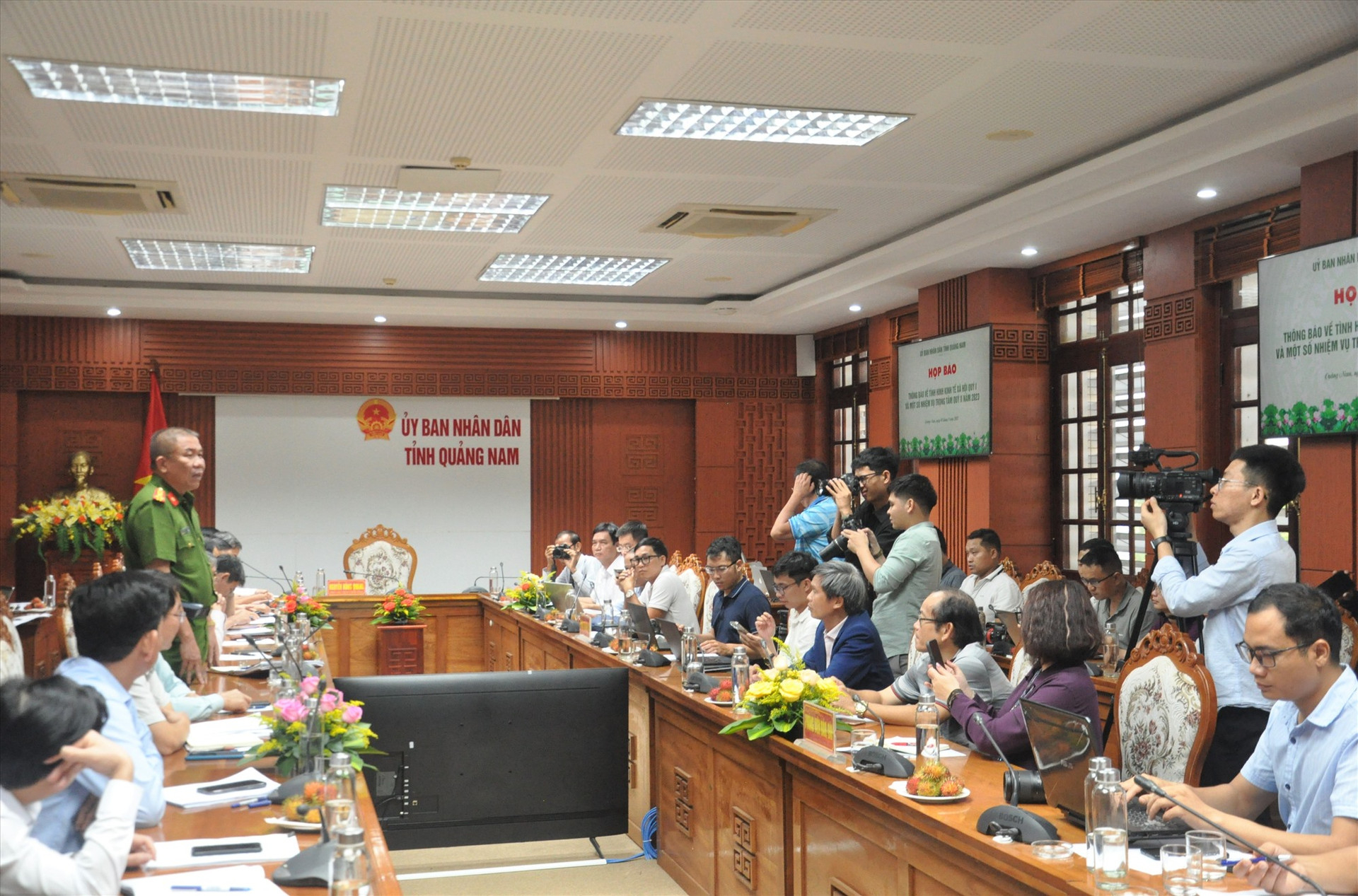
A press conference was held by the Quang Nam Provincial People's Committee to provide information to the media.
Conversely, according to journalist Nong Van Dat, the Department of Information and Communications also needs to further enhance its role as an information censor; at the same time, it needs to improve its capacity to detect errors in journalism, support the press in identifying errors, and promptly inform reporters. In addition, the Department of Information and Communications should introduce and guide reporters, especially those from central media agencies, to interesting and engaging topics, cultural and traditional aspects, and socio-economic development achievements of their localities so that reporters can understand and convey that content effectively in their publications.
Agreeing with the above viewpoint, journalist Tran Duy Tuyen - Head of the Dan Tri Newspaper's representative office in Thanh Hoa - said: The Department of Information and Communications and press agencies need to have more frequent exchanges and coordination, especially in prominent events and incidents occurring in the area, in paying attention to and exchanging information with functional agencies and localities to ensure quick and accurate statements and information so that press agencies have a basis for timely and correct dissemination of information.
Meanwhile, reporter Tran Long also expressed his view that the strong development of the internet, social media, and multimedia is having a multifaceted impact on journalistic activities in general and local journalism in particular. The Department of Information and Communications, in its role, needs to adapt flexibly in managing local journalism.
On the one hand, the Department of Information and Communications directs and guides press agencies, media outlets, and reporters in the province to carry out the task of disseminating the Party's directives and resolutions, and the State's policies and laws. It advises the provincial leadership on directing relevant units and sectors to investigate cases reported by the press, report to the Provincial People's Committee, and respond to press agencies as required; it promptly guides and urges agencies, units, and localities to investigate, clarify, and respond to press information, and promptly handle false information.
On the other hand, the Department of Information and Communications needs to strengthen its supervision of statements and information provision to the press by agencies and localities in accordance with regulations. It should proactively engage in dialogue, hold press conferences, and provide comprehensive information on incidents and current issues of public concern.
The Deputy Director of the Department of Information and Communications of Lang Son province noted: In the coming time, agencies and units need to continue to proactively coordinate actively and regularly with press agencies, innovate communication methods and forms of providing information to the press to ensure transparency and meet the information needs of press agencies.
Conversely, to achieve "harmonious coordination," media outlets need to regularly and closely cooperate with agencies and units in policy communication. Strengthening and improving the quality of policy communication, promoting digital transformation in journalism, applying technology, and innovating multimedia communication methods are crucial for effective policy communication and meeting new task requirements.
Also expressing his views on the "harmonious coordination" between the Department of Information and Communications and press agencies, the Director of the Department of Information and Communications of Hai Duong province, Nguyen Cao Thang, stated: "We will focus on strengthening the direction and management of the press, creating a legal framework for the press to operate smoothly; establishing mechanisms to increase funding for commissioning, assigning tasks, and signing media cooperation agreements with press agencies; continuing to effectively promote joint working groups - where officials of the Department of Information and Communications and reporters can discuss and exchange information regularly; and maintaining daily national press news summaries about Hai Duong to serve the leadership, direction, and management of the provincial leaders."
In addition, organizing journalism awards, press conferences, networking events, training courses on journalistic skills and techniques, public speaking, providing information to the press, and handling media crises… will also help improve the quality of information and communication capabilities of both sides. This close cooperation will certainly help media agencies more effectively disseminate information about local activities and policies.”
Nguyen Huong – Quan Tuan – Minh Dien
Source: https://www.congluan.vn/khi-doi-ben-cung-dong-hanh-post299720.html
![[Photo] Commemorating the unwavering friendship between Vietnam and Laos](/_next/image?url=https%3A%2F%2Fvphoto.vietnam.vn%2Fthumb%2F1200x675%2Fvietnam%2Fresource%2FIMAGE%2F2026%2F01%2F27%2F1769518372051_ndo_br_1-jpg.webp&w=3840&q=75)
![[Photo] Announcement Ceremony of the Art Program “Light Concert – Welcoming the New Year 2026”](/_next/image?url=https%3A%2F%2Fvphoto.vietnam.vn%2Fthumb%2F1200x675%2Fvietnam%2Fresource%2FIMAGE%2F2026%2F01%2F27%2F1769514762857_le-cong-bo-ct-hoa-nhac-anh-sang-1772-9042-jpg.webp&w=3840&q=75)


![[Hightling] Conference on the Implementation of Tasks for 2026](/_next/image?url=https%3A%2F%2Fvphoto.vietnam.vn%2Fthumb%2F402x226%2Fvietnam%2Fresource%2FIMAGE%2F2026%2F01%2F27%2F1769477856197_dsc01637.jpeg&w=3840&q=75)


![OCOP during Tet season: [Part 2] Hoa Thanh incense village glows red.](/_next/image?url=https%3A%2F%2Fvphoto.vietnam.vn%2Fthumb%2F402x226%2Fvietnam%2Fresource%2FIMAGE%2F2026%2F01%2F27%2F1769480573807_505139049_683408031333867_2820052735775418136_n-180643_808-092229.jpeg&w=3840&q=75)
![OCOP during Tet season: [Part 1] Ba Den custard apples in their 'golden season'](/_next/image?url=https%3A%2F%2Fvphoto.vietnam.vn%2Fthumb%2F402x226%2Fvietnam%2Fresource%2FIMAGE%2F2026%2F01%2F26%2F1769417540049_03-174213_554-154843.jpeg&w=3840&q=75)


Comment (0)