

Human rights and civil rights are identified as central issues in building and perfecting the legal system on human rights.
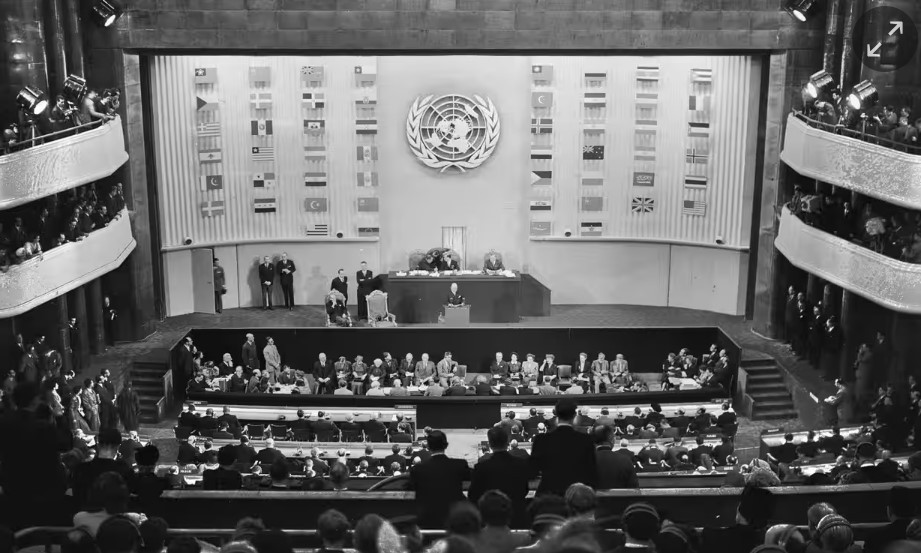 |
| The United Nations General Assembly adopted the Universal Declaration of Human Rights in Paris, December 10, 1948. (Source: AFP/Getty Images) |
In 2023, Vietnam and the international community will celebrate the 75th anniversary of the United Nations General Assembly's adoption of the Universal Declaration of Human Rights in 1948 and the 30th anniversary of the World Conference on Human Rights' adoption of the Vienna Declaration and Programme of Action, proposed by Vietnam and adopted by the United Nations Human Rights Council.
This is a momentous event, marking a new turning point in the international community's common commitment to the cause of promoting and protecting human rights globally; affirming the enduring value of these two important international documents at the contemporary and cross-century level.
The article analyzes in depth the contemporary value of the 1948 Universal Declaration of Human Rights and its significance for promoting and protecting human rights in Vietnam.
1. The contemporary value of the 1948 Universal Declaration of Human Rights
When evaluating the Declaration, many scholars around the world believe that, although there are still certain limitations due to different ideologies or cultural values, and the desire for greater expectations, the fact that the world community has reached a common agreement shows the historical vision of the Declaration. Professor Jack Donnelly - the famous author of the work "Theory and Practice of Global Human Rights, first published in 2003" [1] wrote: " From socialists to liberals, from atheists to Christians, from Jews to Buddhists, and people from many, many other cultural traditions - although with different starting points - but all converge on one point, which is to support the rights stated in the Universal Declaration of Human Rights[2].
It is difficult to fully assess the greatness of the Declaration in one article, but if anyone studies the ideological history of human rights, associated with the history of the struggle of the world's people from ancient times to modern times today, it is impossible to deny the contemporary and cross-century values of the Declaration in the following aspects:
Firstly, from ideal human rights to practical human rights, the Declaration has transcended all cultural differences, becoming a global universal value.
Research on the history of human rights ideology in Vietnamese books and newspapers and in training institutions around the world has confirmed that the ideology of human rights has a very long history, associated with the history of the struggle against brutality, injustice, inequality and together towards the values of justice, freedom, equality and human rights. This is because of the natural principle that, "where there is oppression, there is struggle".
In the theories of natural rights and natural law in the Renaissance - Enlightenment period of the 17th and 18th centuries, Rousseau (1712-1778) - one of the great Swiss thinkers and philosophers, when "On the social contract" or "the principles of political rights", wrote: "It is an obvious truth that man is born free, but everywhere he lives in chains[3]".
During that same period and later, when discussing the history of human rights ideology, there were also many opinions that "in the past, when talking about human rights, we were talking about values originating from humanistic ideas, about human ethics, about human values[4]".
Indeed, if there were no violation or trampling on human values, there would be no history of fighting against social injustice; and there would be no need to waste paper and pen to write and demand human rights, the right to be human; in fact, the history of mankind from ancient times to the present day is ultimately the history of fighting for human rights. Humans have paid with their blood and tears by uniting together to stand up against brutality, against war, against oppression, against social injustice.
However, human rights standards were only established globally when a historical push appeared, which were the first two world wars (1914 - 1918) and the second (1939 - 1945) in the 20th century, as expressed in the preamble of the United Nations Charter, that "war has twice in our lifetime caused untold suffering to mankind[5]", so to prevent war - the biggest perpetrator of encroachment and trampling on human rights, the international community together established the United Nations - an international organization responsible for maintaining peace, security and protecting human rights.
And just one year after the United Nations was founded, the Human Rights Commission was established (in 1946) and three years later an international document on human rights was drafted and adopted by the United Nations General Assembly, which was the Universal Declaration of Human Rights in 1948.
Transcending all cultural differences, the Declaration affirms: That all human beings are born free and equal in dignity and rights. They are endowed with reason and conscience and should act towards one another in a spirit of brotherhood (Article 1 of the Declaration)[6], to affirm that human rights are natural, innate, and not a gift from anyone or any power; and that they are the same for all, without distinction of any kind, such as race, color, sex, language, religion, political or other opinion, national or social origin, property, birth or social status (Article 2)[7], as long as they are human beings, they are entitled to human rights.
Equality and non-discrimination have become the consistent principles, guiding principles for all provisions of the Declaration and international human rights law, and are one of the principles/characteristics of human rights in the common understanding of the international community today . Studying this provision carefully, we can see the great vision of the drafters, because if we look back at human history before the 17th and 18th centuries, when human rights only belonged to a group of people or a certain nation (equality only belonged to the same class and interests), and when there were still huge differences in culture and society, and heavy class divisions in countries; Then the concept of children being considered the property of their parents, women being dependent on their fathers and husbands (the theory of the three obediences), people of color being born slaves by default[8]... truly shows the full meaning of the profound moral and humanistic values that have been summarized in thousands of years of human history of progress, expressed in each simple sentence, each word, easy to understand for everyone, but carrying a historical vision and becoming the truth, having universal global value as it is today.
Human rights have thus developed in the course of history, from an idea to a reality, from appearing in the humanitarian tradition of each individual nation and people, now humanity has become human rights, and the language of human rights that only existed within the same class or group of people has now become human rights for everyone. That is a great achievement in the history of the struggle of progressive people all over the world, of which the Declaration is a shining milestone - marking those great achievements.
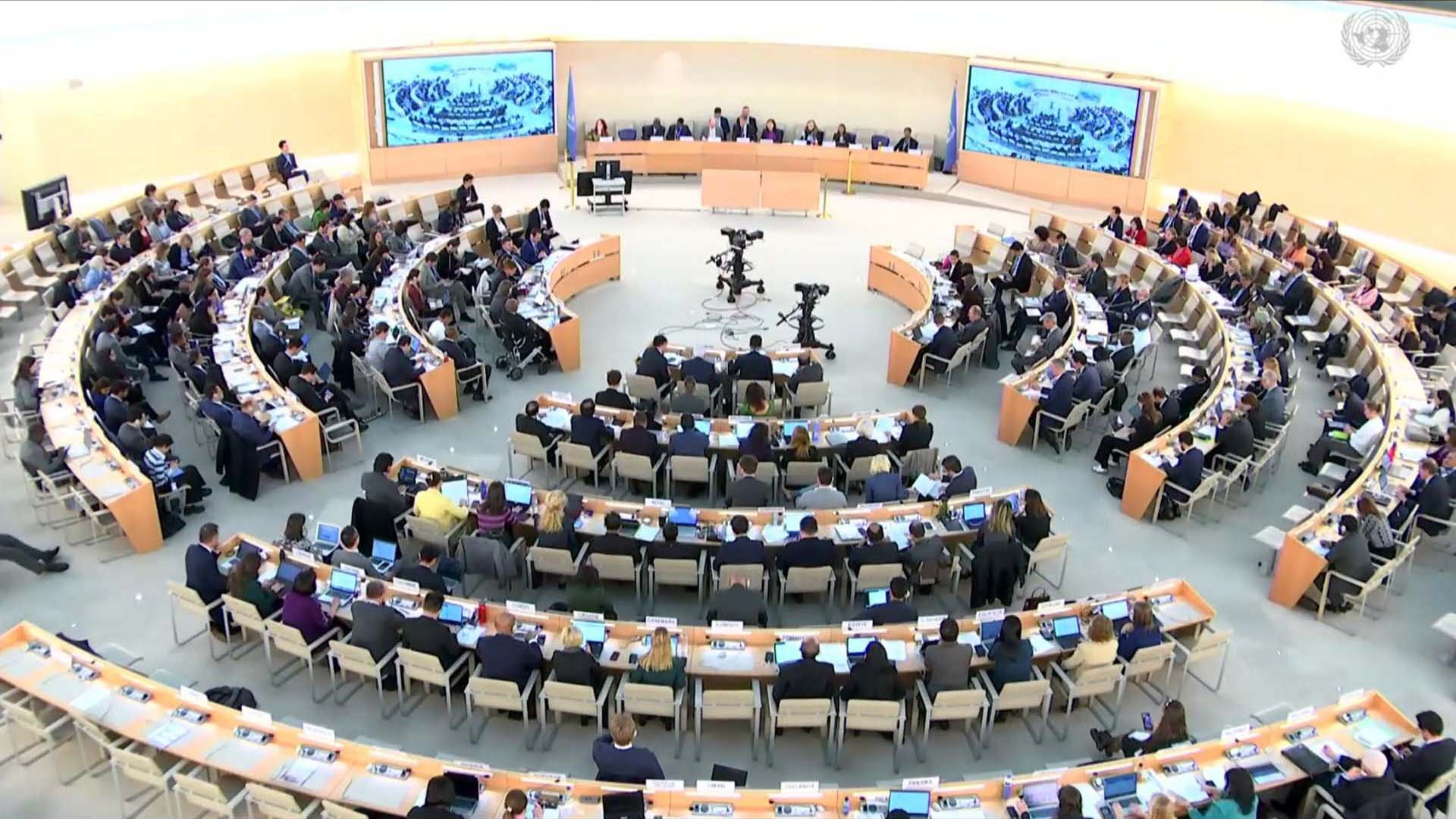 |
| The United Nations Human Rights Council adopted a resolution proposed and drafted by Vietnam on the 75th anniversary of the Universal Declaration of Human Rights and the 30th anniversary of the Vienna Declaration and Programme of Action. (Source: Getty Images) |
Second, the Declaration is an immortal document of political and legal commitments - creating the foundation for building global international standards on human rights.
Together with the preamble and 30 articles listing human rights and fundamental freedoms, establishing the responsibility of committed nations to work together with the United Nations to promote universal respect for and observance of human rights and fundamental freedoms. The Declaration became the first specialized document in modern history at that time, not only a moral and political commitment but also a legal document for nations.
However, because it is a document with recommendatory value, it requires a document with higher legal value and effect, and the need to concretize and develop the ideas and principles in the Declaration through specific international treaties, in each field and with mandatory legal value for member countries, has begun to become a common concern of the international community.
The fundamental rights and freedoms listed in the Declaration were developed and formulated by the United Nations Human Rights Commission into two separate covenants, the International Covenant on Civil and Political Rights and the International Covenant on Economic, Social and Cultural Rights. Both were adopted by the United Nations General Assembly on December 16, 1966.
Currently, the 1948 Universal Declaration of Human Rights, two 1966 international conventions and two additional protocols to the international covenant on civil and political rights are identified by the international community as the International Bill of Human Rights.
Based on the provisions on human rights in this Code, up to now, the United Nations has developed and adopted hundreds of international documents to protect human rights in specific areas of social life such as protection against discrimination; protection of women's rights; children's rights; human rights in judicial administration; freedom of information; freedom of association; employment; marriage, family and youth; social welfare; progress and development; the right to enjoy culture, development and international cultural cooperation; issues of nationality, statelessness, residence and refugees; on the prohibition of torture, cruel, inhuman and degrading treatment; protection of the rights of migrant workers and their family members; protection of the rights of people with disabilities; protection of those who have been forced to disappear; the rights of indigenous peoples and ethnic groups..[9].
Third, the Declaration is a common yardstick for assessing the level of human rights implementation in each country and on a global scale.
In the preamble to the Declaration, the United Nations General Assembly proclaimed that: “This Universal Declaration of Human Rights shall be a common standard of achievement for all peoples and all nations, and for all individuals and organs of society, in judging the achievement of their objectives, keeping this Declaration constantly in mind, to strive by teaching and education to promote respect for these rights and fundamental freedoms and by progressive measures, national and international, to promote their universal and effective recognition and observance, both among the peoples of their own country and among the peoples of territories under their jurisdiction[10]”.
International standards on human rights, there are currently hundreds of documents, but the most important and often cited to assess the level of implementation and enjoyment of human rights in a country or region is the Universal Declaration of Human Rights.
Fourth, the Declaration is also a reminder and admonition for future generations to have the responsibility to cooperate together, prevent cruelty, restrain and eliminate war because it is the greatest perpetrator of human rights violations.
Studying the entire content of the Declaration with its preamble and 30 articles, the central idea is that it is a moral value, a teaching that future generations must have the responsibility to cooperate together, prevent cruelty, restrain and eliminate war because it is the culprit that violates human rights.
Leaders of nations throughout the world must always bear in mind the words of the Declaration, because any disregard, contempt or contempt for human rights and fundamental freedoms is an outrage on the conscience of mankind. And that, “Disregard and contempt for human rights have resulted in barbarous acts which have outraged the conscience of mankind, and the advent of a world in which human beings shall enjoy freedom of speech and belief and freedom from fear and want has been proclaimed as the highest aspiration of the common people[11]”.
Within each country, the ethical and humanistic values in the Declaration are also expressed in teaching people, especially those in power, to whom the law of each country gives them only as representatives and servants, so they must always be aware that the power they are using originates from their own people.
Therefore, whenever power is exercised not for the benefit of the people but as an instrument of domination, of oppression, of violation of human dignity, of the rights and freedoms of the people, the causal relationship, as the preamble of the Declaration noted, “ It is essential, if man is not to be compelled to have recourse, as a last resort, to rebellion against tyranny and oppression, that human rights should be protected by the rule of law[12]”.
2. The significance of the 1948 Universal Declaration of Human Rights for the promotion and protection of human rights in Vietnam
After 75 years in the light of the Universal Declaration of Human Rights and 30 years of implementing the Vienna Declaration and Programme of Action, the promotion and protection of human rights in Vietnam has made giant strides in the following areas:
Firstly, the Party and State of Vietnam pay attention to building and perfecting the legal system on human rights.
Human rights and civil rights are identified as the central issues in building and perfecting the legal system on human rights. Right from the first Constitution (the 1946 Constitution) of the Democratic Republic of Vietnam, basic human rights and freedoms were established.
Up to now, after nearly 40 years of innovation, the Vietnamese State has built a legal system to regulate social relations, focusing on building relatively comprehensive human rights laws, suitable to the country's development practices and gradually compatible with international regulations on human rights[13].
On the basis of international standards and from the specific conditions of the country, build and perfect the legal system to create the most important legal basis for all activities of the State, civil servants and public employees in respecting, ensuring and protecting human rights.
Currently, human rights law has regulated most important areas of the country in all areas of economic, political and social life. The 2013 Constitution passed by the 13th National Assembly is the result of nearly 30 years of innovation, considered the pinnacle in the history of constitutionalism to protect human rights.
The Constitution consists of 120 articles, of which 36 articles stipulate human rights, rights and obligations of citizens; regulations on human rights, rights and obligations of citizens are not only stipulated in a separate chapter (Chapter 2) but also in many different chapters of the Constitution.
The provisions on human rights in the Constitution are the highest legal guarantees of the State to respect, protect and implement human rights. On the basis of constitutional principles, a series of laws and specialized codes have been promulgated to specify the provisions of the Constitution, creating a comprehensive legal basis to ensure human rights in civil and political fields; economic, social and cultural rights; and the rights of vulnerable social groups in society.
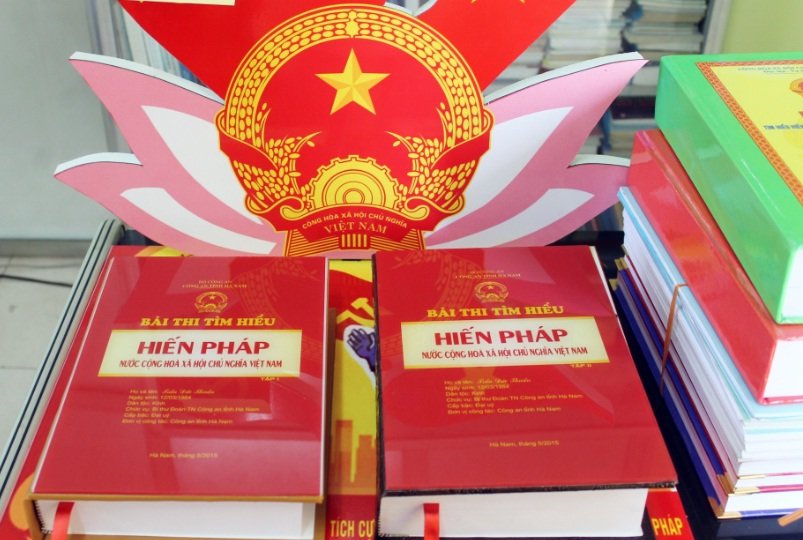 |
| The 2013 Constitution affirms the principle that the State recognizes, respects, protects and ensures human rights and citizens' rights, and commits to "complying with the UN Charter and international treaties to which the Socialist Republic of Vietnam is a member." (Source: VGP) |
Second, the Party and State pay attention to perfecting institutions to protect human rights.
The Party and State of Vietnam have determined that, in addition to the legal system, agencies in the state apparatus play an important role in promoting and protecting human rights. For the first time, the role and responsibility of the state are specifically defined in Article 3 and Clause 1, Article 14 of the 2013 Constitution, which is that the state has acknowledged its responsibility/obligation to "recognize, respect, guarantee, and protect human rights and civil rights"[14].
From this provision, the Document of the 13th National Congress of the Party (2021) clearly defined the role of agencies in the state apparatus. For the National Assembly, "Continue to innovate and improve the quality of the legislative process, focus on building and perfecting the socialist-oriented market economic institution; respect, ensure and protect human rights and civil rights; perfect the mechanism to protect the Constitution..."[15].
For state administrative agencies, it is necessary to build a state administration that serves the people, shifting from a "governing" administration to a "serving" administration, "Building a state administration that serves the people, is democratic, has the rule of law, is professional, modern, clean, strong, open, and transparent[16]".
Implementing the Party's viewpoints in the renovation period, the Government's tasks and powers were also stipulated for the first time in the 2013 Constitution: The Government has the following tasks and powers: Protecting human rights and citizens' rights; ensuring social order and security (Clause 6, Article 96); The 2015 Law on Organization of the Government also stipulates the Government's tasks and powers: Deciding on specific measures to protect the rights and interests of the State and society, human rights and citizens' rights (Clause 2, Article 21).
Regarding the activities of judicial agencies, the Party's guiding viewpoint is "Continue to build a Vietnamese judiciary that is professional, fair, strict, honest, serving the Fatherland and the people. Judicial activities must have the responsibility to protect justice, protect human rights, civil rights, protect the socialist regime, protect the interests of the State, and the legitimate and legal rights and interests of organizations and individuals[17]".
In the past, the focus and priority of judicial activities was to protect the socialist regime. Now, under the light of the Party's innovation policy, especially approaching international standards and good experiences of other countries, the Party and State have changed in defining the mission of judicial activities, and for the first time, the mission of prioritizing the protection of justice and human rights in judicial activities has been included in the 2013 Constitution[18], the 2015 Law on Organization of People's Courts and the 2015 Law on Organization of People's Procuracy.
Accordingly, the People's Court has the duty to protect justice, protect human rights and public rights; the People's Procuracy has the duty to protect the law, protect human rights and civil rights, and then the duty to protect the socialist regime, protect the interests of the State, and the rights and legitimate interests of organizations and individuals.
Third, the results of respecting, ensuring and protecting human rights in specific areas
In the light of the Party's resolutions and the State's legal policies, human rights in civil, political, economic, cultural, social fields and the rights of vulnerable social groups have achieved many important results in all civil, political, economic, social and cultural fields; the protection of the rights of vulnerable groups has been strengthened, guaranteed and protected in the process of implementing policies and laws.
For example, in the civil and political fields, thanks to the correct guidelines identified in the Party's resolutions and documents[19] on judicial rights, judicial activities over the past 15 years with the goal of protecting justice, human rights, respecting, protecting and ensuring human rights in judicial activities have achieved many important results that need to be mentioned, "the work of investigation, prosecution, trial, execution of sentences and arrest, detention, custody and rehabilitation have been carried out more strictly, democratically and fairly, limiting injustice, mistakes and missed crimes, contributing to promoting socio-economic development and international integration[20]".
In the field of implementing economic, social and cultural rights: Looking at the overall picture, after more than 35 years of renovation, the lives of the majority of Vietnamese people have improved significantly with continuous improvement of important indicators related to human beings such as the human development index (HDI) (Vietnam currently ranks 115/191 countries), gender inequality index (GII), average life expectancy per capita, average income per capita...
Vietnam is also one of the countries that completed the United Nations Millennium Development Goals (MDGs) early. According to the 2020 United Nations ranking on SDG implementation, Vietnam ranked 51st out of 193 United Nations member states, achieving higher results than many countries in the region.
Ensuring the rights of vulnerable social groups , such as women, children, the poor, the elderly, the disabled, ethnic minorities, people with HIV/AIDS, etc., always occupies an important position in the process of implementing the Party's viewpoints and policies and the State's policies and laws.
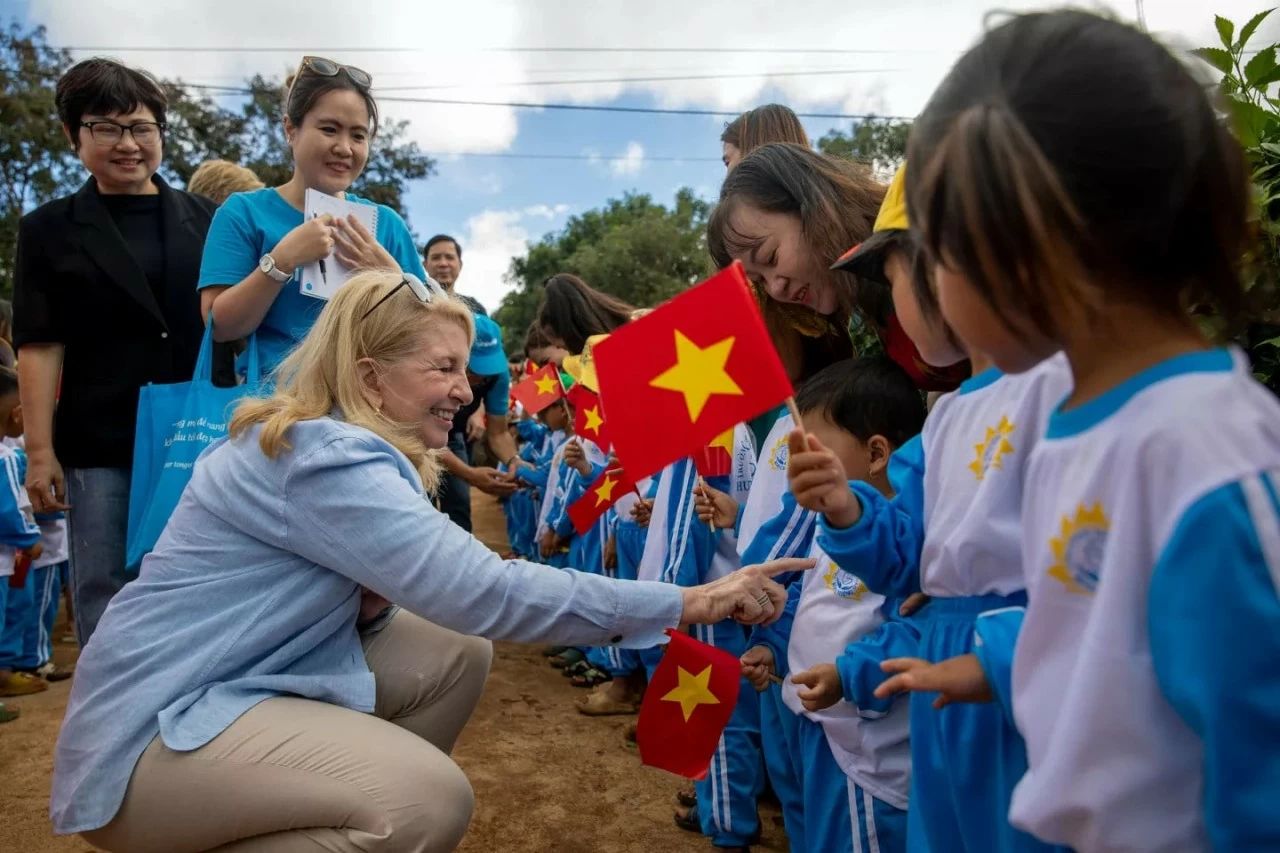 |
| UNICEF Vietnam also actively implements campaigns and programs to promote human rights. (Source: UNICEF Vietnam) |
Fourth, promote social awareness through human rights education
Responding to the Vienna Declaration and Programme of Action and the UN General Assembly Resolution on the Programme for the Decade of Human Rights Education (1995-2004), the Party and State have paid attention to directing all levels and sectors in the political system to synchronously implement human rights education and include human rights content in the education program in the national education system.
The Prime Minister issued Decision No. 1309/QD/TTg dated September 5, 2017 approving the project to include human rights content in the education program in the national education system; Directive No. 34/CT-TTg dated December 21, 2021 on strengthening the implementation of the project to include human rights content in the education program in the national education system. By 2025, 100% of educational institutions in the national education system will organize human rights education.
Thursday, The Vietnamese State has proactively and actively participated in activities for human rights and initially contributed to shaping institutions to promote and protect human rights in the region and the world.
With the Party's viewpoint of "Proactively participating, actively contributing, enhancing Vietnam's role in building and shaping multilateral institutions and international political-economic order, fully implementing international commitments and signed trade agreements[21]", Vietnam in recent years has not only made efforts to implement international commitments but also actively, proactively and made many contributions in the field of promoting and protecting human rights in the region and the world.
Điều này thể hiện rõ thông qua mức độ tín nhiệm với tỷ lệ phiếu đồng thuận rất cao những lần Việt Nam ứng cử Hội đồng nhân quyền Liên hợp quốc và Ủy viên không thường trực Hội đồng Bảo an Liên hợp quốc.
Hiện nay, Việt Nam đang đảm nhiệm thành viên của Hội đồng Nhân quyền, nhiệm kỳ 2023-2025, đang tích cực tham gia có hiệu quả các hoạt động của Hội đồng và có nhiều sáng kiến, thúc đẩy, bảo vệ quyền con người như tham gia dự thảo nghị quyết của Hội đồng về nhân quyền và biến đổi khí hậu; nghị quyết kỷ niệm 75 năm Tuyên ngôn phổ quát về quyền con người và 30 năm Tuyên bố và Chương trình hành động Vienna năm 1993…
Friday, một số định hướng về tôn trọng, bảo đảm, bảo vệ quyền con người trong giai đoạn phát triển mới
Trong giai đoạn phát triển mới, thực hiện chủ trương, quan điểm của Đảng được xác định tại Đại hội XI của Đảng là “Con người là trung tâm của chiến lược phát triển, đồng thời là chủ thể phát triển[22]” và Đại hội lần thứ XIII của Đảng xác định “Nhân dân là trung tâm, là chủ thể của công cuộc đổi mới, xây dựng và bảo vệ Tổ quốc; mọi chủ trương, chính sách phải thực sự xuất phát từ cuộc sống, nguyện vọng, quyền và lợi ích chính đáng của nhân dân, lấy hạnh phúc, ấm no của nhân dân làm mục tiêu phấn đấu”[23]. Đảng cộng sản Việt Nam coi tôn trọng, bảo đảm, bảo vệ quyền con người là trọng yếu của xây dựng nền kinh tế thị trường định hướng XHCN; xây dựng Nhà nước pháp quyền XHCN và nền dân chủ XHCN.
Với vai trò, sứ mệnh và trọng trách của Nhà nước pháp quyền là tôn trọng, bảo đảm và bảo vệ quyền con người, Ban chấp hành Trung ương Đảng Khóa XIII, tại Hội nghị lần thứ 6 đã thông qua Nghị quyết số 27-NQ/TW ngày 9/11/2022 về tiếp tục xây dựng và hoàn thiện Nhà nước pháp quyền XHCN trong giai đoạn mới, đã xác định mục tiêu tổng quát là thượng tôn Hiến pháp và pháp luật, tôn trọng, bảo đảm, bảo vệ hiệu quả quyền con người, quyền công dân và mục tiêu cụ thể đến năm 2030, hoàn thiện cơ bản các cơ chế bảo đảm quyền làm chủ của Nhân dân, bảo đảm và bảo vệ quyền con người, quyền công dân[24].
Đây là những định hướng, quan điểm, tầm nhìn quan trọng cho việc công nhận, tôn trọng, bảo đảm và bảo vệ quyền con người trong quá trình xây dựng và hoàn thiện nhà nước pháp quyền XHCN thực sự của nhân dân, do nhân dân và vì nhân dân trong giai đoạn mới.
[1] Giáo sư của Chương trình Andrew Mellon tại trường Joseph Korbel về Quốc tế học thuộc Đại học Denver. Là tác giả của 3 cuốn sách và hơn 60 bài báo cùng với các chương sách chuyên khảo về lý thuyết và thực tiễn quyền con người, trong đó có Lý thuyết và thực tiễn quyền con người toàn cầu (tái bản lần thứ nhất, 2003), Donnelly được biết đến nhiều nhất bởi những nghiên cứu của ông về khái niệm quyền con người, thuyết tương đối trong văn hóa, phát triển và quyền con người, các thể chế quyền con người quốc tế, quyền con người và chính sách đối ngoại. Ông đã nghiên cứu và giảng dạy nhiều nơi ở châu Mỹ, châu Âu và châu Á. Các tác phẩm của ông cũng đã được dịch ra 10 thứ tiếng trên thế giới.
[2] Kỷ niệm 60 năm Tuyên ngôn thế giới về quyền con người, Tạp chí điện tử của Chương trình thông tin quốc tế, Bộ Ngoại giao Hoa Kỳ, tháng 11/2008, trang 55.
[3] PGS. TS Tường Duy Kiên, Tuyên ngôn thế giới về quyền con người năm 1948 - nền tảng đạo đức, chính trị, pháp lý cho việc tôn trọng, thúc đẩy và bảo vệ quyền con người. Tạp chí pháp luật về quyền con người số 4-2018, trang 4.
[4] Như trên, trang 4.
[5] Học viện Chính trị quốc gia Hồ Chí Minh (2023), Các văn kiện quốc tế, khu vực về quyền con người - tuyển chọn, sách tham khảo, Nhà xuất bản Lý luận chính trị, trang 9.
[6] Như trên, trang 42.
[7] Như trên, trang 42.
[8] Ở nước Pháp, vào năm 1791, Chính quyền cách mạng Pháp mới công nhận quyền bình đẳng của những người Do thái; năm 1792, những người không có tài sản được trao quyền bỏ phiếu; và năm 1794, chính thức xóa bỏ chế độ nô lệ. Ở Mỹ sau cách mạng 1776, Tuyên ngôn về quyền con người được thông qua năm 1791, nhưng phụ nữ mãi đến năm 1924 mới được đi bầu cử.
[9] PGS. TS Tường Duy Kiên, Tuyên ngôn thế giới về quyền con người năm 1948 - nền tảng đạo đức, chính trị, pháp lý cho việc tôn trọng, thúc đẩy và bảo vệ quyền con người. Tạp chí pháp luật về quyền con người số 4-2018, trang 8.
[10] Học viện chính trị quốc gia Hồ Chí Minh (2023), Các văn kiện quốc tế, khu vực về quyền con người – tuyển chọn, sách tham khảo, Nhà xuất bản Lý luận chính trị, trang 41.
[11] Như trên, trang 41.
[12] Như trên, 41.
[13] Học viện Chính trị quốc gia Hồ Chí Minh, giáo trình Lý luận và pháp luật về QCN, Nhà xuất bản Lý luận chính trị. H, 2021, trang 200.
[14] Điều 3. Nhà nước bảo đảm và phát huy quyền làm chủ của Nhân dân; công nhận, tôn trọng, bảo vệ và bảo đảm quyền con người, quyền công dân; thực hiện mục tiêu dân giàu, nước mạnh, dân chủ, công bằng, văn minh, mọi người có cuộc sống ấm no, tự do, hạnh phúc, có điều kiện phát triển toàn diện. Điều 14. 1. Ở nước Cộng hòa xã hội chủ nghĩa Việt Nam, các quyền con người, quyền công dân về chính trị, dân sự, kinh tế, văn hóa, xã hội được công nhận, tôn trọng, bảo vệ, bảo đảm theo Hiến pháp và pháp luật. 2. Quyền con người, quyền công dân chỉ có thể bị hạn chế theo quy định của luật trong trường hợp cần thiết vì lý do quốc phòng, an ninh quốc gia, trật tự, an toàn xã hội, đạo đức xã hội, sức khỏe của cộng đồng.
[15] Đảng Cộng sản Việt Nam: Văn kiện Đại hội đại biểu toàn quốc lần thứ XIII, Nxb.Chính trị quốc gia Sự thật, H.2021, 175,176.
[16] Đảng Cộng sản Việt Nam: Văn kiện Đại hội đại biểu toàn quốc lần thứ XIII, Nxb.Chính trị quốc gia Sự thật, H.2021. Trang 176.
[17] Đảng Cộng sản Việt Nam: Văn kiện Đại hội đại biểu toàn quốc lần thứ XIII, Nxb.Chính trị quốc gia Sự thật, H.2021. trang 177.
[18] Khoản 3, Điều 102 Hiến pháp 2013 quy định: “Tòa án nhân dân là cơ quan xét xử của nước Cộng hòa xã hội chủ nghĩa Việt Nam, thực hiện quyền tư pháp….Tòa án nhân dân có nhiệm vụ bảo vệ công lý, bảo vệ quyền con người, quyền công dân, bảo vệ chế độ xã hội chủ nghĩa, bảo vệ lợi ích của Nhà nước, quyền và lợi ích hợp pháp của tổ chức, cá nhân”; Khoản 3, Điều 107, Hiến pháp 2013 quy định. “Viện kiểm sát nhân dân thực hành quyền công tố, kiểm sát hoạt động tư pháp...Viện Kiểm sát nhân dân có nhiệm vụ bảo vệ pháp luật, bảo vệ quyền con người, quyền công dân, bảo vệ chế độ xã hội chủ nghĩa, bảo vệ lợi ích của Nhà nước, quyền và lợi ích hợp pháp của tổ chức, cá nhân, góp phần bảo đảm pháp luật được chấp hành nghiêm chỉnh và thống nhất”.
[19][19] Nghị quyết 49/NQ/TW ngày 02 tháng 6 năm 2005 về Chiến lược cải cách tư pháp đến năm 2020 và Đại hội lần thứ X (2006), Đại hội XI (2011), Đại hội XII (2016), Đại hội XIII (2021) về cải cách tư pháp, hoạt động tư pháp.
[20] Ban chấp hành Trung ương, Ban Chỉ đạo cải cách tư pháp, Báo cáo tổng kết việc thực hiện chương trình trọng tâm công tác cải cách tư pháp giai đoạn 2011-2016; dự kiến chương trình trọng tâm công tác cải cách tư pháp giai đoạn 2016-2021, trang 27.
[21] Đảng Cộng sản Việt Nam: Văn kiện Đại hội đại biểu toàn quốc lần thứ XIII, Nxb.Chính trị quốc gia Sự thật, H.2021, trang 164.
[22] Đảng Cộng sản Việt Nam: Văn kiện Đại hội đại biểu toàn quốc lần thứ XI, Nxb.Chính trị quốc gia. H.2016, trang 76.
[23] Đảng Cộng sản Việt Nam: Văn kiện Đại hội đại biểu toàn quốc lần thứ XIII, Nxb.Chính trị quốc gia Sự thật, H.2021, tr.28.
[24] Học viện chính trị quốc gia Hồ Chí Minh (2023), Các văn kiện của Đảng, chính phủ về quyền con người, Tuyển chọn và trích dẫn – sách tham khảo, Nhà xuất bản Lý luận chính trị, trang 144.
Nguồn: https://baoquocte.vn/gia-tri-thoi-dai-cua-tuyen-ngon-pho-quat-ve-quyen-con-nguoi-nam-1948-va-y-nghia-doi-thuc-day-va-bao-ve-quyen-con-nguoi-o-viet-nam-296847.html
![[Photo] Cat Ba - Green island paradise](/_next/image?url=https%3A%2F%2Fvphoto.vietnam.vn%2Fthumb%2F1200x675%2Fvietnam%2Fresource%2FIMAGE%2F2025%2F12%2F04%2F1764821844074_ndo_br_1-dcbthienduongxanh638-jpg.webp&w=3840&q=75)























![[VIMC 40 days of lightning speed] Da Nang Port: Unity - Lightning speed - Breakthrough to the finish line](https://vphoto.vietnam.vn/thumb/402x226/vietnam/resource/IMAGE/2025/12/04/1764833540882_cdn_4-12-25.jpeg)






























Comment (0)