

 |
| The ultimate goal of digital transformation is to serve people, with the spirit of placing people at the center, as the subject, the goal, the driving force, and the resource for development. |
Completing the legal framework
In 2019, the Politburo issued Resolution No. 52-NQ/TW dated September 27, 2019, on a number of guidelines and policies for proactively participating in the Fourth Industrial Revolution, which identified the overall goal as: “Effectively utilizing the opportunities brought about by the Fourth Industrial Revolution to promote the process of innovation in the growth model, restructuring the economy associated with implementing strategic breakthroughs and modernizing the country; strongly developing the digital economy; achieving rapid and sustainable development based on science and technology, innovation and high-quality human resources; improving the quality of life and welfare of the people; ensuring national defense and security, and protecting the ecological environment.”
From 2020-2022, the Prime Minister approved and issued numerous decisions and strategies on digital government, digital economy, and digital society, including Decision No. 749/QD-TTg promulgating the National Digital Transformation Program with three pillars: Digital Government, Digital Economy, and Digital Society; the e-Government Strategy towards Digital Government; and the Digital Economy and Digital Society Strategy.
Subsequently, almost all ministries, sectors, and localities issued resolutions, strategies, and programs for digital transformation. This is a fundamental advantage, crucial for success in the following steps. From this perspective, Vietnam's determination, ambition, and agility are second to none in the world.
To protect human rights in cyberspace and national interests, numerous legal documents such as the Law on Information Security, the Law on Cybersecurity, the Law on Electronic Transactions, and the Law on Information Technology have been promulgated, including specific regulations on the rights of citizens when using and conducting business on the Internet. In addition, preventing and dealing with harmful and malicious content on cross-border platforms is considered a top priority for authorities.
The Law on Electronic Transactions 2023, effective from July 1, 2024, also contributes to perfecting the legal framework, facilitating the transition of activities from the physical to the digital environment in all sectors and fields, promptly institutionalizing the Party's guidelines and policies on digital economic development and digital transformation, and promoting the national digital transformation process.
Vietnam is one of the countries with the highest internet development and application rates in the world, with over 70 million internet users, equivalent to 73% of the total population. Personal data, which was previously not considered essential, has become a key component for the operation of various industries, professions, and businesses, and is increasingly playing a crucial role in generating high profits in the national economy.
This raises the challenge of effectively managing and balancing the use and protection of personal data, responding to and mitigating risks, and handling violations in order to maintain the development and value created by personal data.
In each sector, the government and ministries also develop documents and guidelines within their authority, specifying standards, regulations, and guidelines for safe interaction in cyberspace.
Specifically, Decree No. 72/2013/ND-CP on the management, provision, and use of Internet services and online information, and Decree No. 104/2022/ND-CP of the Government are important legal bases for implementing the abolition of paper household registration books and temporary residence books and the transition to a digital environment; Circular No. 09/2021/TT-BGDĐT of the Ministry of Education and Training regulating the management and organization of online teaching in general education and continuing education institutions; Joint Circular No. 05/2021/TTLT-TANDTC-VKSNDTC-BCA-BQP-BTP issued jointly by the Chief Justice of the Supreme People's Court, the Prosecutor General of the Supreme People's Procuracy, the Minister of Public Security, the Minister of National Defense, and the Minister of Justice; Decision No. 131/QD-TTg dated January 25, 2022 and Decision No. 411/QD-TTg dated March 31, 2022 of the Prime Minister assigned the Ministry of Education and Training the task of “Developing digital learning resource repositories and open learning materials for shared use throughout the education sector”, and to lead and coordinate with the Ministry of Labor, Invalids and Social Affairs in “Building a network of electronic libraries, open educational resource platforms, and piloting the development and implementation of an open textbook program”; Decision No. 830/QD-TTg dated June 1, 2021 approved the Program "Protecting and supporting children's healthy and creative interaction in the online environment in the period 2021 - 2025"…
It can be affirmed that the system of policy and legal documents on digital transformation in Vietnam has addressed and regulated social relationships occurring in the online environment relatively comprehensively and is compatible with international standards and experiences.
However, similar to many other countries, Vietnam's legal framework for digital transformation still has many gaps, requiring continuous strengthening and supplementation to suit the actual development of IT and digital transformation.
Digital transformation serves social life.
Information technology infrastructure and digital platforms continue to develop: (i) Fixed and mobile broadband network access speeds increased year-on-year, ranking 45th and 52nd respectively, higher than the world average; (ii) Dedicated data transmission networks of Party and State agencies connect to wards, communes, and towns; (iii) National and specialized databases are being actively developed, connected, and shared, creating convenience in providing online public services to citizens and businesses (population management, business registration, insurance, electronic civil registration, etc.).
In particular, the national population database has been connected and integrated with 47 ministries, departments, localities, state-owned corporations and companies; issued over 76 million electronic chip-embedded citizen identity cards; synchronized over 234 million vaccination records; activated nearly 2.6 million electronic identification accounts; and accurately identified the information of nearly 50 million mobile subscribers...
Utilizing the national population database offers numerous benefits, such as saving costs on printing documents and administrative procedure results; reducing travel; minimizing the need for verification by using data from ministries and agencies to authenticate and verify information on personal identification documents; streamlining the workforce in public service departments, reducing face-to-face meetings, and gradually eliminating petty corruption and harassment of citizens. It is estimated that this has saved society trillions of dong.
 |
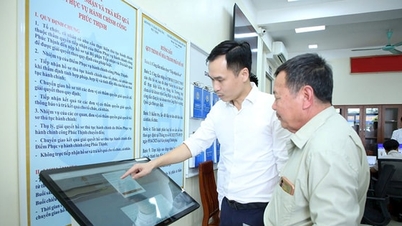
| Online public services are being implemented more widely and effectively. |
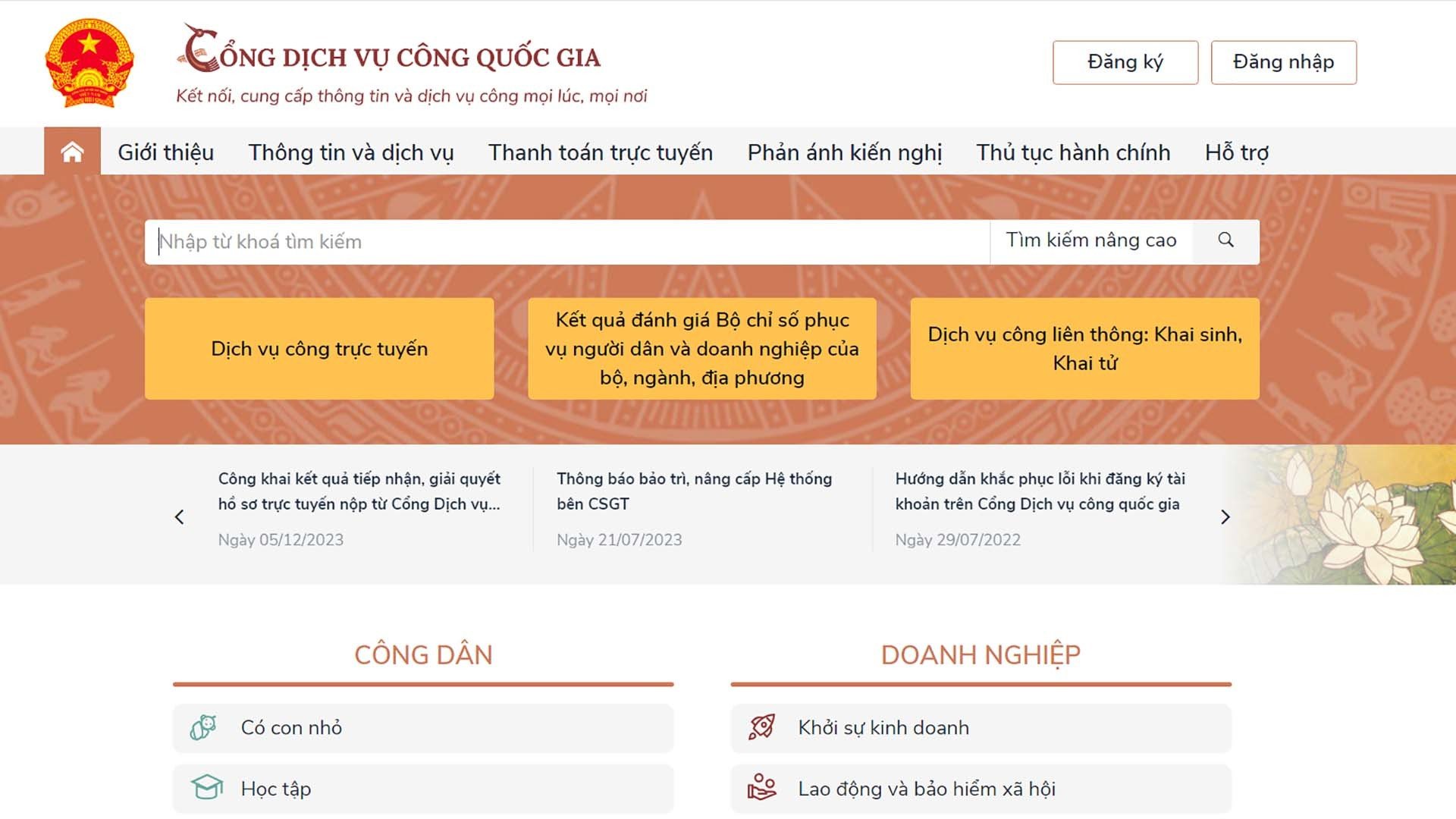
Online public services have been increasingly implemented and are more effective: The National Public Service Portal has provided nearly 4,400 online public services at levels 3 and 4 (three times more than in 2021); more than 154 million records have had their status synchronized (1.7 times more than in 2021); more than 3.9 million online payment transactions have been processed (more than 5.7 times more than in 2021); many digital services serving citizens and businesses have been provided promptly and effectively (registering for university and college entrance exams; online passport issuance; successful pilot of two integrated public services: birth registration - permanent residence registration - issuance of health insurance cards for children under 6 years old and death registration - removal of permanent residence registration - funeral allowance).
The Vietnamese Social Insurance sector has now integrated into the national population database, which includes six basic information fields for over 98 million people, corresponding to nearly 28 million households nationwide; it is also interconnected with nearly 13,000 medical examination and treatment facilities and over 500,000 organizations and businesses using public services nationwide, as well as various ministries and sectors.
Each year, the Electronic Transaction Portal receives and processes nearly 100 million applications; on average, each social insurance officer handles about 4,000 applications per year... With the "VssID - Digital Social Insurance" application, nearly 30 million accounts can manage and control information about the process of implementing social insurance and health insurance services, and perform public services related to social insurance and health insurance conveniently, quickly, easily, saving time and travel costs; and can be used directly when going for medical examinations and treatment under health insurance nationwide...
| The system of policies and laws on digital transformation in Vietnam has been issued and regulates social relationships occurring in the online environment relatively comprehensively and is compatible with international standards and experiences. However, similar to many other countries, Vietnam's legal framework on digital transformation still has many gaps, requiring continuous strengthening and supplementation to suit the actual development of digital technology and digital transformation. |
On April 6, 2023, the Prime Minister approved the Strategy for Digital Transformation of Journalism until 2025, with a vision to 2030. Besides regulatory documents, guidelines and codes of conduct are also being developed, such as the Code of Conduct on Social Media issued by the Ministry of Information and Communications (MIC) in June 2021.
The Code of Conduct serves as a foundation for guiding ministries, sectors, and localities in developing and promulgating codes of conduct within their respective fields of management, such as the Code of Conduct for those working in the arts sector issued by the Ministry of Culture, Sports and Tourism in December 2021.
The Ministry of Information and Communications is also proactively researching and learning to quickly master new features and tools of the Internet and social networks to serve management, propaganda, understanding public opinion, and promoting proactive communication.
A prime example is the "People Ask - City Answers" program implemented by the Ministry of Information and Communications and Ho Chi Minh City during the peak of the Covid-19 pandemic. This program promptly addressed questions and provided direct information between the city and citizens, effectively dispelling misinformation and causing public panic regarding the Party, State, and city's policies and measures for pandemic prevention and control. The use of social media livestreaming for direct dialogue and interaction has helped bridge the gap between government agencies and citizens, contributing to the elimination of fake news and harmful information online.
The official government fanpage on Facebook, "Government Information," is also a prime example of the effective application of social media in policy communication. With 4.1 million followers, each post averages over 2,000 likes and hundreds of comments and interactions.
Besides cooperating and leveraging the features of social networks in policy communication, Vietnam is also simultaneously implementing measures to require cross-border platforms to operate responsibly towards users and comply with Vietnamese law.
The measures being implemented include: building direct feedback and reporting channels between functional units and platforms to promptly remove and filter harmful and toxic information and infringing channels; establishing a National Cybersecurity Monitoring Center and a Vietnam Fake News Processing Center; developing a handbook on preventing and combating fake news and misinformation on the internet to equip agencies, organizations, and individuals with the skills to recognize, detect, respond to, and effectively handle fake news and harmful information; collecting evidence and holding platforms accountable, fulfilling their tax obligations to the Vietnamese State, and paying copyright fees to domestic news agencies and websites…
Digital transformation is an inevitable trend of our time. On this journey, each country faces many choices regarding approach, perspective, policies, and institutions. Vietnam's choice is to proactively and actively promote digital transformation with the ultimate goal of serving its people.
Source













































































































Comment (0)