

The amended Law on Real Estate Business, passed by the National Assembly and effective from the beginning of 2025, stipulates provisions regarding deposits for purchasing houses under construction.
Specifically, Article 17 of the amended Law on Real Estate Business stipulates that the investor of a real estate project is not allowed to authorize other organizations or individuals to sign contracts for deposits, sales, transfers, or lease-purchases of houses, construction works, floor areas within construction works, or land use rights with existing technical infrastructure within the real estate project.
At the same time, Clause 5 of Article 23 of this Law also specifies the details regarding deposits and payments for future housing purchases. Real estate project investors are only allowed to collect deposits not exceeding 5% of the selling price or lease-purchase price from customers when the housing or construction project has met the conditions for being put into business.
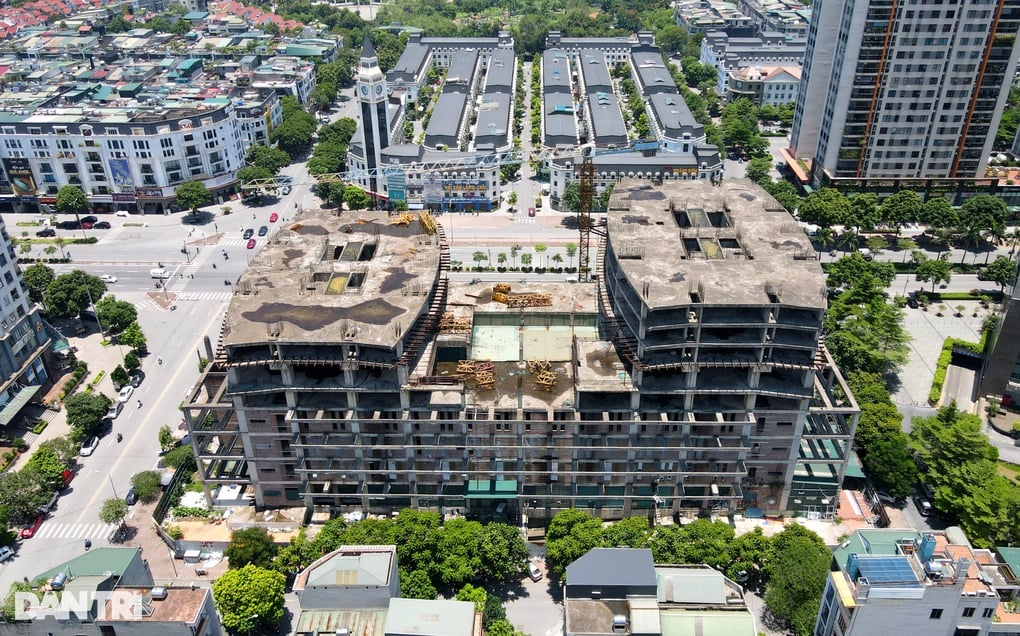
The Hanoi Time Tower apartment project, located in the Van Phu urban area (Ha Dong, Hanoi ), has been abandoned for many years (Photo: Ha Phong).
According to experts, this deposit regulation has ended a long period of deposits being made through agreements. At the same time, the deposit regulation ensures contract signing and protects the rights of homebuyers.
Mr. Le Hoang Chau, Chairman of the Ho Chi Minh City Real Estate Association (HoREA), stated that real estate business has the unique characteristic of deposit transactions. Meanwhile, the 2006 and 2014 Real Estate Business Laws do not stipulate that deposits must occur before a real estate or housing project meets the conditions for concluding a contract or raising capital through the sale of future housing, especially land plots.
According to Mr. Chau, taking advantage of Clause 1, Article 328 of the 2015 Civil Code, which does not specify the value or percentage of the deposit, unscrupulous land speculators, brokers, and businesses have received large deposits, in some cases up to 90-95% of the transaction value. Furthermore, these speculators even create "phantom projects" without legal basis to deceive customers, causing significant losses and disrupting social order, a prime example being the fraud case at Alibaba Company.
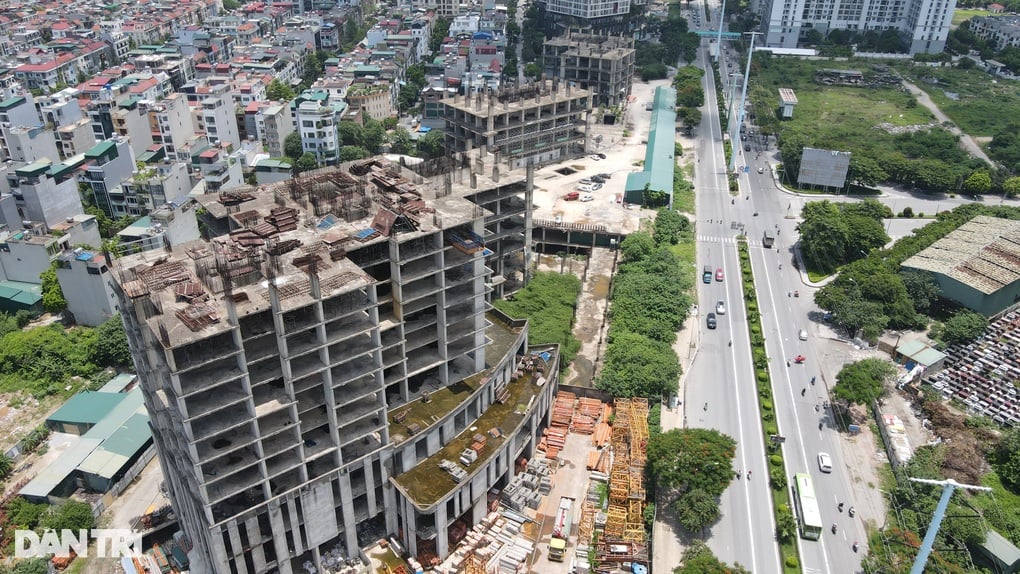
The Usilk City project (Ha Dong, Hanoi) has been delayed for many years, shattering the hopes of thousands of customers for a stable and prosperous life (Photo: Ha Phong).
Sharing the same view, Chairman of the Vietnam Real Estate Brokers Association Nguyen Van Dinh believes that placing a deposit not only signifies the conclusion and implementation of the sales contract, but also serves as a means for the investor to determine market demand and ensure sales for the project's products.
"The regulations regarding deposits in the law are very reasonable, but based on the experience of developed countries, they use third parties, such as banks and credit institutions, to supervise and manage this money in a common account, preventing it from 'flowing' into the developer's pocket. If the developer fails to fulfill their commitments, customers can get their money back, and the bank will be responsible for this amount," Mr. Dinh emphasized.
According to observations by Dan Tri reporters, in reality, there have been many housing projects that have collected deposits and installment payments from customers through brokerage firms or directly from the developers. However, the developers then failed to implement the project or started it halfway and then stopped for decades, leaving homebuyers in a difficult situation.
The common thread in these projects is that the developers have taken deposits and installment payments from customers totaling hundreds of billions of dong, with many people struggling to pay both bank loan interest for their homes and monthly rent.
Source






























































































Comment (0)