

People in Phan Thiet are always proud of their city, which has been formed and developed for hundreds of years. However, many are also saddened by the current state of Phan Thiet's urban preservation.
In 2015, people in Phan Thiet were astonished to see the old, over 120-year-old Phan Thiet Central Post Office building on Le Hong Phong Street, near the Water Tower, demolished to make way for a modern five-story glass building. Even those unfamiliar with architecture and aesthetics found it incongruous and out of place amidst the old architectural landscape of the Provincial Party Committee Office complex, the Water Tower, the Conference Center, and the Provincial People's Committee.
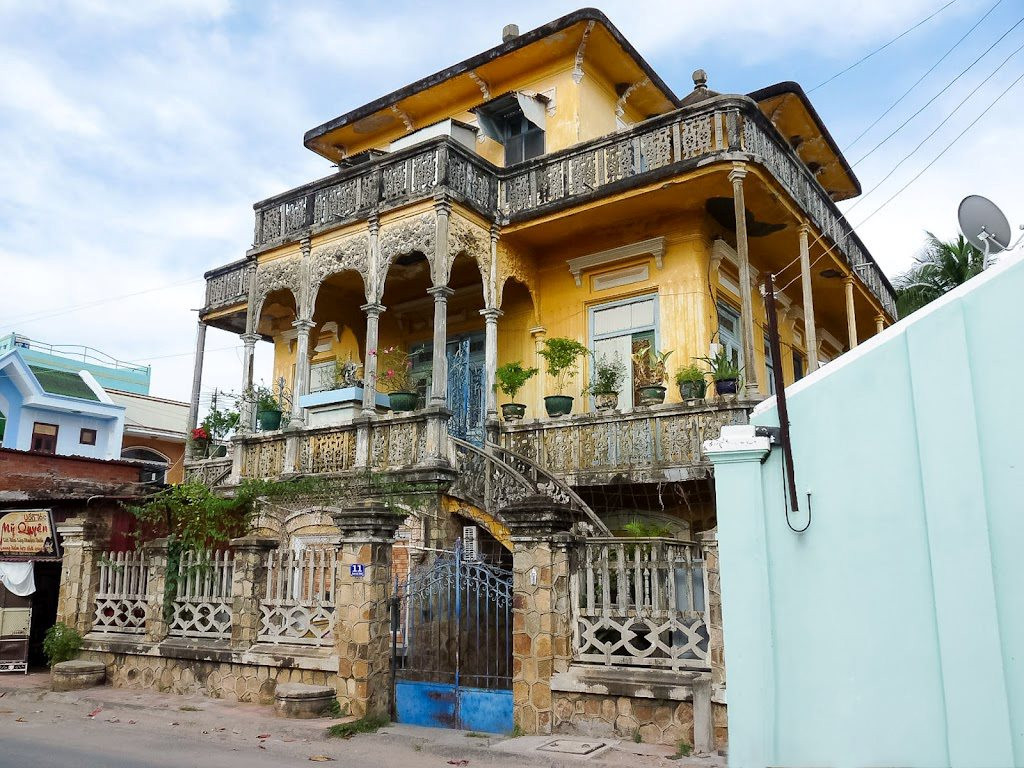
Recently, two buildings on Tran Hung Dao Street, constructed during the French colonial era, were demolished to make way for new office buildings. Besides the loss of state-managed architectural structures, many centuries-old villas belonging to local residents have also been dismantled or are being left to deteriorate without restoration or preservation for various reasons.
It is known that Phan Thiet still has a number of old villas, mostly belonging to families who used to run fish sauce businesses, and many old neighborhoods built during the French colonial period along Hai Thuong Lan Ong and Le Hong Phong streets. These villas and old neighborhoods are renovated or rebuilt by residents without adhering to any architectural regulations, resulting in a blend of old and new styles that lacks urban aesthetics.
According to our research, to date, Binh Thuan province lacks detailed regulations on the preservation of ancient architectural works, unlike some other cities. This has led to the deterioration of ancient buildings under state management and use, and the inevitable phenomenon of "mixing old and new" styles in private residences.
The current state of preservation of ancient architecture in Phan Thiet has led many to question whether urban development and heritage preservation are in conflict. The answer is no. From the perspective of the long-term interests of the community, urban development and heritage preservation are closely related, supporting and promoting each other's development. Of course, this is only true if preservation is done correctly, preserving the unique characteristics of Phan Thiet rather than indiscriminately preserving everything.
In our opinion, Phan Thiet has two areas with ancient buildings that need preservation: the old town area of Duc Nghia ward, which should be preserved as an ancient urban area, and the old town area of Duc Thang ward, which should be preserved as an old Phan Thiet fishing village associated with the history of traditional fish sauce production.
These two areas require a detailed planning project to preserve the ancient structures linked to their identity, culture, and history. This should include a detailed assessment of their current condition and value, followed by detailed regulations and a conservation roadmap. Owners or managers of these ancient architectural structures need to be provided with comprehensive information about their value, the appropriate conduct guidelines, and contact information for relevant agencies and experts who can provide detailed advice in case of incidents or repair needs.
It is necessary to install signs listing basic information such as the year of construction, the builders, the architectural style, and any famous figures who lived there. The tourism industry should also establish criteria for ranking the historical value of ancient buildings to encourage the preservation of Phan Thiet's beautiful architectural structures for tourists. Furthermore, the construction of new buildings along routes with these ancient buildings should prioritize preserving their historical and cultural value.
Furthermore, for properties currently owned by residents, there needs to be a policy to enable them to generate income from the value of the old houses they live in. There should be a plan to organize and guide residents on how to exploit the local tourism advantages. When cultural values are transformed into tangible benefits, residents will be more inclined to preserve them themselves.
Source


















































Comment (0)