

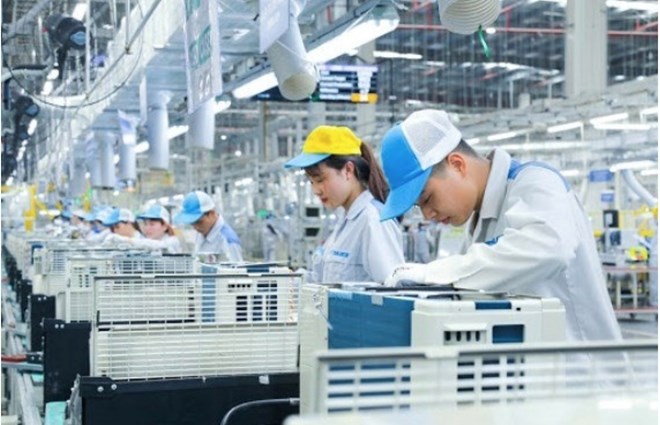
A breakthrough in quality to participate more deeply in the global supply chain is what Vietnam truly desires right now. According to experts, Vietnam's position in the global supply chain is still limited. Most Vietnamese businesses are only in the intermediate stage, with low added value, and primarily involved in assembly. In the coming time, a large wave of foreign investment into Vietnam is predicted, so the opportunity to participate in supplying components and deeper stages of the supply chain, and at the beginning of the chain for FDI enterprises, is potential.
Develop a sustainable supply chain strategy early.
The big question now is, "How can Vietnamese businesses integrate more deeply into global supply chains?" In an interview with the Lao Dong Newspaper, Ms. Tran Thi Thuy Ngoc, Deputy General Director of Deloitte Vietnam, stated: "Although there are unavoidable difficulties and challenges regarding financial resources, human resources, and systems in building green supply chains, especially in the initial stages, Vietnamese businesses still need to enhance their core competitiveness, improve governance, build a foundation in human resources and digital infrastructure to promote sustainable supply chains. Developing a sustainable supply chain strategy early on will not only give Vietnamese businesses the opportunity to participate more deeply in global supply chains, but also increase their resilience in a volatile and challenging market environment."
Global investors and fund managers have increasingly high expectations regarding the sustainability of supply chains.
According to the report, 89% of investors discuss ESG standards in the supply chain with the companies they invest in. 85% of investment managers believe that businesses that do not implement supply chain sustainability initiatives will see their stock prices fall.
Furthermore, 84% of investors believe that issues related to supply chain sustainability and ESG standards pose risks to their investments. With Vietnam's foreign investment reaching a record high of US$22.4 billion in 2022, coupled with its geopolitical position as a key manufacturing hub and supply market in Asia, building sustainable supply chains is crucial for Vietnam to maintain competitiveness, mitigate risks, and ensure a resilient economy in the future.
At the national level, Vietnam has numerous initiatives aimed at strengthening sustainable development efforts, including Prime Minister's Decision No. 687/QD-TTg approving the Circular Economy Development Scheme in Vietnam. By 2025, circular economy projects are expected to contribute to resource recovery, energy consumption reduction, and increased waste recycling rates. Circular economy solutions play a crucial role in promoting the resilience of supply chains, particularly in minimizing indirect emissions from the enterprise value chain. Such initiatives will be key to realizing Vietnam's commitment to achieving net-zero emissions by 2050.
Lessons learned for Vietnam
According to Ms. Tran Thi Thuy Ngoc, a Deloitte survey on supply chain management revealed that 73% of participating professionals said their organizations are planning to transform their supply chain management and procurement processes post-COVID-19. Many of these practices and best practices can be referenced by Vietnamese businesses.
Consistency: Develop a framework with suppliers that clearly outlines expectations for a sustainable supply chain and ensures that all stakeholders are informed. Setting consistent goals is crucial for sourcing decisions and supplier management.
Building a transparent system: Establishing a transparent system allows for monitoring metrics related to supply chain sustainability, making it easier for stakeholders to track progress and collaborate with suppliers to identify areas for improvement.
Product lifecycle assessment: Conduct a product lifecycle assessment to understand the environmental impact, identify which link in the supply chain has the greatest influence, and provide a basis for reducing carbon emissions.
Technology integration: Leveraging technologies such as supply chain management software and data analytics to accurately forecast demand, thereby optimizing inventory levels and reducing excess stock.
Source























































































Comment (0)