

The parachute landing system was successful during the May launch of the Long March-3B rocket, making landings more precise.

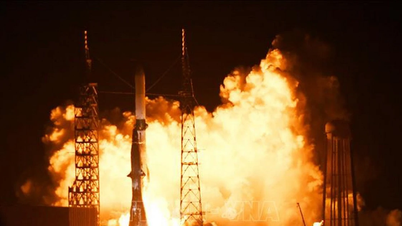
The Long March-3B rocket carrying the Beidou navigation satellite launched from the Xichang Satellite Launch Center in Sichuan province, southwestern China, on May 17. Photo: CFP
The rocket's parachute landing system reduces the landing area by up to 80%, the China Academy of Launch Vehicle Technology (CALT) announced on June 9. The test took place on May 17 when the Long March-3B rocket successfully launched, carrying the 56th satellite for China's Beidou navigation system.
After analyzing test data and debris at the site, CALT found that the parachute system moved along a pre-arranged landing trajectory and accurately delivered the detached rocket fragment to the landing area. CALT stated that the new test has laid the groundwork for the large-scale application of the parachute system in future projects.
The parachute system, independently developed by CALT, aims to enhance the safety of the landing areas for rocket components. Since most of China's large launch sites are located deep inland, preventing rocket components from falling haphazardly, especially in areas with human activity, is a crucial task for the scientists .
In the test, a high-tech parachute system was placed on one of the rocket's four propulsion stages and activated after the stage separated from the rocket and descended to a certain altitude. The parachute system helped control the rocket's altitude and direction, guiding it to the designated landing site.
Experts were able to precisely control the system after several optimization steps. According to CALT, they optimized the parachute system with an auxiliary power system, reducing its weight by 30 kg and making the parachute system more practical.
Thu Thao (According to Global Times )
Source link





































































































Comment (0)