


08:10, 30/11/2023
Millions of people work as teachers, but not all are educators in the most basic sense of the word. Many teach, but are merely "teaching technicians."
When students are less interested in studying and more interested in doing.
To become a teacher, you must first graduate from university with a bachelor's degree. The current Education Law stipulates this, except for preschool teachers (who only need a college degree). However, graduating from a teacher training university only grants you a bachelor's degree in education, not the title of a full-time teacher. A bachelor's degree in education must undergo a teaching apprenticeship until they are deemed capable of teaching in a classroom before being hired as a teacher. A teacher must then spend a considerable amount of time teaching, accumulating sufficient knowledge, experience, professional skills, and ethical conduct to become a full-time educator.
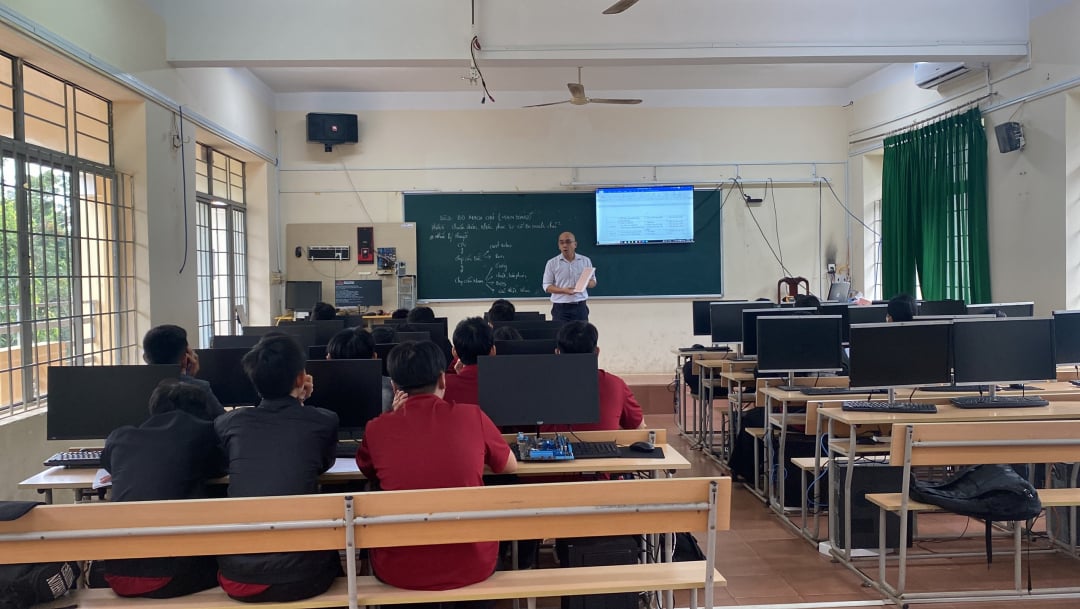 |
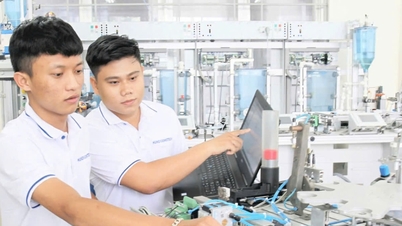
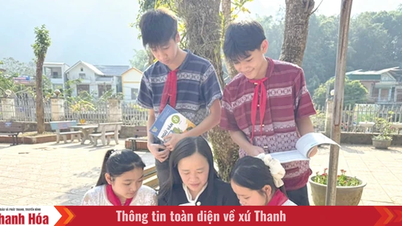
| Teachers and students of the Applied Informatics class - 02THA4, 2023-2025 cohort, 9+3 system, Tay Nguyen Vocational College. (Illustrative photo) |
This shows that the first requirement to become a teacher is to have sufficient university knowledge. However, in reality, most students at universities today are less interested in studying and more interested in "doing." Lecturers at teacher training universities say that, except for a few talented students who enjoy learning, most are reluctant to attend lectures or read in the library. However, they are very enthusiastic about extracurricular activities, and especially about teaching practice and internships at secondary schools. They prefer "doing" to "studying."
If they don't like listening to lectures and rarely read books, where will they get the knowledge to become teachers? Yet, they still manage to teach. They still complete internships and practical training, and somehow still manage to get enough points to graduate from university.
Holding a bachelor's degree, these students actually only wanted to learn to be tradespeople – a job that requires more practical skills than theory. And the result is, they're neither truly skilled tradespeople nor truly teachers!
Teachers and instructors
In Vietnamese, only professionals who have reached a certain level of expertise are called "experts" or "professionals." For example, writers and journalists must be professional and highly skilled to be called "writers" or "journalists." Similarly, educators are those who have reached a mastery level in the teaching profession.
Comparing that obvious requirement with the current reality, it shows that while there are many people working in the teaching profession, not all of them are true educators. Many experienced teachers remain merely "teaching technicians."
Legendary teacher Nguyen Ngoc Ky, who was paralyzed in both arms and wrote with his feet, and author of the book "I Go to School," once said that a teacher is not just a craftsman who teaches; knowledge alone is enough. If it were only about knowledge, students wouldn't need to go to school; they could stay home, read books, and seek knowledge from many other sources. A teacher differs from a craftsman in that they must instill in their students the inspiration to be decent human beings, helping them mature after each lesson. A teacher is not only someone who teaches skills and imparts knowledge, but also someone who inspires learning and cultivates character in their students.
How is a teacher different from a "teaching technician"? Professionally, a "teaching technician" strictly follows textbooks, reference books, standard curricula, and lesson plans. A teacher always creates lectures in their own unique way, unlike anyone else, and never repeats themselves. More importantly, in terms of mission, a "teaching technician" will refuse if the remuneration is undeserved. A teacher will accept teaching, even if paid nothing, because what they achieve is not just money (according to Dr. Nguyen Ngoc Minh).
A true craftsman is a true craftsman!
Some argue that being a "teaching technician" is also good, as long as one fulfills their teaching duties. If we demand that every teacher be a true educator, where will we find enough human resources for the education system?
I am also someone who attended school for 16 years, from elementary to university, and have been taught by many teachers and even "teaching assistants." I have also participated in teaching and worked in various other professions. I have realized that becoming a teacher is very difficult, but if you teach, you must become a teacher.
You might start your teaching career as a "teacher," but that "teacher" must strive to become a true teacher if they want to pursue teaching as a profession. This is because teaching is a unique profession. The product of education is not a commodity like any other, serving human needs. The product of education is a human being, fully developed physically and mentally, with survival skills and a moral character, possessing a soul. Teaching is a unique profession unlike many others, because it carries a sacred mission, a noble function bestowed by heaven and earth. In short: "Cultivating people."
The teaching profession demands a high standard from its teachers; that's the reality. Therefore, the current educational workforce hasn't met this demand. So, being a "teaching technician" is acceptable, but the technician must be a true technician. A teacher who completes a lesson, a class session, according to the curriculum and the Education Law, is sufficient. And they should gradually develop into a true teacher. Only when the technician is a true technician can the teacher be a true teacher!
Minh Tu
Source
![[Image] Current situation of houses precariously balanced due to road leveling in Dong Nai.](https://vphoto.vietnam.vn/thumb/1200x675/vietnam/resource/IMAGE/2026/03/02/1772455749144_ndo_br_z7579763955585-6e80a60471e75768fa835d035eba45ea-6979-jpg.webp)


![[Photo] Procession of a giant "pig" weighing over 200kg at the La Phu Village Festival](https://vphoto.vietnam.vn/thumb/1200x675/vietnam/resource/IMAGE/2026/03/02/1772444501339_anh-man-hinh-2026-03-02-luc-16-40-20.png)































































Comment (0)