

Ho Chi Minh City: Epilepsy patients admitted to Military Hospital 175 are second only to stroke patients, and many cases are mistakenly attributed to mental illness.
"Currently, not many people are interested in or understand epilepsy, and there are still many misconceptions about the disease, while the number of people suffering from it is quite large," said Dr. Hoang Tien Trong Nghia, Head of the Department of Neurology, Military Hospital 175, on the sidelines of a conference organized by the hospital in collaboration with the Vietnam Anti-Epilepsy Association, with many international experts in attendance, on April 14.
To date, Vietnam still lacks statistics on the number of people suffering from and the prevalence rate of this chronic disease. At the Neurology Department of the hospital, stroke patients account for approximately 50%, followed by epilepsy patients at about 20-30%, with the remainder being other medical conditions.
Epilepsy occurs when there are episodes of abnormal or excessive synchronized brain activity, manifesting with various symptoms. The disease can be caused by genes, metabolic disorders, structural abnormalities of the brain, or occur after brain damage such as traumatic brain injury or sequelae after stroke. According to the latest classification of the International Epilepsy Federation, there are three main types of epilepsy: generalized epilepsy, focal epilepsy, and undetermined epilepsy.
"When people think of epilepsy, they usually think of seizures, but in reality, depending on the area of the brain affected, the manifestations of an epileptic seizure can vary and be very diverse," the doctor said.
In some cases, doctors can easily identify epilepsy through tonic-clonic seizures, but some patients experience seizures that are difficult to describe and identify. Particularly, if seizures occur in the temporal lobe, patients often have behavioral disorders. Conversely, many seizures are not necessarily epilepsy, as they may be due to hypoglycemia, neurological infections, etc. Therefore, diagnosing epilepsy can sometimes be challenging.
Many patients come to the hospital after a long period of treatment with antipsychotic drugs in various places without success, due to easily mistaken symptoms such as screaming, agitation, panic, or lethargy, as well as other behavioral disorders and hyperactivity. Most seizures occur for a short period and then return to normal, but they repeat with similar patterns. After examination, paraclinical tests, and surveys using equipment at the Clinical Neurophysiology Unit, patients are diagnosed with epilepsy and respond well to treatment. Many patients recover and return to their daily lives, instead of having to stay home to cope with abnormal seizures.

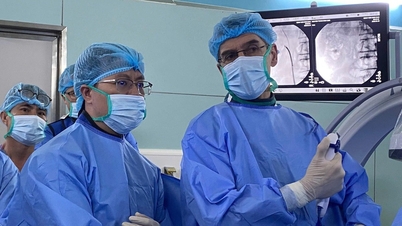
Doctor Nghia (on the right) and his colleagues discuss a patient's condition. Photo: Chinh Tran.
Currently, medication remains the most commonly used treatment for epilepsy. However, among diagnosed epilepsy patients, approximately 30% respond poorly to medication, despite the use of many new types. This is further complicated by the limited number of anti-epileptic drugs available in Vietnam.
Dr. Nguyen Anh Tuan, Head of the Neurology Department at Viet Duc Hospital, said that this occasion marks the first time the Vietnam Anti-Epilepsy Association has developed guidelines for the diagnosis and treatment of epilepsy. Currently, there are many international guidelines, but they are not completely consistent in terms of diagnosis and treatment, and many aspects are not suitable for the reality in Vietnam. In particular, many medications are expensive and unaffordable for Vietnamese incomes, or many drugs are unavailable, and many advanced treatment methods have not been widely implemented in the country.
The association is strengthening its training programs to help doctors, especially those at the grassroots level, to properly access and use electroencephalograms (EEGs) to identify and classify epilepsy patients. If severe cases cannot be treated, primary care doctors will refer patients to specialized centers for timely treatment. In recent years, several centers in Vietnam have made significant progress in epilepsy surgery, giving patients who do not respond to medication, i.e., treatment-resistant epilepsy, a chance to recover and return to normal life.
Dr. Nghia advises that people experiencing abnormalities should seek medical attention early for prompt diagnosis. Good and timely management not only helps patients return to normal life and avoid potentially life-threatening situations, but also prevents the risk of irreversible brain damage.
Epilepsy patients need to adhere to long-term medication as directed by their doctor. Do not stop taking medication on your own when your condition seems stable, as many cases experience a recurrence of symptoms when medication is discontinued. Avoid staying up late and consuming alcohol, as these factors can trigger seizures.
Le Phuong
Source link




































































































Comment (0)