

10,000 mini-apartments
On September 25th, HoREA sent a document to the Standing Committee of the National Assembly, the National Assembly's Law Committee, and the Ministry of Construction proposing several solutions to ensure the quality of construction and fire safety for mini-apartment buildings, and to strictly manage individual houses and households that are permitted to be built as mini-apartment buildings.
According to HoREA, the horrific and devastating fire at the mini-apartment building at 37 Alley 29/70, Khuong Ha Street, Khuong Dinh Ward, Thanh Xuan District, Hanoi , and several other serious fires that have occurred previously in apartment buildings or townhouses (tube houses) used for both living and business, or karaoke establishments, that did not meet fire safety standards, and where these buildings only have one escape route, continue to raise alarm bells and highlight the urgent need to complete the legal framework regarding housing, construction, investment, real estate business, and fire safety, and to enhance the effectiveness and efficiency of state management of facilities with fire and explosion hazards. This includes individual houses built as mini-apartment buildings, mini-apartment buildings, mini-hotels, townhouses used for both living and business, and multi-room rental housing complexes.
Hidden dangers of mini-apartment buildings: Buildings lack fire safety equipment, and residents lack escape skills.
HoREA believes that the most urgent task now is for all relevant entities, from ministries, departments, provincial and district People's Committees, and local authorities to investors and owners of construction projects with fire and explosion hazards, especially mini-apartment buildings, to immediately implement the directives of General Secretary Nguyen Phu Trong. At the same time, all the aforementioned entities must urgently and seriously implement Prime Minister Pham Minh Chinh 's Directive 825 on the implementation of General Secretary Nguyen Phu Trong's directives on strengthening fire prevention and control.
On September 20th, at a meeting of the National Assembly Standing Committee, National Assembly Chairman Vuong Dinh Hue instructed the National Assembly's Law Committee to review the draft Housing Law (amended) currently under consideration and definitively state that mini-apartment buildings should not be included in the Housing Law.
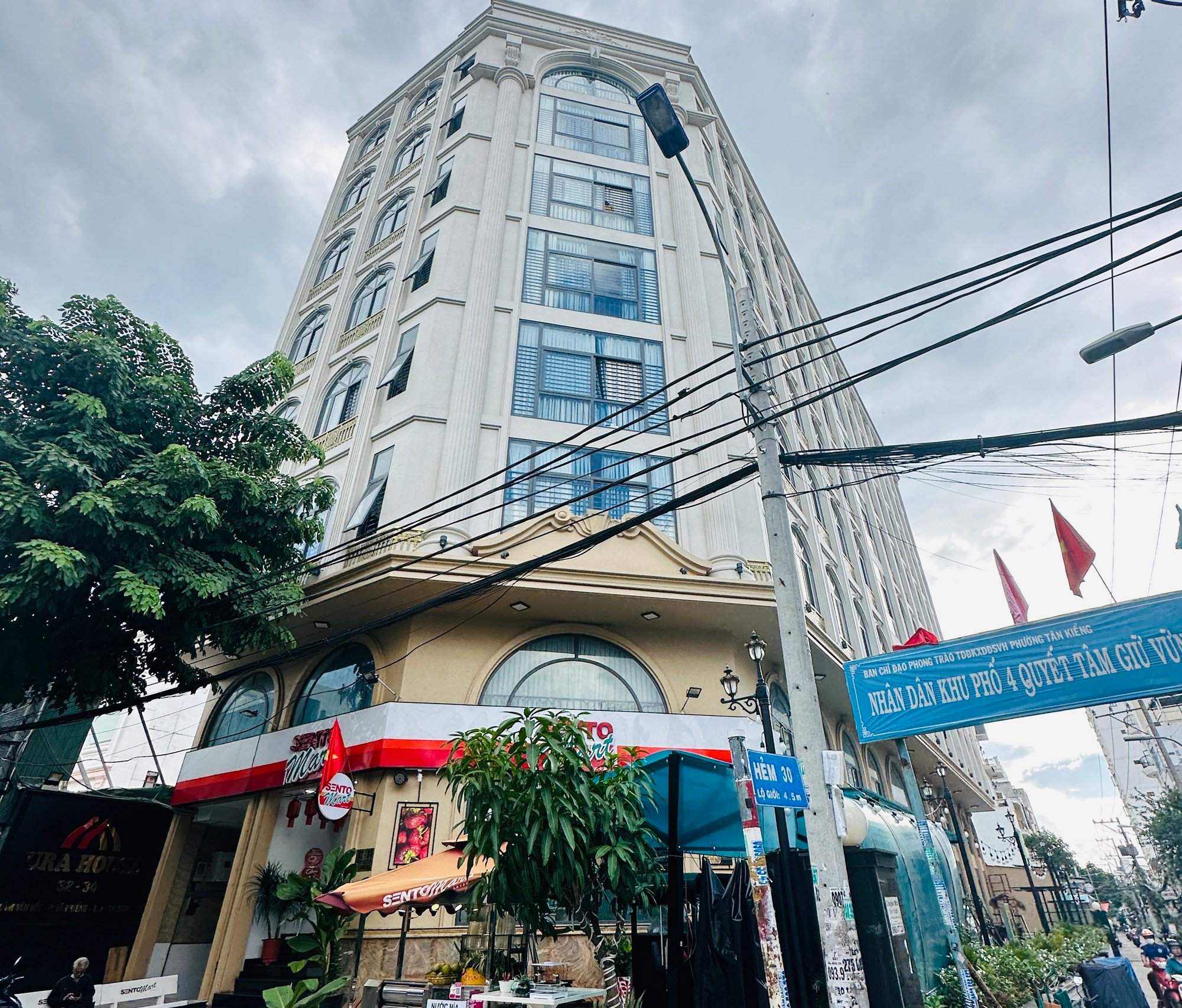
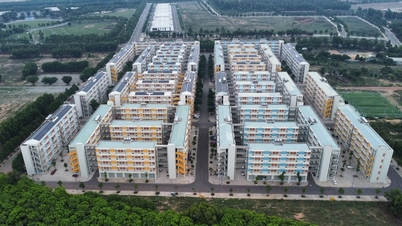
A rental housing complex with hundreds of rooms in Tan Quy ward, District 7.
HoREA agrees with the very decisive directive of the National Assembly Chairman and requests that the law not be codified into "disguised" mini-apartment buildings, nor should the violations of these "disguised" mini-apartment buildings be legalized in the Housing Law. This is because mini-apartment buildings remain a necessary housing product for society due to their affordable rental and sale prices for many people...
HoREA suggests that mini-apartment buildings should be regulated, not banned, because mini-apartment buildings are a very necessary housing product for society today and for many decades to come.
Currently, there are over 10,000 apartment buildings nationwide. Hanoi alone has 2,000 mini-apartment buildings, according to a report by the Hanoi Electricity Corporation. In Ho Chi Minh City, according to the Fire Prevention and Rescue Police Department (PC07), preliminary statistics show that there are currently 42,256 establishments such as boarding houses and rented rooms under state management regarding fire prevention and control. Of these, 4,490 are managed by the police, including 103 establishments with fire and explosion hazards, and 37,766 are managed by the commune-level People's Committees. These concentrated boarding houses and mini-apartment buildings are all establishments with fire and explosion hazards and are strictly managed in terms of fire prevention and control according to the law on fire prevention and control.
Building a mini-apartment building requires a project plan.
Given the reality that thousands of mini-apartment buildings across the country house tens of thousands of people, and the enormous demand for renting and buying these apartments, we are compelled to be very cautious and wise in choosing the solution of "managing, not banning, mini-apartment buildings." Similarly, countries around the world allow them, but they must be strictly managed to ensure fire safety and healthy development.
Currently, it is a very opportune time to develop comprehensive, synchronized, and unified legal regulations to manage mini-apartment buildings. This is because the 15th National Assembly, at its 6th session in October and November, is expected to consider and pass many laws, including the draft Land Law, Housing Law, Real Estate Business Law, and several related laws, to ensure consistency and uniformity in accordance with the policy of the Central Committee of the Communist Party.
The association proposes adding stricter regulations for individual and household-owned houses that are permitted to be converted into mini-apartment buildings. Simultaneously, it suggests amending several provisions of the Construction Law, Investment Law, Real Estate Business Law, and Fire Prevention and Control Law, recognizing the necessity of "legalizing" the conversion of individual and household-owned houses into mini-apartment buildings to enhance the effectiveness and efficiency of state management.
Specifically, regulations should be added requiring investment in the construction of mini-apartment buildings to include project planning; compliance with legal regulations on the approval and acceptance of mini-apartment building projects, including fire safety systems. Regulations should also be added requiring businesses renting or selling mini-apartment units to register as real estate businesses in accordance with the law. Furthermore, regulations on the management and operation of mini-apartment buildings should be similar to those for regular apartment buildings. The Ministry of Construction should also incorporate technical standards for mini-apartment buildings into the National Technical Standard for Apartment Buildings, thereby ensuring stricter management and the development of safe and healthy mini-apartment buildings.
The proliferation of mini-apartment buildings, coupled with shortcomings and limitations in state management over the years, has led to uncontrolled development and loopholes that allow speculators to profit illegally. The subjective cause is the incompleteness, inconsistency, and lack of uniformity in current legal regulations.
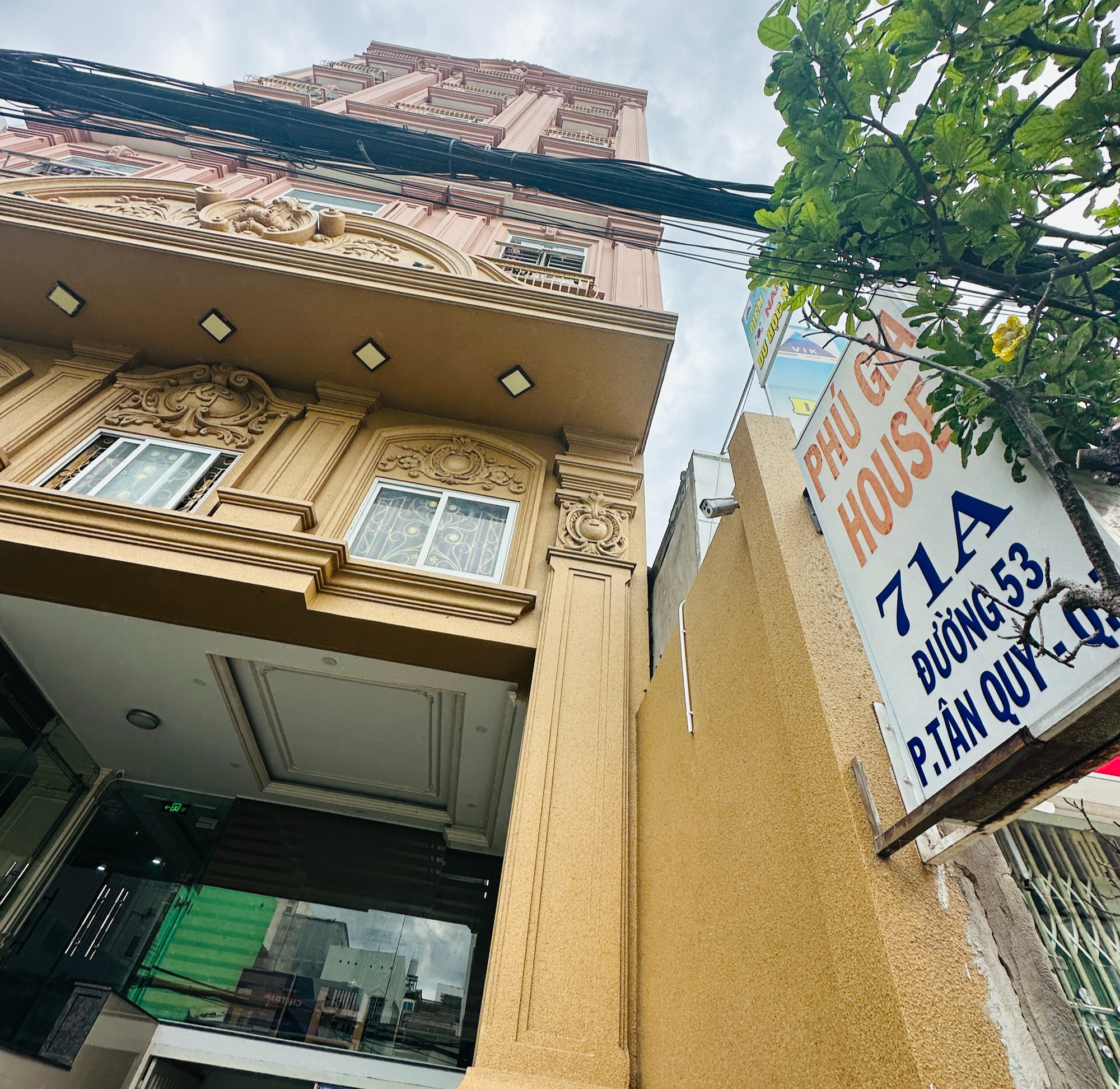
A building with hundreds of rooms in District 7 has had additional floors added to it.
According to Mr. Le Hoang Chau, Chairman of HoREA, mini-apartment buildings are not a flawed product of the previous overheated real estate market, as some experts believe. Rather, mini-apartment buildings, with apartments for rent or sale, are a very necessary housing product for society over the past 13 years, currently, and possibly for many decades to come.
"Until we achieve the Party's goal of making Vietnam a high-income developed country by 2045, the demand for mini-apartments will still exist. This is because there will always be a class of low-income urban residents, workers, laborers, and immigrants who need to buy or rent this type of housing, but their demands for quality, amenities, and services will only increase. Even in developed industrial countries today, mini-apartments still exist. Therefore, I propose that the State should manage, not ban, mini-apartments. Instead of banning them simply because they cannot be managed, the urgent task is to build a comprehensive and unified legal framework to enhance the effectiveness and efficiency of State management of mini-apartments for safe and healthy development," Mr. Chau suggested.
Source link

![[Photo] Da Nang: Mountainous commune adorned with flags and flowers, ready for election day.](https://vphoto.vietnam.vn/thumb/1200x675/vietnam/resource/IMAGE/2026/03/10/1773113803384_ndo_br_9-jpg.webp)
![[Photo] Meeting of the Standing Committee of the National Assembly Party Committee with the Standing Committee of the Government Party Committee on the First Session of the 16th National Assembly](https://vphoto.vietnam.vn/thumb/1200x675/vietnam/resource/IMAGE/2026/03/10/1773107502031_ndo_br_thu-tuong-pham-minh-chinh-va-chu-tich-qh-tran-thanh-man-dong-chu-tri-hoi-nghijpg-jpg.webp)
























![[Image] 20 islands in the Spratly Islands special administrative region hold early elections.](https://vphoto.vietnam.vn/thumb/1200x675/vietnam/resource/IMAGE/2026/03/08/1772949669607_img-20260308-112026-90-jpg.webp)






































































Comment (0)