

Instead of letting spent nuclear fuel sit idle, researchers at Ohio State University (OSU, USA) have developed a new method to transform this waste into a battery that never needs recharging.
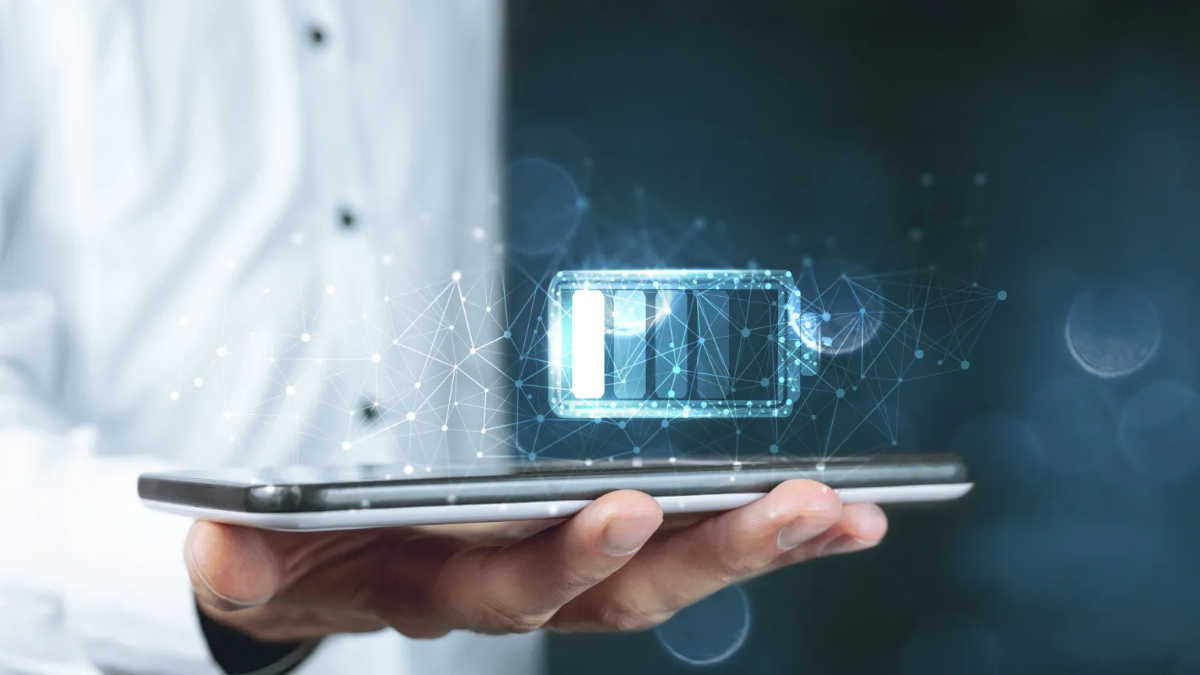
Nuclear batteries open up many practical applications in the future.
The research team's method is based on the use of luminescent crystals – a material capable of absorbing gamma radiation and emitting light. When combined with solar cells, this system can capture the emitted light and convert it into electricity. Unlike conventional batteries, batteries made from nuclear waste will continue to produce electricity as long as the radioactive material remains active, potentially lasting for decades.
Currently, this system only produces microwatts of electricity, but even on a small scale, it can serve low-power applications such as micro-sensors and radiation monitoring devices. In experiments, the research team used two types of radioactive material: Cesium-137 (a common fission product) which can generate 288 nanowatts of electricity and Cobalt-60 (used in medical radiation therapy) which produces 1.5 microwatts.
Although current production is low, researchers believe that scaling up the technology, such as using larger luminescent crystals, could boost power output to watt-level levels... At that point, nuclear batteries would become viable for larger applications.
Why did VinFast suddenly stop its battery leasing model?
Benefits of nuclear battery technology
A battery that can operate for decades without maintenance would offer numerous benefits, especially in areas where switching power sources is difficult. These batteries could support more distant space missions in the future, where long-lasting power is crucial. Additionally, they could be used in underwater exploration equipment and in harsh environments where recharging batteries is challenging.
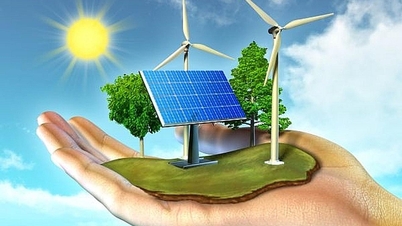
As nuclear energy is expected to continue expanding, finding solutions for reusing its byproducts is more urgent than ever. If this technology is perfected, it could provide a practical method for generating clean, sustainable energy while minimizing the need for hazardous waste storage.
Source: https://thanhnien.vn/pin-hat-nhan-khong-can-phai-sac-lai-185250318095201648.htm



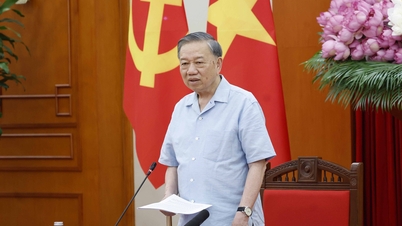
![[Photo] General Secretary and President To Lam presides over a meeting on preparations for the review of one year of operation of the three-tiered government system.](https://vphoto.vietnam.vn/thumb/1200x675/vietnam/resource/IMAGE/2026/06/02/1780391821195_a1-bnd-4595-9717-jpg.webp)
































































Comment (0)