

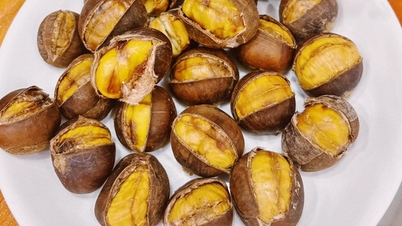
New research, published in the academic journal Diabetes & Metabolism , has shown that adopting a plant-based diet may be the best strategy for people at risk of developing type 2 diabetes.

Type 2 diabetes, affecting millions of people worldwide , has been a major health concern for decades.
Accordingly, a plant-based diet can prevent up to 24% of the risk of developing diabetes, according to the research journal Study Finds.
The study, conducted by scientists at the Medical University of Vienna (Austria), included 113,097 participants aged 40 to 69.
During the 12-year follow-up period, 2,628 people developed diabetes.
The results showed that those who ate the most plant-based foods (including plenty of fruits, vegetables, and whole grains) reduced their risk of developing diabetes by up to 24%.
Notably, even those with a family history of diabetes or those at high risk, such as obese individuals, older adults, or those lacking physical activity, significantly reduced their risk if they adopted a plant-based diet. This is a significant finding, highlighting the power of diet in managing health risks.

Those who ate the most plant-based foods (including plenty of fruits, vegetables, and whole grains) reduced their risk of developing diabetes by up to 24%.
The study also emphasizes that it is important not only to reduce consumption of animal-derived foods but also to limit industrially processed foods and those high in sugar, soft drinks, and refined grains.
The study's author, Dr. Tilman Kühn, professor of public health nutrition at the Medical University of Vienna, said: "This research has shown that a healthy, plant-based diet can improve liver and kidney function and thus reduce the risk of diabetes," according to Study Finds.
Professor Kühn said: "This research offers a new perspective on diabetes prevention. It highlights the importance of dietary choices, particularly adopting a healthy, plant-based diet, in reducing the risk of developing diabetes."
Source link


![[Photo] Closing Ceremony of the 10th Session of the 15th National Assembly](/_next/image?url=https%3A%2F%2Fvphoto.vietnam.vn%2Fthumb%2F1200x675%2Fvietnam%2Fresource%2FIMAGE%2F2025%2F12%2F11%2F1765448959967_image-1437-jpg.webp&w=3840&q=75)















































![[OFFICIAL] MISA GROUP ANNOUNCES ITS PIONEERING BRAND POSITIONING IN BUILDING AGENTIC AI FOR BUSINESSES, HOUSEHOLDS, AND THE GOVERNMENT](https://vphoto.vietnam.vn/thumb/402x226/vietnam/resource/IMAGE/2025/12/11/1765444754256_agentic-ai_postfb-scaled.png)














































Comment (0)