

Since the Fourth National Congress, science and technology have been identified as a revolution, and to this day, they remain a top national priority. Many important resolutions have been issued, contributing to the country's development.

On the morning of January 13th, in Hanoi, the Politburo and the Secretariat of the Central Committee of the Communist Party of Vietnam held a national conference on breakthroughs in science, technology, innovation, and digital transformation, combining online participation with 15,345 connection points nationwide and live broadcast on VTV1, Vietnam Television.
The conference aims to assess the implementation of resolutions of the Central Committee of the Party, the Politburo , and the Secretariat on the development of science and technology; to thoroughly understand and implement Resolution No. 57-NQ/TW dated December 22, 2024, of the Politburo on breakthroughs in the development of science and technology, innovation, and national digital transformation, creating a breakthrough in awareness and implementation, contributing to the development of a prosperous and powerful country in the new era - the era of national progress.
General Secretary To Lam attended and directed the Conference at the central headquarters.
We are pleased to present the full text of General Secretary To Lam's speech at the Conference.
"Distinguished leaders and former leaders of the Party, State, and Vietnam Fatherland Front."
Distinguished intellectuals, scientists, businesspeople, and all delegates attending the conference in the central hall and at the remote locations.
On May 18, 1963, the First Congress of the Vietnam Association for the Dissemination of Science and Technology was held at the historic Ba Dinh Hall, marking a significant event in the history of science and technology in Vietnam.
Beloved President Ho Chi Minh, in his speech at the Congress, emphasized the importance of disseminating science and technology, considering it a driving force for building and developing the country.
He emphasized: "Science must be linked to production and serve the people." This event laid the foundation for the development of scientific applications to serve the cause of industrialization and modernization of the country.
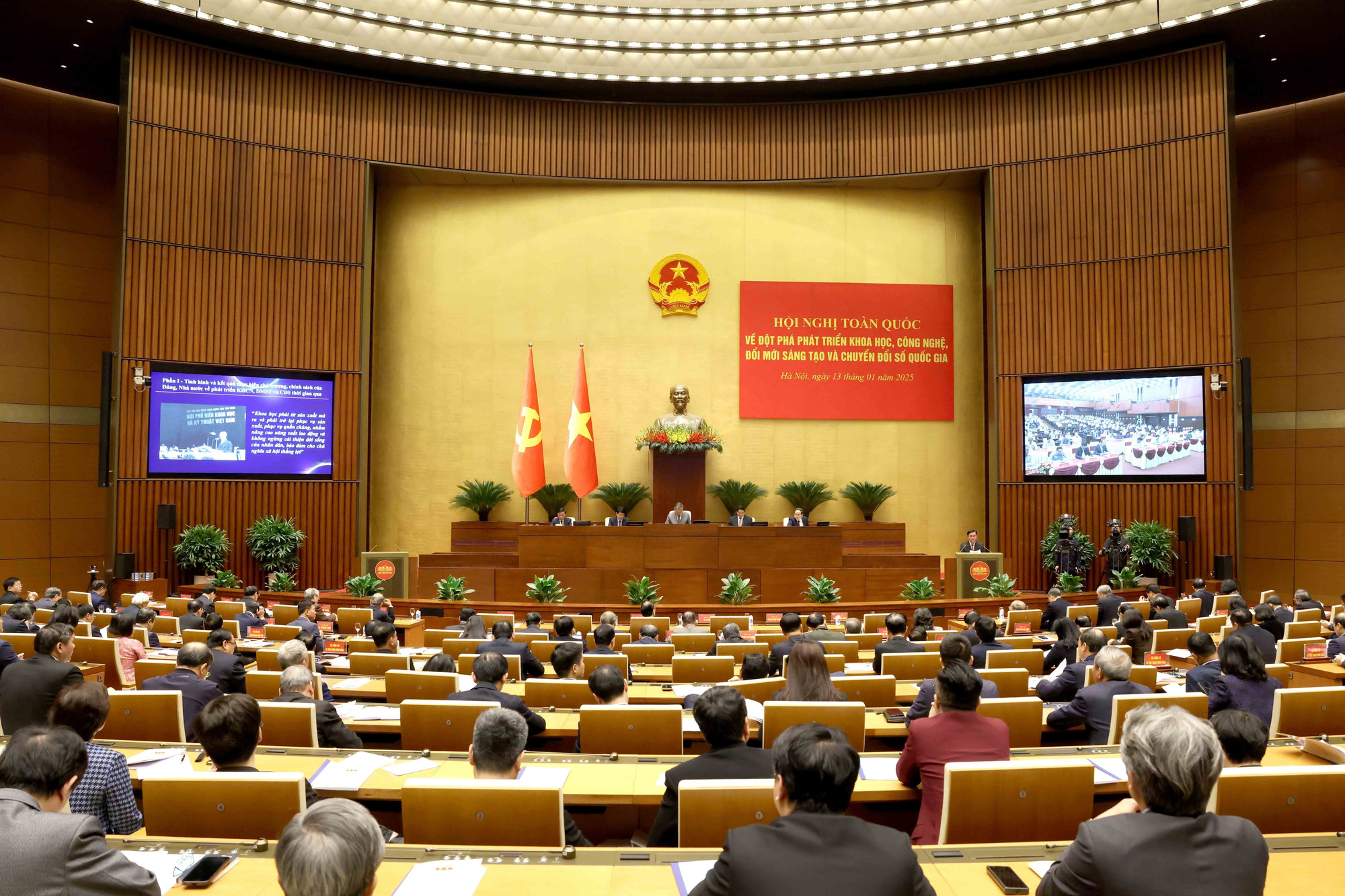
More than six decades later, today, the Second National Conference is being held, on a new scale and with new significance, reflecting the determination of the entire political system and the country to promote the development of science, technology, innovation, and digital transformation.
As we know, science and technology are key drivers of the miraculous economic growth of many countries. The success stories from the United States, China, Germany, Japan, and more recently India, Ireland, South Korea, and Singapore have demonstrated the crucial role of science and technology.
These countries are leveraging technology to transform their economic models, boost labor productivity, and enhance their global competitiveness.
With the goal of becoming a modern industrialized nation by 2030 and a developed, high-income country by 2045, we must consider science, technology, innovation, and digital transformation as key drivers. These are the "golden keys," the vital elements for overcoming the middle-income trap and the risk of falling behind, while simultaneously realizing our nation's aspirations for strength and prosperity.
However, scientific and technological development and digital transformation are only "important means" to achieve the goal. Breakthroughs and innovation are the magical elements that create miracles, because breakthroughs and innovation create revolutionary leaps forward, overcoming current barriers and limitations to achieve outstanding and remarkable results.
Breakthroughs are always characterized by novelty, effectiveness, pushing boundaries, and creating a significant impact (for example: In technology, the advent of smartphones has changed the way people communicate and work; in economics, business models based on digital platforms like Uber, Airbnb, and e-commerce represent a breakthrough for traditional industries; gene editing technology (CRISPR) is a major breakthrough in biology, medicine, and agriculture; in society, reforms in education, healthcare, arts and literature, and management policies are bringing about tremendous changes in people's quality of life).
Resolution 57 of the Politburo outlined strategic directions and received widespread consensus from cadres, Party members, scientists, and the business community both domestically and internationally, viewing it as a kind of "contractual agreement" in the field of science and technology. This support reflects the nation's strong aspiration for development and its determination to rise to the top.
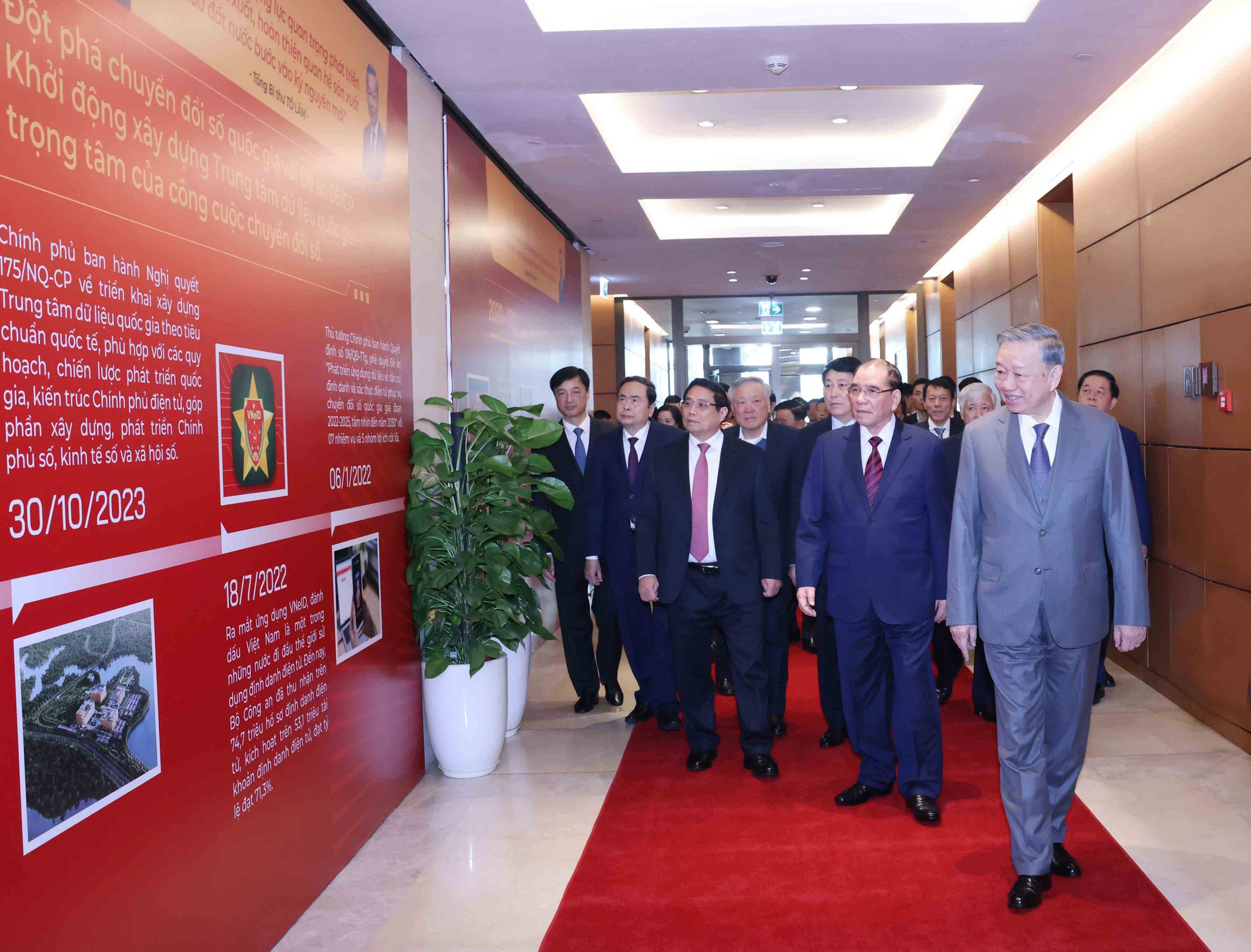
Today's conference demonstrates the sense of responsibility and unity of the entire Party and political system. With thorough preparation, we have strong confidence that breakthroughs in science, technology, innovation, and digital transformation will be the key to propelling the country forward on the path to realizing its development aspirations.
Dear comrades and delegates,
The Party and State of Vietnam have always considered science and technology as the decisive factor and foundation for the sustainable development of the country. Since the 4th National Congress, science and technology have been identified as a revolution, and to this day, it remains a top national priority.
Many important resolutions, such as Resolution 20, Resolution 52, and Resolution 36, have been issued, yielding positive results and contributing to the country's development as it is today.
However, viewed from a comprehensive, serious, and objective perspective, the results of implementing the Central Committee's resolutions have not achieved the set goals, have not met expectations, and have not fulfilled the requirements of development.
Many shortcomings, limitations, barriers, and bottlenecks still hinder the development of science and technology, as the report has pointed out, ranging from institutions, mechanisms, policies, and laws to resources and means (scientists spend too much time, about 50% of their time and effort on procedures; research projects lack breakthroughs and measurable results; resources for science and technology are limited, with our research and development budget being less than 0.7% of GDP, while the average in developed countries is 2%, and some countries even 5%; we are not yet bold enough to accept risks in research, products cannot be commercialized, and in many cases, research projects are a form of "disguised economic activity"...).
The main reason for the lack of real success of the Central Committee's resolutions lies in the implementation process.
Resolution 57 does not replace previous resolutions, but it can be seen as a "Resolution to liberate scientific thinking," a "Resolution to implement resolutions," and a "Resolution of action," with very specific goals, innovating ways of thinking and doing, aiming to realize policies, remove barriers, and unleash capabilities to promote breakthroughs in science, technology, innovation, and digital transformation, creating a foundation for strong national development in the new era.
How can we effectively and promptly implement the Resolution? All levels, sectors, and localities must immediately get to work without delay. The policies and solutions outlined within it must be quickly institutionalized and prioritized with sufficient resources for implementation.
With that in mind, I suggest that further research is needed to refine and deepen the following viewpoints and orientations:
First and foremost, regarding perspective: Always maintain that investing in science and technology, innovation, and digital transformation is a long-term strategy, accepting delays and risks in implementation. View this as an investment, and with any investment, you accept both wins and losses.
Viewing data as a new resource, the "air and light" of the new era, and a new means of production; digital transformation as a tool for innovating production and business methods, and for transforming the forces of production. Innovation is the "magic wand" for achieving sustainable prosperity, with scientists at its center.
Breakthroughs must be made in both the natural and social sciences, which are boundless fields, vast wilderness areas, and numerous opportunities for intellectuals, scientists, and workers to transform "stones into food."
However, the focus should now be on the following areas: Physics and energy (quantum mechanics for applied products such as microprocessors, lasers, nanotechnology, etc.); information and communication technology; medicine and biology (DNA, genes, vaccines, 3D, etc.); space technology; materials, energy, and environmental technology (renewable energy, lithium-ion batteries, carbon capture and storage, etc.); inventions in daily life (3D, robotics and automation, virtual reality - VR and augmented reality - AR); blockchain technology, Internet of Things (IoT); geographic information; digital cultural analysis; online education and training...
We need to shift from applying and mastering technology to building breakthrough innovation capabilities, seizing opportunities from the Fourth Industrial Revolution to "leapfrog" and take control of the future.
The implementation of the Resolution must focus on the practical issues that the country demands, and the needs of the market and the economy. Research products must be commercialized and copyrighted.

In terms of action, it is necessary to clearly define what the State should do? What should businesses do? What should intellectuals and scientists do? What should the entire population do? And how should they benefit?
The State needs to focus on four things: (1) Perfecting the institutional and legal framework to implement breakthroughs and development, (2) Building an infrastructure system to serve breakthroughs, (3) Creating a rich and intelligent workforce with sufficient capacity for breakthroughs, (4) Ensuring the security and safety of data, information, secrets, and know-how, guaranteeing intellectual property rights, protecting national sovereignty, and independent development.”
"In that spirit, I propose and emphasize eight tasks and solutions, especially breakthrough tasks:
The first It is about unifying understanding and action: Identifying the development of science and technology, innovation, and digital transformation as strategic tasks for the entire Party, the entire people, and the entire army.
The Central Committee has set an example by taking action, with the accompanying Action Program being disseminated today. Party committees and governments at all levels need to concretize the Resolution with practical plans, using the results of implementation as criteria for evaluating emulation and awarding commendations.
All tasks will be regularly monitored and evaluated; good performance will be rewarded, while delays or violations will be criticized and dealt with. Incompetent and irresponsible leaders will be replaced immediately, ensuring the country does not miss opportunities for development.
Party committees, government agencies, and units need to develop specific plans that closely adhere to the objectives of Resolution 57, with clear tasks, specific assignments, completion timelines, and measurable results.
Right now, in 2025, we need to select and address fundamental issues, laying the foundation for the 2026-2030 period, creating a boost for new labor productivity, and building confidence in society.
Monday It is crucial to urgently improve institutions and policies: by 2025, as soon as possible, the amendment, supplementation, or promulgation of new legal regulations and policy mechanisms must be completed, removing all bottlenecks and barriers to the development of science, technology, innovation, and digital transformation, maximizing creative potential, encouraging bold thinking, bold action, and accountability (regulations that need to be eliminated should be removed, laws that need to be amended should be amended, ensuring synchronization and consistency, with a spirit of openness, and one regulation per law).
A new mindset and approach are needed in amending the Law on Information Technology, the Law on Science and Technology, the Law on State Budget, the Law on Management and Use of Public Assets, and the Law on Public Officials, in order to harmonize relevant legal regulations.
We encourage proactive, creative individuals who dare to think and act, primarily through legal regulations that create space for managers to make decisions and take responsibility.
The Politburo has directed the reform of the law-making process, ensuring flexibility and efficiency, and this spirit will be institutionalized in the amended Law on the Promulgation of Legal Normative Documents, which is expected to be passed by the National Assembly soon.
The Party Committee of the Government needs to coordinate with the Party Caucus of the National Assembly to direct the timely implementation of the drafting of 27 laws and 19 decrees in 2025, ensuring the institutionalization of Resolution 57 of the Politburo and the early issuance of guiding documents so that the new regulations can be put into practice as soon as possible.
Improving institutions must go hand in hand with effective implementation, with strict monitoring and evaluation mechanisms, especially for the implementing officials. The situation of "smooth sailing at the top, obstacles at the bottom" must be eliminated immediately, along with short-term thinking, jealousy, and egalitarianism.
Tuesday It is urgent to reorganize the science and technology apparatus: In the first quarter of 2025, complete the reorganization of science and technology organizations; focus investment on developing strong research organizations.
There are specific plans to build a high-quality workforce, especially in science and technology. Breakthrough solutions will be implemented to attract leading technology corporations and Vietnamese and foreign technology talents to work in the country.
The procedures related to this issue must be significantly more streamlined, even highly competitive compared to other countries, in order to attract investment. Consider removing business conditions that are no longer consistent with the new requirements of Resolution 57.
The government could select a few pilot institutes or schools to invite external experts to lead them, especially those from the Vietnamese diaspora community abroad, who understand Vietnamese culture, have grown up in developed countries, possess expertise in their field and management, and have extensive international connections.
Previously, people were hesitant to return because we weren't truly ready, and there were many administrative and regulatory obstacles, making it difficult to manage. Now, things will be much smoother.
The plan includes establishing a Chief Architect or Master Engineer mechanism for implementing large-scale, interdisciplinary science and technology and digital transformation projects; and establishing a national institute for standards and testing to conduct research, testing, evaluation, and verification of products and services.
The state facilitates the establishment of private research institutes, provides procedural support, offers incentives through taxes and credit, allows them to invite foreign experts to work, and creates all conditions for their smooth operation.
(Recently, several large technology corporations intended to invest in Vietnam, but the procedures were too cumbersome and complicated, causing delays of years.) This issue must be reviewed and reformed significantly starting in 2025.
Wednesday Prioritizing budget allocation for science and technology as a national breakthrough policy: Allocating budget for science and technology, R&D, establishing science and technology funds, encouraging the formation of venture capital funds, angel funds, startup funds, innovation funds, etc.
Research into mechanisms for a "public investment-private governance" model, ensuring scientists have the right to take initiative in research and technology application.
In 2025, the first year of implementing Resolution 57, the Government needs to innovate its budget allocation plan for the development of science, technology, innovation, and national digital transformation. It is proposed that the Government allocate at least 3% of the national budget to this task and continue to increase the proportion of spending on science and technology to 2% of GDP in the following five years.
This policy should be announced promptly, along with guidance on its smooth implementation procedures. Projects and programs should be reviewed and adjusted to ensure compliance with Resolution 57, avoiding waste and focusing investment effectively and strategically.
At the same time, thoroughly reform the process of allocating, managing, and settling funds, eliminating the "request-and-grant" mechanism and cumbersome procedures to optimize resources and encourage innovation.
Thursday This involves rapidly developing high-quality human resources: enacting mechanisms to attract talent in general, especially scientific and technological talent, Vietnamese talent abroad, and international experts, with attractive policies regarding citizenship, income, housing, and working environment.
The relevant procedures must be transparent, attractive, and competitive with international standards. A network of domestic and international experts should be built, with regular reports on results submitted to the Central Steering Committee. The movement to honor talent and creativity should be promoted, fostering patriotism and dedication among scientists.
Continue to uphold the lifelong learning movement, reform the education and training system, focusing on postgraduate, undergraduate, and vocational training.
Friday This involves increasing investment in technological infrastructure, including digital technology: Prioritizing the construction and improvement of infrastructure as outlined in Resolution 57.
In particular, it is necessary to prepare the energy infrastructure for the next 5-10 years, with a focus on clean energy, ensuring sufficient energy for development through concrete actions.
Optimize and upgrade digital infrastructure, build 5G base stations, expand broadband internet and fiber optic coverage. Develop high-speed low-orbit satellite systems.
The plan includes establishing a national data center, implementing the Data Law, and establishing a data exchange platform by 2025. In 2025, the Government's Party Committee should direct the review and supplementation of the Power Development Plan VIII, effectively exploiting potential resources such as wind and solar power, and implementing the construction of a nuclear power plant to ensure a sustainable power supply. Simultaneously, it is necessary to effectively manage, exploit, and protect mineral resources, especially rare earth elements, to serve national science and technology development.
Saturday Focusing resources on sectors with advantages and potential, avoiding dispersion: Priority should be given to a few economic sectors with advantages and development potential, avoiding inefficiency and waste, including technological solutions for practical national issues such as rational and economical resource use, environmental protection, climate change adaptation, high-tech agriculture, food security, human health science, and Industry 4.0.
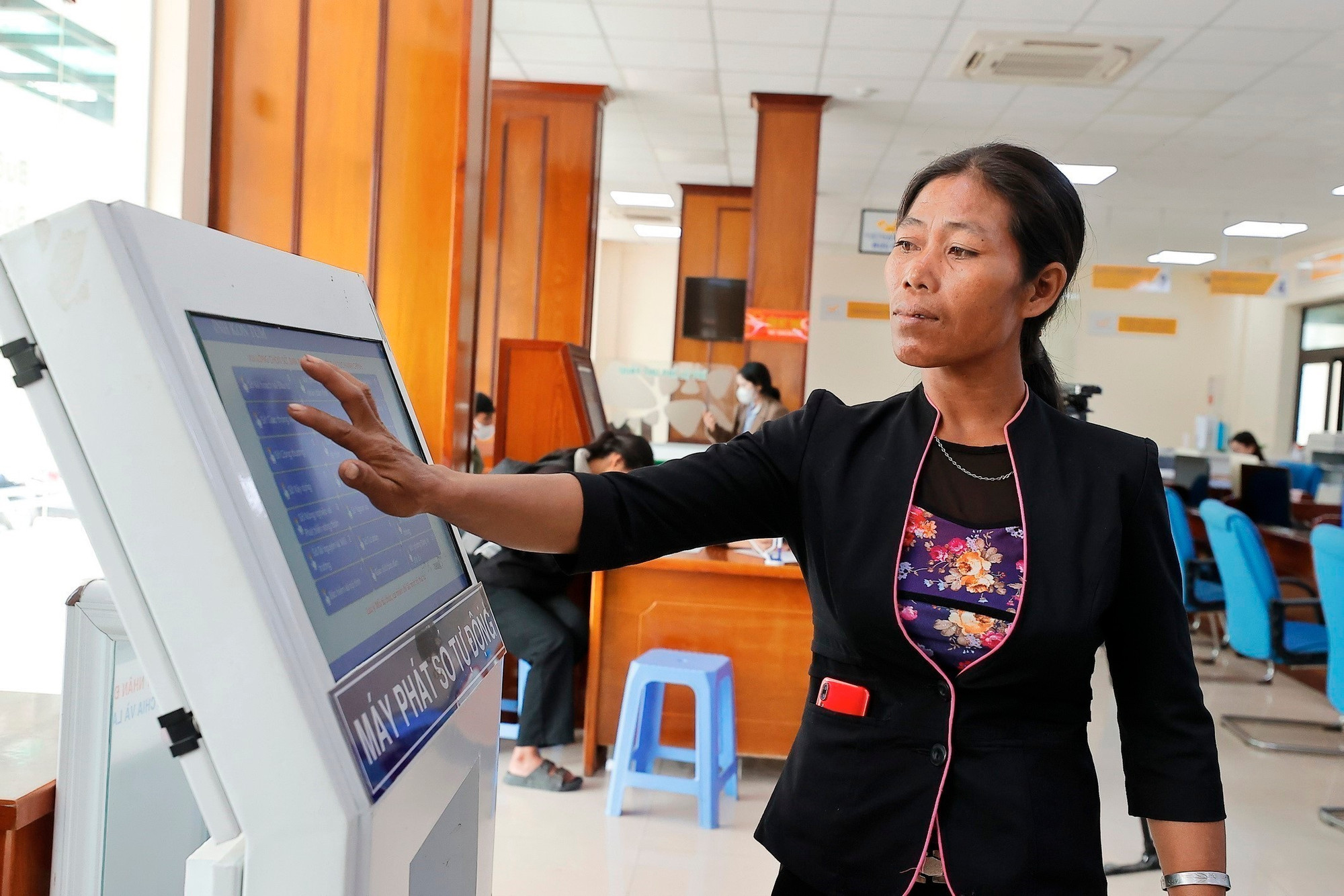
Focus on promoting key areas of digital transformation, especially implementing Project 06 and building a national data center.
By 2025, ensure that 100% of administrative procedures related to businesses are conducted online, smoothly, and efficiently; and that 100% of administrative procedures are not limited by provincial administrative boundaries.
Accelerate the connection and sharing of critical data in areas such as population, justice, education, banking, taxation, insurance, businesses, land, vehicles, etc.
The national data center must be completed with "accurate, complete, clean, and active" data, leading comprehensive digital transformation, creating a foundation for the development of the digital economy and modern productive forces in the 2026-2030 period, meeting the objectives of Resolution 57.
Eighth, strengthen cooperation and leverage international knowledge: Promote research cooperation and technology transfer with advanced countries, especially in fields such as artificial intelligence, biotechnology, semiconductors, and renewable energy.
Actively participate in building international standards, especially within the ASEAN region, through initiatives such as the Hanoi Convention. We must know how to "stand on the shoulders of giants."
Attracting investment from major technology corporations creates opportunities for Vietnamese businesses to participate in global value chains, encourages technology transfer, and enhances the capacity to learn, absorb, master, and improve knowledge and technology from around the world.
Dear comrades and delegates,
The country is facing a great opportunity to rise, but the challenges are also immense. We must be determined to carry out a revolution in science, technology, innovation, and digital transformation, and not let this opportunity slip away again.
I call upon the entire Party, the entire people, and the entire army to unite, be creative, and successfully carry out the tasks, quickly putting Resolution 57 into practice, building a peaceful, unified, independent, democratic, and prosperous Vietnam, as envisioned by President Ho Chi Minh.
Developing science, technology, innovation, and digital transformation is not just a choice, but a path to survival. Leaders at all levels need to consider this a central political task; scientists and businesses should contribute and innovate; and citizens need to participate, learn, and improve their digital skills.
Resolution 57 has removed barriers, overcome bottlenecks, and created breakthrough mechanisms to unleash creativity and resources, promoting the development of science, technology, and national digital transformation.
With a solid political and legal foundation and high consensus from the entire Party, the people, and the intellectual community, I believe that the Resolution will create a breakthrough, contributing to socio-economic development and ensuring national defense and security, leading the country to continue its sustainable development.
On the occasion of the New Year 2025 and the Year of the Snake, I would like to extend my best wishes to all leaders, former leaders, intellectuals, scientists, workers, and fellow citizens for good health, happiness, and success. May our country welcome a new year filled with new confidence, enthusiasm, and victories.
Thank you very much.
Source

![[Photo] Prime Minister Pham Minh Chinh receives the Governor of Tochigi Province (Japan)](/_next/image?url=https%3A%2F%2Fvphoto.vietnam.vn%2Fthumb%2F1200x675%2Fvietnam%2Fresource%2FIMAGE%2F2025%2F12%2F16%2F1765892133176_dsc-8082-6425-jpg.webp&w=3840&q=75)

![[Live] 2025 Community Action Awards Gala](/_next/image?url=https%3A%2F%2Fvphoto.vietnam.vn%2Fthumb%2F1200x675%2Fvietnam%2Fresource%2FIMAGE%2F2025%2F12%2F16%2F1765899631650_ndo_tr_z7334013144784-9f9fe10a6d63584c85aff40f2957c250-jpg.webp&w=3840&q=75)
![[Image] Leaked images ahead of the 2025 Community Action Awards gala.](/_next/image?url=https%3A%2F%2Fvphoto.vietnam.vn%2Fthumb%2F1200x675%2Fvietnam%2Fresource%2FIMAGE%2F2025%2F12%2F16%2F1765882828720_ndo_br_thiet-ke-chua-co-ten-45-png.webp&w=3840&q=75)
![[Photo] Prime Minister Pham Minh Chinh receives Lao Minister of Education and Sports Thongsalith Mangnormek](/_next/image?url=https%3A%2F%2Fvphoto.vietnam.vn%2Fthumb%2F1200x675%2Fvietnam%2Fresource%2FIMAGE%2F2025%2F12%2F16%2F1765876834721_dsc-7519-jpg.webp&w=3840&q=75)
















































![[Photo] Prime Minister Pham Minh Chinh attends the Vietnam Economic Forum 2025](https://vphoto.vietnam.vn/thumb/402x226/vietnam/resource/IMAGE/2025/12/16/1765893035503_ndo_br_dsc-8043-jpg.webp)





























Comment (0)