

Investment priority
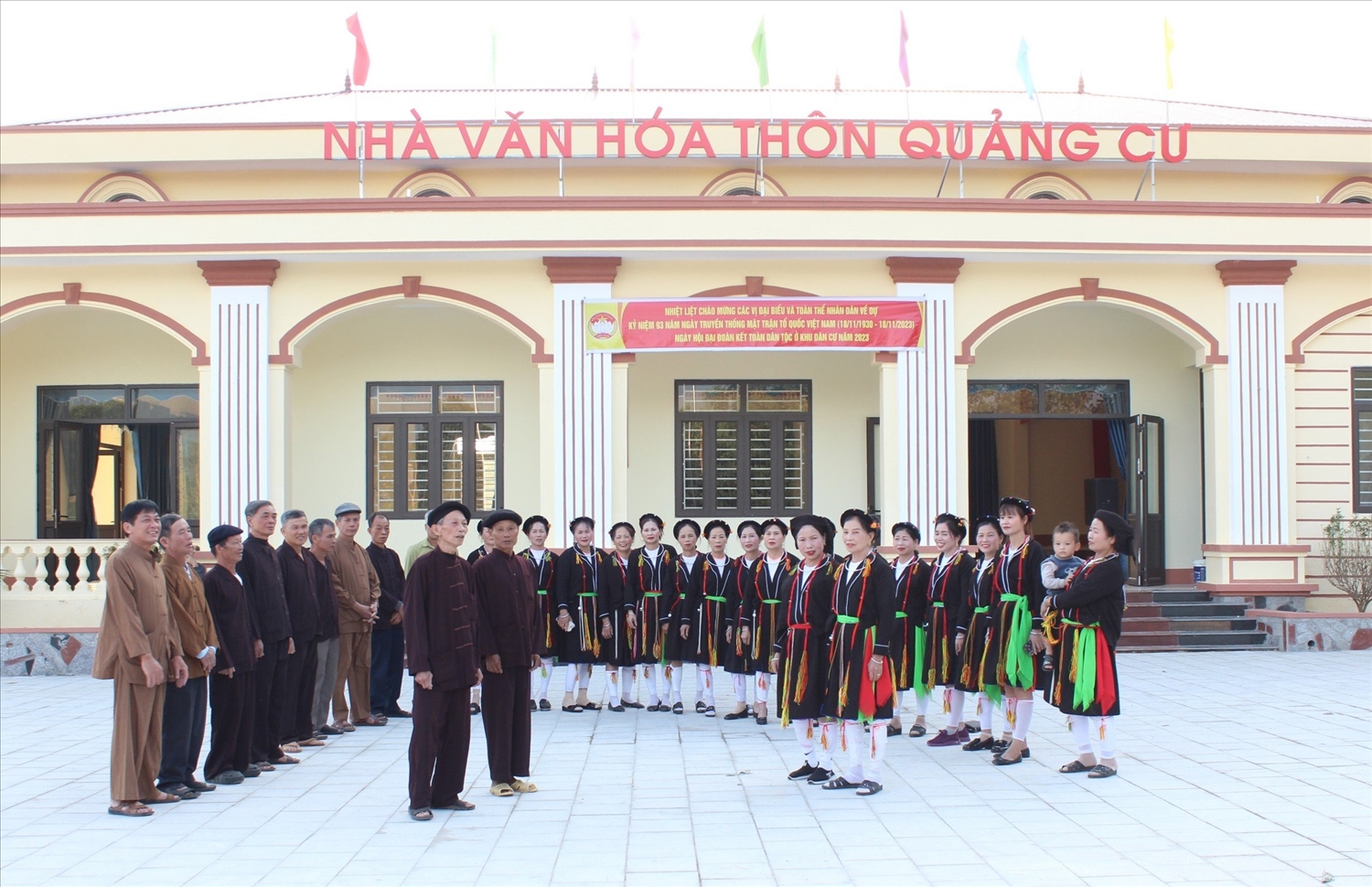
Community cultural centers have become a common feature in the lives of people in various localities. In ethnic minority and mountainous regions, thanks to state investment, most villages now have cultural centers or community activity points.
This is a place for villagers to gather and participate in collective activities of the village and local community groups. In addition, the community center plays an important role in practicing and performing traditional cultural and artistic performances of the local residents, contributing to the preservation and promotion of traditional cultural values.
Clause 1, Article 16 of the 2024 Land Law stipulates: "There shall be policies to ensure land for community living for ethnic minority people in accordance with their customs, traditions, beliefs, cultural identity, and the actual conditions of each region."
Since the implementation of the National Target Program for Socio -Economic Development of Ethnic Minority and Mountainous Regions for the period 2021-2030 (National Target Program 1719), the work of restoring, preserving, and promoting the fine traditional cultural values of ethnic minorities has been strengthened, and the role of cultural centers at the grassroots level has been further enhanced. In many localities, cultural centers serve as places for people to organize the teaching of cultural heritage and traditional crafts; and to display and promote characteristic products.
Given this important role, from the resources of the National Target Program 1719, localities have prioritized allocating capital to invest in, upgrade, and renovate cultural houses at the grassroots level. As a result, the percentage of communes and villages with cultural houses has increased compared to the time of the third survey and collection of information on the socio-economic situation of 53 ethnic minority groups in 2019.
Currently, the General Statistics Office is compiling data on the status of cultural centers in ethnic minority and mountainous areas, reporting from localities (expected to be published in July 2025). However, data presented at the 4th Provincial Congress of Ethnic Minorities – 2024, organized by localities in October and November of this year, already shows a fairly strong increase in the percentage of communes and villages with cultural centers.
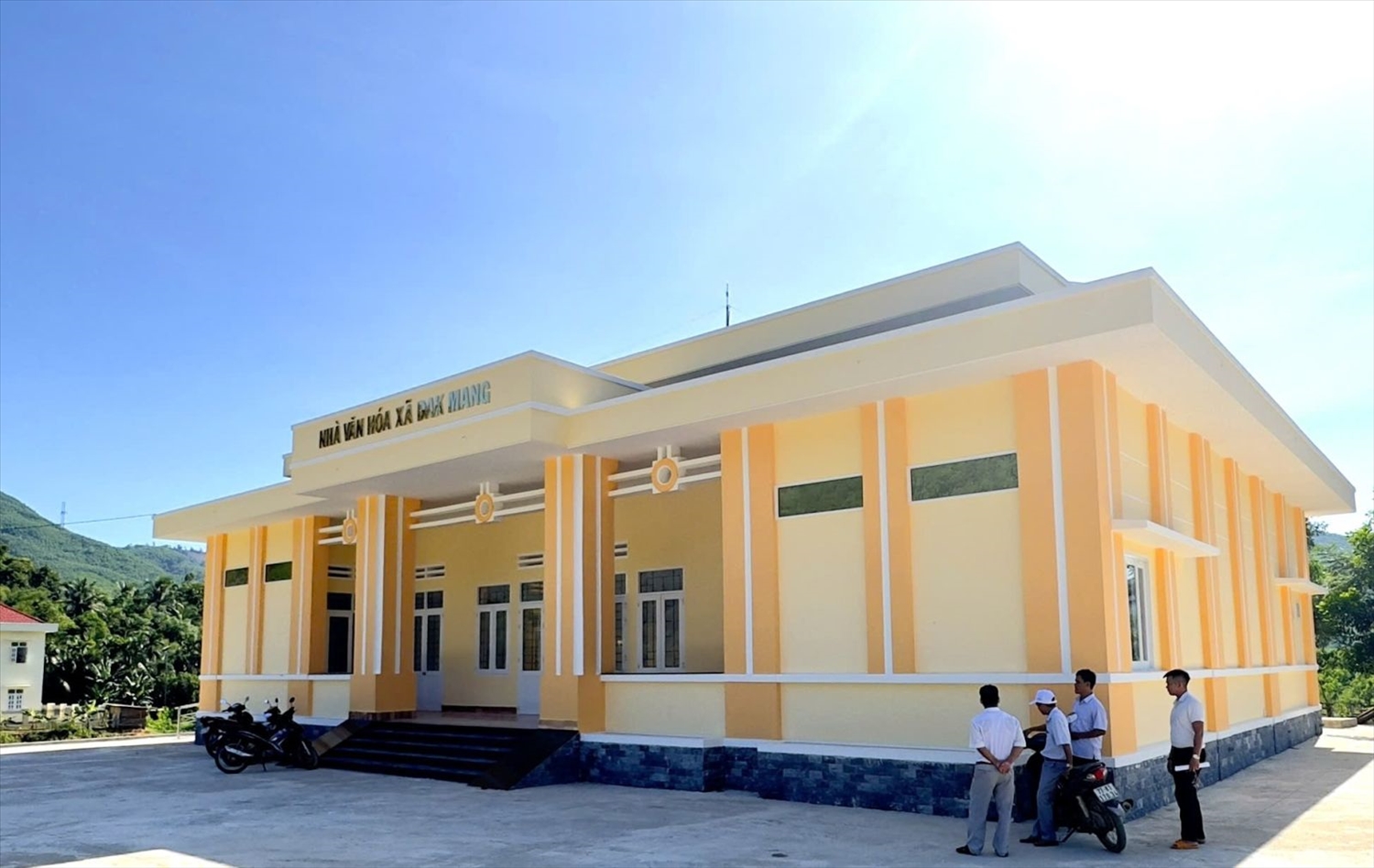
In particular, many localities that previously had very low rates of cultural centers have now seen significant improvement. For example, in Dien Bien province, according to the 2019 survey on the socio-economic situation of 53 ethnic minority groups, only 44 out of 126 communes in the entire province had cultural centers, accounting for just over 34%. By 2024, Dien Bien province had raised this rate to 79.07%.
Not only at the commune level, but the percentage of villages and hamlets with cultural houses has also increased. For example, in Cao Bang province, in 2019, the entire province had 1,866 out of 2,487 villages and hamlets with cultural houses, accounting for over 75%. To date, the percentage of villages and hamlets in the province with cultural houses has reached 98.5%.
Pay attention to shared living spaces.
On November 27, 2024, the 15th National Assembly approved the investment plan for the National Target Program on Cultural Development for the period 2025-2035. Thus, from 2025 onwards, localities in ethnic minority and mountainous areas have secured their places to implement two National Target Programs: National Target Program 1719 and the National Target Program on Cultural Development.
In its Verification Report No. 2457/BC-UBVHGD15 dated May 23, 2024, on the National Target Program for Cultural Development in the period 2025-2035, the National Assembly's Committee on Culture and Education stated that all three National Target Programs currently being implemented in the period 2021-2025 include investment in cultural development.
With the National Target Program for Sustainable Poverty Reduction under Decision No. 90/QD-TTg dated January 18, 2022, the objective of building and improving the system of cultural and sports facilities at the commune and village levels is stipulated in Content 05 under Component 02; with the National Target Program 1719, the policy has already been stipulated in Project 6;… Due to this overlap, the Government proposes transferring Project 6 of the National Target Program 1719 into the Development Program for the period 2025 – 2035.
In response to the government's proposal, 49 out of 51 members of the National Assembly's Committee on Culture and Education argued against integrating Project 6 of the National Target Program 1719 into the 2025-2035 development program. The reason is that each program and project has different overall objectives and implementation phases; the cultural content is developed to suit the specific goals of each program and project.
In implementing the 2024 Land Law, many localities have issued resolutions of the Provincial People's Council on land policies for ethnic minorities; these include regulations on land funds for investment in the construction and development of community living spaces for ethnic minorities.
The transfer and integration of Project 6 into the Cultural Development Program for the period 2025-2035 may make it difficult to assess the level of achievement of the goals and targets in each program and project.
This was also the opinion of the National Assembly's Ethnic Council when reviewing the Report proposing investment policies for the National Target Program on cultural development for the period 2025-2035.
The current state of cultural activities in ethnic minority and mountainous areas provides a practical basis for concluding that integrating Project 6 of the National Target Program 1719 into the Cultural Development Program for the period 2025-2035 is inappropriate.
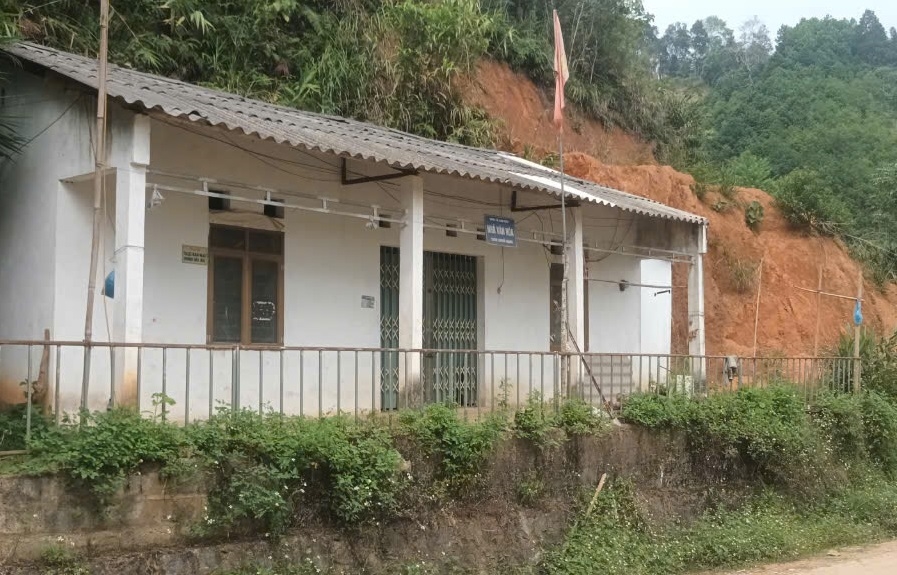
Currently, the percentage of communes and villages with cultural centers in many localities, although improved, is still very low. For example, in Cao Bang province, by 2024, the percentage of communes with cultural centers only reached 35%; while the province aims to have over 60% of communes with cultural centers by the end of 2025.
At the village level, many localities currently have a very low percentage of villages with cultural centers. For example, in Dien Bien province, by 2024, only 55% of villages had cultural centers; a significant gap compared to the target set in National Target Program 1719, which aimed for 80% of villages to have cultural centers by the end of 2025.
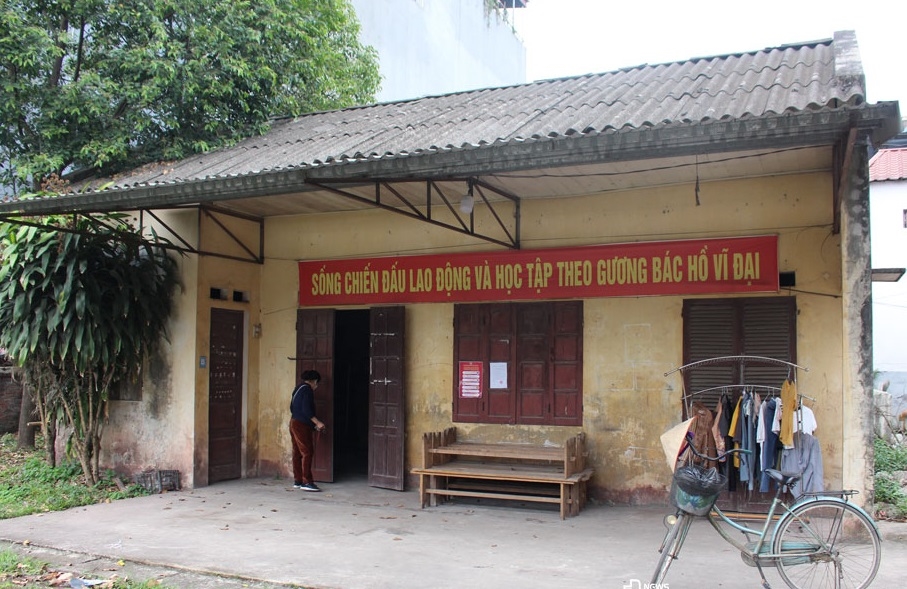
The current state of cultural activities in communes and villages in ethnic minority and mountainous areas will be clearly outlined after the General Statistics Office compiles and publishes data from the 4th socio-economic survey of 53 ethnic minority groups – 2024.
This will be one of the important data points for relevant agencies to advise on and develop the National Target Program on Cultural Development for the period 2025-2035, to be submitted to the Prime Minister for approval and implementation. In particular, the integration of Project 6 of the National Target Program 1719 into the National Target Program on Cultural Development needs careful consideration; above all, priority should be given to investing in and developing shared community spaces.
Besides the three existing National Target Programs, many programs related to cultural development issued by the Prime Minister have overlapping content in terms of objectives, beneficiaries, and funding sources. These include: Decision No. 515/QD-TTg dated May 15, 2023, of the Prime Minister approving the overall program on cultural development for the period 2023-2025; Decision No. 1909/QD-TTg dated November 12, 2021, of the Prime Minister approving the Strategy for cultural development until 2030; and Decision No. 1230/QD-TTg dated July 15, 2021, of the Prime Minister approving the Program for the sustainable preservation and promotion of Vietnamese cultural heritage values, period 2021-2025. Decision No. 2026/QD-TTg dated December 2, 2021, of the Prime Minister approving the Program for Digitizing Vietnamese Cultural Heritage for the period 2021-2030; Decision No. 1755/QD-TTg dated September 8, 2016, of the Prime Minister approving the Strategy for the Development of Vietnam's Cultural Industry in 2020, with a vision to 2030; Decision No. 1341/QD-TTg dated July 8, 2016, of the Prime Minister approving the Project for Training Talents in the Field of Culture and Arts for the period 2016-2025, with a vision to 2030; Decision No. 69/QD-TTg dated February 9, 2023, of the Prime Minister approving the Program for researching, compiling, and publishing literary works for the revolutionary cause of the Party, leading up to the 90th anniversary of the founding of the Socialist Republic of Vietnam and the 100th anniversary of the founding of the Communist Party of Vietnam on the foundation of the fourth industrial revolution…
( Report No. 2457/BC-UBVHGD15 dated May 23, 2024, of the National Assembly's Committee on Culture and Education on the Proposed Investment Policy Report for the National Target Program on Cultural Development giai đoạn 2025 – 2035 )
Identifying the socio-economic situation based on village surveys: Balancing investment capital to keep the "lifeline" open (Part 2)

![[Photo] Prime Minister Pham Minh Chinh holds a phone call with the CEO of Russia's Rosatom Corporation.](/_next/image?url=https%3A%2F%2Fvphoto.vietnam.vn%2Fthumb%2F1200x675%2Fvietnam%2Fresource%2FIMAGE%2F2025%2F12%2F11%2F1765464552365_dsc-5295-jpg.webp&w=3840&q=75)






































































Comment (0)