

Carbon credit market
The carbon credit market originated from the United Nations Kyoto Protocol on climate change in 1997. According to this protocol, countries with excess greenhouse gas emission rights can sell, give away, or buy them from countries that emit more or less than their committed targets. From this, a new commodity emerged worldwide : certificates of greenhouse gas emission reduction.
Since carbon (CO2) is the equivalent of all greenhouse gases, transactions involving carbon trading are collectively referred to as carbon buying and selling, forming a carbon market, or carbon credit market.

Each carbon credit is equivalent to one ton of CO2 emissions or other greenhouse gases (CH4, NO2). Previously, the price of each carbon credit fluctuated greatly, ranging from US$6 to nearly US$100, depending on the timing and size of the carbon credit lots traded.
The carbon credit market operates with buyers, sellers, and intermediary organizations. Sellers, known as those with a "carbon footprint," can be organizations or individuals engaged in activities such as reforestation and ecosystem protection projects, renewable energy development, green energy development, and green production, all aimed at mitigating climate change and minimizing greenhouse gas emissions.
Conversely, the buyers are businesses and organizations engaged in production and business activities such as steel, cement, petrochemical, and chemical manufacturing companies, which emit greenhouse gases during their operations. According to international conventions, these organizations, if they want to sell their products, are required to purchase carbon credits to qualify for export to markets with green production standards.

In other words, carbon credit trading is an internationally established activity aimed at mitigating human impacts on the ecological environment, ozone depletion, and climate change. Buying and selling carbon credits encourages environmentally friendly practices, moving towards green production and green energy to protect the Earth's environment. The party causing greenhouse gas emissions (the buyer) pays to support and encourage the party implementing greenhouse gas emission reduction activities (the seller).
The first international carbon credit trading market was established by the European Union in 2005 to address climate change and fulfill commitments under the Kyoto Protocol and later the Paris Agreement on climate change. This market accounts for approximately 45% of total emissions across Europe and about three-quarters of the global carbon emissions market.
An inevitable global trend
Following the Kyoto Protocol, carbon markets have flourished in Europe, the Americas, and Asia, encompassing two types: mandatory and voluntary carbon markets. Mandatory markets apply to carbon trading based on commitments made by countries under the United Nations Framework Convention on Climate Change (UNFCCC) to achieve greenhouse gas reduction targets. Voluntary carbon markets are based on bilateral or multilateral agreements between organizations, companies, or countries.
On January 7, 2022, the Vietnamese Government issued Decree 06/2022/ND-CP regulating greenhouse gas emission reduction and ozone layer protection. This decree specifies the development roadmap and implementation timeline for the domestic carbon market. Currently, Vietnam is preparing for the pilot operation of a carbon credit exchange starting in 2025, with official operation expected by 2028.
In October 2022, the Vietnamese Ministry of Agriculture and Rural Development and the World Bank (WB) – the trustee of the Forest Carbon Partnership Fund (FCPF) – signed the Emission Reduction Payment Agreement for the North Central Region Emission Reduction Program (ERPA). Under this agreement, Vietnam transferred 10.3 million tons of CO2 emissions reductions from forests in six provinces of the North Central region to the FCPF, including Thanh Hoa, Nghe An, Ha Tinh, Quang Binh , Quang Tri, and Thua Thien Hue, for the period 2018-2024. The FCPF will pay US$51.5 million for this service.

The ERPA agreement will only be fully implemented when Vietnam issues regulations on the mechanism for transferring results and the financial management mechanism. On December 28, 2022, the Vietnamese Government issued Decree No. 107/2022/ND-CP on piloting the transfer of emission reduction results and financial management of the agreement on payment for greenhouse gas emission reductions in the North Central region. To date, the World Bank has transferred US$41 million to Vietnam, which will be added by localities to the forest environment fund to pay those directly involved in forest work, contributing to improving people's lives and thereby promoting awareness of sustainable forest protection and management.
ERPA is the first successful forest carbon transfer agreement in Vietnam.
Nghe An initiates steps to access the carbon market.
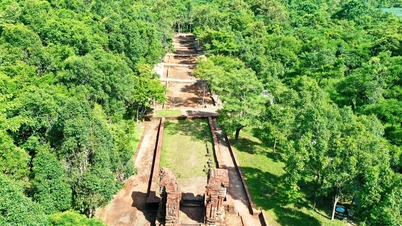
Nghe An currently has over 1 million hectares of forested land, making it the province with the largest area of forest and forestry land, along with the highest forest cover in the country. The majority of Nghe An's forest area is concentrated in the 11 western districts, especially in the Southwest, creating favorable conditions and significant potential for carbon credit exploitation. The western region accounts for 84% of the province's total area, with 1.4 million hectares. Its mountainous terrain is highly conducive to the development of various sectors, including: forestry (forestry, protection, and reforestation), medicinal plant cultivation, clean agricultural production (livestock farming, crop cultivation), and tourism development. Among these, forest planting and protection is a sector poised to generate millions of dollars in revenue once access to the carbon credit market is established.
According to scientific research, newly planted hybrid acacia forests, in addition to providing timber value during harvesting, are among the most efficient CO2-absorbing forest trees during their growth process. Therefore, planting acacia trees not only provides income from timber but also helps prevent the emission of thousands of tons of CO2 into the environment.

In Nghe An province, according to data from the Forest Protection Department, the province has 172,296.52 hectares of planted forest that has matured and 51,844.57 hectares of planted forest that has not yet matured. Of this, the area of planted acacia forests on production forest land is approximately 150,192 hectares, accounting for up to 90% of the total planted forest area. Therefore, acacia planting is currently the main source of forest economic development in Nghe An. This also represents a great potential for forest planters to increase their high-value income by selling carbon credits in addition to income from selling acacia wood.
According to Mr. Nguyen Khac Lam, Director of the Forest Protection and Development Fund, carbon credit trading is currently a new field in Nghe An province, requiring the completion of many policy mechanisms according to new regulations before it can access this potential market. Currently, the province is in the process of approaching this market. Along with the major policies of the Government and the Ministry of Agriculture and Rural Development, Nghe An is gradually preparing to access the carbon credit trading market.
Specifically, agricultural officials have been participating in training courses to update their basic knowledge on carbon standards; safety measures and experiences from countries operating carbon markets; carbon offsetting; and the operation and trading of emission quotas and carbon credits on the domestic carbon market exchange according to Decree 06/2022/ND. In addition, they are accessing knowledge and guidance on greenhouse gas emission reduction activities; greenhouse gas inventory; carbon pricing and quotas in the domestic carbon market.
Officials from the agriculture and forestry sectors also participated in visits, learning sessions, and training on carbon exchange simulation software (CarbonSim); the types of markets on the exchange; and the steps for registering an account, selecting account types for trading, and trading methods.
By proactively engaging with the carbon market, including the domestic carbon trading market, the Nghe An Provincial Forest Protection and Development Fund will continue to implement measures to enhance the added value of forests from providing forest environmental services through the carbon market; and effectively implement the Government Decree on the transfer of emission reduction results and financial management of emission reduction payment agreements in the North Central region after its promulgation.

It is evident that the market potential and demand for forest carbon trade in Vietnam in general, and Nghe An in particular, are enormous. To promote the forest carbon market both domestically and internationally, both mandatory and voluntary, Vietnam and Nghe An are urgently preparing the necessary conditions to seize opportunities, contributing to the goal of accessing international financing and improving the lives of local people through revenue from forest environmental services. This will further strengthen forest management and protection, improve forest quality, and promote stable and sustainable development of the forestry economy.
Source






















































































Comment (0)